Implementing Effective Heat Acclimatization New Workers UAE Summer Programs for Enhanced Site Safety
Successfully managing a workforce in the Gulf requires more than basic hydration; it demands a structured approach to biological adaptation. For HR managers and HSE leads, heat acclimatization new workers UAE summer protocols are not merely a recommendation but a vital operational necessity that ensures the long-term health and productivity of the team. By gradually introducing staff to the extreme thermal loads of the UAE, organizations can significantly reduce the risk of heat-related illness and operational downtime. This process must be treated as a continuous challenge throughout the summer season as new personnel arrive and existing staff return from leave.
Understanding the Physiology of Heat Acclimatization New Workers UAE Summer Adaptations
The human body requires a specific 10 to 14 day period to physiologically adjust to the intense heat and humidity of the Middle Eastern summer. During this time, several critical adaptations occur that allow a worker to perform safely. First, plasma volume expands by five to fifteen percent, which helps maintain blood pressure and cardiovascular stability under high heat loads. Simultaneously, the body begins sweat activation earlier, meaning the cooling process starts at a lower internal temperature threshold. Furthermore, the sweat rate becomes more efficient, allowing for better cooling at a lower cardiovascular cost. One of the most significant changes is the improved conservation of electrolytes in sweat, as the kidneys and sweat glands learn to retain sodium and potassium more effectively. Utilizing electrolyte stick packs during this phase ensures that the body has the necessary minerals to support these physiological shifts and maintain the sodium-glucose cotransport mechanism.
The Three-Stage Schedule for Occupational Heat Adaptation
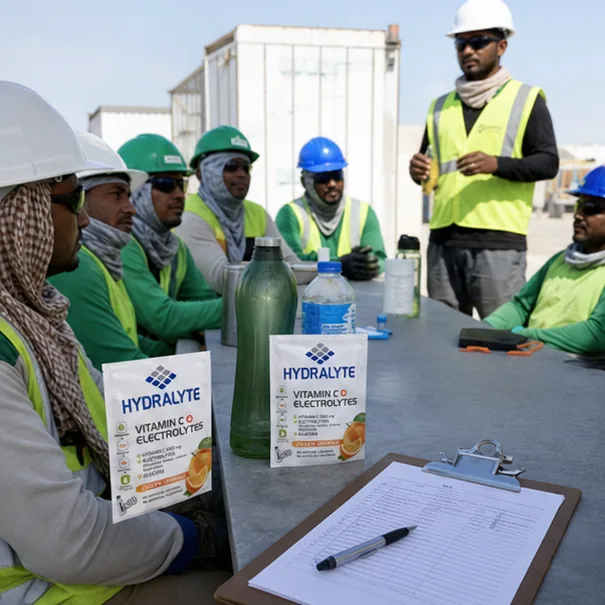
To safely integrate personnel, site supervisors should follow a rigorous three-stage schedule that scales exposure in line with physiological limits. During the first week, new arrivals should be limited to fifty percent of their total outdoor exposure time, focusing on light intensity tasks while receiving electrolyte rehydration every thirty minutes under close monitoring. In the second week, exposure can increase to seventy-five percent with moderate intensity work, adjusting the rehydration interval to every forty-five minutes. By the third week, most workers can move to a full schedule with the standard sixty-minute rehydration interval. This progressive workload ensures the cardiovascular system is not overwhelmed while the body’s cooling mechanisms are still developing. Throughout this schedule, supervisors must ensure that hydration stations are consistently stocked and that the increased frequency of intake is strictly enforced.
Extending Acclimatization Protocols to Returning and Indoor Staff
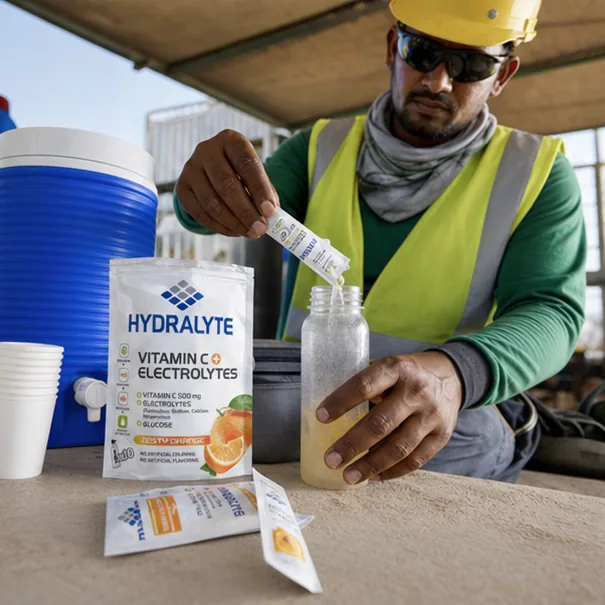
Acclimatization is not limited to new hires; it is a recurring requirement for any worker whose heat tolerance has diminished due to time away from the site. Workers returning from annual leave or medical leave of fourteen days or more lose a significant portion of their heat adaptation and require a shortened re-entry protocol before returning to full duty. Similarly, employees transitioning from air-conditioned indoor roles to outdoor industrial environments mid-season must be treated as new arrivals for safety purposes. Individuals returning after a week-long illness also need a modified return-to-work schedule to ensure their recovery is not compromised by thermal stress. Providing easily accessible rehydration sachets at welfare stations encourages these vulnerable groups to maintain their electrolyte levels throughout their transition back to full outdoor capacity.
Documentation for MOHRE Compliance and Risk Management
Maintaining detailed records of the heat acclimatization new workers UAE summer schedule is essential for regulatory compliance and overall risk mitigation. To satisfy Ministry of Human Resources and Emiratization (MOHRE) inspections, companies must provide evidence of risk management for individual vulnerable workers. This documentation should include specific logs of exposure hours, rehydration frequency, and supervisor sign-offs for each stage of the adaptation process. By recording these metrics, employers demonstrate a proactive duty of care and provide a clear audit trail of their safety commitment. These records prove that the organization is not only providing the necessary supplements but is actively monitoring the health of its most at-risk employees.
For assistance in setting up a compliant hydration program or to inquire about bulk supply for your industrial sites, contact the Hydralyte B2B team at contact our team.
Frequently Asked Questions
What physiological changes occur during heat acclimatization and why do they matter?
During acclimatization the body makes four key adaptations: plasma volume expands by 5-15% (maintaining blood pressure under heat load), sweat glands activate earlier (cooling begins sooner), total sweat rate increases (more efficient surface cooling), and the kidneys and sweat glands learn to conserve sodium and potassium more effectively (reducing electrolyte depletion rate per hour of work). All four adaptations mean an acclimatized worker depletes electrolytes more slowly and manages heat load more efficiently than a non-acclimatized worker.
Do workers who have been in the UAE all year need acclimatization if they return from leave in summer?
Yes. Workers who have been away from outdoor UAE summer conditions for 14 or more days — whether due to annual leave in their home country, medical leave, or an extended indoor assignment — begin losing their acclimatization after about two weeks away from the heat. These workers need a shortened acclimatization re-entry protocol before returning to their full outdoor workload.
How should supervisors identify workers who are struggling during the acclimatization period?
Watch for: unusual fatigue at the end of week 1 that persists into week 2, elevated resting heart rate observed during break periods, headache that the worker reports daily, performance declines in physical tasks compared to peers, and any heat illness symptoms during the reduced-exposure week 1 schedule. Workers who show any of these signs during the reduced-exposure acclimatization period need extended protocols before advancing to the week 2 schedule.
The Hydralyte Advantage for UAE and GCC Conditions
Hydralyte is a potassium-rich, low-sodium isotonic electrolyte formula designed specifically for proactive daily hydration — not just reactive emergency recovery. With 500mg Vitamin C per serve and a low-sugar formula, it provides comprehensive hydration support for anyone living, working, or exercising in the extreme heat of the UAE and GCC.
Unlike traditional ORS sachets designed for acute illness, or high-sugar sports drinks designed for athletic performance, Hydralyte is formulated for safe, repeated daily consumption across the entire summer season. This makes it the preferred choice for workplace hydration programs, family use, and fitness enthusiasts across the region.
Available in three flavours (Orange Blast, Lemon Lime, Pineapple) and four pack sizes, Hydralyte is stocked online and across GCC retail, with bulk corporate supply available for businesses with 50+ workers.
🏗 Protecting Outdoor Workers? Hydralyte supplies bulk electrolyte programs for construction, oil & gas, logistics, and manufacturing companies across the GCC — with full MoHRE compliance documentation. See Industry Hydration Programs →
🛒 Ready to try Hydralyte? Available in three refreshing flavours across multiple pack sizes — from individual sachets to 800g bulk pouches. Shop Hydralyte Online → or request a corporate quote.