For Industries
Hydration programmes,
tailored to the workforce.
Site formats, supply schedules and documentation built for each industry — from construction welfare stations to fleet glove-box kits to oil & gas camps. Pick the sector page that matches your site, or start with the programme outline below.
Industries we supply
Pick your programme.
Each sector page carries its own programme outline — the formats that suit the site, where the stations go, what the supply calendar looks like and which documents land in the HSE file. The fourth card covers everything else we supply: production floors, kitchens, event crews and camps.
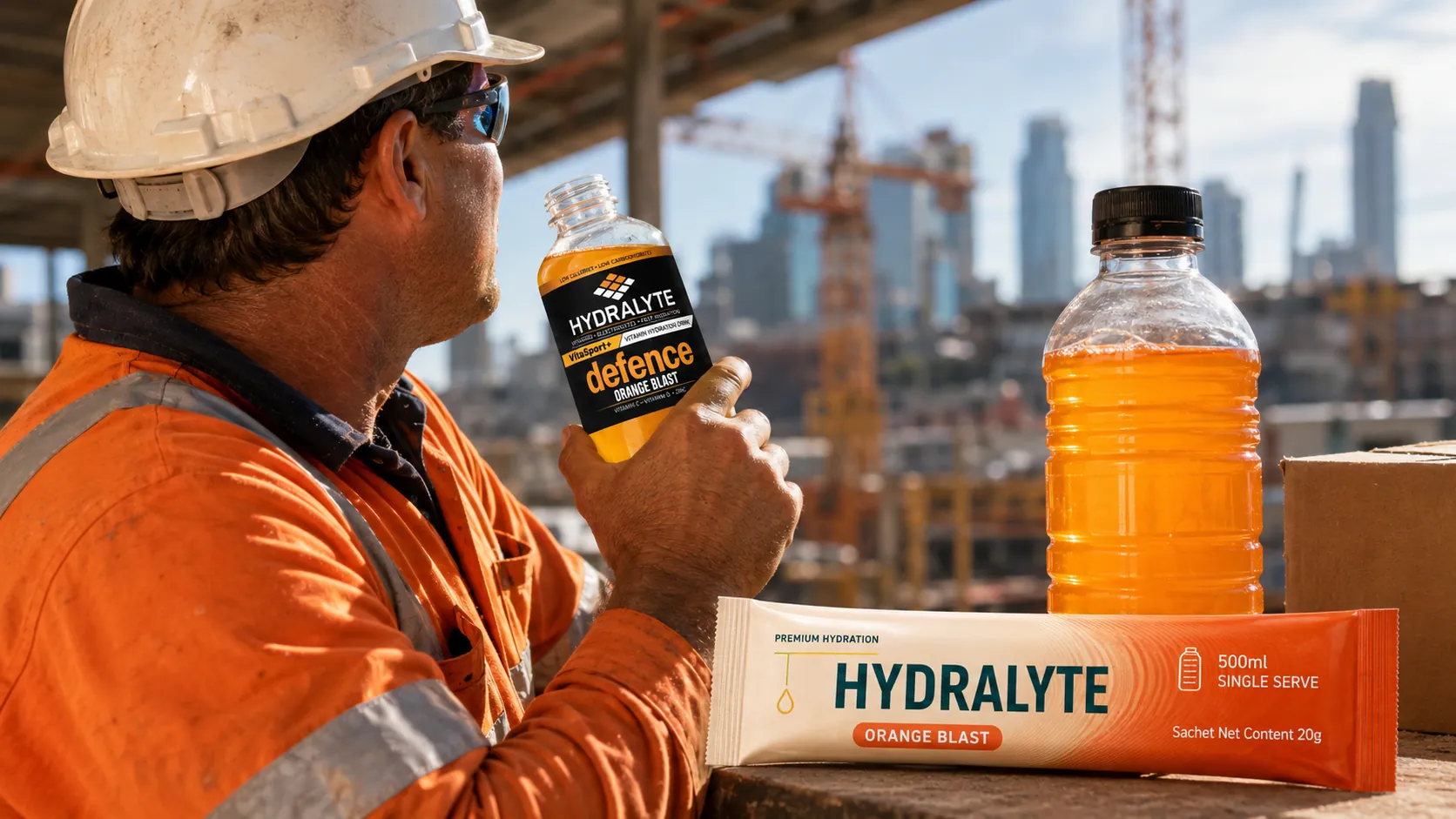
Construction
Worksites, welfare stations, labour camps. MoHRE-aligned supply, distribution logs, pallet drops to site.
Explore the programme →
Logistics & delivery
Drivers, riders, warehouse teams. Glove-box kits, depot stations, hub-and-spoke refills.
Explore the programme →
Oil & gas
Camps, platforms, refineries. GCC-wide supply, HSE audit packs, rotation kits and RTD cases for coolers.
Explore the programme →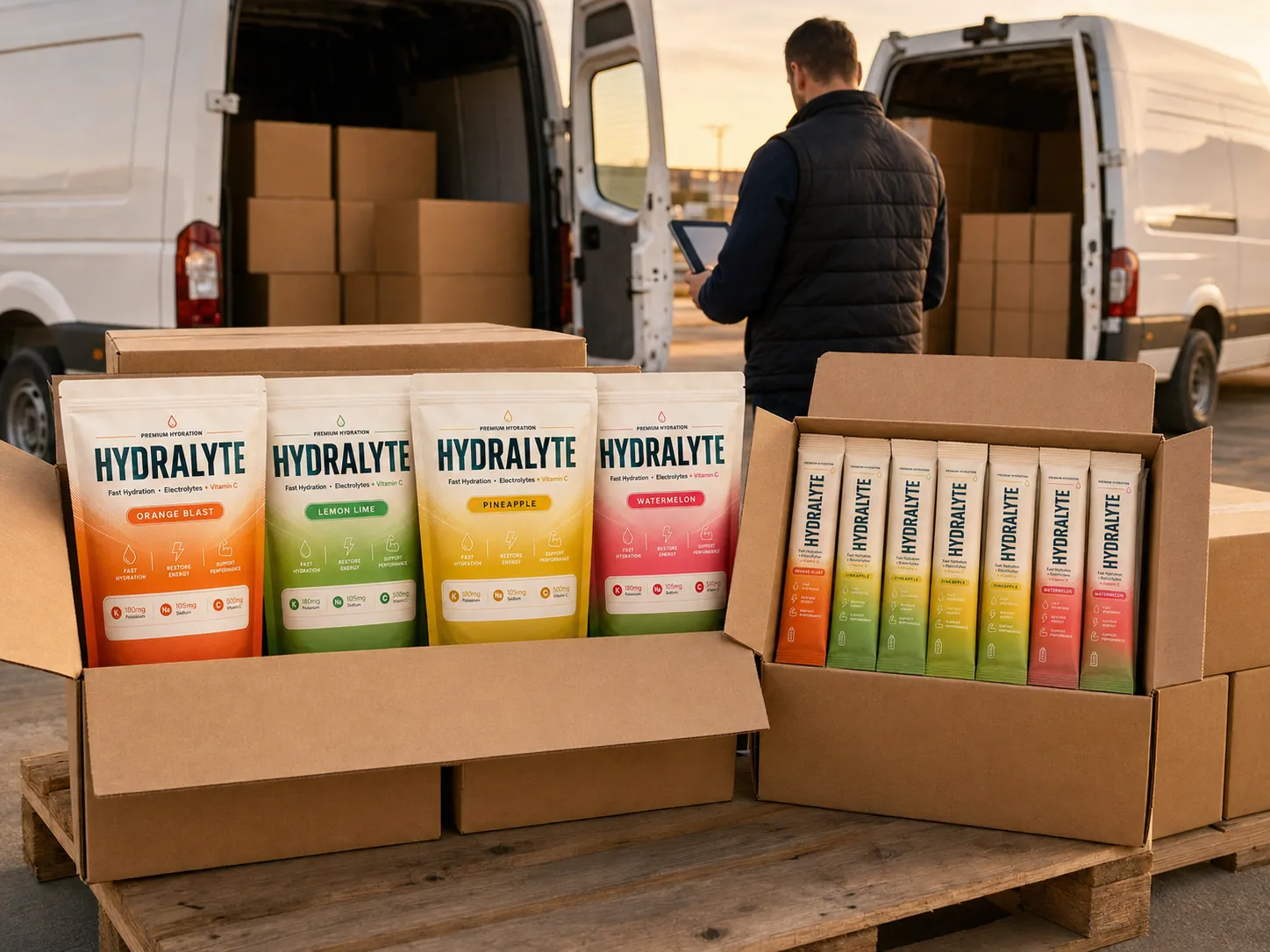
Other sites & events
Manufacturing floors, kitchens, hospitality, event crews and canteens — sized to the shift. The business page covers it all.
For business →How a programme runs
The midday ban is not the hard part.
During the MoHRE midday break season (15 June – 15 September, 12:30–15:00) outdoor work pauses at peak sun — but the 40 °C+ hours on either side carry the real load, and indoor industries run all summer. Compliance is the floor. A workforce that is actually hydrated is the return: fewer incidents, steadier output, cleaner audits. Every sector programme follows the same four steps, so the first drop is on site before 15 June rather than chasing it in the first hot week.
Walk-through
A site visit maps heat exposure, headcount and shift windows — the baseline for the whole programme and the input to the planner.
Pilot station
One welfare station installed, stocked and logged like a full programme, so you have real consumption data before committing the site.
Scheduled supply
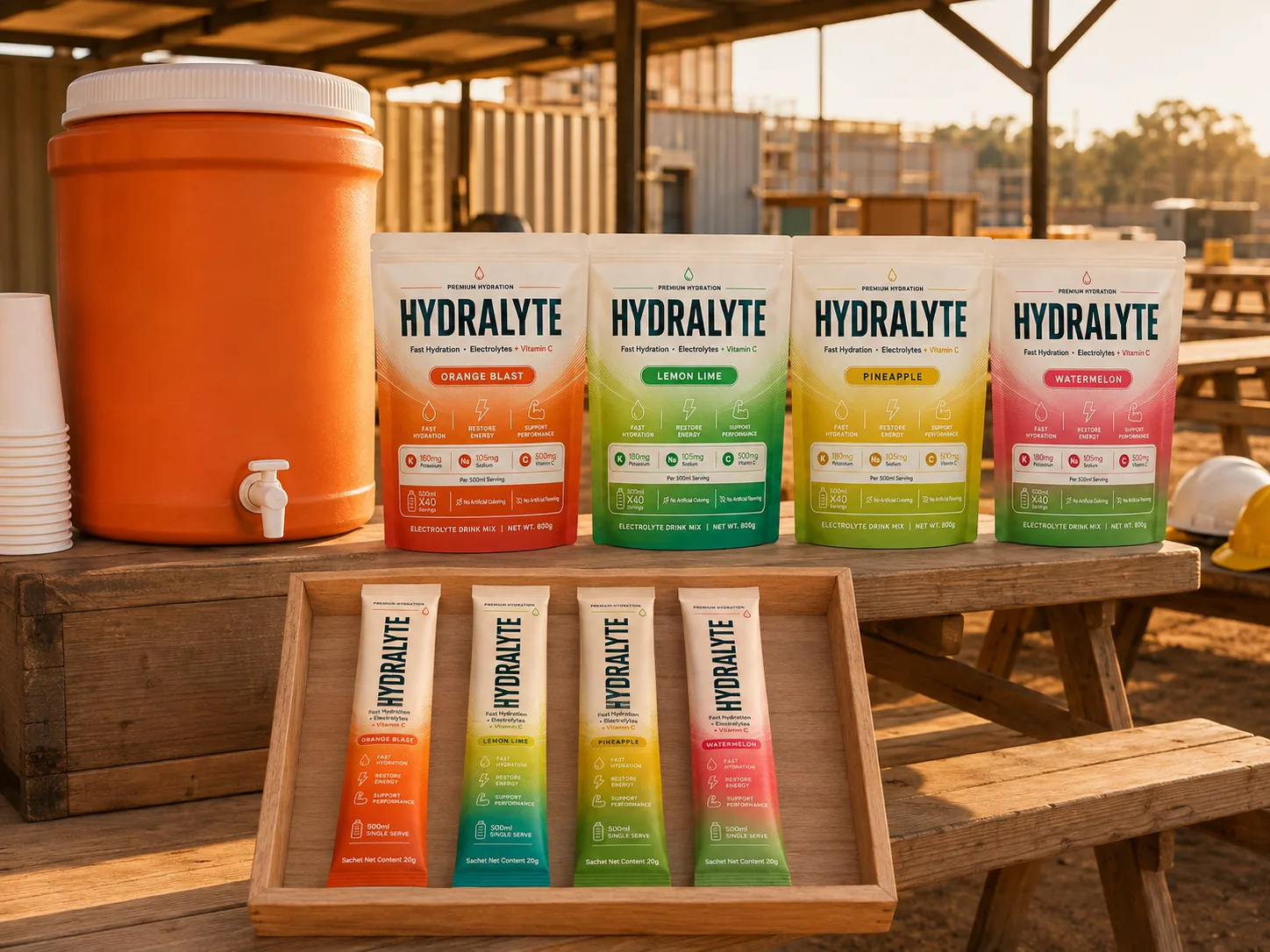
Pallet drops on a calendar rather than order by order — pouches for the dispensers, sticks for the kits, VitaSport+ for the coolers.
HSE pack
Spec sheets, distribution-log templates, signage and monthly usage reports filed to your HSE records — audit-ready all season.
Heat stress costs more than lost hours.
Dehydration triggers a cascade: impaired concentration, muscle cramps, heat exhaustion — and in severe cases hospitalisation. For an employer the loss lands twice: the incident and the output. A stocked station with a balanced electrolyte serve is the simplest intervention on the list.
Formats for sites
Three packs cover almost every site.
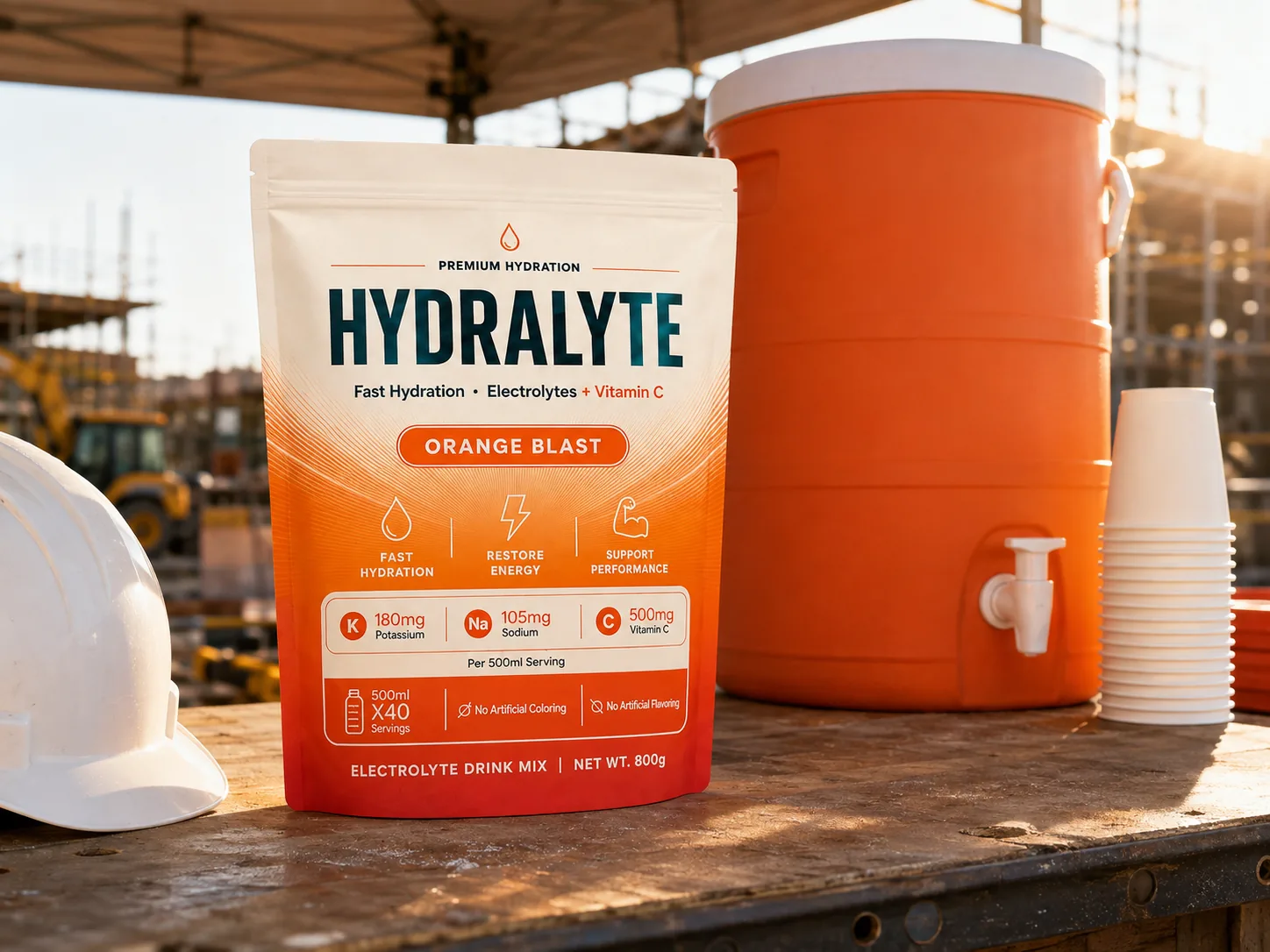
Most programmes run on three formats: the 800 g pouch at the welfare station, the 20 g stick for anyone who moves, and the VitaSport+ ready-to-drink case for coolers, cabs and camps where nobody will mix a bottle. The full range — jars, tubes and 10 g minis included — is on the formats page.
| Pack | Format | Pack size | Serves per pack | Where it sits on site |
|---|---|---|---|---|
 |
800 g pouch | Case of 10 pouches | 40 × 500 ml per pouch | Welfare-station dispensers — half a pouch fills a 10-litre jug |
 |
20 g stick | Box of 200 sticks | 200 × 500 ml (one stick per bottle) | Glove-box kits, gate handouts, crews working away from the station |
 |
VitaSport+ RTD | Case of 24 bottles | 24 × 500 ml, ready to drink | Gate coolers, cabs, camps and rotation kits — no jug, no mixing |


Plan it yourself first
Three tools before the first call.
Score the site, size the supply and check the paperwork — each tool runs in the browser and gives you a printable result to bring to the walk-through.
Procurement questions
What procurement asks before choosing a sector programme.
Which sector programme should a mixed site use?
Start from where the people are. Outdoor crews at fixed points follow the construction outline — welfare stations stocked with pouches; people who move between sites follow the logistics outline — sticks in kits, stations at the depot; remote camps and rotations follow the oil & gas outline — RTD cases and audit packs. A mixed site simply combines them, and the walk-through sets the split.
How do we size the first order for a site?
Count heads, shifts and exposure, not pallets. The workforce hydration planner turns those three inputs into serves per day and cartons per month; the quote then confirms a first drop and a calendar for the rest of the season. Most sites start with a pilot station and scale to scheduled supply within the first month.
Can one account cover several sites or emirates?
Yes. Multi-site accounts run one calendar with a drop per location, and pallets go direct to sites, camps and depots across the UAE on the agreed schedule. For locations elsewhere in the GCC, name them on the inquiry form and we confirm the route and lead time with the quote.
What lands in the HSE file?
Product spec sheets, distribution-log templates, welfare-station signage, the replenishment calendar, a heat-stress one-pager for toolbox talks and a monthly usage report — maintained through the season and formatted to sit in your records for main-contractor and MoHRE audits.
Something specific to your site or sector? Send it with the bulk inquiry or write to hydralyte@bagason.com.
Start with a walk-through.
We map exposure, headcount and shift windows, then quote the programme — quantities, lead times and documentation inside one business day.