Why Hydralyte?
Hydration, engineered
for every day.
Electrolyte hydration designed for proactive daily use — five essential electrolytes, low in sodium, optimised for prevention, not just recovery. For the gym and the dawn run, the office and the school run, the fasting day and the site shift: wherever sweat, dry air or a long day take more than water alone gives back.
The hydration problem
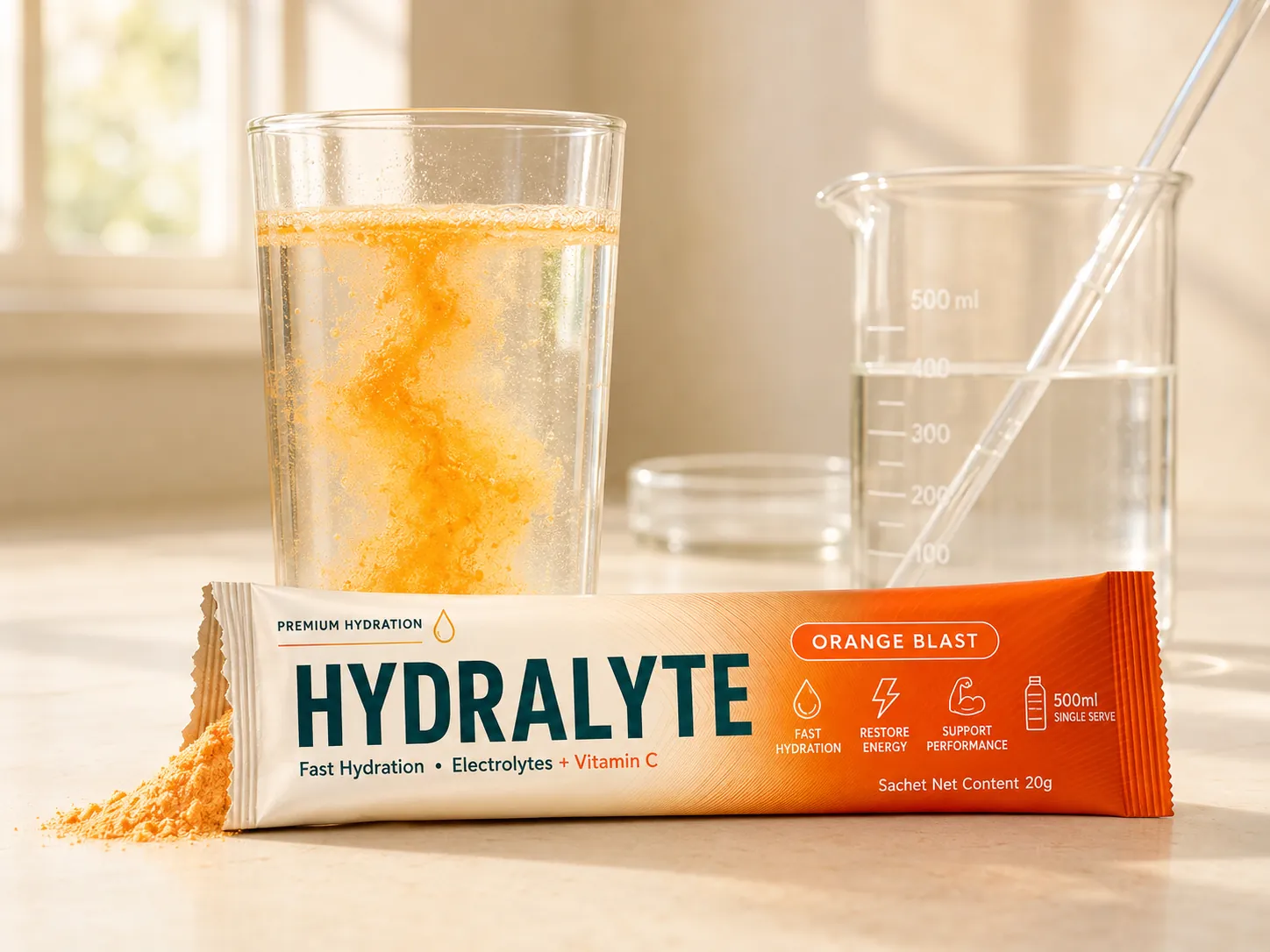
Most people are chronically dehydrated — and don’t know it.
In the Gulf, where summer temperatures regularly exceed 45°C, the risk is even greater. Dehydration doesn’t just mean thirst — it quietly taxes energy, focus, muscle recovery and immune response. And the uncomfortable part: when you sweat, you don’t only lose water. You lose essential electrolytes — sodium, potassium, chloride, calcium and magnesium. Without replacing those minerals in the right ratio, your body can’t properly absorb or retain what you drink.
It is not only a site problem. A class in an air-conditioned gym still runs a full sweat — it just evaporates before you notice. A long office day in chilled, dry air keeps water leaving through breath and skin while coffee nudges it along. A summer school run is an hour of stepping between 45°C outside and 20°C inside. Adequate total water intake for adults sits around 2.0 litres a day for women and 2.5 for men before any of that starts (EFSA), and exercise sweat rates run anywhere from roughly 0.3 to 2.4 litres an hour depending on the person, the pace and the heat (ACSM). The answer is the same on every kind of day: replace the water and the minerals together, in a ratio the gut can use.
The science
How Hydralyte works: proactive absorption
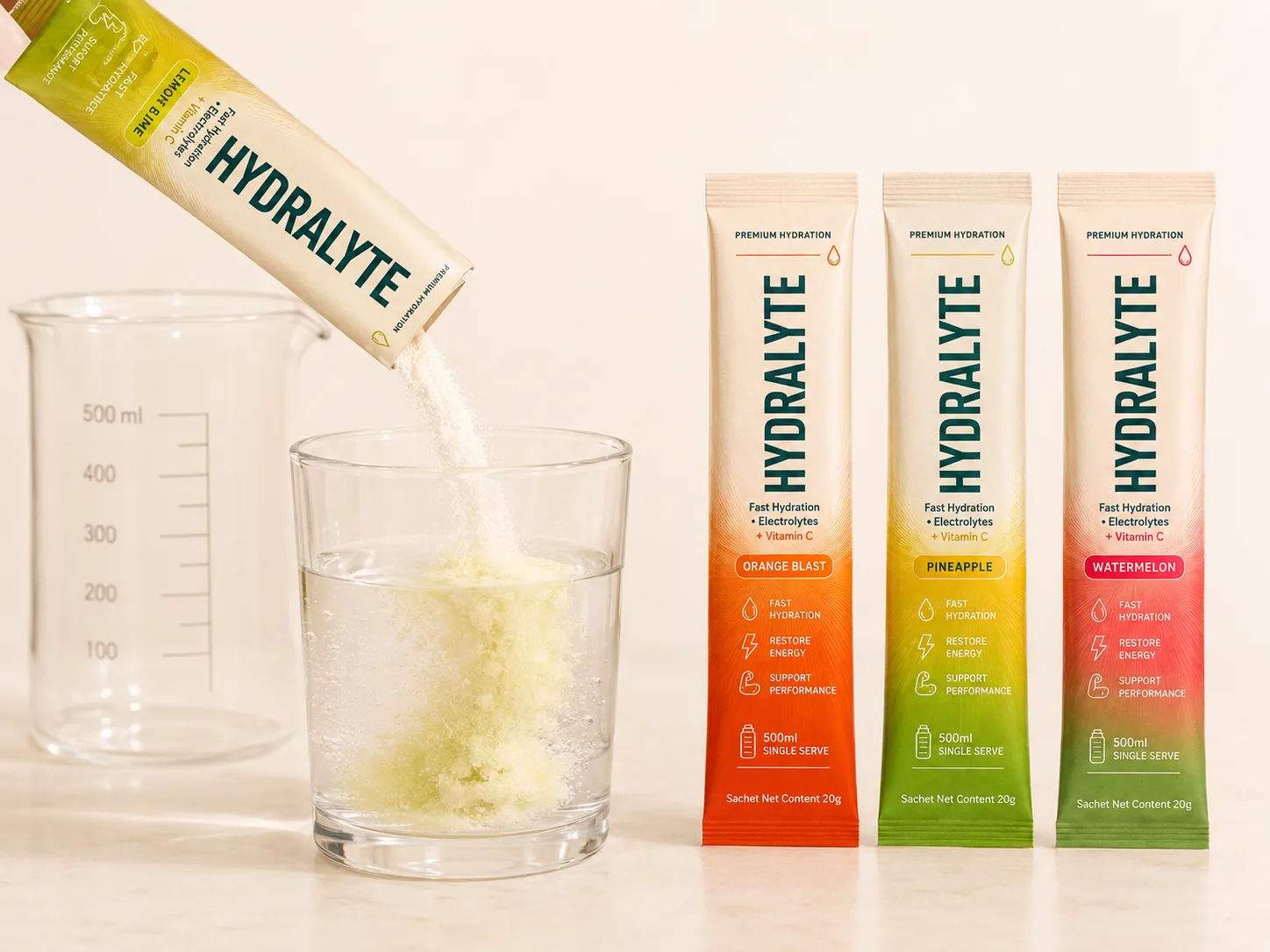
A precisely balanced ratio of sodium and glucose activates the SGLT1 cotransporter on the surface of your intestinal cells. For every cycle of this transport, hundreds of water molecules follow by osmosis — a rapid absorption pathway that keeps working even under extreme heat stress.
This is why Hydralyte hydrates faster than water alone: it doesn’t rely on passive diffusion. It uses active cotransport to pull fluid into your bloodstream — with a low-sodium profile tuned for every-day use, not hospital-strength recovery.
What that means in the glass
Plain water crosses the gut wall by passive diffusion — slowly, and only while the gradient favours it. In sustained heat that gradient collapses: sweat has already taken sodium out of the blood, so every bottle of water dilutes it further and much of what you drink passes straight through. Hydralyte changes the route. The measured sodium and the small amount of glucose in a 500 ml serve switch on SGLT1, the sodium-glucose cotransporter, and water is escorted across with every cycle. The science page walks through the mechanism with a diagram and the sweat-loss numbers behind it.
The rest of the formula is deliberately quiet: 105 mg of sodium and 180 mg of potassium per 500 ml, with chloride, calcium and magnesium alongside and 500 mg of vitamin C — a prevention ratio, not a clinical one. The same serve comes in four flavours and five formats, from a 20 g stick for the glove box to an 800 g pouch for a welfare station; corporate supply and the paperwork that goes with it live under For Business.
Reading the stick
Four lines on the pack. One 500 ml serve.
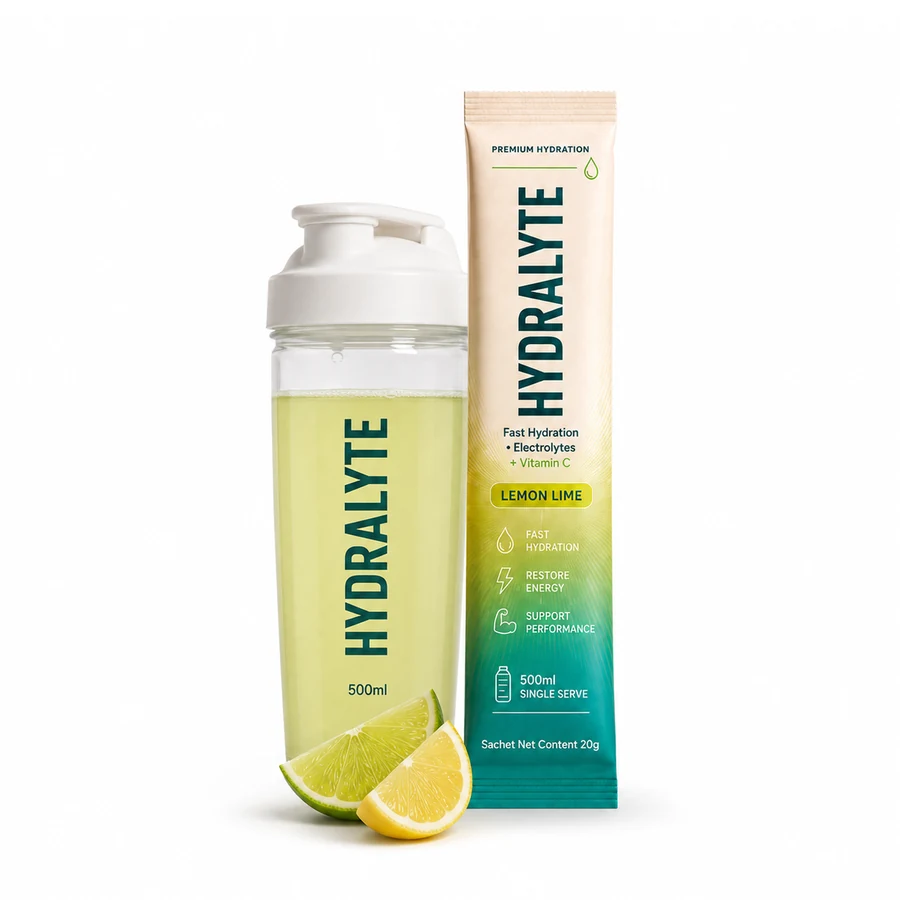
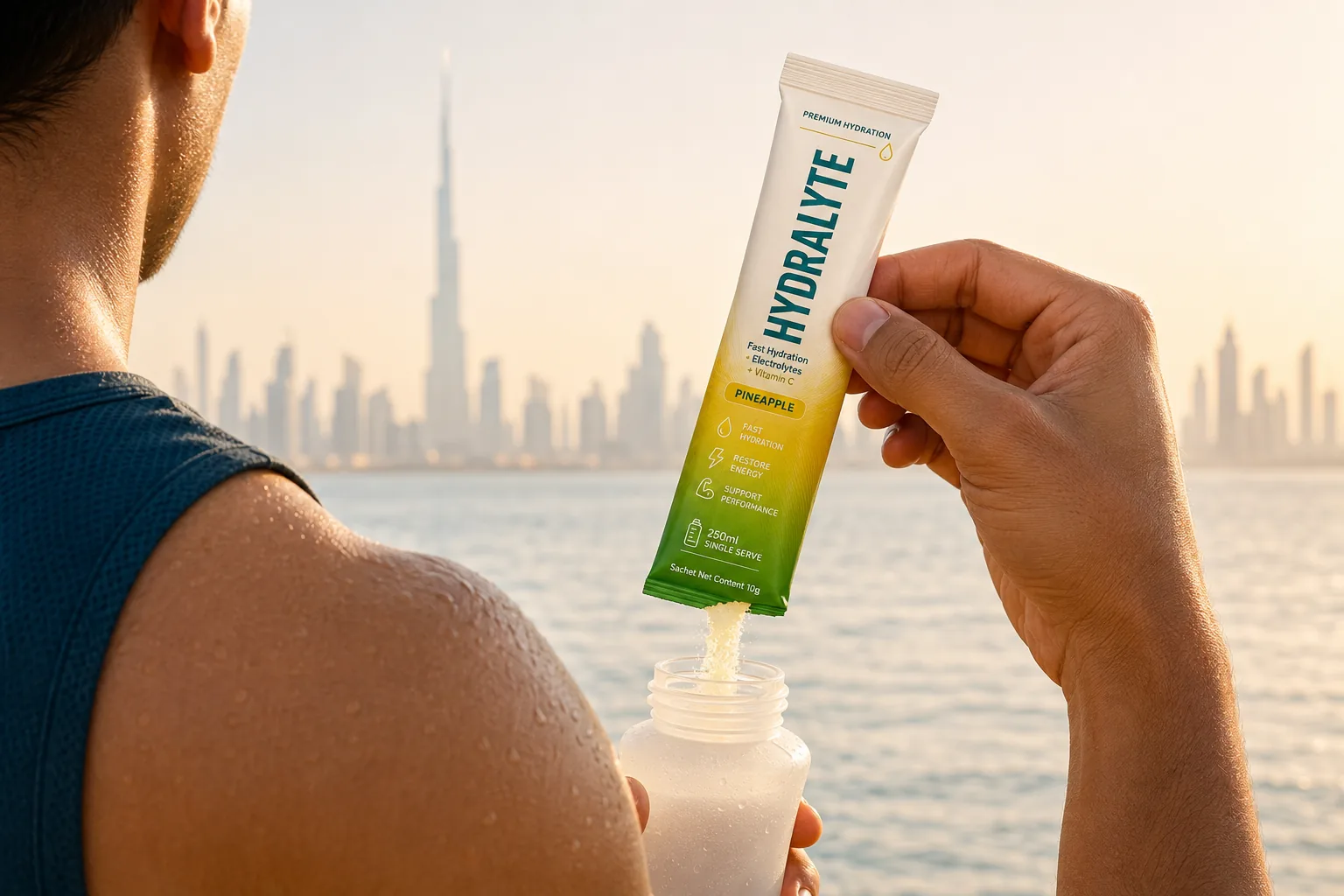
Everything the formula promises is printed on the front of a single 20 g stick. Hover or tap a number to find it on the pack — the values are the ones from the comparison table on the science page.
Serve size: 20 g into 500 ml
One whole stick, one 500 ml bottle. The ratio is the point — it sets the sodium-to-glucose balance that switches SGLT1 on. Dilute it further and it still hydrates; concentrate it and you slow it down.
The electrolyte panel
“Electrolytes” on the front means five minerals inside: 105 mg sodium and 180 mg potassium per 500 ml, with chloride, calcium and magnesium alongside. Potassium-heavy on purpose — a daily-prevention ratio, not a hospital-strength one.
+ Vitamin C: 500 mg
The immune-support line on the pack, and the same 500 mg in the comparison table — the one thing a sports drink does not carry at all.
Low sugar, low carb
“Restore energy” is not a sugar hit. There is just enough glucose to run sodium-glucose co-transport — not the 20–35 g of sugar a sports drink carries in the same 500 ml.
The essentials
Five minerals sweat takes. Five minerals a serve gives back.
- K
Potassium
180 mg / 500 ml
Balances the fluid inside your cells and keeps muscle and nerve signalling steady — cramps follow when it runs low.
- Na
Sodium
105 mg / 500 ml
The absorption driver. Sodium-glucose co-transport is what pulls water across the gut wall — measured, not clinical.
- Cl
Chloride
In every serve
Sodium’s partner ion. Keeps blood volume and acid-base balance stable through long sweat sessions.
- Ca
Calcium
In every serve
Muscle contraction and nerve firing. Lost in sweat, and implicated in heat cramps when depleted.
- Mg
Magnesium
In every serve
Recovery and energy metabolism. Runs down quietly over a hot week — a daily serve keeps it topped up.
Plus 500 mg of vitamin C per 500 ml serve for immune support — and low sugar, low carb.
For whom
One range. Six kinds of heavy sweaters.
The same 500 ml serve, six very different days. Sweat looks different in a chilled gym, on a dawn run, at a desk, on the school run, through a fast and on a site — but what it takes out is the same five minerals, and the serve that puts them back does not change.
Indoor athletes
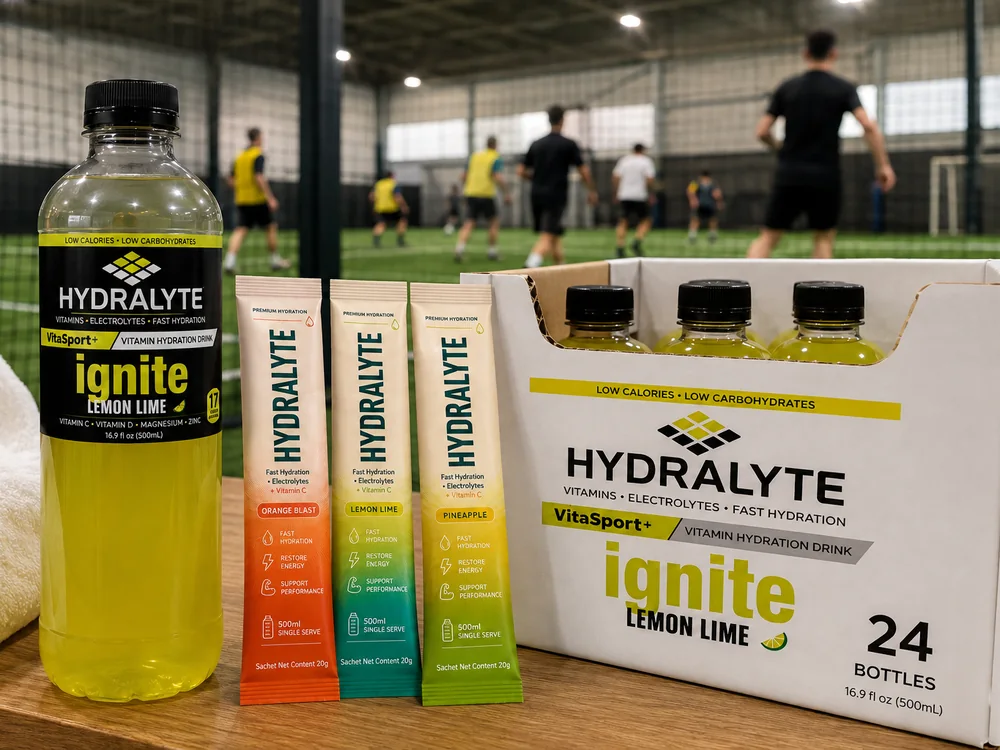
After 45 min+ of sweatingAC classes, padel, indoor football and lap swimming still run a full sweat — it just evaporates before you notice. A 20 g stick in 500 ml after a 45-minute session replaces what the towel took.
Training guide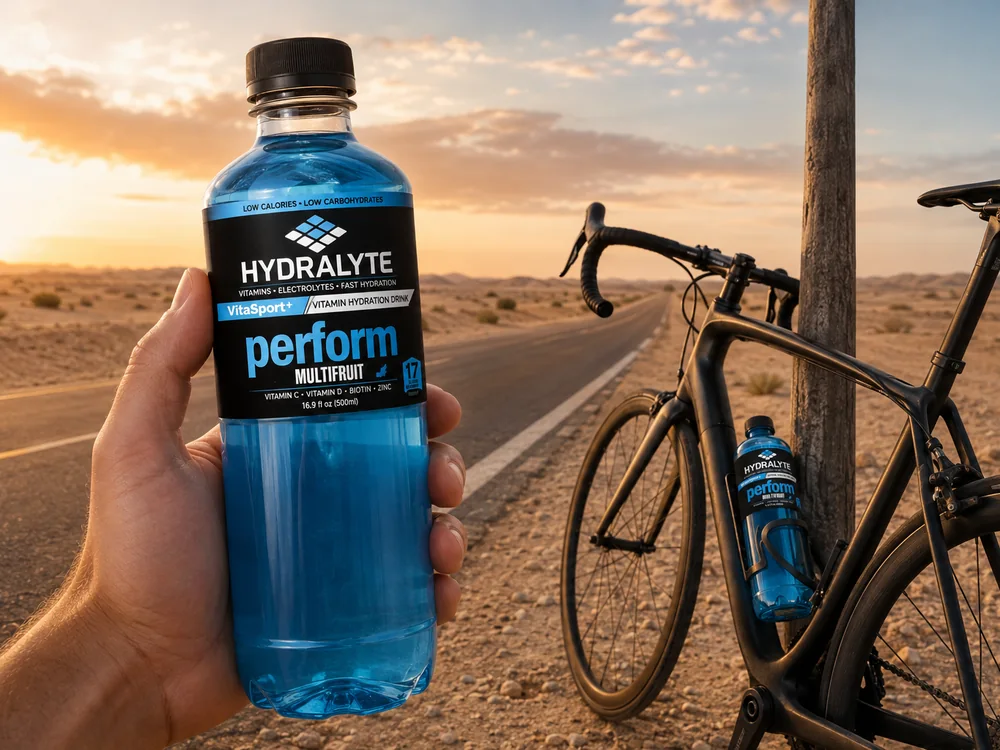
Outdoor athletes
During and after, at 35 °C+Dawn runs, long rides, golf and beach sessions sit at the top of the sweat-rate range, and plain water alone dilutes what is left. One serve during or straight after, and water in between.
Training guide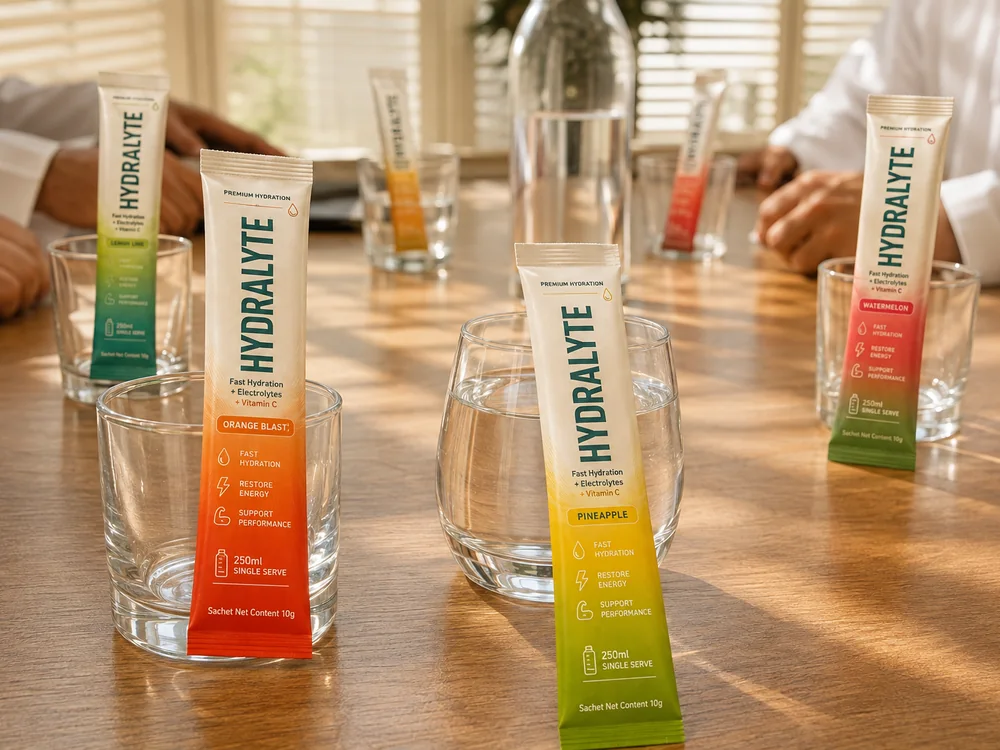
Office & travel
Long days, flights, hot commutesChilled, dry air keeps water leaving through breath and skin all day, and coffee moves it along. A short AC day needs only water; a long one, a flight or a hot commute earns a 10 g stick in 250 ml.
Personal calculator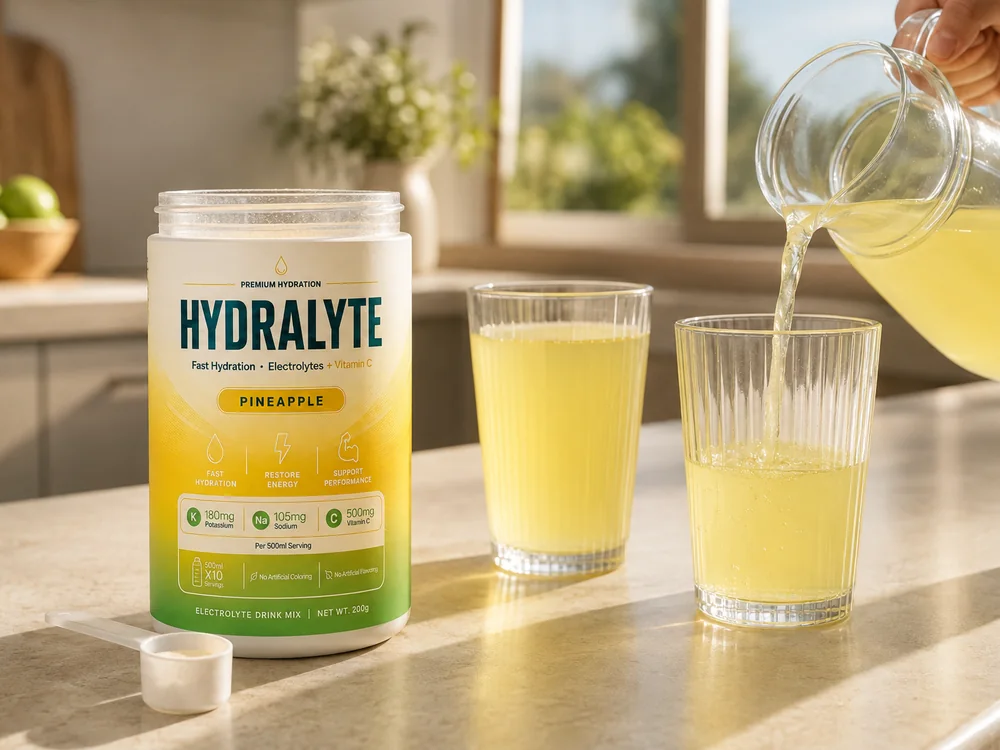
Families & daily life
3 h+ in and out of the heatSchool runs, summer errands and weekend afternoons are hours of stepping between 45 °C and 20 °C. A jar on the counter means one scoop covers whoever came in flushed — half a serve, mixed cold, for the kids.
Family guide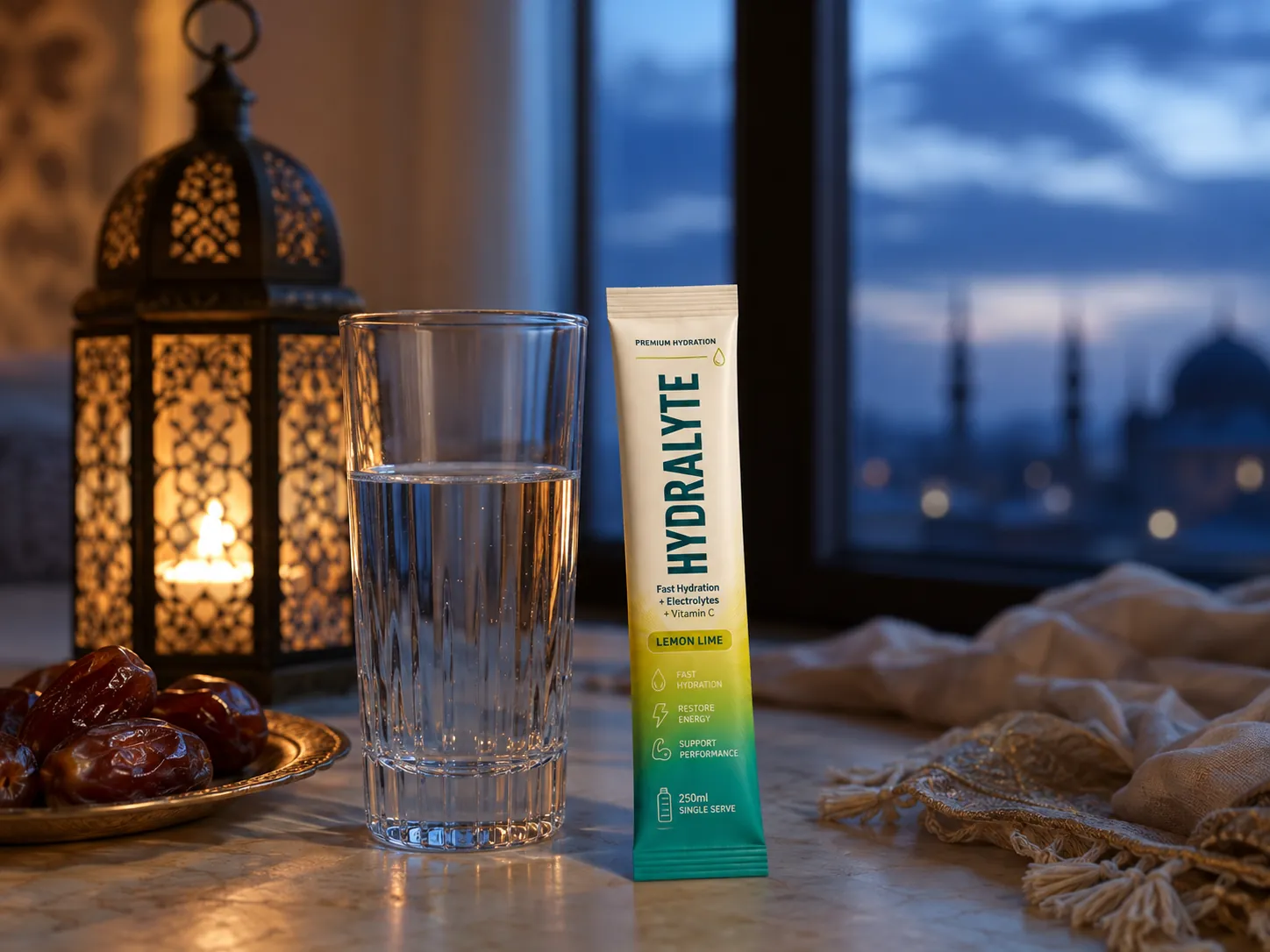
Fasting days
Iftar and suhoorA long, hot fast means nothing goes in through the hours the body loses most, and appetite is often off at iftar. One serve at iftar and one before suhoor cover the gap with the minerals a meal would normally bring.
Fasting guide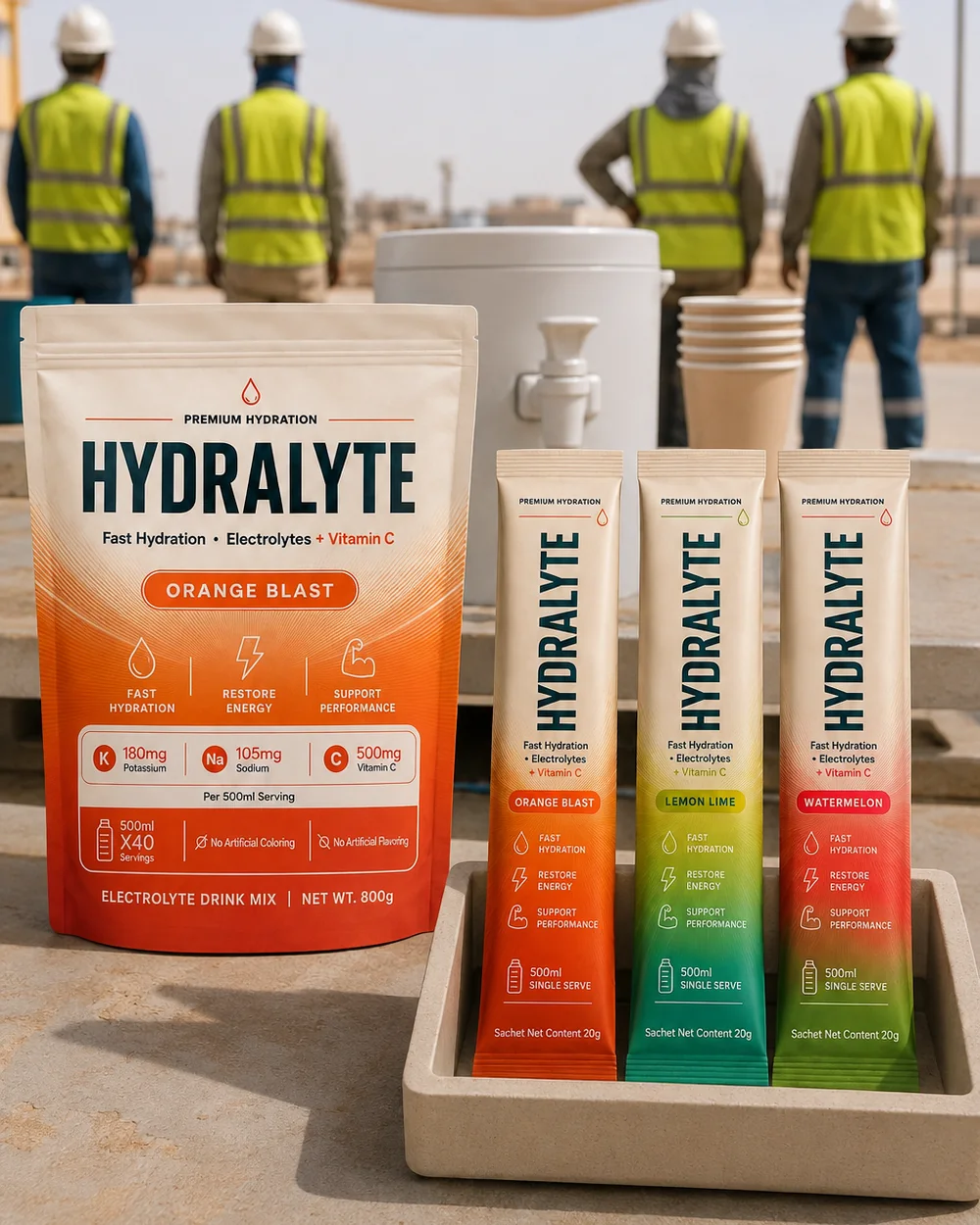
Site crews
2–3 serves spaced across a shiftConstruction, logistics and oil & gas crews lose litres a shift, and water alone rarely keeps up. Welfare-station pouches, glove-box sticks and the paperwork to match — sized by headcount, shift pattern and season.
Programme supply via For BusinessWhy not just water?
Water first. Hydralyte when the sun gets serious.
Water is what your body runs on — nothing replaces it. But in sustained heat — or 45 minutes into a class in cold, dry air — with sweat running, water alone can dilute what’s left of your electrolyte balance. Hydralyte adds back the minerals sweat takes, in a measured ratio, with 500 mg of vitamin C and nothing your body doesn’t need.
No artificial colours. No crashes. Safe for every single day.
Water, sports drink, Hydralyte — side by side
| Nutrient | Water | Sports drink | Hydralyte |
|---|---|---|---|
| Sodium | 0 mg | ~250 mg | 105 mg |
| Potassium | 0 mg | ~25 mg | 180 mg |
| Vitamin C | 0 mg | 0 mg | 500 mg |
| Sugar | 0 g | 20–35 g | Low |
| Calories | 0 | ~80 per typical serving | Low — 36 per 250 ml serve |
Sodium, potassium, vitamin C and sports-drink sugar as shown on the science page; calorie figures from the electrolyte comparison tool, quoted on their own serving basis. Values are approximate and for general comparison.
Water or a serve?
When is water enough, and when does a serve help?
Most hours of most days, water is the right answer — the formula is for the hours it isn’t. Three honest triggers decide it: sweating for 45 minutes or more, being out in 35 °C or hotter, or food and appetite being off (a fast, a skipped lunch, a child who won’t eat). One trigger is a maybe; two is a serve. A short day in air conditioning hits none of them, and water is all it needs.
- 45 min+of steady sweating — indoors or out
- 35 °C+outside, or in and out of it for hours
- Food offfasting, a skipped meal, no appetite
| Scenario | What you lose | Water is enough when… | A serve helps when… | Suggested serve |
|---|---|---|---|---|
| Office day in air conditioning | Little sweat, but chilled air is dry, so water keeps leaving through breath and skin; a lot of coffee moves it along. | It is a normal-length day with meals as usual — around two litres spread across the day covers it. | The day runs long, lunch is skipped, coffee has replaced water, or you arrived from a hot commute already flushed. | 0–1 × 10 g stick in 250 ml, mid-afternoon |
| Gym class, padel or indoor football | Moderate: 45–60 minutes of steady sweating that evaporates unnoticed in cool air. | The session is short and light — under about 30 minutes, no dripping. | You have sweated for 45 minutes or more, or it is the second session of the day. | 1 × 20 g stick in 500 ml after; water during |
| Outdoor run, ride or match | High: outdoor exercise in heat sits at the top of the sweat-rate range. | It is a short, easy effort in the cool of a winter morning. | 45 minutes or more, or any session at 35 °C or above. | 10 g in 250 ml before if starting hot; 20 g in 500 ml during or straight after |
| Summer errands and the school run | Steady and unnoticed: hours of stepping between 45 °C outside and 20 °C inside. | You are mostly indoors and drinking water through the day. | Three hours or more in and out of the heat, or a child who is flushed and will not eat. | 1 × 10 g in 250 ml per person mid-afternoon; half a serve for kids |
| Site shift, eight hours outdoors | Very high: litres over a shift, and water alone rarely keeps up. | Rarely in summer — only on a short, shaded, light-work day. | Every summer shift: 35 °C or above for hours with a sustained workload. | 2–3 × 20 g serves spaced across the shift, water in between |
| Fasting day | Nothing goes in through the hours the body loses most; appetite is often off at iftar. | The day is cool, suhoor was a proper meal and you stayed mostly indoors. | The fast is long and hot, you were active, or you ate less than usual. | 1 × 20 g in 500 ml at iftar; 1 × 10 g in 250 ml before suhoor |
Sweat-rate range from the ACSM position stand on exercise and fluid replacement (roughly 0.3–2.4 litres an hour across people, paces and conditions); daily adequate intake from EFSA (2.0 litres for women, 2.5 for men, from all sources). Serve counts stay inside the one-to-three-a-day guidance in the FAQ below. General guidance, not medical advice — if you have a medical condition, ask your doctor. Employers sizing a whole crew should use the workforce planner.
Do the maths
Six tools that turn the science into a number for you.
Body weight, session length and the day’s heat change the answer for you; headcount, shift pattern and season change it for a crew. The first four are for your own day — start with the personal calculator. The last two are for employers running a site. The calculators do the sums; you do the drinking.
Questions, answered
Why Hydralyte — the short answers.
Why not just drink water?
Water is essential and should always come first. But sweat carries minerals out with it, and in sustained heat plain water refills the volume without replacing any of them — blood sodium drifts lower with every bottle. A 500 ml Hydralyte serve puts 105 mg of sodium and 180 mg of potassium back, with chloride, calcium and magnesium, so the fluid you drink is absorbed and retained rather than passed straight through.
Is Hydralyte safe to drink every day?
Yes. Hydralyte is formulated for proactive daily use: low in sodium, with a potassium-to-sodium ratio built for prevention rather than clinical rehydration, 500 mg of vitamin C, no artificial colours and low sugar, low carb. Most people do well with one to three serves a day during heat, training or illness — and plain water the rest of the time.
How is Hydralyte different from ORS?
Oral rehydration salts are a clinical formula: sodium-heavy by design, made to rehydrate someone who is already ill, and not intended as a daily drink. Hydralyte flips the ratio for daily prevention — measured sodium, high potassium, all five sweat minerals and 500 mg of vitamin C — in four flavours people actually finish. That is why employers switch from basic ORS at welfare stations.
Can children drink Hydralyte?
Yes — the formats mix to a gentle, low-sodium electrolyte serve that suits kids from around four years up: half a 250 ml stick serve, mixed cold, on hot days, after sport or when they are unwell. If your child has a medical condition, check with your paediatrician first.
How many serves should I have in a day?
One to three, depending on the day: one before or during peak heat, one after sport or a heavy-sweat shift, and one whenever plain water isn’t cutting it. A 20 g stick or a jar scoop makes a 500 ml serve; a 10 g stick makes 250 ml. Outside heat, exercise or illness, water is all you need.
I train in an air-conditioned gym — do I still need electrolytes?
Often, yes. Cool, dry air makes sweat evaporate almost as fast as it forms, so a 45-minute class or a padel match can cost as much fluid and sodium as the same effort outdoors without ever feeling like it. Water is enough for a short, light session. After 45 minutes or more of steady sweating — or a second session in the same day — a 20 g stick in 500 ml puts back 105 mg of sodium and 180 mg of potassium alongside the water.
How much should I drink on an office day, and when does a serve help?
For a normal-length day in air conditioning, plain water is enough: adequate total water intake for adults sits around 2.0 litres a day for women and 2.5 for men (EFSA), spread across the day. Chilled air is dry, so water keeps leaving through breath and skin, and a lot of coffee moves it along — but that is a water problem, not a mineral one. A 10 g stick in 250 ml earns its place when the day runs long, lunch is skipped, or you arrived from a hot commute already flushed. One a day is plenty.
Which format should I start with?
The 20 g stick is the simplest first serve: one stick, one 500 ml bottle, no measuring. Jars suit the kitchen counter, tubes the gym bag, pouches a welfare station or a big family, and VitaSport+ is ready to drink from the cooler. The formats page lays all five out with serves per pack.
More detail lives on the science page, and the blog covers the practical side — heat, habits and how to build a serve into the day.
Quality & compliance
Formulated, registered, documented.
GSO conformant
Produced to Gulf standardisation requirements for electrolyte drinks.
Registered & traceable
Municipality-registered batches with full traceability and HSE documentation for corporate supply.
Repacked in the Gulf
Formulated for GCC conditions; quality-checked and distributed from our Dubai base.
Start with the numbers.
See exactly what’s in a serve, and how it compares to water and sports drinks.