Fasting support
Two windows.
One long day.
A long summer fast in a 45°C climate is a hydration problem with a schedule. Here’s the practical suhoor-to-iftar plan for the two windows you control — before dawn and after sunset — and what to drink in each.
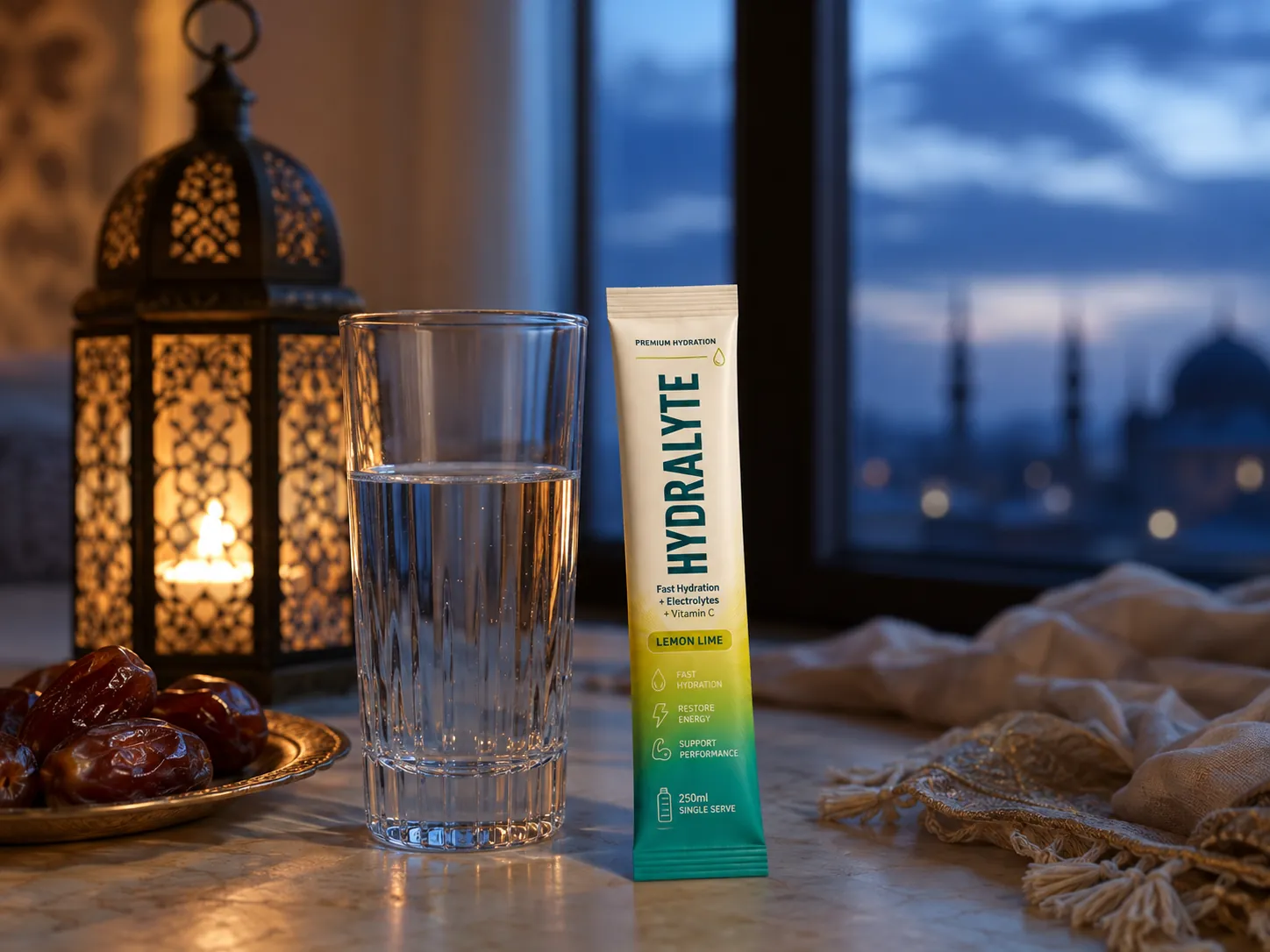
The challenge
The body keeps sweating between meals.
Through a summer Ramadan, an ordinary day still means heat, movement and the AC-to-heat transitions of a commute, a school run or a shift — fluid and mineral losses continue from suhoor to iftar, and the window to put them back is short. Water alone at suhoor can pass straight through: without sodium and a little glucose to switch on absorption, most of what you drink before dawn is gone by mid-morning. Pairing it with a balanced electrolyte serve helps the body hold what you drink.
Everything on this page sits inside the two windows. Nothing here is taken during the fasting hours; the plan is about what you drink before dawn and after sunset so that the hours between are easier. A 500 ml Hydralyte serve carries 105 mg of sodium, 180 mg of potassium and 500 mg of vitamin C with low sugar — the daily-prevention ratio the science page explains — so it fits beside a traditional table rather than competing with it. The 10 g mini and the effervescent tube suit the month best, in whichever of the four flavours you will finish. If the month also includes evening training or children in the heat, those guides cover the other clocks in the house.
The two windows
Before dawn, after sunset.
Four moments across the day — two where you drink, one where you manage the exposure, and a late one for the hottest days. The serves sit only in the windows.
Suhoor · front-load gently
One serve · end of the mealWater through the meal, then one balanced electrolyte serve to finish — a 20 g stick in 500 ml or a tablet in 250 ml. Go easy on salty dishes; they borrow from the hours ahead.
Fasting hours · manage the exposure
Nothing to drinkShade, spacing and rest where the day allows, and the AC where it does not. If work cannot move, that is what the workforce programme formats are for — see For Business.
Iftar · rebuild the balance
One serve · with the mealBreak the fast traditionally — water and dates first — then a mixed electrolyte serve with the evening meal replaces the day’s mineral losses. Low sugar, so the spread stays the star.
Late evening · top up
Optional mini · hot daysOn the hottest days, or after taraweeh and a walk, a 10 g mini in 250 ml is the third serve. Water otherwise; one to three serves a day is the ceiling.
The serve guide
How much, when, which pack.
Every value is the pack ratio from the formats page — 20 g per 500 ml, one tablet or 10 g per 250 ml — placed in the window where it does the most work.
| Window | Water | Format and amount | How often |
|---|---|---|---|
| Before dawn (suhoor) | 500 mlplus water through the meal | One 20 g stick or one level scoop; or one tablet per 250 ml | One serve, at the end of the meal |
| Fasting hours | — | Nothing — the plan lives in the two windows | Shade, spacing, restsee the business page for site programmes |
| After sunset (iftar) | 500 mlafter water and dates | One 20 g stick, or two effervescent tablets | One serve, with the meal |
| Later evening | 250 ml glass | One 10 g mini stick, or one tablet | Optional third serve on hot daysone to three a day is the ceiling |
A note on conditions. The serve is gentle — low sodium, low sugar — and built for daily prevention. If you manage a medical condition or take regular medication, check with your doctor before changing what you drink around a fast. For a target sized to your weight and the day’s heat, the personal hydration calculator does the sums.
Formats for the month
Two packs that wait for sunset.
Nothing to measure at 3 AM and nothing to spill on the iftar table. Both mix to the same serve; the mini goes in the pocket, the tube stays in the fridge door.
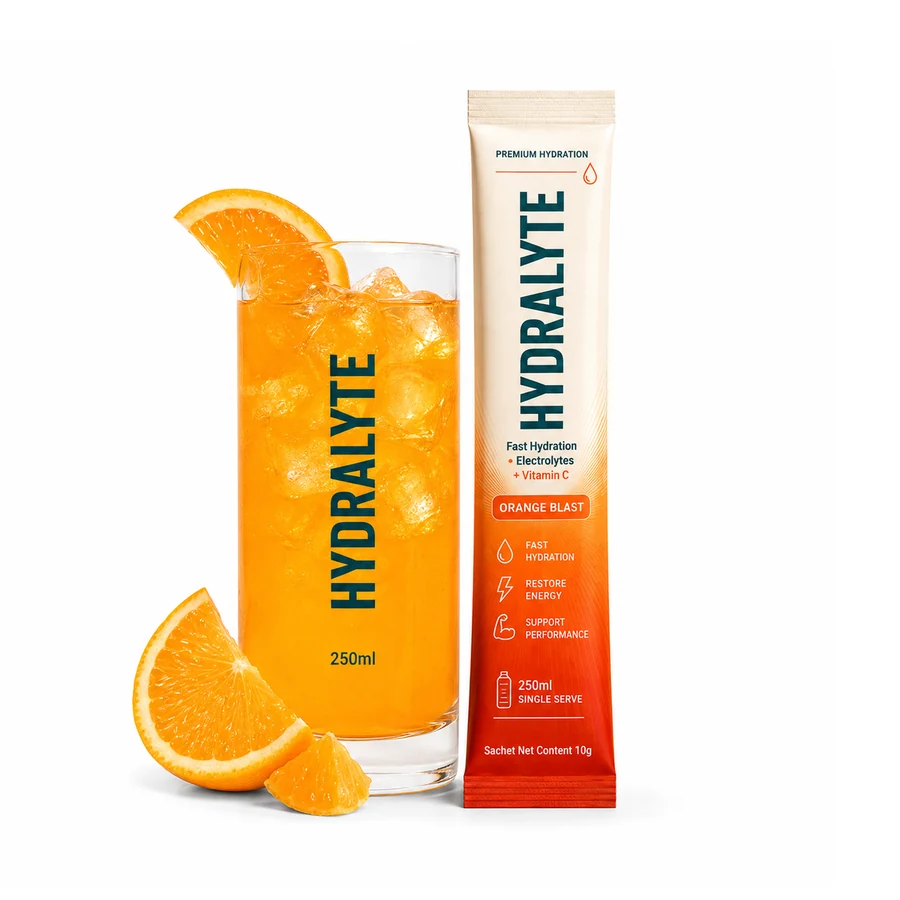
The 10 g mini stick
One 250 ml serve — a glass at suhoor, a top-up late in the evening. Flat, sealed, and light enough to keep a week of them in a bag.
Read about the mini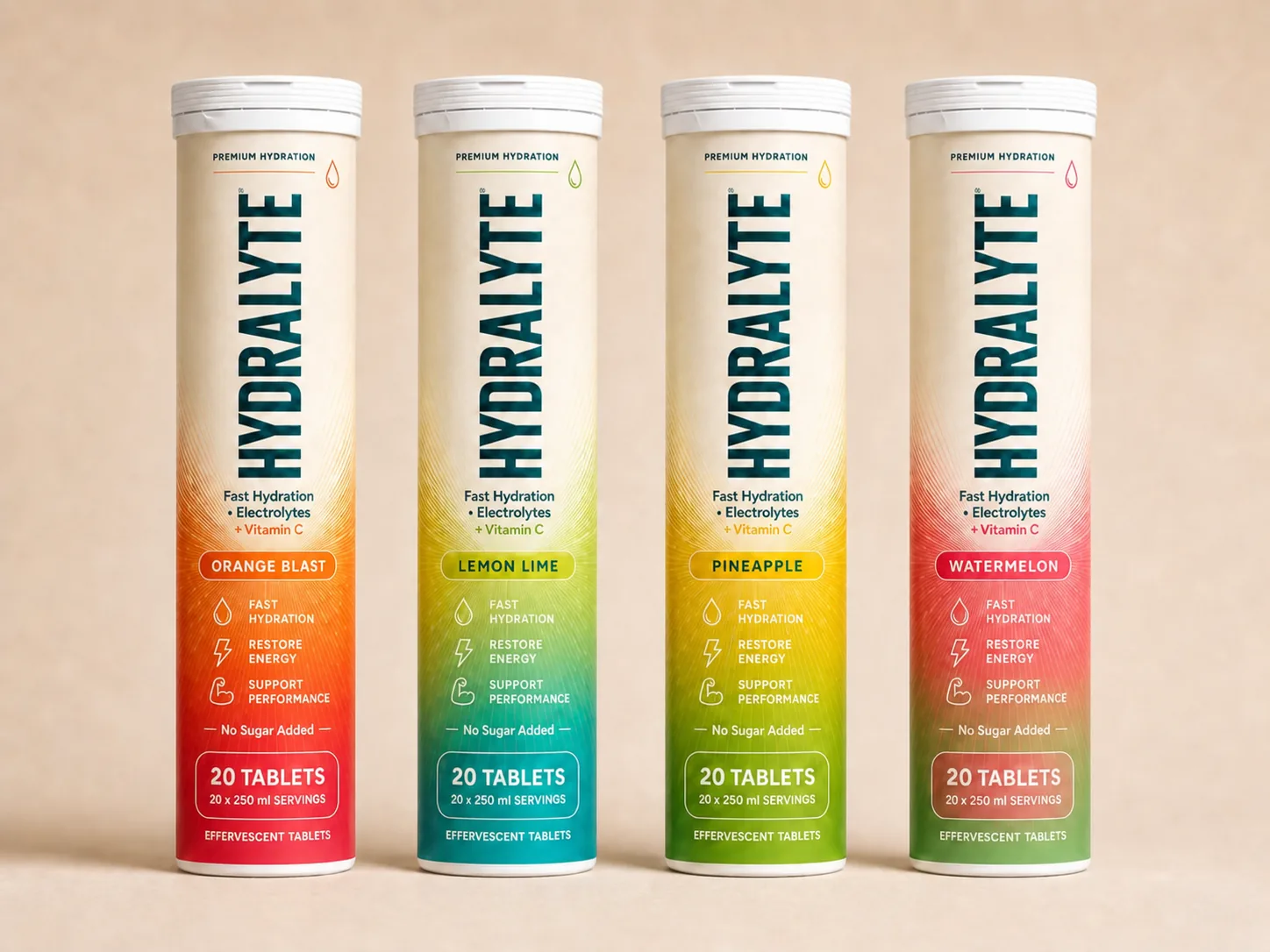
The effervescent tube
Twenty 250 ml serves in an airtight tube — drop one in, let the fizz settle, drink. Two tablets make a 500 ml bottle for the iftar table.
Read about the tube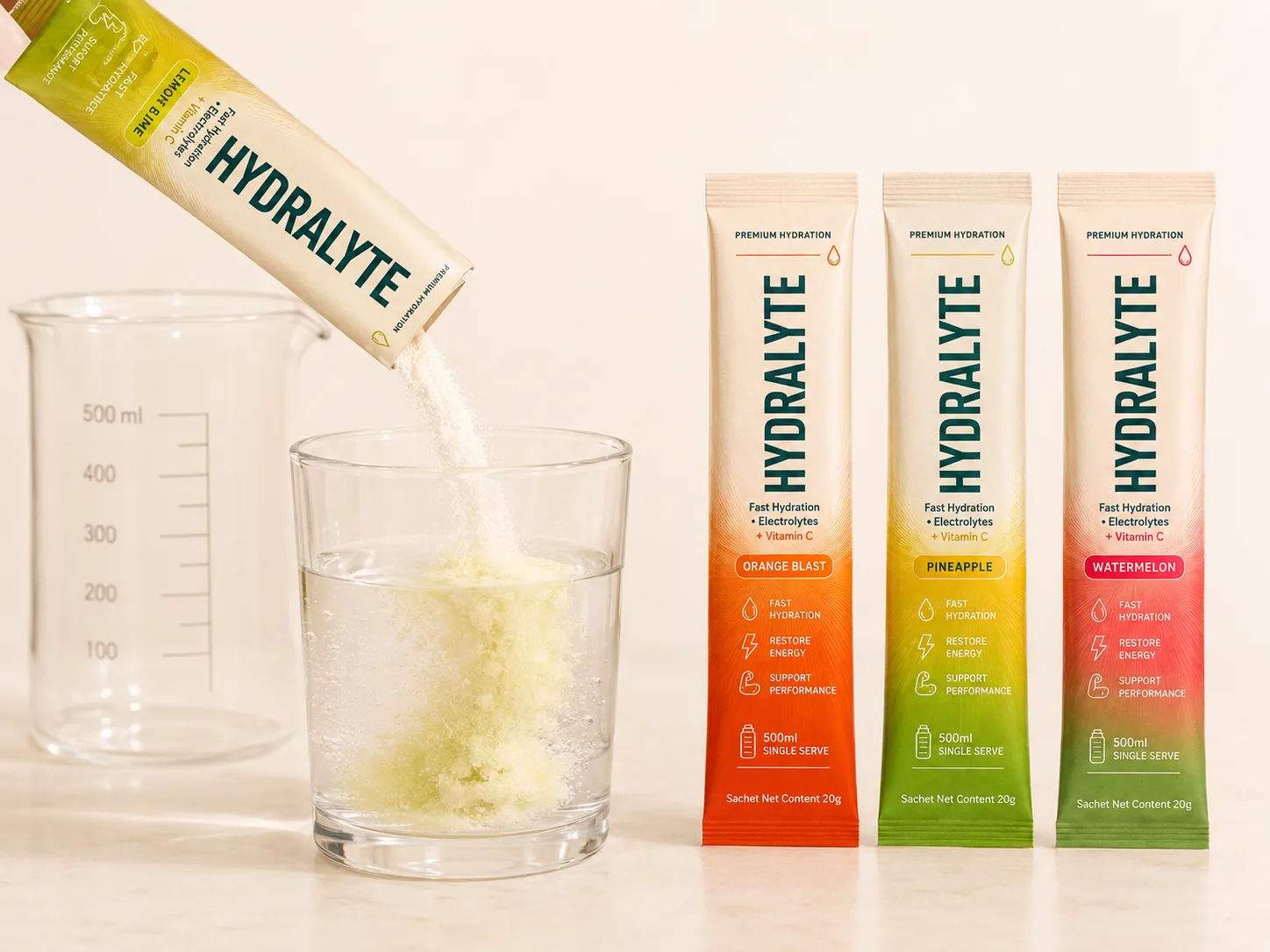
Why the serve holds
Water hydrates. Electrolytes retain.
A balanced ratio of sodium and glucose switches on the SGLT1 cotransporter in the gut wall, and every transport cycle pulls hundreds of water molecules across with it. That is why a serve at the end of suhoor does more than the same glass of plain water: the water has an escort into the bloodstream instead of a fast exit. The science page draws the mechanism.
- Potassium-led, low sodium — 180 mg against 105 mg per 500 ml — so it restores the fluid inside cells without a salt load before a long day.
- Low sugar: just enough glucose to run the pump, not a sweet drink before bed.
- 500 mg of vitamin C in every serve, in each of the four flavours.
- Mix cold and drink it fresh — thirty seconds, any format.
The playbook
Three habits for the month.
Salt light at suhoor
Salty dishes before dawn borrow from the hours ahead. Season the evening meal instead, and let the serve carry the minerals into the morning.
Cold, not sweet
A chilled glass at iftar gets finished; a sugary one crowds the meal. Low sugar means the serve sits beside the spread rather than competing with it.
Plan the month, not the day
A 200 g jar covers ten serves for the family table; a 20-tablet tube covers the fridge at work. Both wait patiently for sunset.
Fasting FAQ
The questions the month raises.
Do I drink anything during the fasting hours?
No. Everything on this page sits in the two windows — before dawn and after sunset. Nothing here is taken during the fast; the plan is about making suhoor and iftar count so that the hours between are easier.
What should I drink at suhoor?
Water through the meal, then one balanced electrolyte serve at the end — a 20 g stick in 500 ml, or a tablet in 250 ml. The sodium and glucose in the serve switch on absorption, so the body holds more of what you drink before dawn. Go easy on salty dishes; they borrow from the hours ahead.
What about iftar?
Break the fast traditionally — water and dates first — then a mixed serve with the evening meal to replace the day’s mineral losses. It is low in sugar, so it sits beside the spread rather than competing with it.
How many serves across the evening?
Most people do well with one at each window — suhoor and iftar — and a 10 g mini later on the hottest days. One to three serves a day is the ceiling during heat, training or illness; water covers the rest. If you manage a medical condition, check with your doctor first.
Which format suits the month?
The 10 g mini for the pocket and the desk drawer, the 20-tablet tube for the fridge door, and a 200 g jar for the family table — one jar makes ten 500 ml serves. All mix to the same serve in all four flavours; the formats page has the size guide.
More on the numbers, the flavours and the packs: science · flavours · formats.
More guides
Also for you.
Plan the month, not the day.
A jar covers ten serves for the family table; a stick box covers the fridge at work. Both wait patiently for sunset.