There's a strange trick pool days play on you. You spend two hours in the water, you never feel that sticky, sweaty heat you'd get on a run or a building site, and yet you climb out light-headed, a little foggy, and starving for something cold. If that sounds familiar, you're not imagining it — swimming is one of the easiest ways to get dehydrated without noticing.
This isn't about extreme sport or medical risk. It's about a simple gap in how our bodies signal thirst, and a few small habits that close it. Whether you're doing laps before work, watching the kids in the shallow end, or spending a lazy Friday poolside with the whole family, a bit of planning turns "why do I feel like this" into "that was a great pool day."
Why You Don't Feel Thirsty in the Water
On land, sweat is obvious. It beads on your skin, soaks your shirt, and reminds you to drink. In a pool, that same sweat washes away the moment it appears. Your body is still losing fluid and salts through sweat and through simple immersion in water, but the visual and sensory cues that normally nudge you toward a drink are gone.
Cooler water temperature adds to the effect. Your body reads "cool" as "not overheating," even on a day when the air around the pool is genuinely hot. The result is a mismatch: your body is quietly using fluid and electrolytes to regulate itself, but your brain isn't sending the usual "go get water" signal until you're already behind.
The Real Signs You Need to Top Up
Because thirst shows up late at the pool, it helps to watch for other cues instead of waiting to feel parched. Common signals include:
- A dull headache that appears an hour or two into a pool session
- Feeling unusually tired or "flat" after swimming, rather than pleasantly worn out
- Dry lips or a slightly dry mouth once you're out of the water and dried off
- Kids becoming cranky or losing energy faster than usual during a long pool visit
- A stronger-than-expected appetite for salty snacks right after getting out
None of these are dramatic on their own, but together they're a good nudge to build drinking into the day rather than waiting for a signal that may not come until later.
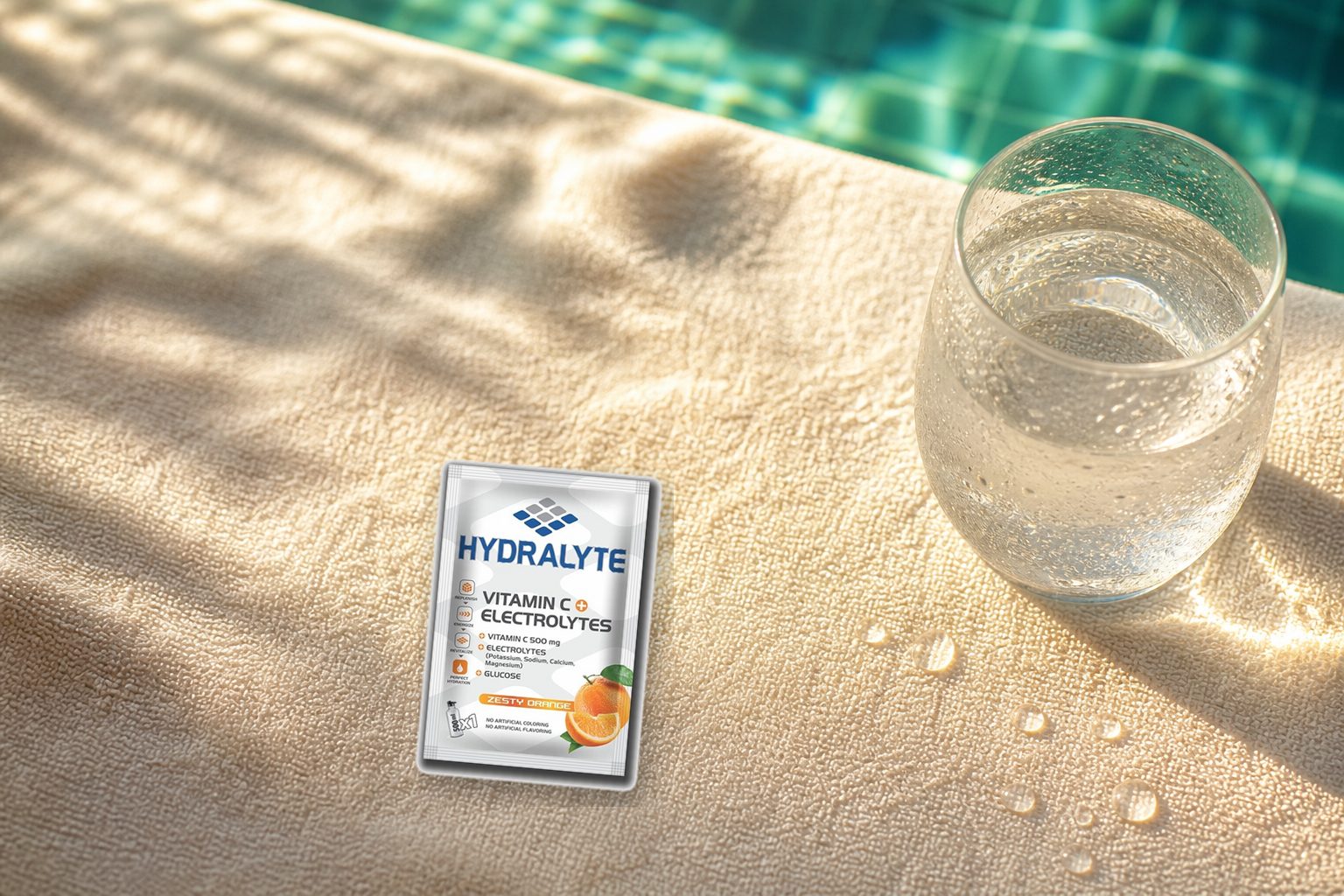
Building a Simple Poolside Hydration Habit
The easiest fix is to stop relying on thirst altogether and instead attach drinking to natural breaks in the day. You don't need a strict schedule — just a few checkpoints that are easy to remember.
Before you get in
Have a full glass of water or an electrolyte drink before you ever touch the water. This gives you a head start rather than trying to catch up later, and it's an easy habit to build into getting changed or applying sunscreen.
Between swims
Every time you take a break — reapplying sunscreen, grabbing a snack, checking on the kids — treat it as a drink checkpoint too. Keeping a bottle or a mixed sachet within arm's reach on your lounger makes this almost automatic. If you want a rough idea of how much fluid your day actually needs, the personal hydration calculator is a quick way to get a starting number based on your own routine.
After you're out
The window right after you dry off is when a lot of people reach for a sugary soft drink because they suddenly feel hungry and tired. An electrolyte drink is a better first move — it replaces what the pool quietly took and tends to settle that "flat" feeling faster than food alone.
Packing a Pool Bag That Actually Helps
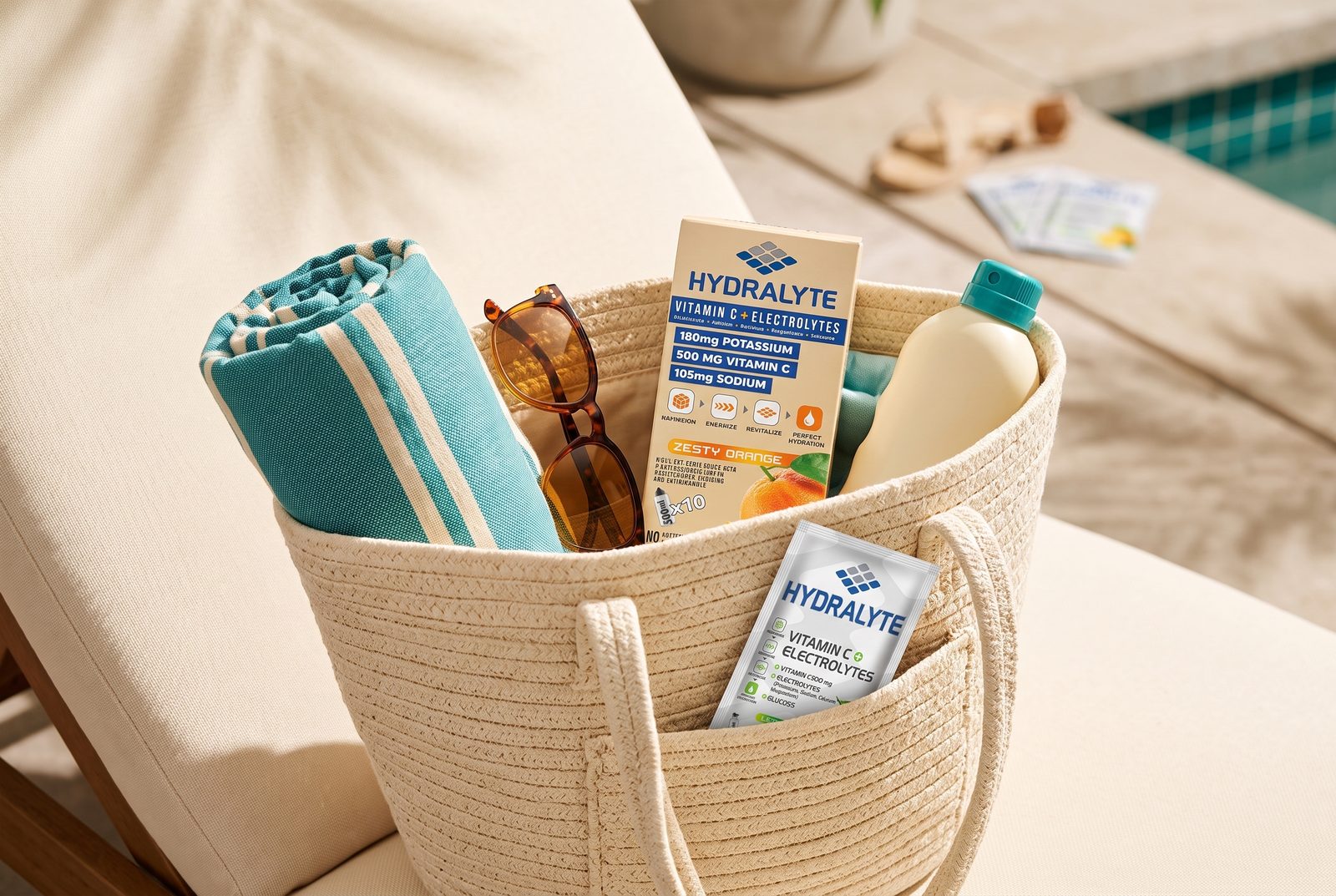
A good pool bag solves the hydration problem before it starts. A few sachets take up almost no space next to the towels and sunscreen, and they mean you're never dependent on finding a shop or a working vending machine at the pool. Individually wrapped sachets are easy to toss to older kids or teenagers so they can mix their own, while a ready-to-drink bottle is the simplest option when you want something you can hand straight over.
If you're stocking up before a summer of regular pool visits, it's worth keeping a small box of electrolyte sachets in the car or by the front door, right next to the towels, so packing the bag doesn't become another thing to remember at the last minute.
Family Pool Days: Keeping Kids and Adults on Track
Kids are often worse than adults at noticing they need a drink at the pool — they're distracted, having fun, and won't stop swimming to ask for water. A helpful approach is to make drink breaks part of the fun rather than an interruption: call everyone out of the water together for a five-minute break every hour, and use that time for a snack and a drink rather than just a snack.
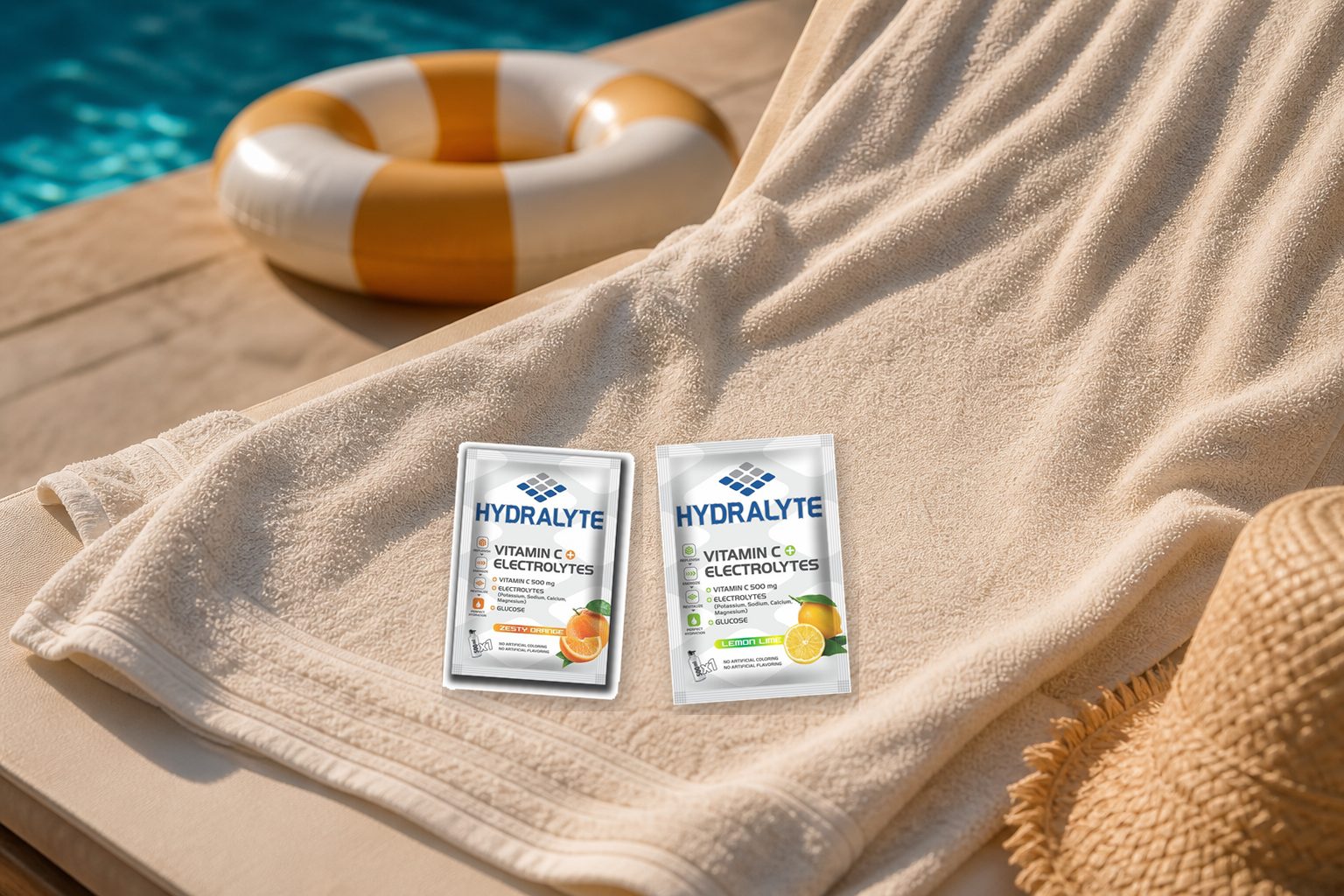
Flavour matters more than adults sometimes admit. A plain glass of water is easy to ignore after a long swim, but a lemon or orange electrolyte mix is genuinely more appealing to a tired seven-year-old, which makes the habit easier to stick to across a whole afternoon. If you want more ideas on building this into everyday routines, our guide on electrolytes for kids covers what parents usually want to know before making it a regular thing.
A Few Easy Habits for Every Pool Day
- Drink before you get in — don't wait until you're already tired
- Set a break every hour and treat it as a drink checkpoint, not just a snack stop
- Keep sachets or a bottle within reach on your lounger, not buried in the bag
- Reach for an electrolyte drink first when you get out, before sugary snacks
- Make it a group habit — call everyone out for a break together, especially with kids
Making It a Habit, Not a Fix
None of this requires overthinking your pool day. The goal is simply to stop treating thirst as your only signal and instead build a few automatic checkpoints into the time you spend in and around the water. Pack a sachet or two, drink before you get in, take a real break every hour, and reach for something with electrolytes rather than plain water alone once you're out.
Do that a few times and it stops being a rule you have to remember — it just becomes part of how your family does pool days. And that's really the whole point: fewer foggy afternoons, more time actually enjoying the water.
<span class="hl-int-links" aria-hidden="true"></span>