As a parent in the UAE, you know how intense our heat can be. Keeping your children hydrated isn't just about giving them water—it's about understanding what their bodies actually need to stay healthy and energised. If you've ever wondered about electrolytes for kids, you're not alone. Many parents are curious about whether their children need more than plain water, especially during hot months, sports activities, or when they're unwell.
In this guide, we'll explore what electrolytes are, why they matter for children, and how to make smart hydration choices for your family.
Electrolytes for Kids: What Parents Need to Know
Children's bodies are different from adults' in important ways for hydration. Kids have a higher surface area relative to their body weight, which means they lose fluids more quickly through perspiration. They're also less aware of thirst signals and may become absorbed in play, forgetting to drink until they're already dehydrated.
The Gulf climate adds another layer of challenge. With temperatures regularly exceeding 40°C in summer, your child's body works harder to regulate temperature, and fluid loss accelerates. Whether your child is playing outdoors, attending school sports events, or simply spending time in air-conditioned environments (which can be dehydrating too), maintaining proper hydration is essential.
Children are also more sensitive to the effects of dehydration because their bodies have less capacity to adapt to fluid loss. What might be mild dehydration in an adult can affect a child's energy, concentration, and overall wellbeing more noticeably.
Signs of Dehydration in Children
Recognising early signs of dehydration helps you respond quickly. Watch for these common indicators:
Early signs: Mild thirst, slightly dry lips or mouth, normal or slightly pale skin, playing less energetically than usual.
Moderate signs: Increased thirst, noticeably dry lips and mouth, fewer bathroom visits (fewer than usual wet nappies in toddlers, or infrequent urination in older children), slightly sunken eyes, lethargy or crankiness.
Severe signs: Extreme thirst or difficulty drinking, very dry mouth and lips, no urination for 8+ hours, sunken eyes, dizziness or confusion, rapid or weak pulse. If you notice severe signs, seek medical attention immediately.
In the UAE heat, it's easy for dehydration to sneak up on you. The dry climate means sweat evaporates quickly, and children may not realise how much fluid they're losing.
How Much Fluid Do Children Need (by Age Group)
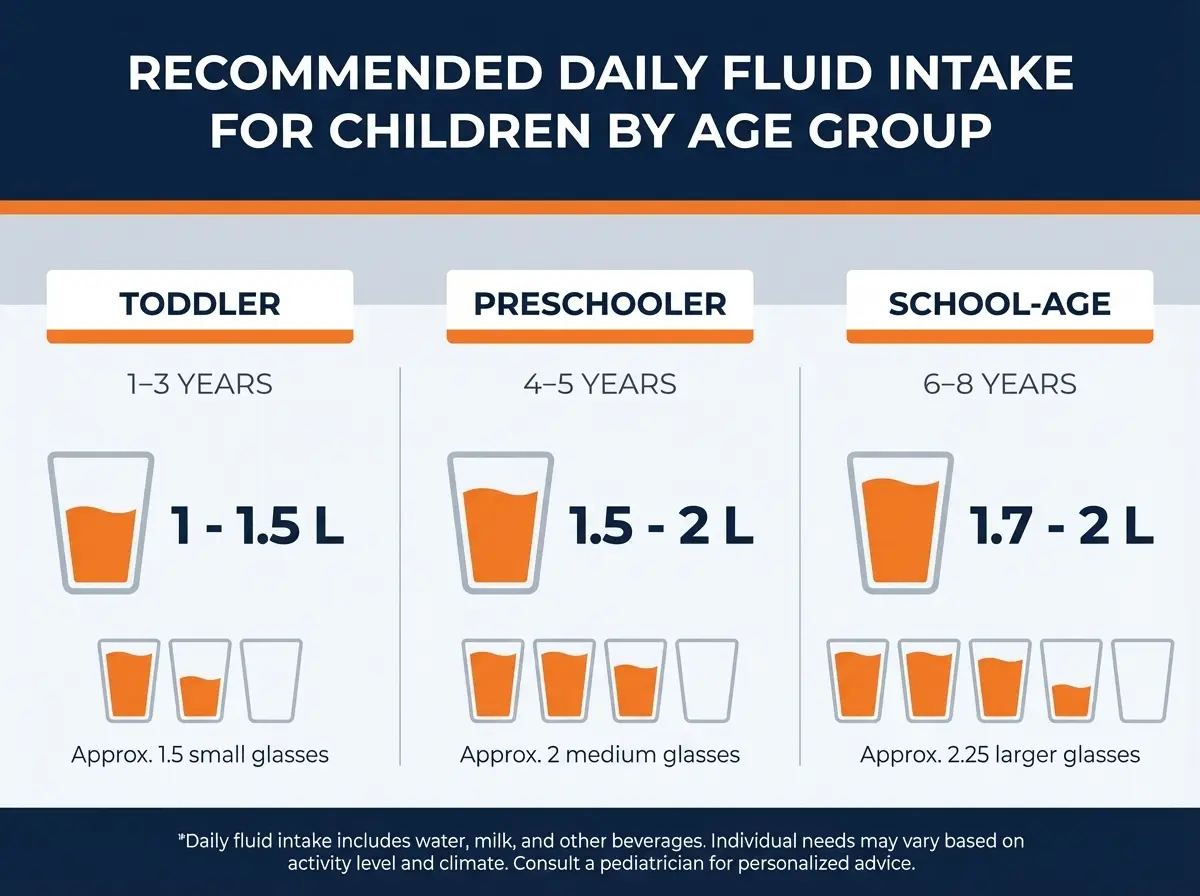
Hydration needs vary significantly by age. The following are general guidelines for daily fluid intake in moderate climates, though in the UAE heat, your child may need more:
Toddlers (1-3 years): Approximately 1-1.5 litres (4-6 cups) daily, with a significant portion from breastmilk or formula if still being offered.
Preschoolers (4-5 years): Around 1.5-2 litres (6-8 cups) daily from all beverages and foods containing water.
School-age children (6-8 years): Roughly 1.7-2 litres (7-8 cups) daily.
Older children and teens (9+ years): Similar to adult requirements, around 2-2.5 litres (8-10 cups) daily, with teen boys often needing slightly more.
During hot weather, illness, or physical activity, these amounts should increase. The easiest way to monitor hydration is by observing urine colour—pale and plentiful suggests good hydration, while dark yellow indicates your child needs more fluids.
When Electrolytes Are Appropriate for Kids
Plain water is perfectly adequate for everyday hydration. However, electrolytes become valuable in specific situations:
During intense physical activity: If your child plays sports, trains regularly, or participates in outdoor activities lasting more than 60 minutes, especially in hot weather, an electrolyte drink can help maintain performance and recovery.
In extreme heat: During the intense UAE summer months or during special events in hot conditions, electrolyte drinks support fluid retention and help the body maintain electrolyte balance more effectively than water alone.
During illness: When children experience diarrhoea, vomiting, or fever, their bodies lose electrolytes alongside fluids. An age-appropriate electrolyte drink aids rehydration more effectively than water during recovery.
During travel: Long flights or car journeys can dehydrate children. In-flight air circulation is particularly drying, and electrolyte drinks provide balanced hydration during and after travel stress.
In these situations, an electrolyte drink containing a balance of sodium, potassium, and glucose helps the body absorb fluids more efficiently and maintain the electrolyte balance necessary for healthy functioning.
What to Look for in a Child-Safe Electrolyte Drink
Not all electrolyte drinks are created equal. When choosing one for your child, consider these key factors:
Age-appropriate formulation: Look for products specifically designed for children. Different age groups have different needs, and a formula created for kids should reflect this. Check our formula and safety information to understand what goes into a well-designed electrolyte drink for children.
Balanced electrolyte profile: A good children's electrolyte drink should contain sodium and potassium in appropriate proportions to support healthy fluid balance. These are the electrolytes lost primarily through sweat and are essential for muscle and nerve function.
Moderate sugar content: While glucose helps with fluid absorption, excessive sugar is unnecessary. Look for formulations that include just enough carbohydrate to aid absorption without loading your child with excess calories or contributing to dental health concerns.
No artificial nasties: Choose drinks without artificial colours, artificial sweeteners, or unnecessary additives. Simple, clean ingredients are best for developing bodies.
Genuine taste appeal: A drink your child actually enjoys will be used when needed. Natural fruit flavours are often preferable to artificial ones.
Trusted sourcing: Choose electrolyte drinks from reputable brands with transparent sourcing and manufacturing practices. When you're caring for your child's health, you deserve to know exactly what you're giving them.
If you have questions about which product might suit your child's specific age or situation, our team is happy to help. Get in touch with us for personalised guidance, or browse our range of hydration products.
Frequently Asked Questions
Are electrolytes necessary for my child every day?
No. For everyday hydration in normal conditions, plain water is sufficient and is what most children should be drinking regularly. Electrolyte drinks are most beneficial during specific situations like sports, illness, or extreme heat—think of them as a supplement for when plain water isn't quite enough.
Can my child have too much electrolyte drink?
Yes, excessive electrolyte intake can be counterproductive. Regular, excessive consumption of electrolyte drinks (when plain water would suffice) can contribute to unnecessary sodium and calorie intake. Use them purposefully—during activity, illness, or heat—rather than as an everyday replacement for water.
What's the difference between sports drinks and electrolyte drinks designed for kids?
Sports drinks are often formulated for athletic performance in older children and adults, typically with higher carbohydrate and sugar content for energy during competition. Children's electrolyte drinks are formulated with younger bodies in mind—lower overall electrolyte concentrations, gentler formulations, and appropriately balanced nutrients for recovery and rehydration without the heavy carbohydrate load. For young children, a dedicated children's formula is usually the better choice.
Final Thoughts
Keeping your child hydrated in the UAE climate is one of the most important health habits you can establish. Understanding when plain water is sufficient and when a good electrolyte drink adds value puts you in control of your child's hydration strategy.
Every child is different, so pay attention to your own child's signs of thirst, activity level, and health needs. When you need support—whether to choose the right hydration product or to discuss your child's specific situation—we're here to help.
Ready to explore hydration solutions for your family? Shop our range or contact us with your questions. School canteens, sports clubs, and wellness coordinators are also welcome to reach out about our bulk options.
References:
World Health Organization – Drinking Water Fact Sheet
American Academy of Pediatrics
This article is for informational purposes only and does not constitute medical advice. Consult a healthcare professional for personalised guidance.
The Hydralyte Advantage for UAE and GCC Conditions
Hydralyte is a potassium-rich, low-sodium isotonic electrolyte formula designed specifically for proactive daily hydration — not just reactive emergency recovery. With 500mg Vitamin C per serve and a low-sugar formula, it provides comprehensive hydration support for anyone living, working, or exercising in the extreme heat of the UAE and GCC.
Unlike traditional ORS sachets designed for acute illness, or high-sugar sports drinks designed for athletic performance, Hydralyte is formulated for safe, repeated daily consumption across the entire summer season. This makes it the preferred choice for workplace hydration programs, family use, and fitness enthusiasts across the region.
Available in three flavours (Orange Blast, Lemon Lime, Pineapple) and four pack sizes, Hydralyte is stocked online and across GCC retail, with bulk corporate supply available for businesses with 50+ workers.
🏗 Protecting Outdoor Workers? Hydralyte supplies bulk electrolyte programs for construction, oil & gas, logistics, and manufacturing companies across the GCC — with full MoHRE compliance documentation. See Industry Hydration Programs →