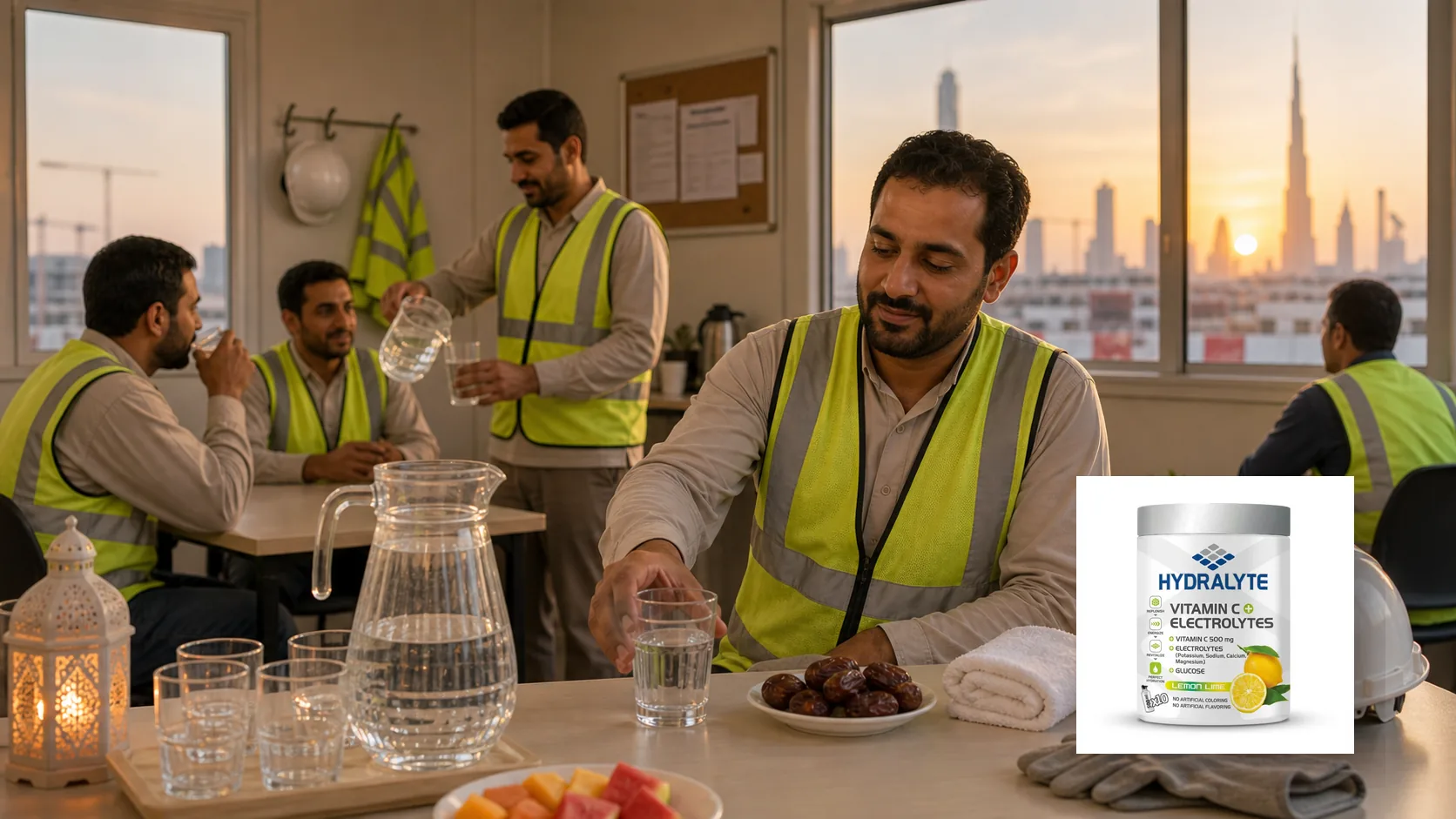
Hydration Guide for Ramadan: How to Stay Hydrated While Fasting
Ramadan is a sacred month of spiritual reflection, self-discipline, and community. During daylight hours, Muslims abstain from food and water as part of their fast—a beautiful practice that strengthens faith and builds empathy for those with fewer resources. However, fasting for up to 15 hours in the UAE's warm climate presents real physiological challenges, especially around maintaining proper hydration.
When you don't drink fluids during the day, your body enters a fasting state where it relies on stored water and electrolytes to function. In hot weather, this becomes more pronounced because you lose additional fluid through perspiration. The result? Thirst, fatigue, headaches, and reduced concentration—sensations many experience by mid-afternoon during the fasting hours.
The good news is that understanding how your body works during fasting—and preparing strategically during non-fasting hours—can help you maintain energy, focus, and wellbeing throughout Ramadan. Hydration isn't about replacing the spiritual practice; it's about supporting your body so you can honor the fast fully and comfortably.
What Happens to Your Body During a Long Fast
Your body is remarkably adaptive. When you stop eating and drinking, it shifts into conservation mode. Water and electrolytes—minerals like sodium, potassium, and magnesium—are essential for every cell function: nerve signals, muscle contractions, heart rhythm, and fluid balance.
During extended fasting, your body draws on its water reserves. If those reserves aren't replenished during eating windows, dehydration can develop. Early signs include thirst, dry mouth, reduced urine output, fatigue, and difficulty concentrating. In the UAE climate, where temperatures often exceed 35°C during Ramadan, fluid loss accelerates even after sunset when you're no longer fasting and are active again.
Electrolytes work alongside water to maintain cellular hydration and muscle function. When you fast and then eat again, your electrolyte balance can fluctuate. This is why simply drinking water alone during non-fasting hours isn't always optimal—your body benefits from a balanced approach that includes both water and electrolytes.
According to research from the World Health Organization on hydration during extended fasting periods, maintaining fluid and electrolyte intake during eating windows significantly supports energy levels and physical performance during fasting hours.
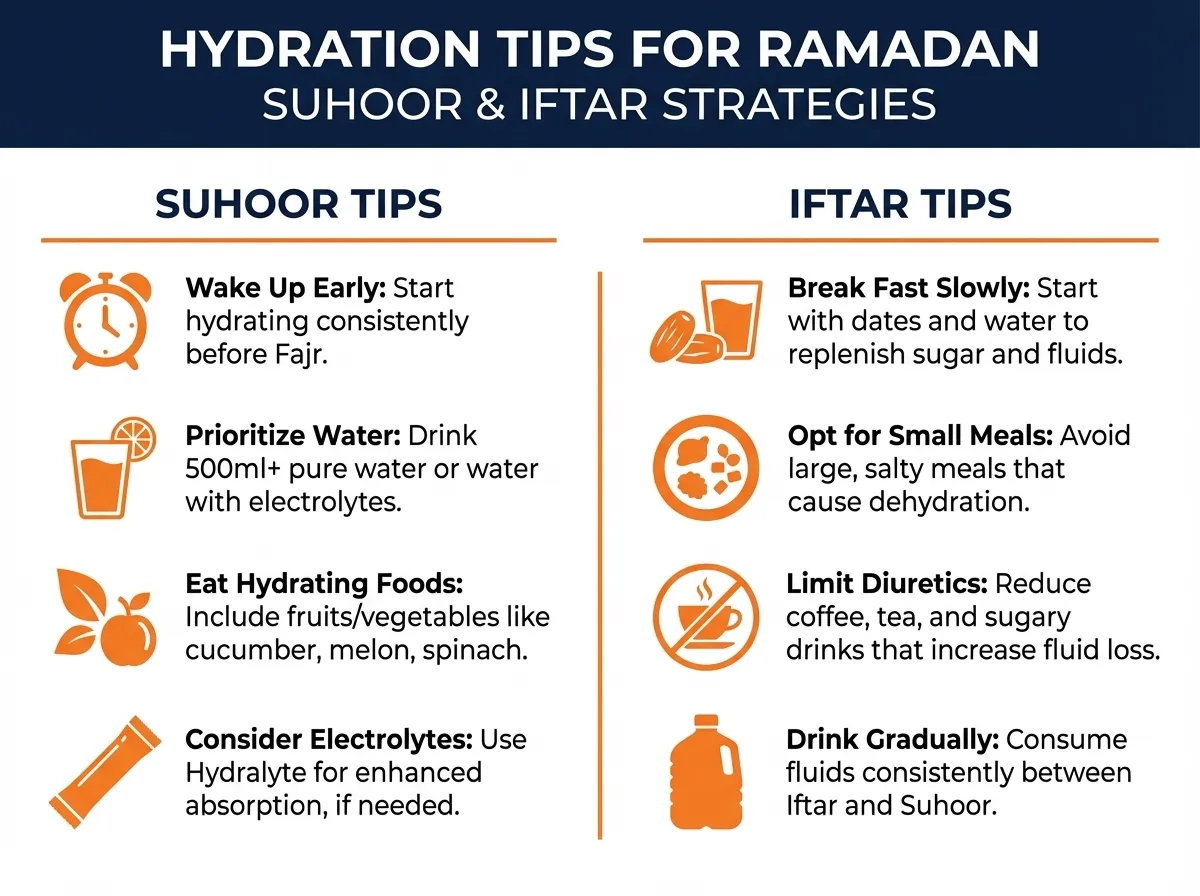
Best Practices at Suhoor (Pre-Dawn Meal)
Suhoor is your first opportunity to hydrate strategically. Eaten in the early morning before the fast begins, this meal sets the tone for your entire day. Here's how to approach it:
Drink water consistently. Aim for a full glass of water with your Suhoor meal and another glass 20–30 minutes after eating. This gives your body time to absorb the fluid before the fast begins.
Include water-rich foods. Dates, cucumbers, melons, and yogurt all contain natural water and nutrients. They're traditional choices for good reason—they nourish and hydrate together.
Add electrolytes strategically. If you choose a hydration drink, consume it during Suhoor rather than relying solely on water. Electrolytes help your body retain fluids more effectively throughout the fasting hours. Learn more about why electrolytes matter at our guide to electrolyte hydration.
Avoid high-sodium and high-sugar processed foods at Suhoor. These can increase thirst during the fast and cause energy crashes. Stick to balanced whole foods: proteins, healthy fats, and complex carbohydrates.
Limit caffeine and diuretics. Coffee, strong tea, and energy drinks can increase urination and lead to net fluid loss. If you enjoy these, have them well after Suhoor so they don't compromise your hydration during the fast.
Best Practices at Iftar (Breaking the Fast)
Iftar is when you break your fast at sunset—often with family and community. This is also your key window to rehydrate. Many people make the mistake of overloading on food immediately, which can strain digestion and actually slow fluid absorption. A thoughtful approach works better:
Start with water and dates. This is the Sunnah and also the most physiologically sound approach. Dates provide natural sugars that help your body begin absorbing fluids again, while water rehydrates you gently.
Pause before the main meal. Wait 15–20 minutes after your first dates and water, then enjoy your main meal. This pacing allows your digestive system to adjust and helps your body absorb fluids more effectively.
Drink hydration fluids alongside food. During and after your main Iftar meal, alternate between water and a hydration drink that contains electrolytes. This combination supports faster, more complete rehydration than water alone—especially important after a long fast in heat.
Continue hydrating into the evening. Don't assume you're fully hydrated after Iftar. Drink steadily throughout the evening, between Iftar and Taraweeh prayers or other activities. Aim for 6–8 glasses of water (or equivalent hydration beverages) spread across your eating window.
Monitor your hydration status. Check the color of your urine—pale yellow indicates good hydration, while dark yellow suggests you need more fluids. This simple check helps you adjust intake throughout the evening.
What to Drink and What to Avoid
Best choices:
Water remains your foundation. Aim for at least 2–3 liters during eating hours (Suhoor and Iftar). Hydration drinks with balanced electrolytes support faster, more complete rehydration—especially valuable after a long fast. Browse our hydration products to find options suited to your preferences.
Herbal teas, unsweetened juices diluted with water, and milk also contribute to your daily fluid intake. Coconut water and dates provide natural electrolytes and carbohydrates.
Avoid or minimize:
Sugary drinks and soft drinks cause rapid blood sugar spikes, leading to energy crashes and increased thirst. Heavily caffeinated beverages can increase urination and net fluid loss. Alcohol is not consumed during Ramadan, but it's worth noting that it's a diuretic. Overly salty foods increase thirst without providing balanced hydration support.
The goal is steady, consistent hydration throughout your eating windows—not gulping large volumes all at once, which your body can't absorb efficiently.
Frequently Asked Questions
Can I drink water during fasting hours if I'm unwell?
Islamic jurisprudence permits breaking the fast for health reasons. If you experience dizziness, severe headache, or health concerns, consult a healthcare professional. Your wellbeing matters, and many Islamic scholars recognize that protecting your health is consistent with the spirit of Ramadan. For guidance on your specific situation, reach out to us or speak with your healthcare provider and religious advisor.
How much should I drink if I work outdoors in the heat?
If your work involves physical labor or time in the sun, your fluid needs are higher. Prioritize aggressive hydration during Suhoor—aim for 500ml of water plus a hydration drink with electrolytes. During Iftar, increase your intake to compensate for daytime losses. Start rehydrating immediately after sunset with water and dates, then continue steadily through the evening. Discuss any concerns with your employer or healthcare provider.
Is it better to drink one large amount at Suhoor or Iftar, or spread it throughout the eating window?
Spreading fluid intake throughout your eating window—from Suhoor through the evening—is far more effective. Your body can absorb and retain fluids better when consumed gradually. Drinking 1–2 liters at once leads to excess urination and wasted hydration. Aim for a glass of water or hydration drink every 30–45 minutes during eating hours.
Conclusion: Hydration Supports Your Fast
Staying hydrated during Ramadan isn't about bypassing the fast—it's about honoring your body so you can fully engage with this sacred month. With strategic hydration at Suhoor and Iftar, balanced electrolyte intake, and consistent fluid consumption throughout your eating window, you can minimize fatigue, maintain focus, and experience Ramadan with greater ease and presence.
Your well-being during the fasting hours reflects the care you take during eating hours. Make hydration a priority, and feel the difference.
Ready to optimize your Ramadan hydration? Explore our hydration solutions or learn why electrolytes matter.
For bulk orders and corporate wellness programs during Ramadan, contact our team.
This article is for informational purposes only and does not constitute medical advice. Consult a healthcare professional for personalised guidance.
Understanding Fasting-Related Dehydration in UAE Summers
When Ramadan falls during the UAE summer months, outdoor workers face a compounded challenge: they cannot consume any liquids during daylight hours while still being exposed to extreme heat. This creates a dehydration deficit that accumulates daily and cannot be fully recovered during the shorter nighttime eating window.
Research indicates that fasting workers in GCC heat can experience fluid deficits of 3–5% of body weight by the end of a working day — well beyond the 1–2% threshold at which cognitive impairment begins. This makes pre-dawn hydration (Suhoor) and post-sunset recovery (Iftar) absolutely critical.
Hydralyte's potassium-rich isotonic formula is particularly valuable during Ramadan because it supports rapid and complete electrolyte replacement in a limited consumption window. Unlike high-sugar sports drinks that cause blood sugar spikes and subsequent crashes, Hydralyte provides sustained hydration support with low sugar.
Employer Obligations During Ramadan in the UAE
UAE labour law does not exempt employers from heat safety obligations during Ramadan. Employers must still provide shaded rest areas, approved rehydration materials, and adjusted work schedules. The MoHRE midday work ban (12:30–3:00 PM, June 15–September 15) applies regardless of Ramadan timing.
Practical steps include: offering Hydralyte sachets at Suhoor for pre-loading, providing Hydralyte at Iftar break stations for rapid recovery, and ensuring non-fasting workers still have access to electrolytes throughout the day. Document all Ramadan-specific hydration provisions as part of your MoHRE compliance records.
🏗 Protecting Outdoor Workers? Hydralyte supplies bulk electrolyte programs for construction, oil & gas, logistics, and manufacturing companies across the GCC — with full MoHRE compliance documentation. See Industry Hydration Programs →