Hydration Guide for Construction Workers in UAE Heat
Construction work in the UAE combines multiple challenges: intense physical labour, restrictive PPE that traps heat, direct sun exposure for hours at a time, and coastal humidity that makes evaporative cooling (sweating) less effective. A construction worker carrying heavy materials, operating machinery, or performing repetitive tasks in 45°C heat can lose up to 2–3 litres of sweat per hour—sometimes more.
Unlike workers in air-conditioned environments who gradually lose fluids, construction workers experience rapid, visible fluid loss. When that loss isn't replaced promptly and completely, dehydration develops within hours. And dehydration is the gateway to heat exhaustion and heat stroke.
The challenge is this: construction sites don't pause for hydration. Work schedules are tight. Supervisors focus on timelines. Workers push through discomfort. Without a structured, mandatory hydration programme, workers become chronically underhydrated, and their risk of <a href="/tools/heat-stress-assessment">heat stress</a> climbs steadily.
How Much Fluid Does a Construction Worker Need?
The amount of fluid a construction worker needs depends on several factors: the intensity of work, the heat level, humidity, PPE worn, and individual metabolic factors. However, research and occupational health guidelines provide practical frameworks.
In extreme UAE summer heat (40–45°C): A worker performing moderate to heavy labour typically needs 500–1,000ml per hour. This equals 4–8 litres over an 8-hour shift, which aligns with the visible sweat loss observed on construction sites.
In moderate heat (30–39°C): Fluid needs drop to 300–750ml per hour, or 2.5–6 litres per shift.
In cooler conditions (below 30°C): Fluid needs are lower, around 200–500ml per hour.
These figures assume continuous or frequent work. Rest periods and shade naturally reduce fluid loss. However, many construction sites maintain long shifts with minimal shade, meaning workers must consume fluids at the higher end of these ranges.
The practical takeaway: In peak summer, assume 6–8 litres of fluid per construction worker per shift. Plan your hydration supply accordingly.
Why Water Alone Is Not Enough on Site
Water is essential—it forms the foundation of any hydration strategy. However, in conditions of heavy sweating and prolonged heat exposure, water alone has limitations.
During intensive construction work, workers lose not just water but also electrolytes—primarily sodium, potassium, and magnesium. These minerals are critical for:
- Maintaining nerve and muscle function (preventing cramping)
- Regulating fluid balance inside and outside cells
- Supporting cardiovascular stability
- Maintaining alertness and cognitive function
Drinking only water without electrolytes can paradoxically increase urinary losses and reduce the body's ability to retain fluids. Workers may feel fuller but remain dehydrated at the cellular level. Additionally, consuming large volumes of plain water without carbohydrates can lead to a drop in blood glucose, causing fatigue and reduced work capacity.
Electrolyte drinks—which contain a balanced mix of sodium, potassium, and carbohydrates—address these gaps. They enhance fluid retention, support muscle function, and help maintain energy during prolonged exertion. To dive deeper into the science behind hydration, visit our comprehensive hydration guide.
A Practical Hydration Schedule for Site Workers
A successful hydration programme on a construction site must be simple, measurable, and enforced. Here's a practical schedule that works across different shift patterns.
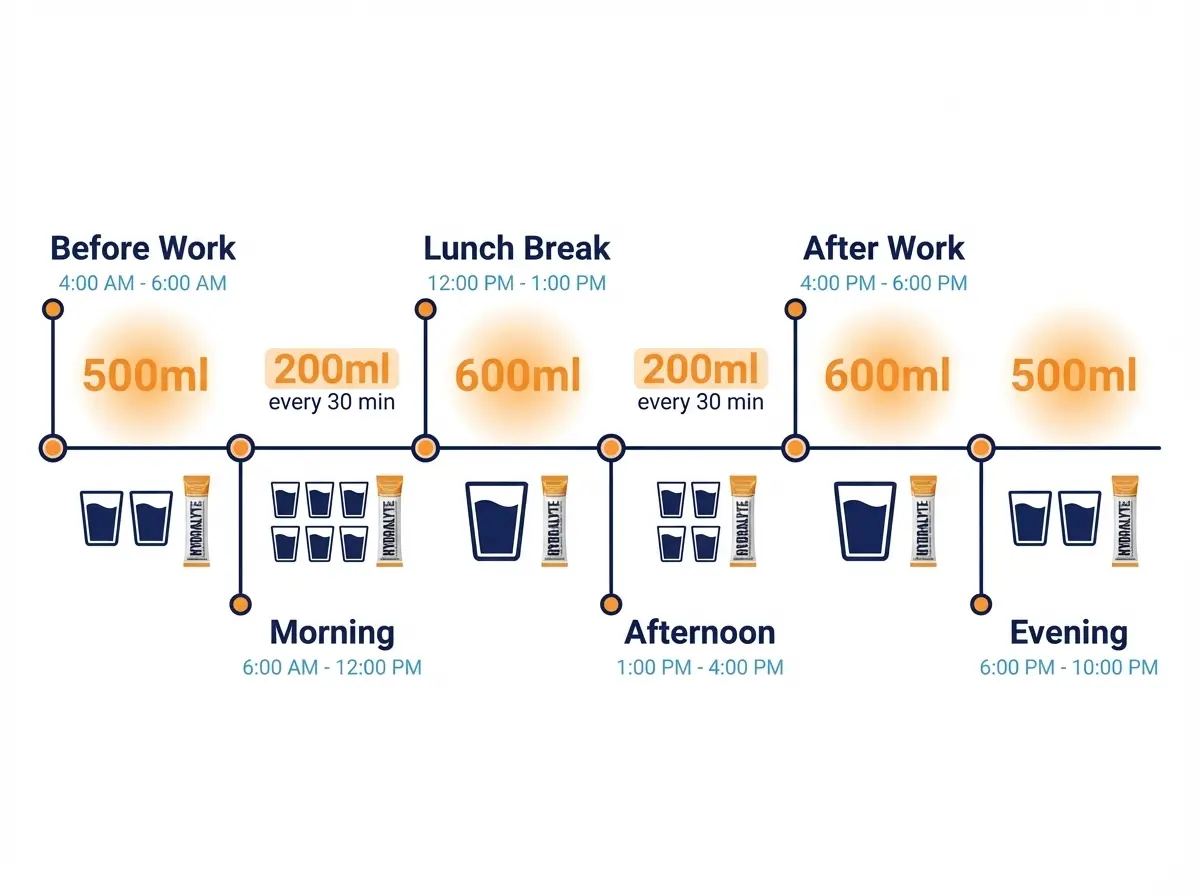
Before Work (Home or Site Arrival): Workers should arrive at the site already hydrated. Drinking 400–600ml of fluid 2–3 hours before starting work, followed by another 200–300ml just before beginning tasks, ensures they begin the shift in a hydrated state. This prevents the immediate onset of dehydration during the first few hours.
During Work (Every 30 Minutes): Once work starts, workers should drink 150–250ml every 30 minutes. This frequent, small-volume approach prevents both dehydration and the discomfort of suddenly consuming large quantities. A simple rule: one cup every half hour.
Scheduled Rest Breaks (Every 90–120 Minutes): Beyond regular sips, workers need deeper rest breaks in shade every 90–120 minutes. During these 10–15 minute breaks, workers should drink 300–500ml and allow their core body temperature to lower. These breaks are as important as the hydration itself.
Lunch Break (Midday): The longer lunch break provides an opportunity for significant rehydration (500–750ml) alongside food intake. Food and fluids together support recovery and energy replenishment.
After Shift (Recovery Phase): Hydration continues after work ends. Workers should drink 150% of fluid lost during the shift over the next 4–6 hours. For example, if a worker lost 3kg of body weight (roughly 3L) during an 8-hour shift, they should drink 4.5L over the afternoon and evening. This overdrinking is intentional—it accounts for continued urinary losses during recovery and fully restores body fluid levels for the next day.
Sample Daily Hydration Schedule for a Construction Worker:
- 6:00 AM – 500ml at home before departing
- 6:45 AM – 250ml at site before work begins
- 7:30 AM – 200ml
- 8:00 AM – 200ml
- 8:30 AM – 200ml (cumulative: 1,150ml)
- 9:00 AM – Rest break in shade: 400ml
- 10:00 AM – 200ml
- 10:30 AM – 200ml
- 11:00 AM – 200ml (cumulative: 2,150ml)
- 12:00 PM – Lunch break: 600ml + food
- 1:00 PM – 200ml afternoon shift begins
- 1:30 PM – 200ml
- 2:00 PM – 200ml (cumulative: 3,350ml)
- 3:00 PM – Rest break in shade: 400ml
- 4:00 PM – 200ml
- 4:30 PM – 200ml
- 5:00 PM – Work ends (total shift intake: 4,350ml)
- After work – 500ml within the first hour, then continued hydration (750ml more) over the evening
How Site Managers Can Build a Hydration Programme
Individual worker responsibility is important, but site-wide infrastructure and enforcement are what make a programme successful. HSE managers and site supervisors play a central role.
Bulk Ordering and Cost Management: Hydration drinks can be expensive if workers buy individual bottles. Site managers should negotiate bulk pricing with suppliers and provide drinks free or at subsidised cost to all workers. The cost of hydration is minimal compared to the cost of heat-related incidents, downtime, or liability.
Hydration Stations: Install clearly marked, shaded hydration stations at multiple locations across the site. Each station should contain cooled water, electrolyte drink mix (or ready-to-drink bottles), cups, and seating for rest breaks. Stations should be within a 5-minute walk of any work area. Assign a team member to monitor and refill stations throughout the day.
Worker Education and Monitoring: Train all site workers on heat stress signs and the importance of regular hydration. Make it clear that drinking is not optional—it is a mandatory part of safety, like wearing hard hats and high-visibility vests. Supervisors should actively monitor workers for early signs of heat stress (dizziness, weakness, lack of sweating) and enforce rest breaks.
Shift Adjustments and Timing: In peak summer months (June–August), adjust work schedules to avoid the hottest hours (11:00 AM–3:00 PM). Starting work earlier and extending the lunch break during midday heat is more effective than pushing workers through peak heat. This aligns with UAE Ministry of Human Resources guidance on occupational heat safety.
Documentation and Accountability: Track hydration compliance. Simple tally sheets at hydration stations or supervisor checklists help ensure workers are actually drinking and resting. If a worker consistently skips hydration, intervention is needed.
FAQ
Q: What is the best drink for construction workers in heat?
A: A combination of plain water and electrolyte drinks. Water should form the bulk of intake (75–80%), while electrolyte drinks (with sodium, potassium, and carbohydrates) should be consumed during and after periods of heavy exertion to support fluid retention and mineral replacement. Cold fluids are preferable as they support core temperature cooling. Avoid sugary soft drinks, energy drinks with excessive caffeine, and alcohol, all of which can worsen dehydration.
Q: How do electrolytes help manual workers?
A: During heavy sweating, workers lose sodium and potassium—minerals essential for nerve signalling, muscle contraction, and fluid retention. Drinking plain water without electrolytes can increase urinary losses, meaning the body retains less fluid than consumed. Electrolyte drinks slow urinary loss and help maintain cellular hydration, supporting muscle function, cardiovascular stability, and mental alertness. For construction workers, this means better work capacity, fewer heat cramps, and lower risk of heat exhaustion.
Q: What does UAE law say about worker hydration?
A: The UAE Ministry of Human Resources and Emiratisation mandates midday rest periods (typically 12:30 PM–3:00 PM) during peak summer months to reduce heat exposure. Employers are required to provide a safe work environment, which includes access to drinking water and shade. While the law doesn't prescribe specific hydration protocols, occupational safety standards expect employers to assess heat risks and implement controls—including accessible hydration and rest breaks. The ILO's guidance on occupational heat stress reinforces these principles and is widely referenced in regional safety frameworks.
Equip Your Site with Hydralyte
Building a comprehensive hydration programme requires reliable supply and scalable solutions. Whether you need individual bottles for small crews, bulk electrolyte mixes for large sites, or complete hydration station setups with coolers and monitoring, Hydralyte has options built for construction environments in the UAE. Our products are designed for the heat, the workload, and the scale of construction teams. Browse our product range or contact our team to discuss bulk pricing and customised solutions for your site.
Disclaimer: This article is for informational purposes only and does not constitute medical advice. Consult a healthcare professional for personalised guidance.
External References:
- UAE Ministry of Human Resources and Emiratisation – Occupational Safety and Midday Rest Regulation: https://www.mohre.gov.ae/
- International Labour Organization – Heat Stress at Work: https://www.ilo.org/global/topics/safety-and-health-at-work/areasofwork/heat-stress/lang--en/index.htm
🏗 Protecting Outdoor Workers? Hydralyte supplies bulk electrolyte programs for construction, oil & gas, logistics, and manufacturing companies across the GCC — with full MoHRE compliance documentation. See Industry Hydration Programs →