<a href="/tools/heat-stress-assessment">Heat Stress</a> Prevention for Outdoor Workers in the UAE
The UAE's outdoor work environment presents a formidable challenge to worker health and safety. Summer temperatures regularly exceed 45°C (113°F), with humidity levels in coastal regions reaching 90% or higher. For outdoor workers—construction labourers, landscapers, security personnel, traffic management officers, and utility technicians—the combination of intense direct sun exposure, minimal shade, and heat-trapping personal protective equipment (PPE) creates a perfect storm for heat-related illness.
The human body is designed to cool itself through perspiration, but in extreme heat, this natural system becomes overwhelmed. When workers are exposed to such conditions for extended periods without adequate hydration and rest, dehydration sets in rapidly, and heat stress accelerates.
The Stages of Heat Illness
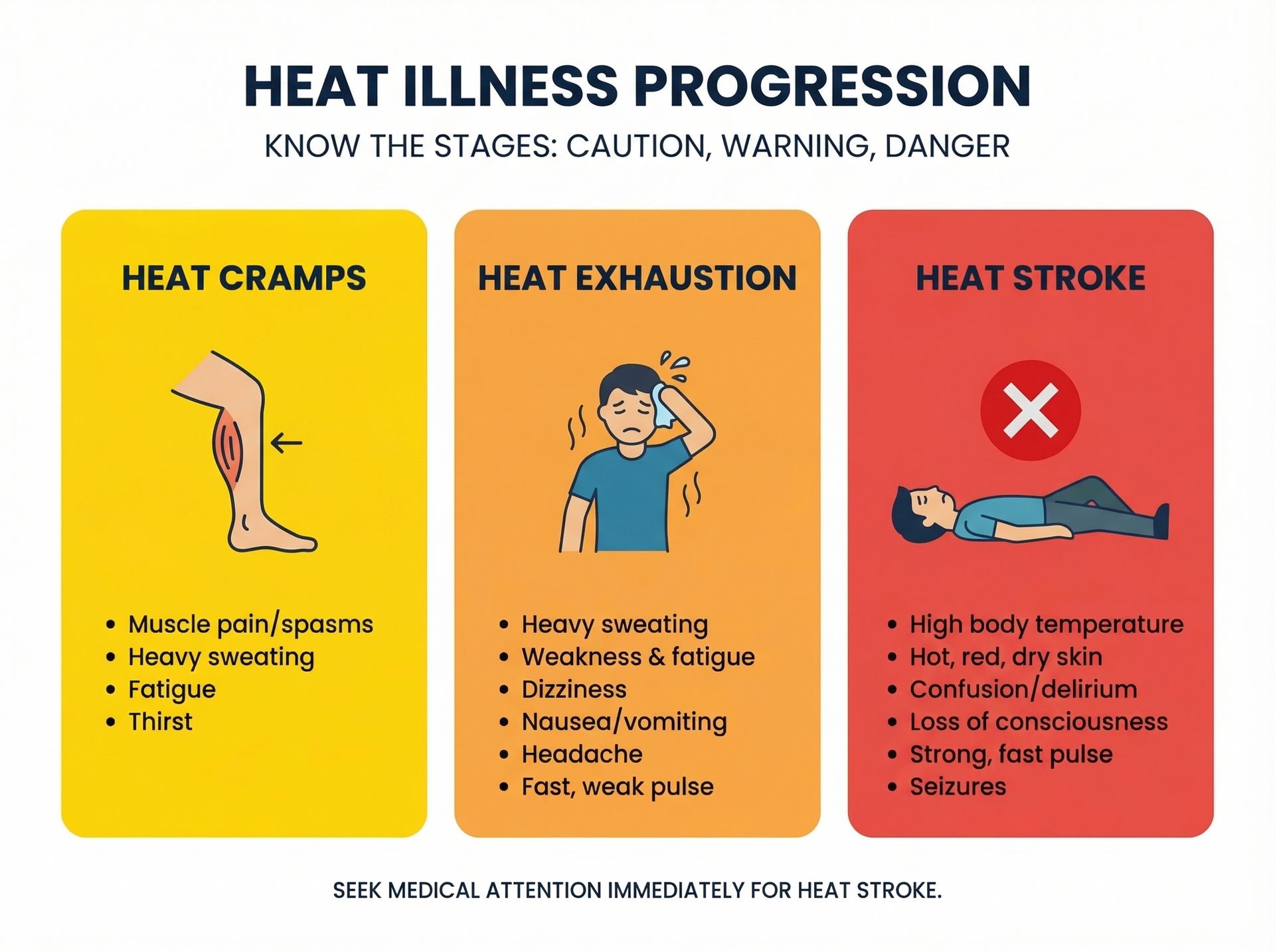
Understanding the progression of heat illness is essential for early intervention. Heat-related conditions develop in stages, each more serious than the last.
Heat Cramps: Often the first sign, heat cramps are painful muscle spasms, typically in the legs or abdomen. They result from loss of salt and fluids through heavy sweating. While not life-threatening, they signal that the body is struggling to maintain its thermal balance and hydration status.
Heat Exhaustion: This develops when dehydration and electrolyte loss reach a critical point. Symptoms include dizziness, nausea, weakness, rapid heartbeat, and heavy sweating (or in severe cases, a lack of sweating). A worker experiencing heat exhaustion is incapacitated and requires immediate rest, shade, and rehydration. Without intervention, heat exhaustion can progress to heat stroke.
Heat Stroke: The most severe form, heat stroke occurs when the body's core temperature exceeds 40°C (104°F). At this point, the body can no longer cool itself, and organ failure may begin. Heat stroke is a medical emergency requiring immediate professional medical intervention. Symptoms include confusion, loss of consciousness, seizures, or cessation of sweating despite extreme heat.
How Dehydration Accelerates Heat Stress
Dehydration is the primary mechanism driving heat stress in outdoor workers. When the body loses more fluid than it takes in, several things happen simultaneously:
- Blood volume decreases, reducing the body's ability to deliver oxygen to muscles and organs
- Sweat production diminishes, impairing the body's primary cooling mechanism
- Core body temperature rises unchecked
- Electrolyte balance (sodium, potassium, magnesium) becomes disrupted, affecting muscle and nerve function
This is why simply drinking water is often insufficient for workers in extreme heat. Water alone does not fully replace the electrolytes lost through profuse sweating. Electrolyte-containing drinks help maintain cellular hydration and support muscle and cardiovascular function during prolonged heat exposure. To understand more about how proper hydration works, visit our guide to hydration science.
Practical Hydration Protocol for Outdoor Workers
An effective hydration strategy must be proactive, not reactive. It should begin before heat exposure starts and continue throughout and after the work shift.
Pre-Shift Hydration (Before Work Begins): Workers should arrive hydrated. Drinking 400–600ml of fluid 2–3 hours before work, followed by another 200–300ml about 20 minutes before exposure, gives the body a strong hydration foundation.
During-Shift Hydration (Every 20–30 Minutes): In extreme heat, workers should drink 150–250ml (a standard cup) of fluid every 20–30 minutes during active work. For construction workers and labourers performing heavy physical work, intake should trend toward the higher end. This frequent, small-volume approach prevents both dehydration and the discomfort of suddenly consuming large quantities.
Rest Break Hydration (Every 1–2 Hours): Scheduled rest breaks in shade are essential. During these breaks, workers should drink 300–500ml and allow core body temperature to begin dropping. Breaks of 10–15 minutes every 1–2 hours are far more effective than occasional longer breaks.
Post-Shift Recovery (After Work): Rehydration continues after work. Workers should drink 150% of the fluid lost during work over the next 4–6 hours. For example, if a worker lost 2kg of body weight during a shift (roughly 2L of fluid), they should drink 3L over the recovery period. This overdrinking compensates for continued urinary losses.
Simple Daily Schedule:
- 6:00 AM – 400ml before leaving home
- 6:45 AM – 200ml before starting work
- 7:30 AM – 200ml mid-morning
- 8:00 AM – 200ml mid-morning
- 8:30 AM – 200ml mid-morning
- 9:00 AM – 10-minute shade break, 400ml
- 10:00 AM – 200ml
- 10:30 AM – 200ml
- 11:00 AM – 200ml
- 12:00 PM – Lunch break, 500ml + food
- 1:00 PM – 200ml afternoon shift begins
- 1:30 PM – 200ml
- 2:00 PM – 200ml
- 2:30 PM – 200ml
- 3:00 PM – 10-minute break, 300ml
- After work – 500ml within first hour, then continued hydration over 4–6 hours
What HSE Teams Can Do
Individual worker responsibility is necessary but not sufficient. Organisational commitment is essential for a robust heat stress prevention programme.
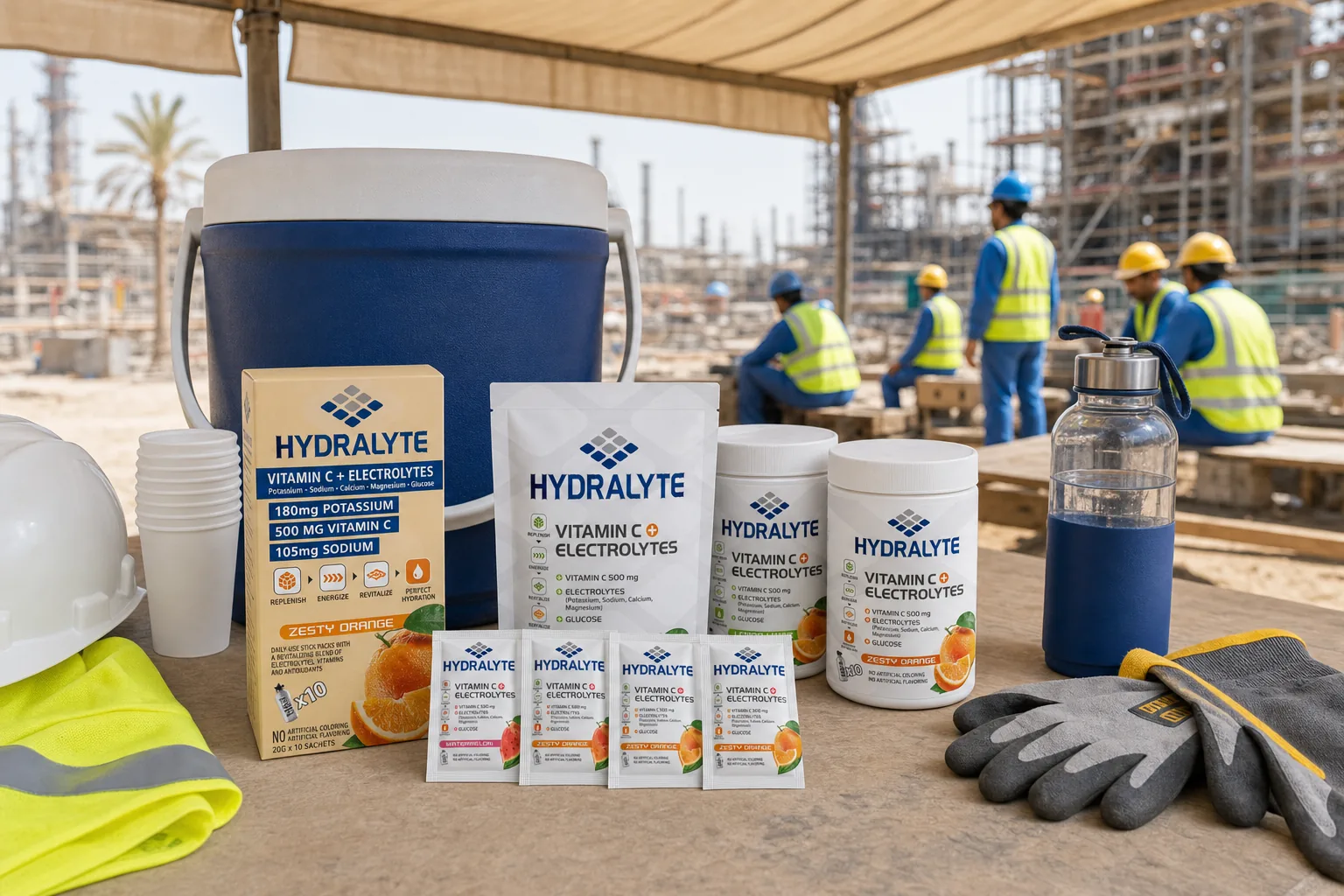
Bulk Supply and Accessibility: HSE teams should ensure hydration drinks are readily available and affordable (ideally free) to all outdoor workers. Placing cooled drink dispensers at multiple locations on site removes barriers to regular intake.
Designated Hydration Stations: Establish shaded hydration stations with cold water, electrolyte drink mix, cups, and rest areas. These stations should be within a 5-minute walk from any work area. Regularly monitor and refill supplies.
Worker Education and Monitoring: Train workers to recognise early signs of heat stress in themselves and colleagues. Emphasise that drinking is not optional; it is part of the safety protocol. Supervisors should actively monitor workers for signs of heat illness and enforce rest breaks.
Shift Timing Adjustments: In peak summer months (June–August), align work schedules to minimise exposure during peak heat hours (11:00 AM–3:00 PM). Early start times and extended rest periods during midday heat are proven effective.
FAQ
Q: How much should workers drink per hour in heat?
A: In the UAE's extreme heat (40°C+), workers should aim for approximately 150–250ml every 20–30 minutes during active work, which totals 300–500ml per hour. Exact intake depends on the intensity of physical work, PPE worn, and individual sweat rates. Supervisors should encourage frequent small drinks rather than large infrequent ones.
Q: What are early warning signs of heat stress?
A: Early signs include excessive thirst, lightheadedness, mild dizziness, reduced urination, dark urine, headache, and nausea. If a worker reports any of these, they should immediately move to shade, rest, and drink fluids. Delayed intervention can lead to heat exhaustion or heat stroke.
Q: Can electrolyte drinks replace water?
A: No. Plain water is essential and should make up the majority of fluid intake. Electrolyte drinks (which contain sodium, potassium, and carbohydrates) are beneficial during and after prolonged heat exposure to help maintain cellular hydration and replace lost minerals. A balanced approach uses both: water for regular hydration and electrolyte drinks during and after heavy exertion in heat.
Supply Hydration for Your Team
Investing in a comprehensive hydration programme demonstrates your commitment to worker safety and aligns with UAE labour regulations. Whether you need individual bottles, bulk drink mixes, or complete hydration station setups, we can support your team. Browse our hydration products or contact our team to discuss bulk supply options and customised solutions for your worksite.
Disclaimer: This article is for informational purposes only and does not constitute medical advice. Consult a healthcare professional for personalised guidance.
External References:
- UAE Ministry of Human Resources and Emiratisation – Midday Rest Regulation and Occupational Safety Standards: https://www.mohre.gov.ae/
- International Labour Organization – Heat Stress at Work: https://www.ilo.org/global/topics/safety-and-health-at-work/areasofwork/heat-stress/lang--en/index.htm
Recognising the Stages of Heat-Related Illness
Heat-related illness progresses through distinct stages, each requiring escalating intervention. Understanding these stages enables supervisors to intervene early — before a heat stress incident becomes a medical emergency.
- Stage 1 — Heat Cramps: Muscle spasms in legs, arms, or abdomen. Caused by electrolyte depletion. Intervention: Rest in shade, provide Hydralyte, stretch affected muscles.
- Stage 2 — Heat Exhaustion: Heavy sweating, weakness, cold/clammy skin, nausea, dizziness. Core temperature below 40°C. Intervention: Remove from heat immediately, cool actively, provide Hydralyte, monitor for 30 minutes.
- Stage 3 — Heat Stroke: Hot/dry skin, confusion, loss of consciousness, core temperature above 40°C. Medical emergency. Intervention: Call emergency services immediately, cool aggressively, do NOT give fluids if unconscious.
The critical window between heat exhaustion and heat stroke can be as short as 15–30 minutes. Proactive electrolyte hydration with Hydralyte throughout the workday prevents workers from ever reaching Stage 1.
Building a Site-Level Heat Stress Response Plan
Every outdoor work site in the UAE should have a documented heat stress response plan that includes: designated cool-down zones within 50m of work areas, trained first aiders on every shift, emergency cooling equipment (ice packs, misting fans), and pre-positioned Hydralyte electrolyte stocks at every welfare station and first aid point.
Train all workers — not just supervisors — to recognise heat stress symptoms in colleagues. Buddy-system monitoring is one of the most effective early warning mechanisms, especially during peak heat hours. Ensure your plan includes MoHRE compliance documentation requirements.
🏗 Protecting Outdoor Workers? Hydralyte supplies bulk electrolyte programs for construction, oil & gas, logistics, and manufacturing companies across the GCC — with full MoHRE compliance documentation. See Industry Hydration Programs →