Staying Hydrated in Warehouses and Logistics Hubs: A GCC Guide
When we think about <a href="/tools/heat-stress-assessment">heat stress</a> in the GCC, outdoor construction sites and field work come to mind first. Yet warehouse and logistics environments pose a surprisingly acute hydration challenge that many facility managers overlook.
Unlike outdoor work, where workers can anticipate heat exposure, warehouse environments create sustained thermal stress through a combination of factors unique to the region. Large metal and concrete structures absorb and radiate intense heat, particularly during the peak months of May through September. Industrial equipment—forklifts, conveyor systems, and refrigeration units—generates additional warmth. Poor airflow in vast facilities means that air conditioning struggles to maintain uniform cool zones, leaving some sections significantly warmer than others.
In UAE and broader GCC logistics hubs, the challenge intensifies during peak seasons. Workers may be undertaking sustained physical labour—loading, unloading, sorting, packing—for 8–12 hour shifts with limited opportunity to move to genuinely cool environments. Shift patterns often don't align with the coolest parts of the day, and night shift workers face the accumulated heat stored in the structure overnight.
This creates a hidden hydration risk: workers don't recognise the heat exposure as acutely as they would outdoors, yet sweat rates and fluid loss remain substantial.
How Dehydration Affects Shift Worker Performance
Dehydration doesn't just make workers uncomfortable—it directly impacts the cognitive and physical performance needed for safe warehouse operations.
In logistics environments, even mild dehydration impairs concentration and situational awareness. Workers operating forklifts, managing inventory systems, or coordinating loading sequences need sharp decision-making and quick reaction times. Studies on occupational heat stress show that dehydration reduces mental clarity, slows response times, and increases the risk of mistakes. A fatigued, dehydrated worker is more likely to mishandle goods, miss safety checks, or make poor judgment calls under pressure.
Physical fatigue compounds these risks. As fluid loss progresses, workers experience muscle fatigue, reduced strength, and slower movement. This doesn't just slow productivity—it increases accident rates. A dehydrated worker is more prone to slips, drops, and musculoskeletal strain.
For facility managers and HSE teams, the connection is clear: proper hydration directly supports both safety compliance and operational efficiency. Learn more about how hydration supports cognitive and physical performance in our guide to why hydration matters for shift workers.
Hydration Needs for Physical Warehouse Roles vs Desk/Admin Roles
Not all warehouse workers have the same hydration needs. A forklift operator working on a loading dock faces different thermal stress than an admin staff member managing inventory in a climate-controlled office area. Hydration strategies should reflect this reality.
Physical warehouse roles (loading, unloading, packing, manual sorting) involve sustained physical effort and high sweat rates. These workers should aim to drink 200–300 mL of fluid every 20–30 minutes during active work in warm warehouse sections. In peak summer or during intensive shifts, this may increase. These roles benefit most from electrolyte-containing drinks, as prolonged sweating depletes both water and essential minerals.
Desk and administrative roles (inventory management, dispatch coordination, administrative oversight) typically work in climate-controlled spaces with lower physical exertion. These workers still need regular hydration—approximately 150–200 mL every 60 minutes—but water alone is usually sufficient. However, workers transitioning between office and warehouse floor should increase fluid intake when moving to warmer zones.
Facility managers should communicate these distinctions clearly. A one-size-fits-all hydration policy will fail both overhydrate desk staff and under-supply physical workers.
Setting Up Hydration Stations in Your Facility
A structured hydration programme begins with accessible, well-stocked hydration stations positioned strategically throughout your warehouse.
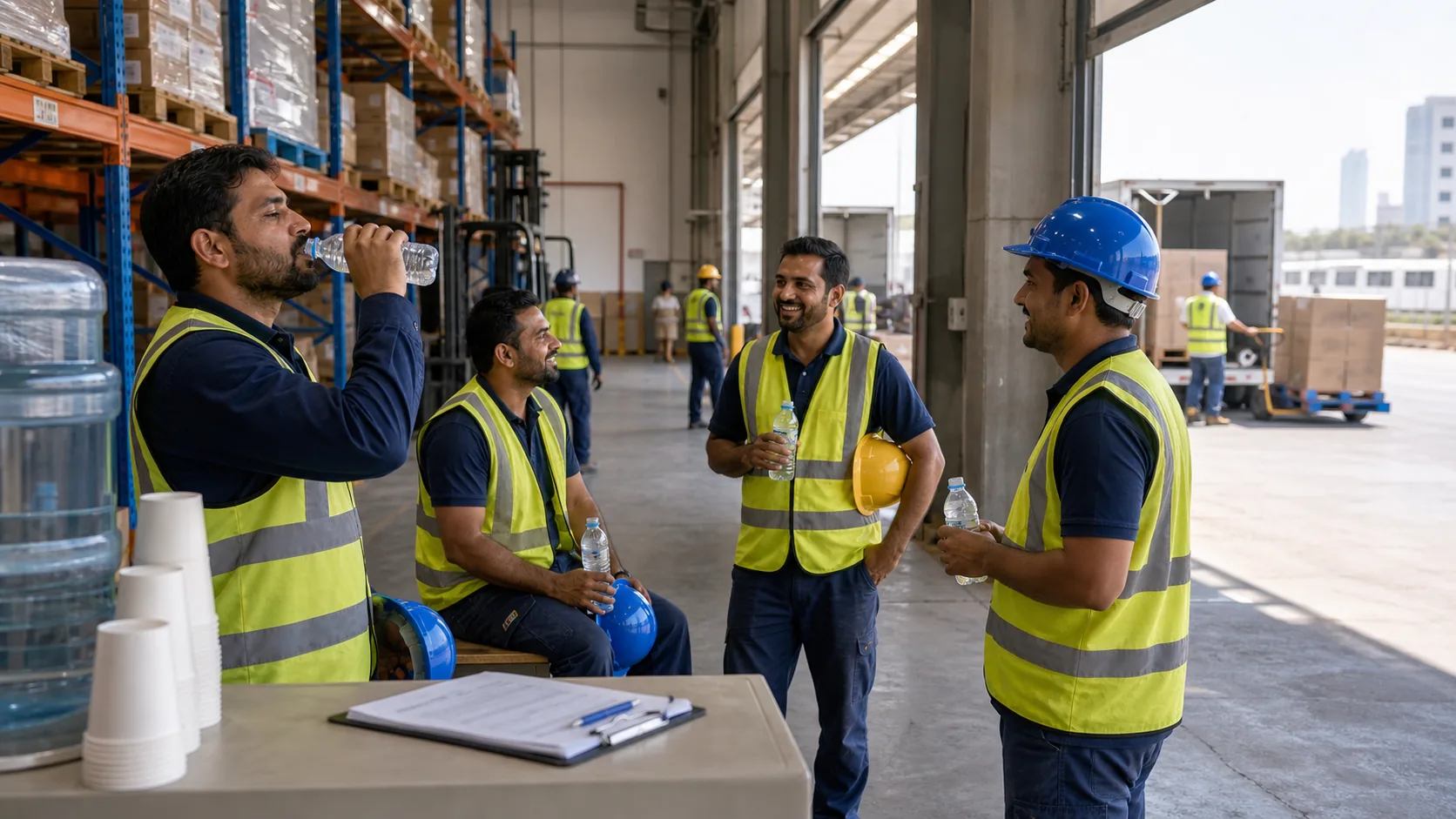
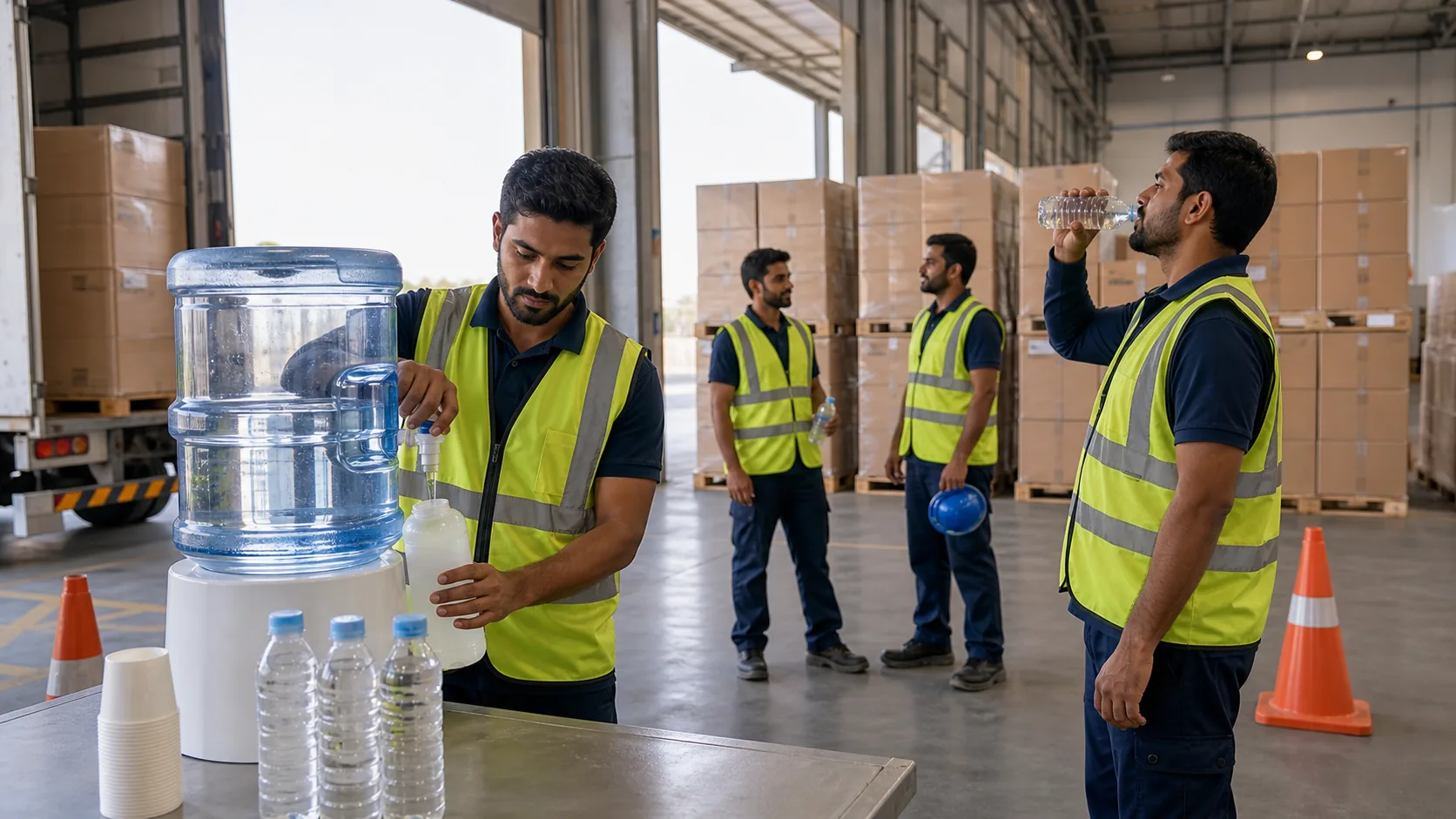
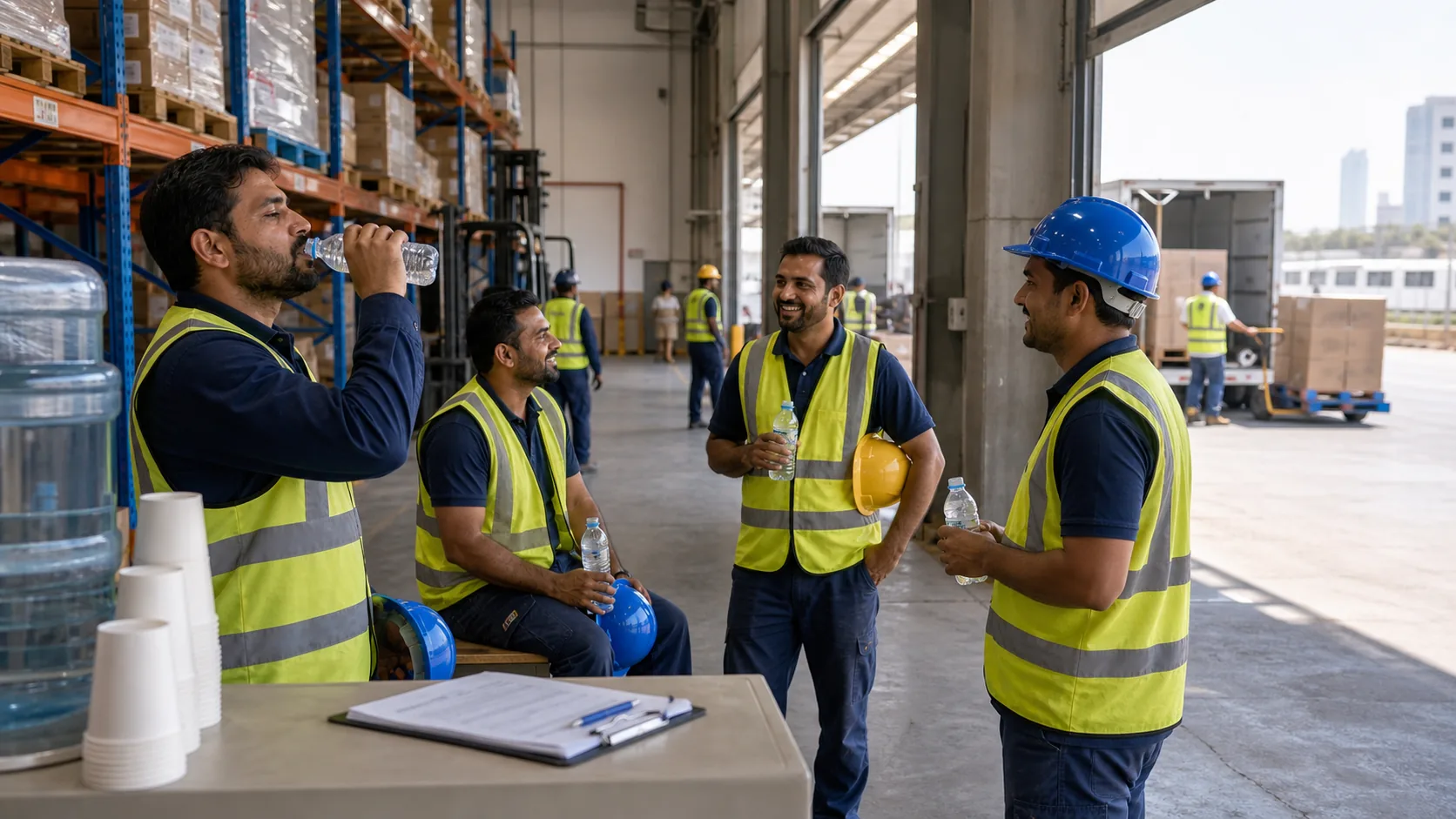
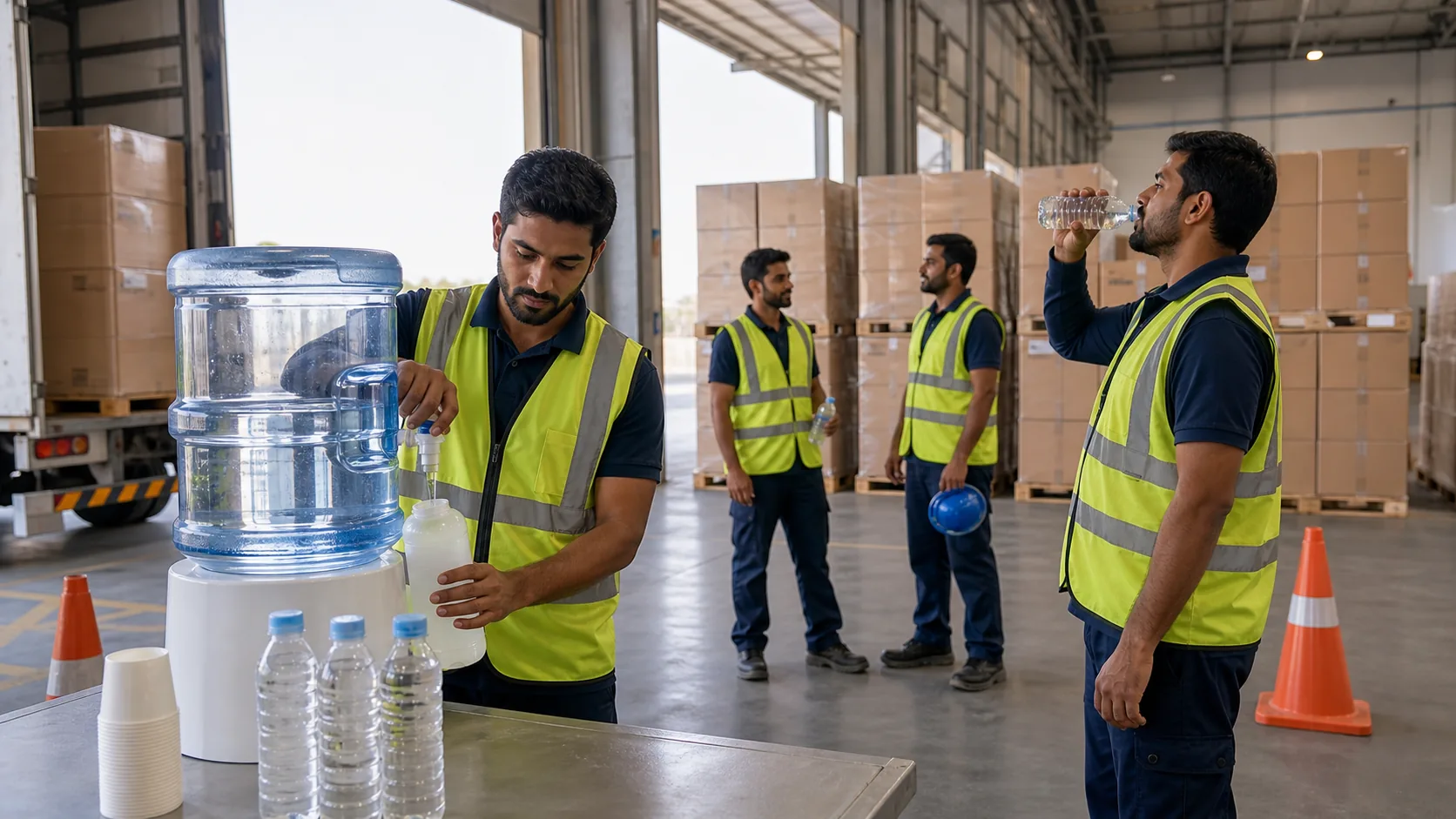
Location strategy: Place stations at natural break points—near loading docks, at the start of shift areas, adjacent to rest zones, and near high-heat zones. In large facilities, multiple stations reduce the time workers spend travelling for hydration, which itself can impact productivity. Ensure stations are visible and clearly labelled.
What to stock: Provide both water and electrolyte-containing drinks. Water addresses basic hydration; electrolyte drinks support workers undertaking intensive physical effort for extended periods. Stock disposable cups or encourage workers to bring reusable bottles (which many increasingly prefer for sustainability). Keep supplies well-stocked during peak season and adjust quantities based on shift schedules and seasonal temperature fluctuations.
Encouraging uptake: Make hydration a cultural norm rather than an afterthought. Train supervisors to encourage regular drinking during breaks. Some facilities display simple reminders ("Drink every 30 minutes during summer") or incorporate hydration checks into HSE toolbox talks. Workers who understand why they're drinking hydrate more consistently.
Monitoring: Track hydration station usage and worker feedback. If consumption seems low, investigate barriers—perhaps the station is poorly located, supplies run out, or workers aren't convinced of the benefit. Adjust accordingly.
Hydration for Night Shift Workers in GCC Logistics
Night shift work in GCC logistics introduces a distinct set of challenges that many operators underestimate.
While temperatures are lower at night, the surrounding warehouse structure retains substantial heat accumulated during the day. Workers enter an environment that remains significantly warmer than outdoor night temperatures. Simultaneously, night shift workers experience circadian disruption—their bodies are less attuned to recognise thirst cues at night, and fatigue is already high due to working against natural sleep cycles.
This combination means night shift workers often drink less despite ongoing thermal stress. Dehydration compounds night fatigue, creating a dangerous cycle of impaired alertness and slower response times.
For night shift workers:
- Establish a proactive drinking schedule rather than relying on thirst recognition. Supervisors should prompt hydration at set intervals.
- Include electrolyte drinks in night shift hydration stations. Mineral replacement is just as important at night.
- Ensure adequate access to cool, shaded rest areas where workers can genuinely cool down between intense work periods.
- Monitor night shift workers closely for signs of fatigue and overexertion, as dehydration amplifies these risks.
FAQ
Q: How often should warehouse workers drink during a shift?
A: For physical warehouse roles in warm facility sections, workers should aim to drink 200–300 mL (a standard glass) every 20–30 minutes during active work. Desk and admin staff in climate-controlled areas need less—approximately 150–200 mL every 60 minutes. Individual needs vary based on personal factors, activity level, and facility temperature. Supervisors should encourage regular breaks and provide accessible hydration stations.
Q: Do electrolyte drinks help with fatigue from shift work?
A: Electrolyte drinks support hydration more effectively than water alone during sustained physical effort and heavy sweating. They replace not only fluid but also sodium, potassium, and other minerals lost through sweat. This more complete rehydration can reduce fatigue onset during long shifts. For desk staff with minimal sweating, water is usually sufficient. For physical workers, electrolyte drinks are a practical addition to a comprehensive hydration strategy.
Q: What's the minimum temperature that requires extra hydration measures?
A: In the GCC context, extra hydration measures become important when facility temperature exceeds approximately 28°C and workers are undertaking physical labour. However, the risk is cumulative—even moderate temperatures combined with physical effort, extended shifts, and poor air circulation warrant proactive hydration programmes. If your facility experiences sustained temperatures above 25°C and includes physical work roles, implement structured hydration protocols year-round, increasing intensity during summer months.
Bulk Hydration for Your Facility
If you manage a warehouse or logistics facility in the GCC, implementing a robust hydration programme is both an HSE priority and a practical investment in worker safety and productivity. Bulk hydration solutions make this straightforward and cost-effective.
At Hydralyte, we supply hydration drinks designed for the GCC industrial environment—practical, easy to distribute, and formulated to support workers undertaking sustained physical effort in warm conditions. Browse our product range at /shop, or contact our team to discuss bulk supply options tailored to your facility's size and shift patterns at /contactus.
Whether you manage a distribution centre, port logistics hub, or regional warehouse, we're here to help you build a hydration programme that works for your team.
Disclaimer: This article is for informational purposes only and does not constitute medical advice. Consult a healthcare professional for personalised guidance.
External Citation: International Labour Organization (ILO) – Occupational Safety and Health: Heat Stress. Available at: https://www.ilo.org/safework/areasofwork/heat-stress/lang--en/index.htm
The Hidden Heat Risk in Logistics Operations
Logistics and warehousing operations in the UAE face a dehydration risk that is often underestimated because much of the work happens inside structures. However, non-air-conditioned warehouses in the GCC routinely reach internal temperatures of 50°C or higher during summer months. Delivery vehicles parked in direct sun can exceed 60°C internally.
Forklift operators, pickers, packers, and delivery drivers all face sustained heat exposure without the cooling effects of wind movement. The physical demands of lifting, carrying, and loading compound the dehydration risk — these workers can lose 1–1.5 litres of sweat per hour during peak operations.
Positioning Hydralyte 200g jars at loading docks, break rooms, and vehicle staging areas ensures workers have access to proper electrolyte replacement throughout their shifts. For delivery drivers who spend extended periods away from base, individual Hydralyte sachets provide a portable solution that fits in a vehicle door pocket.
Shift-Based Hydration Planning for Warehouse Teams
Design your hydration program around shift patterns rather than fixed schedules. Night shift workers in non-AC facilities face cumulative heat that builds throughout the evening as warehouse structures radiate absorbed daytime heat. These workers often receive less hydration attention than day shift crews, despite facing comparable dehydration risks.
Provide Hydralyte at shift handovers and at each scheduled break. Track consumption — if a team consistently uses less than the recommended volume, it indicates either inadequate access or insufficient awareness training, both of which need addressing.
🏗 Protecting Outdoor Workers? Hydralyte supplies bulk electrolyte programs for construction, oil & gas, logistics, and manufacturing companies across the GCC — with full MoHRE compliance documentation. See Industry Hydration Programs →