What Is Oral Rehydration Solution (ORS) Explained
For HSE managers and operations directors, understanding heat illness statistics UAE construction is a prerequisite for effective risk management and regulatory compliance. In a region where summer temperatures frequently exceed 45°C with high humidity, the physiological strain on the workforce is not merely a seasonal discomfort but a significant epidemiological challenge. Data indicates that when ambient conditions reach these extremes, the incidence of heat exhaustion and heatstroke among outdoor workers rises sharply, necessitating a data-driven approach to safety investment. By examining established health outcomes and enforcement data, leadership can move beyond reactive measures toward a proactive hydration strategy that protects both human capital and the bottom line.
The Scale of Thermal Stress and Heat Illness Statistics UAE Construction
The scale of heat-related health issues in the Gulf construction sector is substantial. Research conducted on regional workforces suggests that a staggering 86.4% of outdoor workers have reported experiencing symptoms of heat exhaustion during their tenure. This incidence is heavily concentrated during the peak summer months of June through August, when the thermal work limit is frequently exceeded. The demographic most affected remains South Asian male workers in heavy labor roles, who often face prolonged exposure before full acclimatization occurs. While the Ministry of Human Resources and Emiratization (MOHRE) reports high compliance with the mandatory midday break, the cumulative effect of working in high-heat environments for the remaining hours remains a primary driver of medical presentations. It is also widely recognized among occupational health professionals that official reporting likely undercounts the actual incidence of mild to moderate heat exhaustion, as many cases are managed onsite without formal hospital registration.
The Economic Burden of Heat Incidents on Industrial Employers
Beyond the primary concern of worker welfare, the economic cost of heat illness is a major factor for operations directors. A single incident of heat exhaustion resulting in hospitalization can incur direct and indirect costs ranging from AED 20,000 to AED 50,000. These figures account for immediate productivity loss, emergency medical transport, treatment costs, and the subsequent administrative overhead of MOHRE investigations. Furthermore, the loss of a skilled worker for several days of recovery, combined with the potential for legal liability and the negative impact on site morale, creates a significant financial drain. When these costs are aggregated across a large-scale project, the "cost of doing nothing" far outweighs the investment required for a professional-grade hydration program.
Statistical Evidence for the Efficacy of Structured Electrolyte Programs
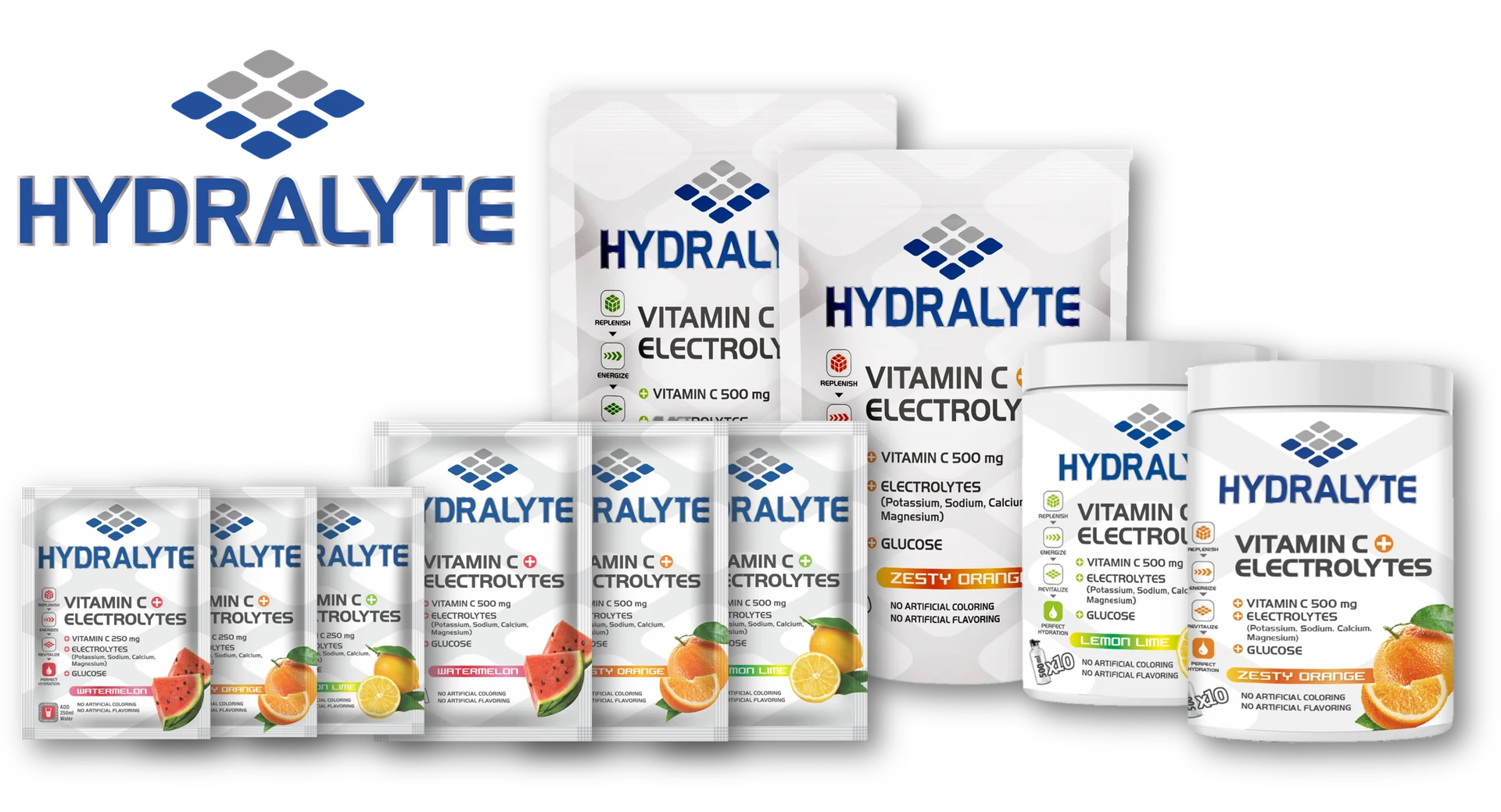
Occupational health data provides a compelling argument for the implementation of professional oral rehydration solutions. Studies on the "Safety in the Heat" program in Abu Dhabi demonstrated that companies adopting structured <a href="/tools/heat-stress-assessment">heat stress</a> management saw a 79.5% reduction in heat-related treatment and emergency cases over a two-year period. This evidence suggests that moving from ad hoc water provision to a managed electrolyte program—utilizing a full range of formats like bulk pouches, jars, and sachets—is the most effective way to drive down the frequency of incidents. In comparison to sites providing only water, those utilizing isotonic formulas significantly improved workforce hydration status and reduced the physiological markers of heat stress, effectively lowering the rates of heat syncope and exhaustion.
Using Data to Build the Internal Case for Hydralyte Investment
HSE professionals can use heat illness statistics UAE construction to secure necessary budgets from procurement committees. By presenting the documented 60-80% reduction in illness rates alongside the high cost of medical emergencies, the ROI of a Hydralyte program becomes clear. Providing a full range of hydration options allows for site-specific flexibility, ensuring that workers at every station have access to the electrolytes required to remain safe and productive. This data-driven justification transforms hydration from a simple utility into a strategic safety asset that aligns with the UAE's humanitarian workplace standards and ensures long-term operational resilience.
To evaluate how a structured electrolyte program can reduce your site's risk profile and ensure MOHRE compliance, contact our B2B team at contact our team.
How prevalent is heat illness in the UAE construction sector?
UAE construction employs one of the world's largest concentrations of outdoor workers in one of the world's hottest environments. MOHRE enforcement data documents thousands of heat stress violations annually during summer inspections. Medical records across UAE hospitals document significant numbers of heat illness presentations in construction workers during June-September, with serious incidents concentrated in June and July before full workforce acclimatization.
What is the economic cost of a single heat exhaustion incident on a UAE construction site?
A heat exhaustion incident that results in the worker requiring medical attention involves: immediate productivity loss (the worker plus 1-2 colleagues involved in the response), potential ambulance attendance cost, medical treatment costs, investigation documentation time, and typically 1-3 days of worker absence during recovery. For severe incidents requiring hospitalization, total direct and indirect costs can reach AED 20,000-50,000 per incident.
How does the cost of a Hydralyte program compare to the cost of heat illness incidents?
For a 100-worker summer program, the annual Hydralyte cost at wholesale pricing is approximately AED 150,000-280,000. Three heat exhaustion hospitalizations would cost AED 60,000-150,000 in direct costs, plus investigation overhead and MOHRE scrutiny. One heat stroke incident with serious outcome could exceed the entire Hydralyte program cost in liability alone. Structured prevention is demonstrably the better investment.
The SGLT1 Mechanism: How Electrolyte Drinks Actually Work
Understanding why electrolyte drinks work requires understanding the sodium-glucose co-transport mechanism (SGLT1) in the small intestine. This mechanism transports sodium and glucose molecules together across the intestinal wall, pulling water along by osmosis. This is why plain water alone — without electrolytes and glucose — is absorbed significantly slower.
Hydralyte's isotonic formula is specifically calibrated to optimise SGLT1 transport. The precise ratio of sodium, glucose, potassium, chloride, and calcium matches the body's natural fluid osmolality (280–295 mOsm/L), enabling absorption up to 3× faster than water alone.
This is fundamentally different from hypotonic solutions (which have lower osmolality than body fluids) and hypertonic solutions (which have higher osmolality). While hypotonic solutions may absorb slightly faster in the intestine, they provide less complete electrolyte replacement — meaning workers need to consume more volume to achieve the same rehydration effect.
Why Potassium-Rich Formulas Are Safer for Daily Use
Most traditional ORS formulas are high in sodium because they were originally designed for treating acute dehydration from diarrhoea and cholera. Consuming high-sodium formulas daily across a 3-month UAE summer season can contribute to elevated blood pressure, cardiovascular strain, and kidney stress.
Hydralyte reverses this ratio — high potassium, low sodium. Potassium supports muscle function, heart health, and cellular hydration. This makes Hydralyte safe for proactive daily use rather than just reactive emergency treatment. For workers consuming electrolyte drinks 6–8 times per day during summer, this distinction is significant.
Frequently Asked Questions
Q: What is the difference between isotonic and hypotonic electrolyte drinks?
A: Isotonic drinks match the body's natural fluid concentration (280–295 mOsm/L), providing balanced absorption and complete electrolyte replacement. Hypotonic drinks have a lower concentration, absorbing slightly faster but providing less electrolyte content per volume. For sustained daily hydration in UAE heat, isotonic formulas like Hydralyte provide more comprehensive support.
Q: Why is potassium more important than sodium for daily electrolyte drinks?
A: Sodium is essential for fluid absorption via the SGLT1 mechanism, but excessive daily sodium intake (as found in traditional ORS) can elevate blood pressure and strain the cardiovascular system. Potassium supports muscle function, heart rhythm, and cellular hydration without these risks — making potassium-rich formulas like Hydralyte safer for repeated daily consumption across the summer season.
Q: How does Hydralyte compare to sports drinks for hydration?
A: Hydralyte contains 4× more electrolytes and low sugar than leading sports drinks. Sports drinks are designed for athletic performance (high sugar for energy), not sustained daily hydration. For workers consuming electrolyte drinks multiple times per day, the lower sugar and higher electrolyte content of Hydralyte is significantly more effective and healthier.
🏗 Protecting Outdoor Workers? Hydralyte supplies bulk electrolyte programs for construction, oil & gas, logistics, and manufacturing companies across the GCC — with full MoHRE compliance documentation. See Industry Hydration Programs →
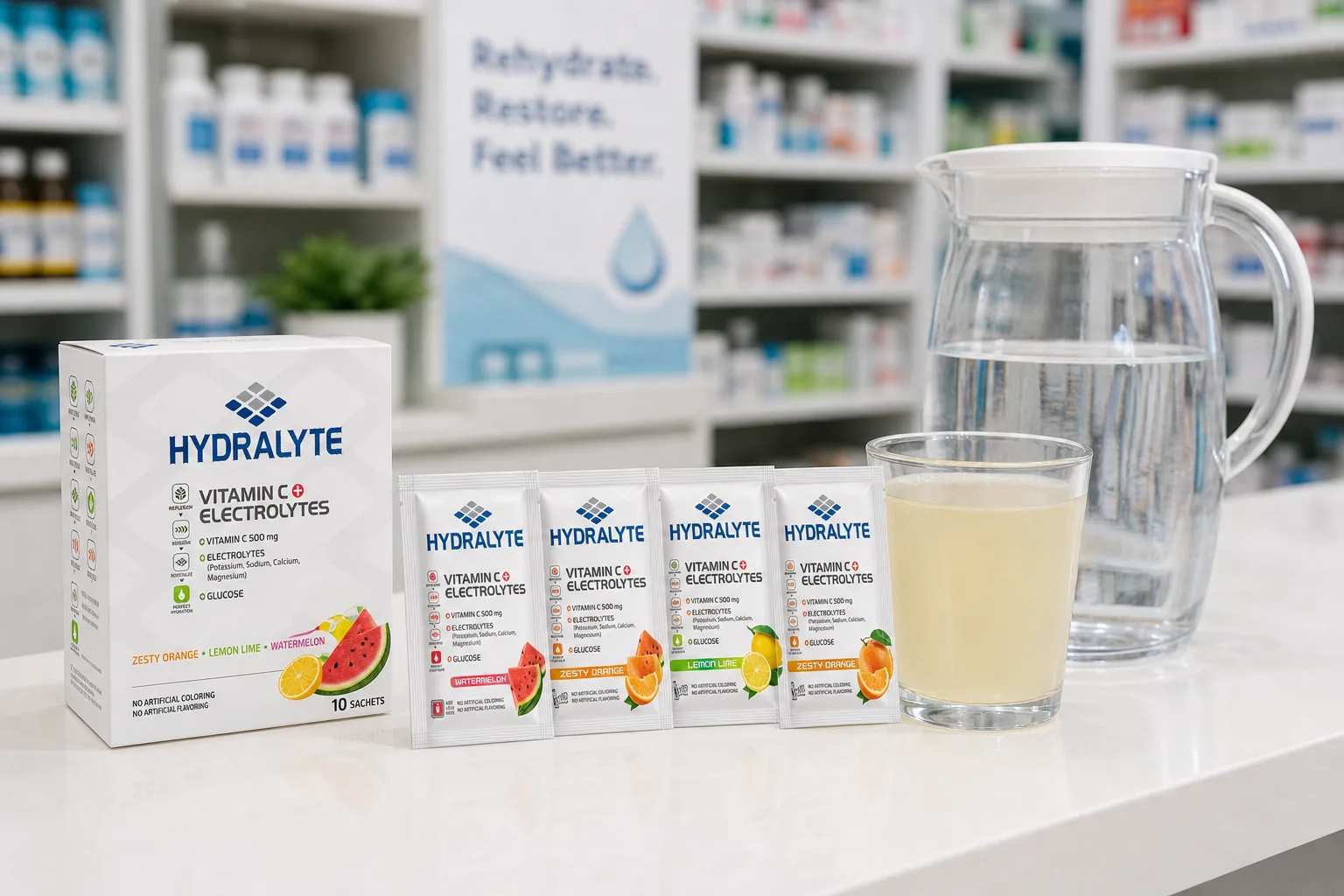
🛒 Ready to try Hydralyte? Available in three refreshing flavours across multiple pack sizes — from individual sachets to 800g bulk pouches. Shop Hydralyte Online → or request a corporate quote.