For managers responsible for outdoor or industrial teams in the UAE, summer brings a specific and serious set of obligations. Heat safety compliance is not optional, and it is not vague. There are clear expectations around protecting workers from extreme heat, most visibly through the well-known summer midday work break, but extending well beyond it into the wider duty of care a responsible employer owes the people working in punishing conditions. Understanding those expectations, and meeting them properly, is part of running a competent operation through the hottest months of the year.
This guide is written for the manager who needs a clear, practical picture rather than legal abstractions: what the obligations are, why they exist, and how to move from simply ticking boxes to genuinely keeping people safe. Compliance and protection are not the same thing, and the difference matters. The best operations in the UAE treat the rules as a foundation to build on rather than a finish line to cross, because the gap between the legal minimum and real safety is precisely where the most serious incidents tend to occur.
Across the sections that follow, we cover the <a href="/industries">midday break</a> and exactly how it works, the wider duty that surrounds it, the documentation that proves diligence, a practical manager's checklist, and why hydration sits at the centre of any credible heat-safety approach. The intent is to leave you confident that you can both satisfy the rules and protect your teams through a UAE summer, which are related goals but not identical ones.
Understanding the midday work break
The most recognisable element of UAE heat safety is the summer midday break, administered through the Ministry of Human Resources and Emiratisation, commonly known as MoHRE. Each year, across the peak summer period that runs from mid-June to mid-September, work in direct sunlight and in open-air areas is prohibited during the hottest hours of the afternoon, broadly the early-to-mid afternoon window. The logic is straightforward and sound: those hours carry the greatest risk of heat illness, and removing exposure during them prevents a large share of the potential harm before it can happen.
For managers, the practical implications go well beyond simply stopping work for a few hours. Schedules need to shift earlier or later, demanding tasks need to be planned around the prohibited window, and shaded, cooled rest areas need to be genuinely available to workers during the break rather than existing only on paper. Done well, this is not merely compliance; it is a sensible way to protect both people and productivity by moving the most strenuous work out of the most punishing conditions and into the cooler parts of the day.
It is worth being precise about what the break does and does not cover, because misunderstanding the scope creates risk in both directions. It can lead a manager to breach the rule by assuming an exemption that does not apply, or to disrupt operations unnecessarily by stopping work that could legitimately continue. The rule is specific about timing and about the kind of exposure it targets, and certain limited categories of urgent or technically unavoidable work are treated differently under defined conditions. Getting the detail right is part of the job.
Knowing exactly what applies to you
The specifics of how the break applies can depend on the nature of the work and the setting, and the safest course is never to assume. It is worth taking the time to %check where you stand on compliance% so that you know precisely which obligations apply to your operation, whether any conditional categories are relevant, and whether your current arrangements actually meet the standard. A clear understanding established before the season prevents both unintentional breaches and the costly disruption that comes from over-applying a rule out of caution.
Beyond the break: the wider duty of care
It would be a serious mistake to treat the midday break as the whole of heat safety. The break removes exposure during the worst hours, but workers still face significant heat throughout the rest of a summer day in the UAE. Early mornings, late afternoons and night shifts can all carry real heat risk, particularly when humidity on the coast keeps temperatures oppressive long after the sun has dropped. Indoor environments without adequate cooling, such as warehouses, plant rooms and the interiors of vehicles and containers, can be genuinely hazardous regardless of what the clock says.
A real heat-safety approach therefore covers the full working day and every working condition, not just the prohibited afternoon window. That means assessing risk across every shift, providing hydration and rest throughout, training supervisors to recognise the early signs of heat illness, and adjusting or pausing work when conditions on a particular day demand it, even outside the formal break. The midday break is one important control among several; it is not a substitute for the rest of them, and treating it as such leaves workers exposed during the many heat-loaded hours that fall outside its scope.
The false sense of security trap
One of the quieter and more dangerous risks for managers is the assumption that, once the midday break is observed, heat safety is effectively handled. This false sense of security can cost lives. A team working hard at ten in the morning, or resuming in the late afternoon when temperatures and humidity are still extreme, is far from safe simply because they are not working during the prohibited window. Heat illness does not consult the regulation; it responds to actual conditions and actual exertion, and a fit worker pushing hard at the wrong moment can slide from discomfort to a medical emergency with little warning. Treating compliance with the break as the end of the story leaves a real and avoidable gap in protection.
Reading the real conditions, not just the calendar
Heat risk is driven by more than air temperature. Humidity, direct radiant heat from the sun and hot surfaces, air movement, the physical intensity of the task, and how much protective clothing a worker must wear all combine to determine the strain on the body. Two days at the same temperature can present very different dangers depending on these factors. A competent approach reads the real conditions on each site and adjusts accordingly, rather than relying on the calendar and the clock alone. To do that well, it helps to %assess the heat risk on your sites% so you can see where exposure is highest and direct your controls there.
Documentation and record-keeping
Compliance is not only about doing the right things; it is also about being able to demonstrate that you did them. For managers, this means keeping clear, consistent records of the measures in place: how schedules were adjusted, what rest and shade were provided, how hydration was supplied and to whom, and what training supervisors received. Good records serve two distinct purposes. They demonstrate diligence if questions are ever raised by an authority, a client or in the aftermath of an incident; and, just as importantly, they expose gaps before those gaps turn into harm.
Record-keeping does not need to be onerous or bureaucratic. A simple, consistent daily log of the controls applied builds a clear picture across the season and helps managers see whether standards are genuinely holding up as fatigue, routine and complacency set in over the long weeks of summer. The very act of recording reinforces accountability, making it harder for any single control to quietly lapse unnoticed. A control that is supposed to happen but is never recorded has a way of gradually ceasing to happen at all.
For larger or multi-site operations, records also make it possible to compare practice across sites and identify where attention is needed. If one site's hydration provision is consistently logged and another's is patchy, that pattern is visible in the records long before it becomes visible in an incident report. Documentation, used this way, is not paperwork for its own sake; it is a management tool that turns intention into verifiable practice.
The manager's practical checklist
Turning obligations into protection is largely a matter of consistent, well-organised practice. Managers do not need to reinvent heat safety from first principles; they need to make sure the essential elements are reliably in place and actually used, day after day, across a long and demanding season. A workable approach usually covers the same core ground.
- Schedule work to comply fully with the midday break and to minimise peak-heat exposure across the rest of the day.
- Provide shaded, cooled rest areas that workers can reach easily and are genuinely encouraged to use.
- Ensure adequate hydration, including electrolytes, wherever sweat losses are high.
- Train supervisors to spot the early signs of heat strain and to respond quickly and correctly.
- Assess heat risk regularly as conditions change through the day and across the season.
- Keep clear daily records of the controls applied so standards can be checked and sustained.
Each of these is straightforward on its own. The real discipline lies in keeping them all running consistently, on every site, across the full stretch of summer, rather than letting standards slip as the weeks wear on and the novelty of the season fades. To target your effort where it matters most, it helps to map exposure by role and by time of day; for organisations managing many workers across several locations, tools that let you %sectors most affected by the summer break% make it far easier to ensure the highest-risk roles and hours receive the most attention rather than being averaged into the crowd.
Why hydration sits at the centre
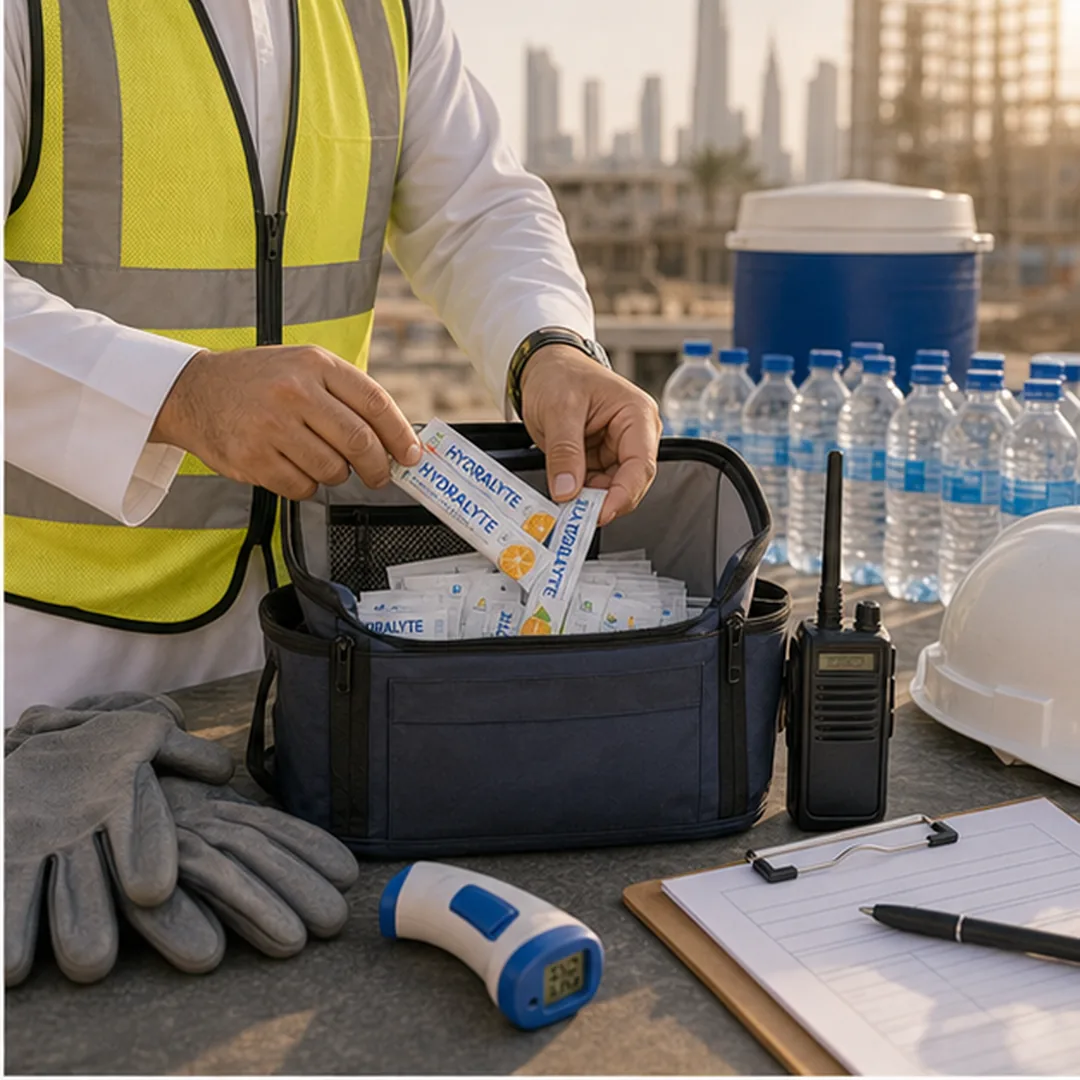
Of all the controls available to a manager, hydration deserves particular emphasis because it works continuously throughout the entire day, not only during the protected hours of the break. A worker who is properly hydrated is far better equipped to tolerate heat, maintain concentration, work safely and avoid the dangerous slide toward heat exhaustion and heat stroke. Hydration is also one of the easiest controls to deliver well: provide fluids and electrolytes close to where the work is happening, schedule intake regularly before thirst even sets in, and make drinking a normal, expected part of the routine rather than an afterthought.
This matters across every heat-exposed sector, and it is especially critical in physically demanding settings where exertion and exposure combine. It is the daily reality on a construction site, in a distribution yard and on the kind of remote, high-intensity work found in heavy industry. Building hydration into the daily structure ensures that protection continues steadily even outside the formally prohibited hours, closing precisely the gap that the false sense of security around the midday break tends to open.
Water alone is not enough in extreme heat
It is worth being clear that hydration in extreme heat means electrolytes, not water alone. Workers in the UAE summer can lose substantial amounts of salt and other minerals through heavy, sustained sweating, and replacing fluid without replacing those minerals can leave them functionally under-hydrated even though they are drinking. A compliance approach that provides only water technically offers a drink, but it does not fully meet the underlying physiological need, and in severe cases drinking large volumes of water without electrolytes can itself become a problem. Managers who understand this distinction give their teams genuine protection rather than a measure that looks adequate on a checklist but quietly falls short in the field.
Building hydration into the working day
The most effective hydration provision is the kind workers barely have to think about. Fluids and electrolytes within easy reach of the task, regular prompted breaks to drink, and a culture in which taking on fluid is normal rather than a sign of weakness all do more than any single piece of equipment. Because needs differ by role, exposure and intensity, it is worth planning provision deliberately rather than leaving it to chance, and to %plan hydration across your whole workforce% so that the right volume reaches the right people at the right times across the season. This is where compliance and genuine care visibly converge: a well-designed hydration programme satisfies the duty of care and protects people at the same time.
Sector pressures and shared lessons
While the obligations apply broadly, the way heat risk shows up varies by sector, and managers benefit from understanding the particular pressures their industry faces. On construction sites the combination of heavy physical work, direct sun and tight programmes creates intense, sustained exposure that the midday break only partly relieves. In logistics, the risk shifts and spreads: drivers in hot cabs, loaders in sun-baked yards, and workers in poorly ventilated stores all face heat at different points across long and often unpredictable shifts.
Heavy industry presents some of the most demanding conditions of all, where ambient heat is compounded by process heat, confined spaces and protective equipment that traps it against the body; the pressures that %the same pressures fall hard on oil and gas operations% face illustrate just how far a credible heat-safety plan has to go beyond the basic legal minimum. The common thread across all of these sectors is that compliance with the break is necessary but never sufficient. Each setting demands a tailored layering of scheduling, rest, hydration, training and real-time judgement on top of the baseline rule, and the managers who handle the season best are the ones who adapt the general principles to the specific shape of their own operation.
Training supervisors as the front line
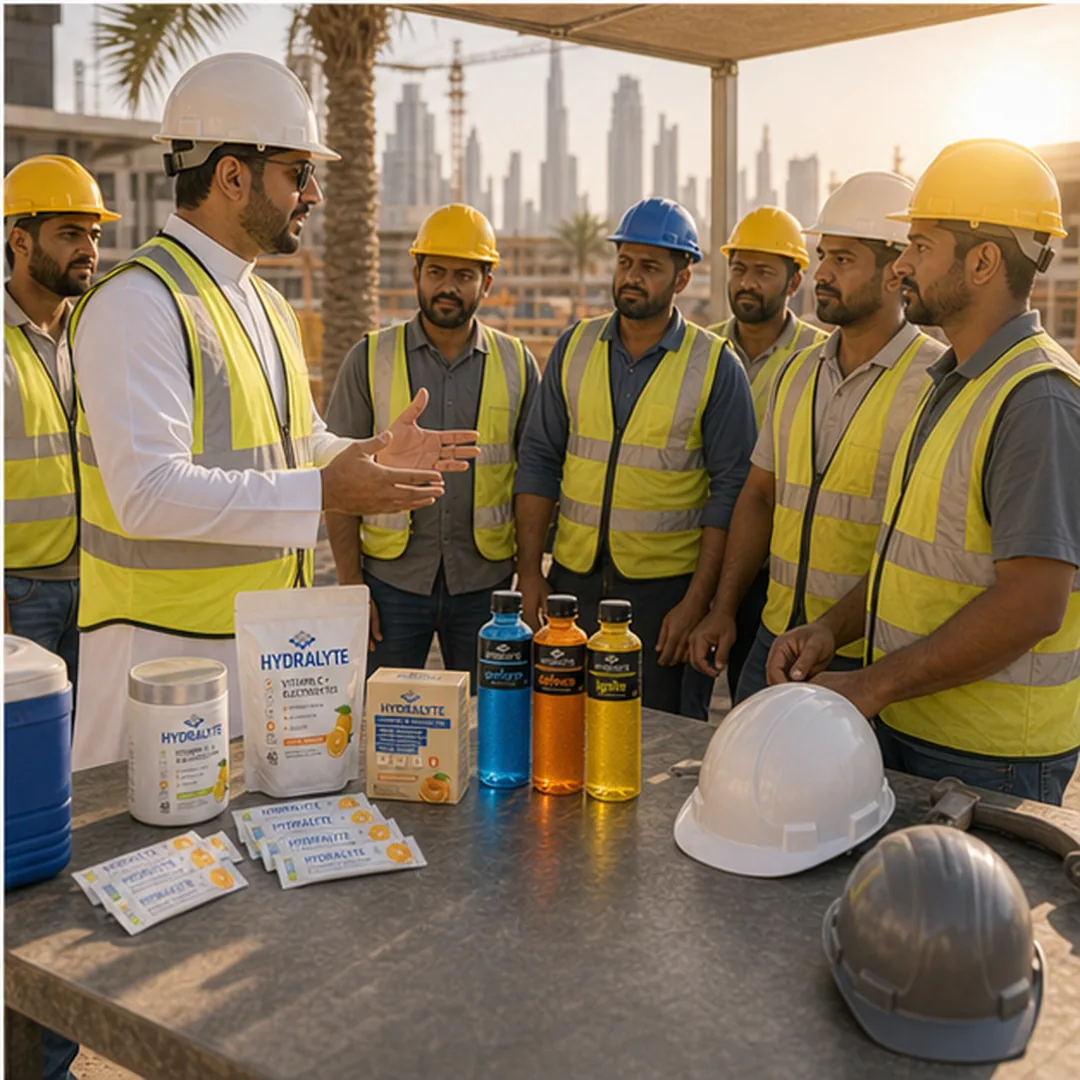
No manager can personally watch every worker on every site through every hour of a summer shift. The people who can are the supervisors and team leaders working alongside the crews, and that makes their training one of the highest-value investments a manager can make in heat safety. A well-trained supervisor is the early-warning system that catches heat strain in a single worker before it becomes a medical emergency, and the steady hand that keeps hydration, rest and scheduling running when the manager is elsewhere.
Effective supervisor training covers a few essentials. Supervisors need to recognise the early signs of heat illness, understand the immediate response, and know when to escalate to medical help without hesitation. They need to understand why the controls exist, because a supervisor who grasps the reasoning enforces the rules far more reliably than one who treats them as arbitrary box-ticking. And they need the authority and the confidence to act, including pausing work or sending a struggling worker to shade, without fearing they will be second-guessed for putting safety first.
Just as important is the culture supervisors set. If a supervisor treats hydration breaks as a nuisance and pushes the crew through, workers will absorb that signal regardless of any policy. If a supervisor visibly drinks, encourages others, and treats taking on fluid as normal and expected, that signal spreads too. Supervisors are where written policy becomes daily reality, and investing in them is how a manager extends real protection across an operation they cannot personally oversee at every moment.
Responding when heat illness strikes
Every supervisor and manager should know the basic response when a worker shows signs of heat illness, because minutes matter. The essentials are consistent across guidance: move the person into shade or a cooler area immediately, help them rest, cool them down, and provide fluids with electrolytes if they are conscious and able to drink. Severe signs such as confusion, collapse, a stop in sweating or a very high body temperature point to possible heat stroke, which is a medical emergency requiring immediate help. Having this response known, rehearsed and not improvised in the moment is part of being genuinely prepared rather than merely compliant.
Planning ahead for the season
Heat safety is far easier to deliver when it is planned before the season starts rather than assembled in a hurry once temperatures climb. The peak summer period is predictable; it arrives at roughly the same time every year, and that predictability is an advantage a competent manager uses. Planning ahead means the controls are in place and tested before they are needed, not scrambled together while workers are already exposed.
Practical pre-season planning covers several fronts. Schedules can be reworked in advance so the shift around the midday break is settled before it bites. Shaded and cooled rest areas can be prepared and checked. Supervisor training can be refreshed before the heat arrives rather than during it. And critically, hydration supply can be secured against realistic peak demand, with buffer stock in place, so that the central control in the whole heat-safety effort does not run short at the worst possible moment. A programme that runs out of electrolytes during a heatwave fails exactly when it matters most, and that failure is entirely preventable with foresight.
Pre-season planning is also the right moment to review what happened the previous summer. Where did standards slip as the weeks wore on? Which sites needed more attention? Did supply hold up? An honest review of the last season is the cheapest available source of improvement for the next one, and managers who build that review into their planning tend to start each summer stronger than the last rather than relearning the same lessons each year.
Compliance, productivity and morale
It is sometimes assumed that heat safety and productivity pull against each other, that every break and every control is time and output lost. In practice the relationship is the opposite. A worker suffering from heat strain is slower, less accurate, more accident-prone and at risk of being lost to the shift entirely. Heat safety, properly done, protects output by keeping people capable of working rather than pushing them past the point where their performance and their health both collapse.
The midday break itself illustrates this. Moving demanding work out of the most punishing hours does not simply remove output during the prohibited window; it preserves the capacity to work well during the cooler, more productive parts of the day. A team that is rested, hydrated and protected from peak heat gets more done across the whole day than one that is driven hard through conditions that exhaust and endanger it. Good heat management is not a tax on productivity; it is a condition of sustaining it through a long summer.
There is a morale dimension too. Workers notice whether their employer takes their wellbeing seriously, particularly in conditions as demanding as a UAE summer. An operation that visibly protects its people, provides proper hydration and rest, and treats the rules as a genuine commitment rather than a grudging obligation tends to retain a more engaged, loyal and careful <a href="/industries">workforce</a>. The reputational and human returns on doing heat safety well extend well beyond avoiding a penalty; they shape the kind of operation people want to work for.
The UAE and GCC heat reality
It is worth grounding all of this in the specific severity of the environment, because the UAE summer is not an ordinary working condition that can be managed with ordinary measures. Summer temperatures regularly exceed 45 degrees, and along the coast extreme humidity compounds the danger by preventing sweat from evaporating, which is the body's primary means of cooling itself. When the air is both very hot and very humid, the body's defences against overheating are undermined precisely when they are needed most, and the margin between hard work and a medical emergency narrows sharply.
The composition of the workforce raises the stakes further. The UAE's labour force is largely expatriate and heavily concentrated in the physically demanding outdoor and industrial sectors that carry the highest heat exposure. Large numbers of workers are spread across construction sites, logistics yards and industrial installations through the very months when conditions are at their most dangerous. The same pattern holds across the wider Gulf Cooperation Council, which comprises the UAE, Saudi Arabia, Qatar, Kuwait, Bahrain and Oman, all of which face extreme summer heat and rely on large outdoor and industrial workforces.
This context is exactly why the regulatory framework exists and why it is enforced, and equally why managers cannot treat the framework as the whole answer. The midday break addresses the single most dangerous window, but the severity of the surrounding hours means that a manager who stops at the legal minimum is leaving workers exposed in conditions that, in this part of the world, are genuinely capable of causing serious harm. The environment demands a response built on the rule but reaching well beyond it.
Why the regional season rewards preparation
The Gulf summer has a predictable, concentrated rhythm: a short, fierce season that arrives at roughly the same time each year and places intense, sustained demand on every heat-safety control at once. That predictability is a gift to the prepared and a trap for the complacent. An operation that secures its schedules, rest provision, supervisor training and hydration supply before the season starts moves through it steadily; one that improvises as the heat arrives spends the summer reacting to problems that foresight would have prevented. The concentrated nature of the season is precisely what makes early, deliberate preparation pay off.
Building heat safety into daily operations
The strongest heat-safety programmes are not bolted on as a separate exercise; they are woven into how work is planned and run every day. When heat considerations sit inside the normal operational routine, rather than alongside it as an extra, they are far more likely to be sustained through the long grind of summer. A control that depends on someone remembering to do something extra will eventually be forgotten; a control that is simply part of how the day works will hold.
In practice this means heat is a factor in the daily plan from the outset. The shape of the shift accounts for the break and for peak-heat hours. The toolbox talk at the start of the day includes a word on the conditions expected and a reminder on hydration and the signs of heat strain. Rest and shade are positioned where the work is, not in some distant welfare cabin that is too far to use in the time available. Hydration is stationed at the point of work and refilled as a matter of course. None of these is dramatic; together they make heat safety an ordinary, expected part of operations rather than an occasional intervention.
This integration also makes the controls more resilient to the pressures that erode them. Programmes fall down when output deadlines tighten, when a particular task runs long, or when a stand-in supervisor does not know the routine. Heat controls that are embedded in the standard way of working survive these pressures far better than ones that depend on individual diligence, because they are the default rather than an effortful addition. The aim is to reach a point where doing the work safely in the heat is simply how the work is done.
Reviewing and improving year on year
Finally, heat safety should be treated as something that improves over time rather than a fixed checklist repeated identically each summer. Conditions, workforces and operations change, and so should the response. A short review at the end of each season, capturing what worked, where standards slipped, which sites needed more support and whether supply held up, turns each summer into a lesson for the next. Managers who close this loop build steadily stronger programmes, while those who do not tend to relearn the same hard lessons every year. Continuous, honest review is what separates an operation that merely survives the summer from one that gets demonstrably better at handling it.
From compliance to a genuine safety culture
The managers who handle UAE summers best are, almost without exception, the ones who see compliance as the beginning rather than the end. Meeting the legal minimum protects you from breaching the rules; building a real safety culture protects your people from harm and your operation from the disruption, cost and reputational damage that a serious heat incident brings. The two goals reinforce each other, and the space between them, the difference between technically compliant and genuinely safe, is exactly where the most serious incidents tend to occur.
The practical path is clear enough. Treat the obligations as a non-negotiable baseline. Then go further: assess your real risks across the whole day and every site, provide proper hydration and rest, train your supervisors to act early, keep honest records, and review your approach as the season progresses and conditions change. Done this way, heat safety stops being a seasonal compliance headache to be endured and becomes a settled, well-run part of how your operation handles the summer, keeping your teams safe and your work moving steadily through the heat. When you are ready to put a concrete hydration plan behind that approach, it makes sense to %speak to our team about a hydration plan% so that the central control in your heat-safety effort is properly resourced from the start of the season to its end.
Frequently Asked Questions
What is the UAE midday work break?
It is a summer rule administered by the Ministry of Human Resources and Emiratisation that prohibits work in direct sunlight and open-air areas during the hottest afternoon hours, applied annually across the peak summer period from mid-June to mid-September. Those hours carry the greatest risk of heat illness, so removing exposure during them prevents a large share of the potential harm before it happens.
What hours does the midday break cover?
The break covers the hottest part of the afternoon during the summer period, broadly the early-to-mid afternoon window. The exact timing is set by the authorities and applies to outdoor and open-air work in direct sun. Because the precise scope and any conditional categories can affect how it applies to your operation, it is best to confirm the current requirements rather than rely on memory from a previous year.
Is complying with the midday break enough for heat safety?
No. The break removes exposure during the worst hours, but workers still face real heat in early mornings, late afternoons, night shifts and poorly cooled indoor settings. A genuine approach covers the whole working day and every condition, including hydration, rest, supervisor training, ongoing risk assessment and the readiness to pause work when conditions demand it, even outside the formal break.
What are a manager's main heat safety responsibilities?
Key responsibilities include scheduling work around the midday break, providing shaded and cooled rest areas, ensuring adequate hydration with electrolytes, training supervisors to recognise heat strain, assessing heat risk regularly, and keeping clear records of the controls applied. The central challenge is keeping all of these running consistently across a long summer rather than letting standards slip as routine sets in.
Why is hydration so central to heat safety compliance?
Hydration works continuously throughout the day, not just during the break, and a well-hydrated worker tolerates heat far better and stays safer and more alert. It is also one of the easiest controls to deliver well by placing fluids and electrolytes close to the work and scheduling intake before thirst sets in, which makes it a cornerstone of any credible heat-safety approach across the full working day.
Is water alone enough, or do workers need electrolytes?
In the extreme, sustained heat of a UAE summer, water alone is often not enough. Heavy sweating removes significant salt and minerals, and replacing fluid without replacing those minerals can leave a worker functionally under-hydrated even while drinking. For demanding outdoor and industrial work, electrolytes address the actual losses far better than water on its own and should form part of any serious hydration provision.
What records should a manager keep for heat safety?
Keep a simple, consistent daily log of the controls applied: schedule adjustments, rest and shade provided, hydration supplied, supervisor training, and any risk assessments carried out. These records demonstrate diligence if questions are ever raised and, just as importantly, expose gaps before they turn into incidents. For multi-site operations they also make it possible to compare practice and direct attention where it is needed.
How do I recognise the early signs of heat illness in workers?
Early warning signs can include excessive sweating or, more worryingly, a sudden stop in sweating, headache, dizziness, nausea, cramps, confusion, irritability and unusual fatigue or weakness. Supervisors should be trained to spot these signs early and to act immediately by moving the worker to shade, providing fluids and electrolytes, and escalating to medical help if symptoms are severe or do not improve quickly.
Does heat safety only apply to construction?
No. While construction is highly exposed, the obligations and the underlying risk apply across all heat-exposed sectors, including logistics, heavy industry, facilities, agriculture and many others. The way the risk appears differs by sector, from drivers in hot cabs to workers in confined, process-heated spaces, but the duty to protect people from extreme heat applies wherever the exposure exists.
What happens if an operation fails to comply with heat safety rules?
Beyond the regulatory consequences that can follow a breach, the more serious risk is the human one: heat illness, including potentially fatal heat stroke, among the very workers the rules are designed to protect. Failures also bring operational disruption, cost and reputational damage. This is why the strongest operations treat compliance as a baseline and build genuine protection on top of it rather than aiming only to avoid penalties.