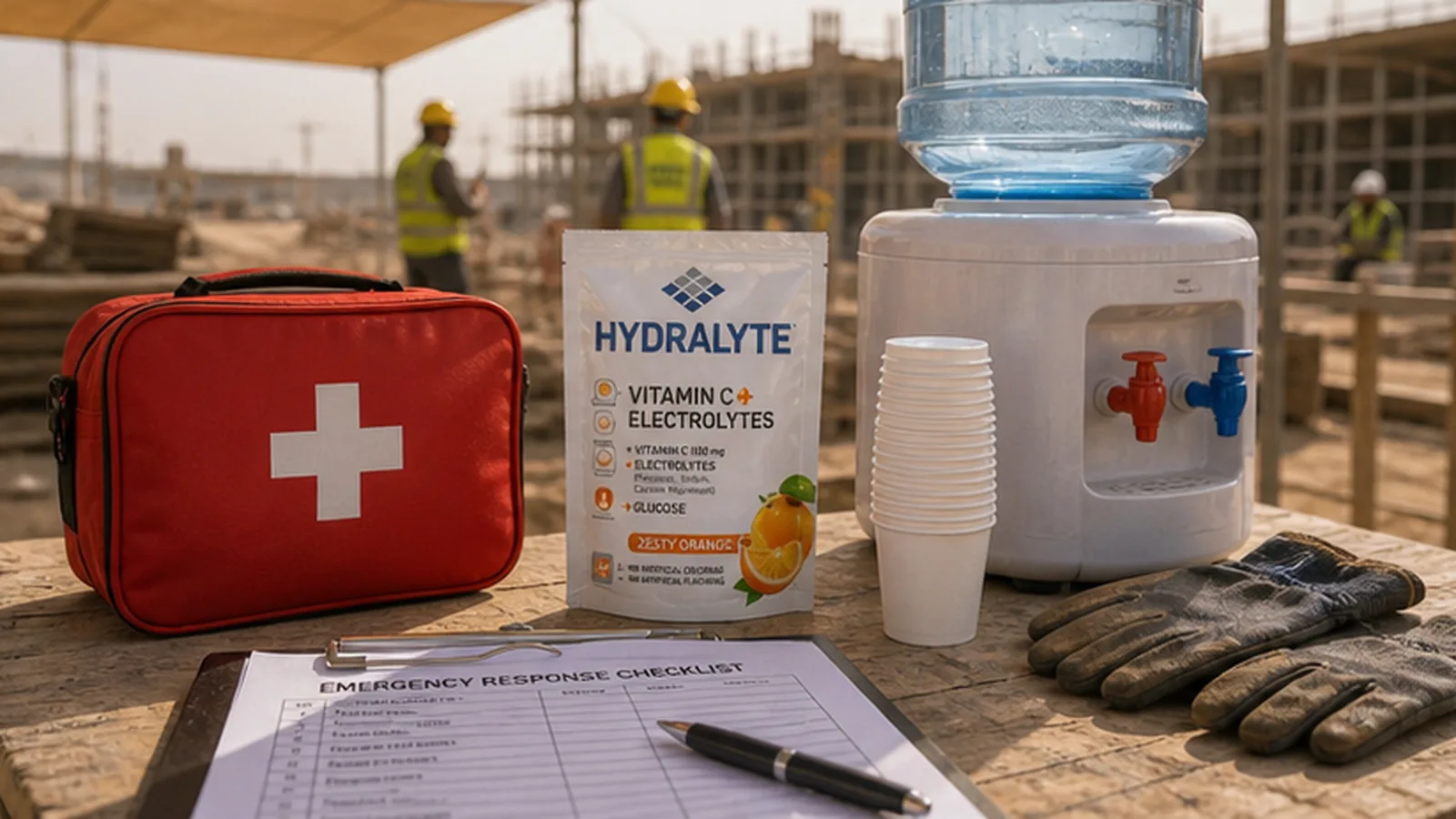
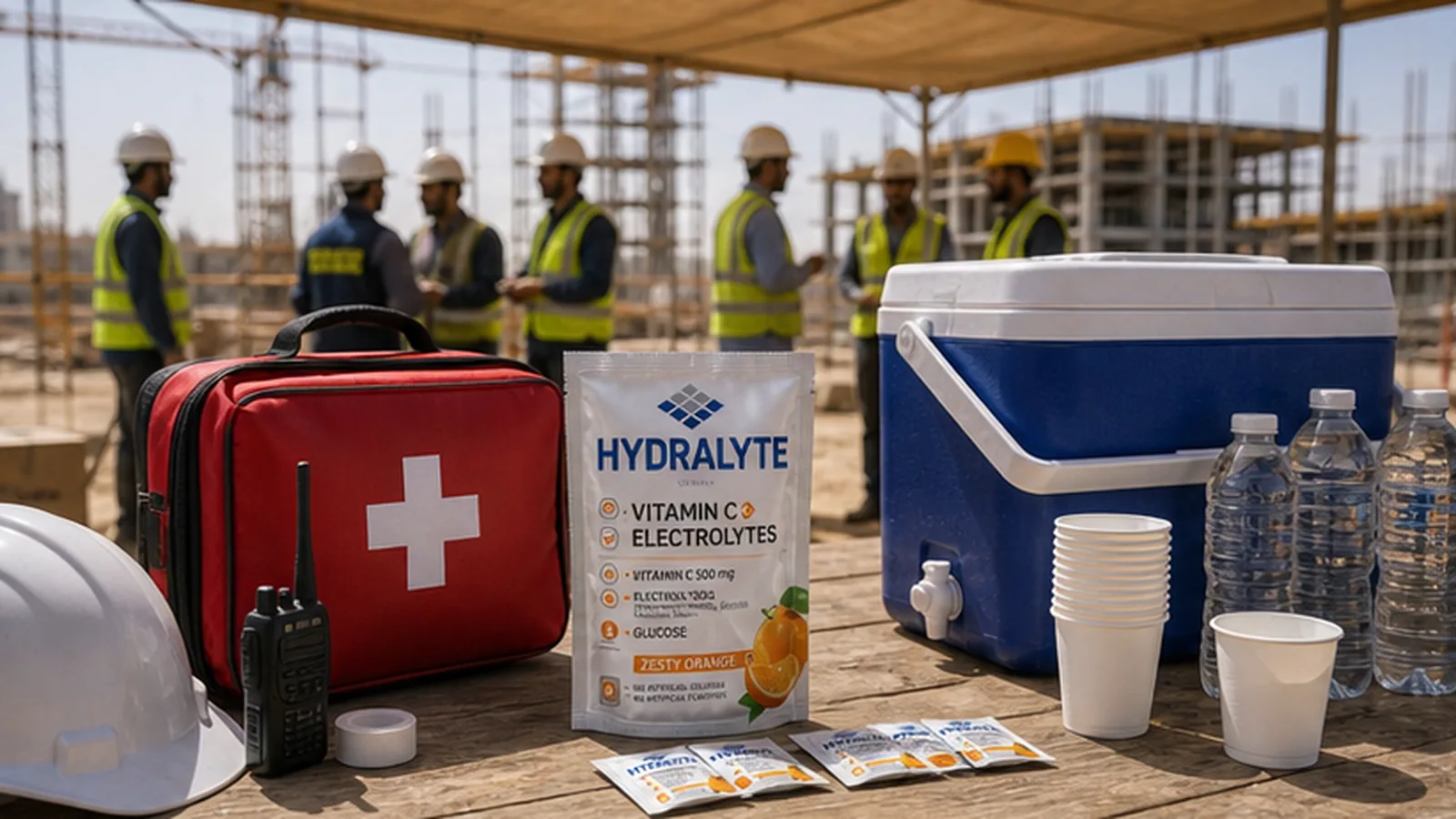
Hydralyte Emergency Response Kit for UAE Construction Sites
In the UAE's industrial and construction sectors, workforce diversity is a significant operational strength that presents unique challenges for health and safety compliance. A strategy for heat safety briefings in multiple languages is a critical component of risk management. When temperatures soar, the ability of every worker to understand and implement hydration protocols is the difference between a safe site and a medical emergency. For HR and HSE managers, the goal is to ensure essential safety data transcends linguistic barriers to reach every operative effectively.
The Linguistic Reality of UAE Heat Safety
The UAE outdoor workforce is a complex mosaic of nationalities. On a typical large-scale project, teams may speak:
- Hindi
- Urdu
- Bengali
- Nepali
- Tagalog
- Sinhala
- Arabic
Relying solely on English for heat safety briefings typically reaches only a small fraction of the workforce. Under MOHRE’s duty of care standards, safety information must be communicated and understood, not just presented. If a worker cannot demonstrate an understanding of <a href="/tools/heat-stress-assessment">heat stress</a> prevention due to a language barrier, the employer has not met their legal or ethical safety obligations.
Practical Strategies for Multilingual Heat Safety Delivery
Effective communication in a diverse environment requires moving beyond text-heavy posters. Toolbox talks provide the ideal forum for visual demonstrations that bypass language barriers. During these sessions, supervisors should:
- Physically demonstrate the preparation of Hydralyte
- Use a Hydralyte Sachet and water bottle to mime the mixing process
- Point to designated welfare stations
- Indicate specific time intervals on a watch
To reinforce these demonstrations, every provision point should feature laminated welfare station cards. These cards must provide clear instructions in Arabic, Hindi, Urdu, Tagalog, and Sinhala to ensure Hydralyte Sachets are used correctly throughout the shift.
Leveraging the Bilingual Supervisor Advantage
Empowering bilingual supervisors and welfare monitors is one of the most effective ways to ensure successful multilingual heat safety briefings. Key benefits include:
- Peer-to-peer education that carries more weight than external materials
- High compliance through native-language instruction (e.g., Nepali welfare monitors explaining Hydralyte stick packs)
- Full grasp of heat stress symptoms and specific mixing requirements regardless of English proficiency
To learn more about implementing a multilingual heat safety program and securing bulk electrolyte supplies, contact our team.
🏗 Protecting Outdoor Workers? Hydralyte supplies bulk electrolyte programs for construction, oil & gas, logistics, and manufacturing companies across the GCC — with full MoHRE compliance documentation. See Industry Hydration Programs →
Implementing a Construction Site Hydration Protocol
A structured hydration protocol is the most effective way to reduce heat-related incidents on UAE construction sites. This requires more than simply placing water coolers — it demands a systematic approach to electrolyte provision timed around work-rest cycles.
Start by mapping your site's thermal exposure zones. Areas with direct solar radiation, reflective surfaces (steel decking, concrete pours), and enclosed spaces all create different dehydration risk profiles. Workers in these high-risk zones should receive Hydralyte at each mandatory rest break, not just water.
Hydration stations should be placed within 50 metres of every active work zone, stocked with Hydralyte 800g pouches for mixing at volume. For workers in mobile roles (crane operators, surveyors, scaffolders), provide individual 20g sachets that can be carried in PPE pockets and mixed with any available water source.
Document every aspect of your hydration program — from procurement receipts to distribution logs. This documentation becomes critical evidence during MoHRE inspections and any heat illness incident investigations. A well-documented program demonstrates duty of care and can significantly reduce employer liability.
Heat Acclimatisation and Hydration for New Workers
New workers arriving on UAE construction sites face the highest dehydration risk. Research shows that heat acclimatisation takes 7–14 days of gradual exposure. During this period, new workers lose significantly more electrolytes through sweat as their bodies haven't yet adapted to the thermal environment.
Implement a graduated work schedule: 50% workload in week one, 75% in week two, with increased electrolyte provision during the entire acclimatisation period. Providing Hydralyte during induction sends a clear signal that your site takes heat safety seriously — and reduces the risk of losing new workers to heat-related illness in their first fortnight.
Frequently Asked Questions
Q: Is it a MOHRE requirement to deliver heat safety information in workers' home languages?
A: MOHRE requires that safety information be effectively communicated and understood. The duty of care standard in Federal Decree-Law No. 33 of 2021 is met only when workers can demonstrate they understand requirements. Briefing only in English to non-English-proficient workers is non-compliant in practice.
Q: What are the most important languages for heat safety materials on a UAE construction site?
A: Producing materials in Hindi, Urdu, Arabic, and Tagalog will typically cover 70-80% of workers who are not comfortable with English. Other common languages include Bengali and Nepali.
Q: What should a multilingual welfare station instruction card for Hydralyte include?
A: A laminated A4 card should feature:
- A numbered diagram showing visual mixing steps
- Time intervals shown on a clock face
- Symptoms to report illustrated via simple body diagrams
- The supervisor's name and phone number
🛒 Ready to try Hydralyte? Available in three refreshing flavours across multiple pack sizes — from individual sachets to 800g bulk pouches. Shop Hydralyte Online → or request a corporate quote.