Electrolyte Provision — Contractor vs Subcontractor Responsibility UAE
In the rapidly evolving skylines of Dubai, Abu Dhabi, and Sharjah, high-rise developments present unique safety challenges that ground-level protocols fail to address. While standard <a href="/tools/heat-stress-assessment">heat stress</a> programs work for horizontal sites, the vertical nature of tower construction introduces environmental variables that accelerate worker fatigue and fluid loss. Addressing heat stress in high-rise construction is a logistical necessity to ensure workers stationed dozens of floors above ground remain hydrated and productive.
The Unique Heat Environment of Upper-Floor Construction
Workers positioned above the 10th floor operate in a microclimate significantly more aggressive than at ground level due to several factors:
- Direct Exposure: No shade from surrounding structures or natural topography, leaving operatives in direct sunlight from every direction.
- High-Velocity Winds: Wind at height evaporates sweat with extreme rapidity, creating a deceptive cooling sensation that masks accelerated electrolyte depletion.
- Radiant Heat: Thermal loads are compounded by heat reflecting off metal formwork and glass facades.
- The Accessibility Gap: Descending 20 to 35 floors via a slow hoist to reach a ground-level welfare station often leads workers to skip necessary hydration intervals.
Personal Sachet Issue: The Only Practical Solution for Height
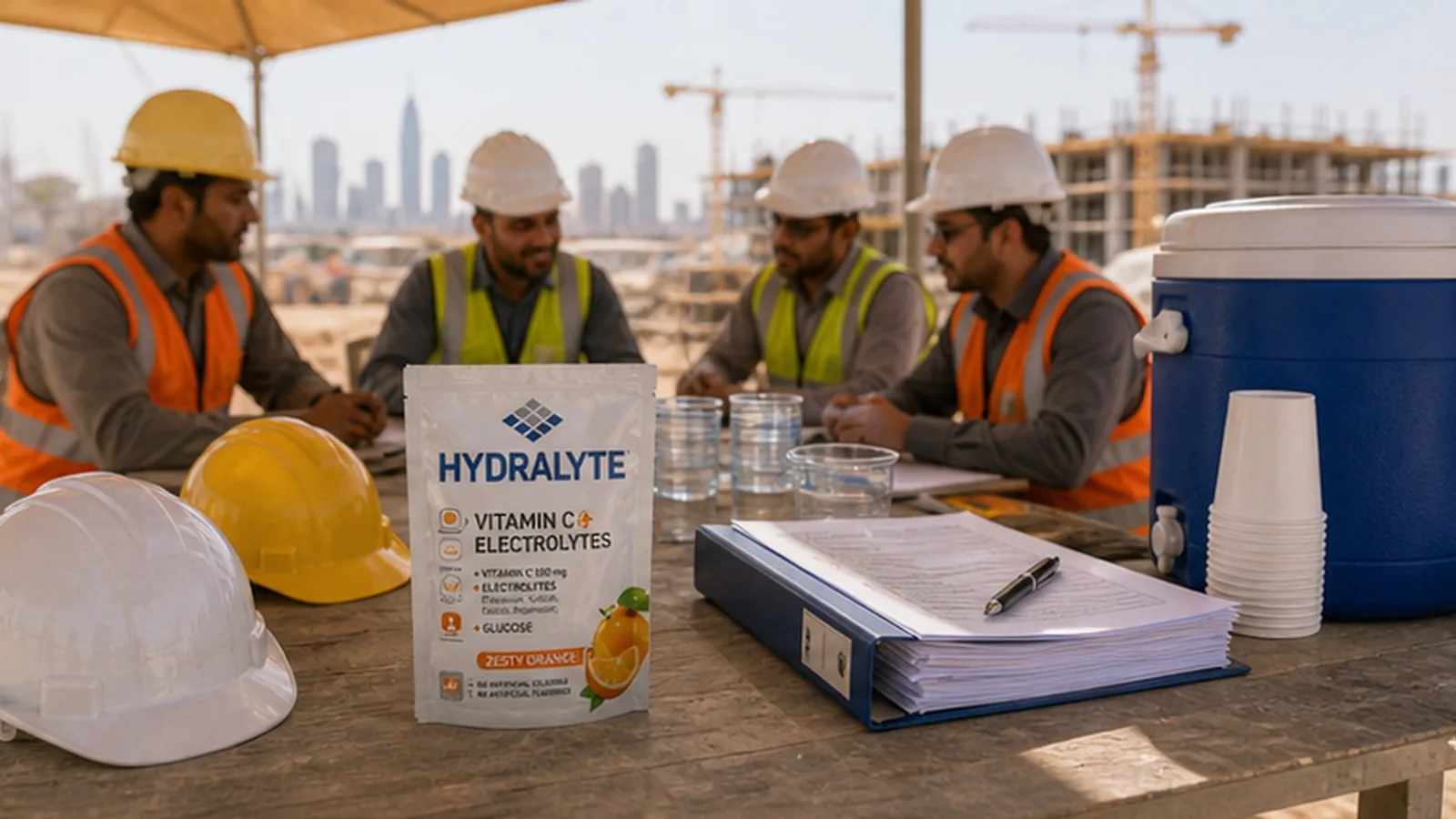
For high-rise sites, the traditional water-cooler model is insufficient. Individually sealed Hydralyte sachets represent the only effective delivery model for workers at height:
- Daily Provision: Provide each operative with a personal kit of 5-6 sachets at the start of their shift to eliminate distance barriers.
- Point-of-Work Hydration: Workers mix sachets into personal bottles at any available water connection on their specific floor.
- Verifiable Compliance: Using stick packs allows supervisors to easily verify that every worker has their required provision on their person.
The Dangers of Wind-Induced "False Comfort"
One of the most dangerous aspects of heat stress in UAE high-rise construction is the "false comfort" provided by wind. Key points for supervisor briefings include:
- Physiological Risk: Airflow does not reduce the actual risk; it simply speeds up the loss of essential salts and minerals.
- Self-Regulation Gap: Workers at height often feel less thirsty than ground-level counterparts despite depleting reserves faster.
- Mandatory Intervals: Explicit supervisor attention is required to ensure consumption happens at 45-60 minute intervals, regardless of perceived thirst.
To implement a specialized high-rise hydration protocol for your project, contact our team.
Clarifying Electrolyte Responsibility in UAE Contracting Chains
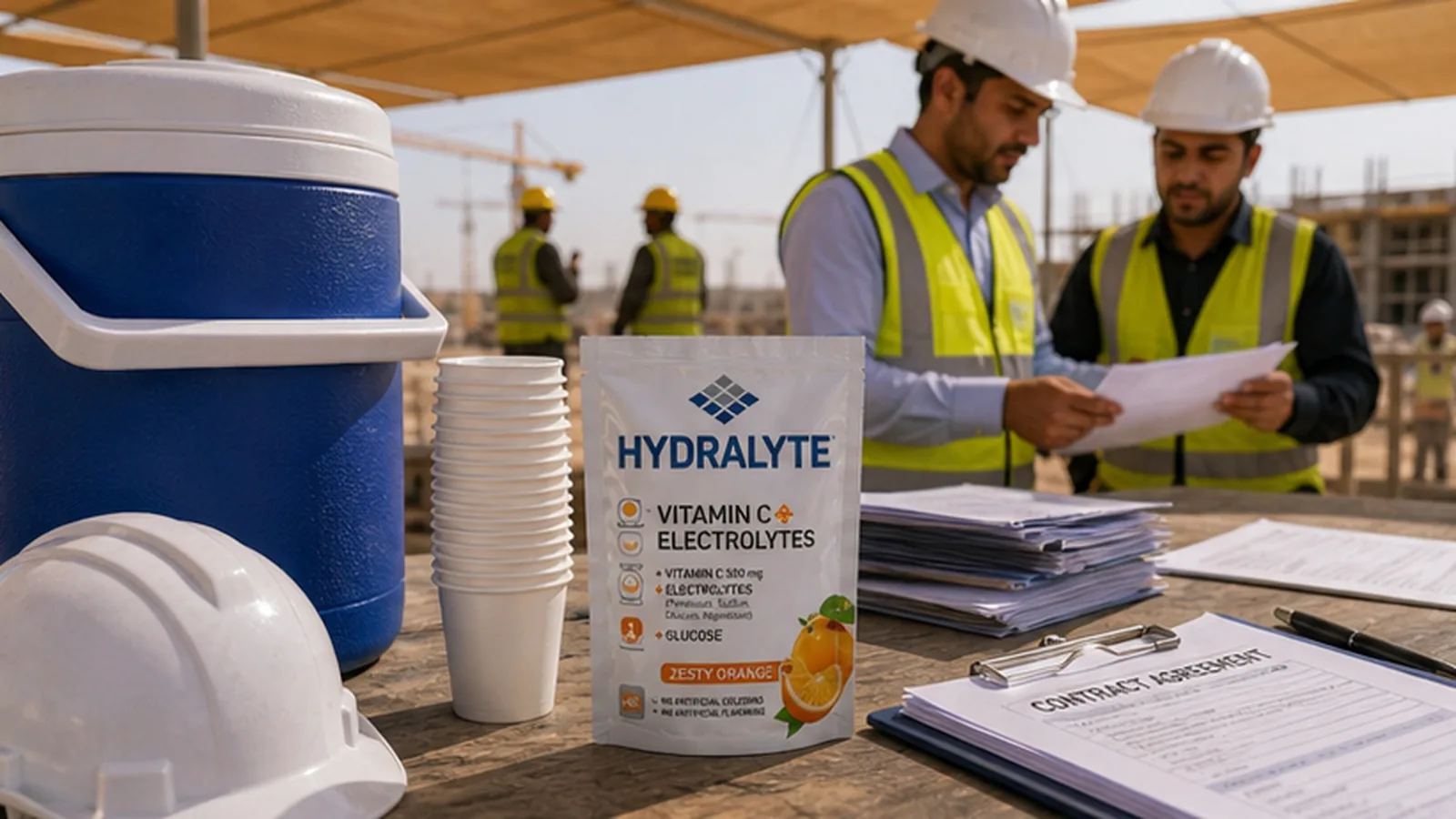
One of the most common compliance gaps in UAE construction is the question of who provides electrolytes when multiple contractors operate on the same site. The answer under MoHRE regulations is clear: the entity that employs the worker bears primary responsibility for their heat safety provisions.
However, principal contractors (Tier 1) are increasingly including electrolyte provision requirements in subcontractor agreements. This protects the principal contractor from reputational and legal exposure if a subcontractor's workers suffer heat illness on their site.
Best practice is for the principal contractor to establish a site-wide hydration standard — specifying the approved electrolyte product (Hydralyte), minimum consumption per worker per day, and welfare station distribution requirements. Subcontractors then either participate in the central program or demonstrate equivalent provision at their own welfare stations.
This approach simplifies MoHRE audit compliance because inspectors see a unified hydration program rather than a patchwork of different products and standards across contractors.
🏗 Protecting Outdoor Workers? Hydralyte supplies bulk electrolyte programs for construction, oil & gas, logistics, and manufacturing companies across the GCC — with full MoHRE compliance documentation. See Industry Hydration Programs →
The Hydralyte Advantage for UAE and GCC Conditions
Hydralyte is a potassium-rich, low-sodium isotonic electrolyte formula designed specifically for proactive daily hydration — not just reactive emergency recovery. With 500mg Vitamin C per serve and a low-sugar formula, it provides comprehensive hydration support for anyone living, working, or exercising in the extreme heat of the UAE and GCC.
Unlike traditional ORS sachets designed for acute illness, or high-sugar sports drinks designed for athletic performance, Hydralyte is formulated for safe, repeated daily consumption across the entire summer season. This makes it the preferred choice for workplace hydration programs, family use, and fitness enthusiasts across the region.
Available in three flavours (Orange Blast, Lemon Lime, Pineapple) and four pack sizes, Hydralyte is stocked online and across GCC retail, with bulk corporate supply available for businesses with 50+ workers.
Frequently Asked Questions
Q: Why do upper-floor construction workers in the UAE dehydrate faster than ground-level workers?
On upper floors, high wind speeds evaporate sweat more rapidly. This creates a subjective feeling of coolness that masks a faster fluid and electrolyte deficit, making these workers uniquely vulnerable.
Q: How should MOHRE welfare station requirements apply to upper-floor workers?
MOHRE compliance for high-rise construction requires practical access to provisions. Because ground-level stations fail to provide this for elevated workers, sites must provide:
- Welfare provision points at each hoist stop, OR
- Personal-issue sachets to give workers direct access without needing to descend.
Q: What is the recommended daily sachet allocation for a UAE upper-floor construction worker?
- Quantity: Issue 5-6 individually sealed sachets per worker at the start of the shift.
- Frequency: One sachet every 45-60 minutes for a 5-6 hour outdoor shift.
- Monitoring: Supervisors should confirm consumption at each interval and log it on a floor-level distribution sheet.
🛒 Ready to try Hydralyte? Available in three refreshing flavours across multiple pack sizes — from individual sachets to 800g bulk pouches. Shop Hydralyte Online → or request a corporate quote.