Mitigating <a href="/tools/heat-stress-assessment">Heat Stress</a> for Steel Fixers in the UAE: Protecting High-Risk Specialist Crews
In the hierarchy of thermal risk on UAE construction sites, certain specialist groups face a burden far exceeding the site average. Managing heat stress for steel fixers in the UAE and roofing crews requires more than standard hydration protocols; it demands an understanding of radiant heat and specialized electrolyte intervention. Because these workers interact with materials that amplify ambient temperatures, their physiological strain reaches critical levels faster than general labor, necessitating a dedicated safety sub-protocol to prevent heat-related incidents and maintain operational productivity.
The Extreme Radiant Heat Environment of Steel Fixing
Steel reinforcement bars are high-density thermal conductors. On a typical UAE summer site, rebar sitting in direct sun can reach surface temperatures between 65°C and 85°C within a few hours of sunrise. For those managing heat stress for steel fixers in the UAE, it is vital to recognize the specific risks:
- Workers battle intense radiant heat loads from the metal itself, not just air temperature.
- Handling, tying, and placing reinforcement create a localized microclimate significantly more extreme than standard air thermometer readings.
- Physical exertion from maneuvering heavy steel accelerates internal metabolic heat production.
- The combination creates a dual-threat environment of external radiant heat and internal physical strain.
Understanding Triaxial Heat Input for Roofing Specialists
Roofers operating in the UAE face a unique and dangerous heat profile known as triaxial heat input. While installing bitumen, tiles, or metal roofing sheets, these specialists are exposed to heat from three distinct sources simultaneously:
- Direct overhead solar radiation
- Ambient air temperature
- Upward radiant heat reflected from the roofing surface
Because roofing work offers zero shade access, surfaces absorb and re-radiate extreme temperatures without relief. This continuous exposure drives sweat rates to the absolute upper limit, leading to rapid electrolyte depletion that plain water cannot adequately replenish.
Enhanced Provision Protocols and Personal Sachet Carry
Due to the extreme nature of their work, steel fixers and roofers must be classified as maximum heat exposure category workers. Standard hydration intervals of 45–60 minutes are insufficient. Instead, an enhanced protocol should be implemented:
- Required intake: One Hydralyte serving every 30–40 minutes.
- Logistical challenge: Elevated structures and expansive roofs make central welfare stations difficult to access.
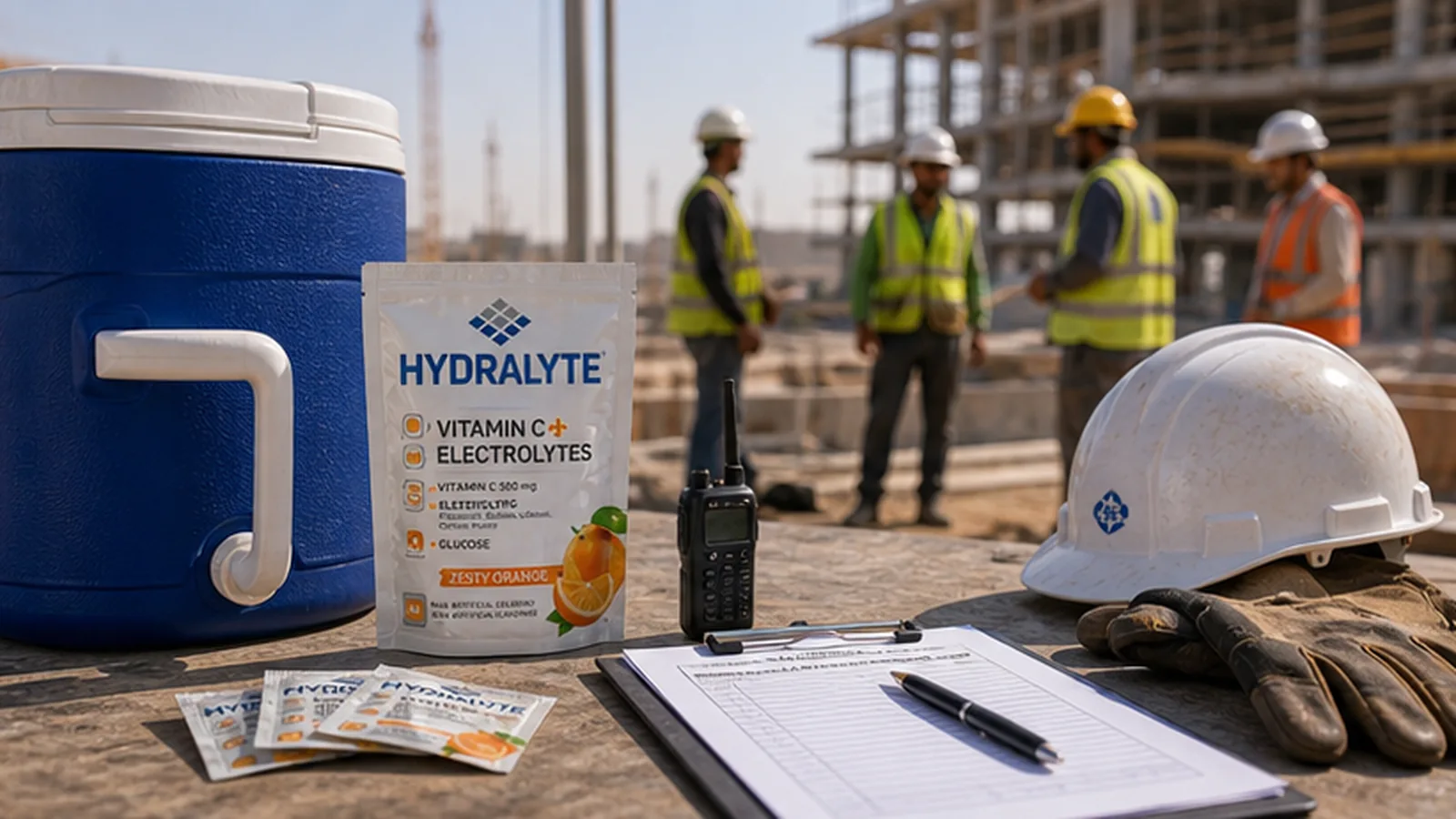
- Solution: Issue personal Hydralyte sachets at the start of every shift.
- Benefit: Personal carry allows workers to maintain electrolyte balance without descending to ground level, ensuring cognitive and physical performance remains stable.
To implement a specialized heat stress protocol for your specialist steel and roofing crews, contact us at /contactus.
🏗 Protecting Outdoor Workers? Hydralyte supplies bulk electrolyte programs for construction, oil & gas, logistics, and manufacturing companies across the GCC — with full MoHRE compliance documentation. See Industry Hydration Programs →
Implementing a Construction Site Hydration Protocol
A structured hydration protocol is the most effective way to reduce heat-related incidents on UAE construction sites. This requires more than simply placing water coolers — it demands a systematic approach to electrolyte provision timed around work-rest cycles.
Start by mapping your site's thermal exposure zones. Areas with direct solar radiation, reflective surfaces (steel decking, concrete pours), and enclosed spaces all create different dehydration risk profiles. Workers in these high-risk zones should receive Hydralyte at each mandatory rest break, not just water.
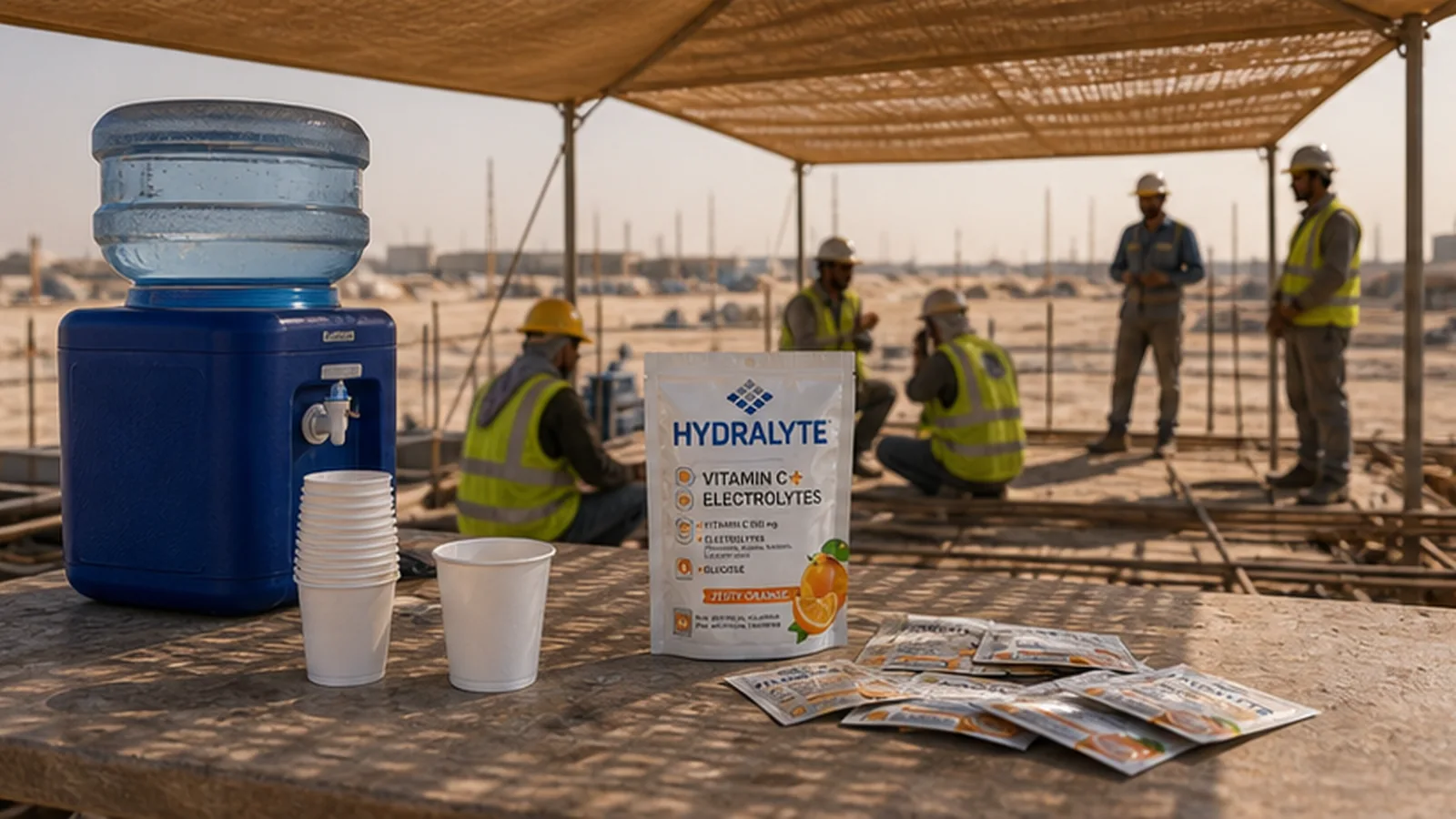
Hydration stations should be placed within 50 metres of every active work zone, stocked with Hydralyte 800g pouches for mixing at volume. For workers in mobile roles (crane operators, surveyors, scaffolders), provide individual 20g sachets that can be carried in PPE pockets and mixed with any available water source.
Document every aspect of your hydration program — from procurement receipts to distribution logs. This documentation becomes critical evidence during MoHRE inspections and any heat illness incident investigations. A well-documented program demonstrates duty of care and can significantly reduce employer liability.
Heat Acclimatisation and Hydration for New Workers
New workers arriving on UAE construction sites face the highest dehydration risk. Research shows that heat acclimatisation takes 7–14 days of gradual exposure. During this period, new workers lose significantly more electrolytes through sweat as their bodies haven't yet adapted to the thermal environment.
Implement a graduated work schedule: 50% workload in week one, 75% in week two, with increased electrolyte provision during the entire acclimatisation period. Providing Hydralyte during induction sends a clear signal that your site takes heat safety seriously — and reduces the risk of losing new workers to heat-related illness in their first fortnight.
Frequently Asked Questions
Q: At what temperature do steel reinforcement bars reach on a UAE summer construction site?
A: Steel rebar in the direct UAE summer sun typically reaches surface temperatures of 65–85°C within 2–3 hours of sunrise. Workers handle these bars while tying and fixing, placing them among the highest-risk workers on any site.
Q: Why should roofers receive Hydralyte every 30–40 minutes rather than the standard 45–60?
A: Roofers work on surfaces reaching 70–80°C. The triaxial heat input (overhead sun, ambient air, and surface radiation) drives sweat rates to the extreme upper end of the range, requiring frequent electrolyte provision.
Q: Can steel fixers and roofers access a central welfare station during their shifts?
A: Typically not without a 10–15 minute work interruption. The only effective model is personal sachet issue at the shift start, supplemented by supervisors carrying emergency sachets to ensure compliance without disrupting the work cycle.
🛒 Ready to try Hydralyte? Available in three refreshing flavours across multiple pack sizes — from individual sachets to 800g bulk pouches. Shop Hydralyte Online → or request a corporate quote.