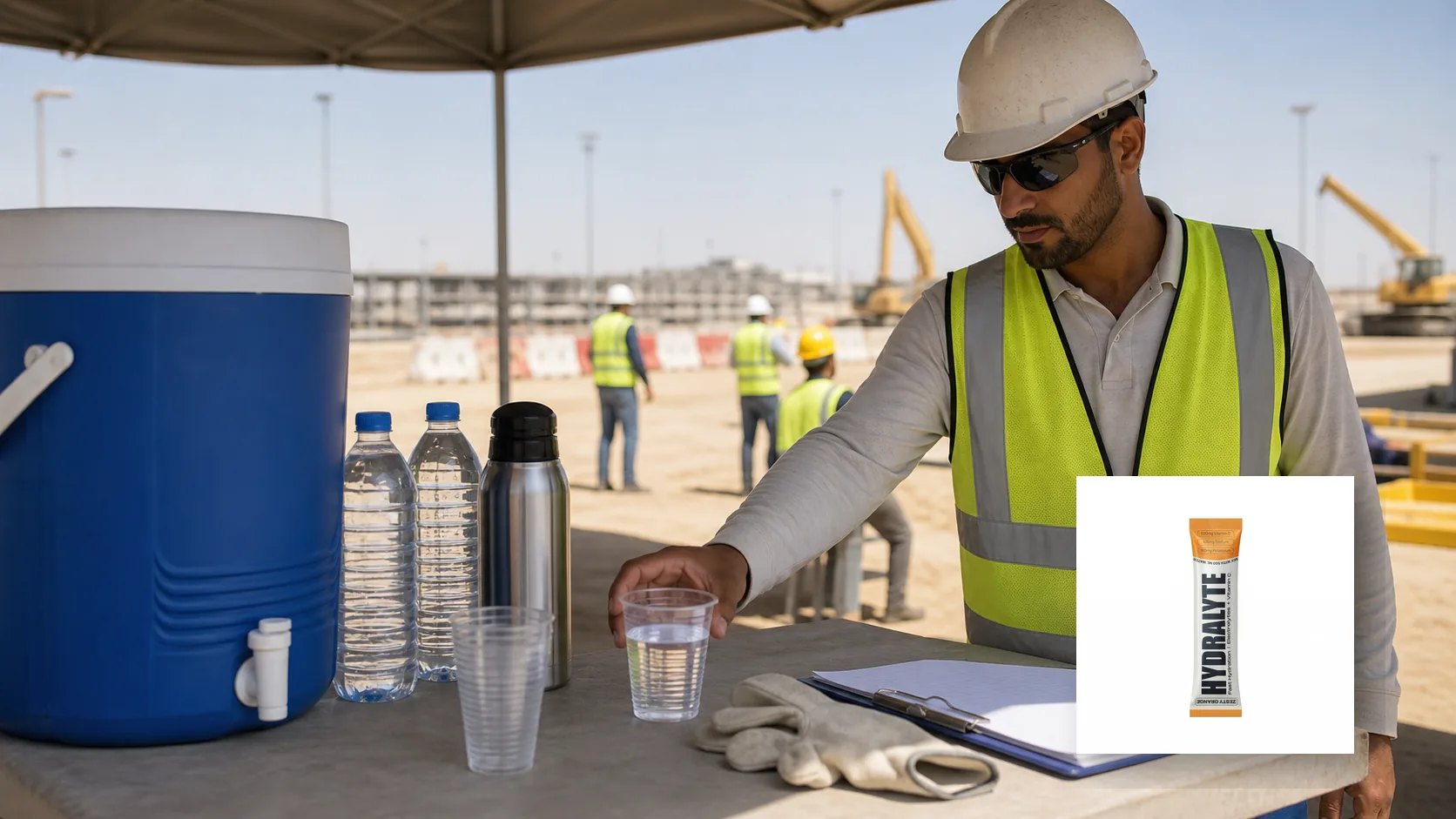
Dehydration symptoms can creep up on you faster than you think — especially in the UAE, where temperatures routinely exceed 40°C and humidity can make even a short walk feel like a workout. Most people don't realise they're dehydrated until it's already affecting how they think, move, and feel. Understanding what's happening inside your body is the first step to staying ahead of it.
What Happens to Your Body When You're Dehydrated
Your body is roughly 60% water. Every system — from your brain to your kidneys to your muscles — depends on water to function. Dehydration occurs when your body loses more fluids than it takes in, disrupting this balance. It's not just about thirst. By the time you feel thirsty, you're already mildly dehydrated.
In the UAE, fluid loss happens faster than most people expect. Heat, humidity, and air-conditioned environments (which dry out the air) all accelerate water loss through sweat and respiration. Add exercise, fasting, or illness to the mix, and the fluid deficit can become significant quickly.
Hydration isn't just about water intake, either. Your body needs electrolytes — sodium, potassium, and chloride — to absorb and retain fluid at the cellular level. That's why plain water isn't always enough, particularly when you're sweating heavily or unwell.
Early Dehydration Symptoms: What to Watch For
Mild dehydration — a fluid loss of just 1–2% of body weight — is enough to cause noticeable changes. These early dehydration symptoms are easy to dismiss, but they're your body's first warning signals:
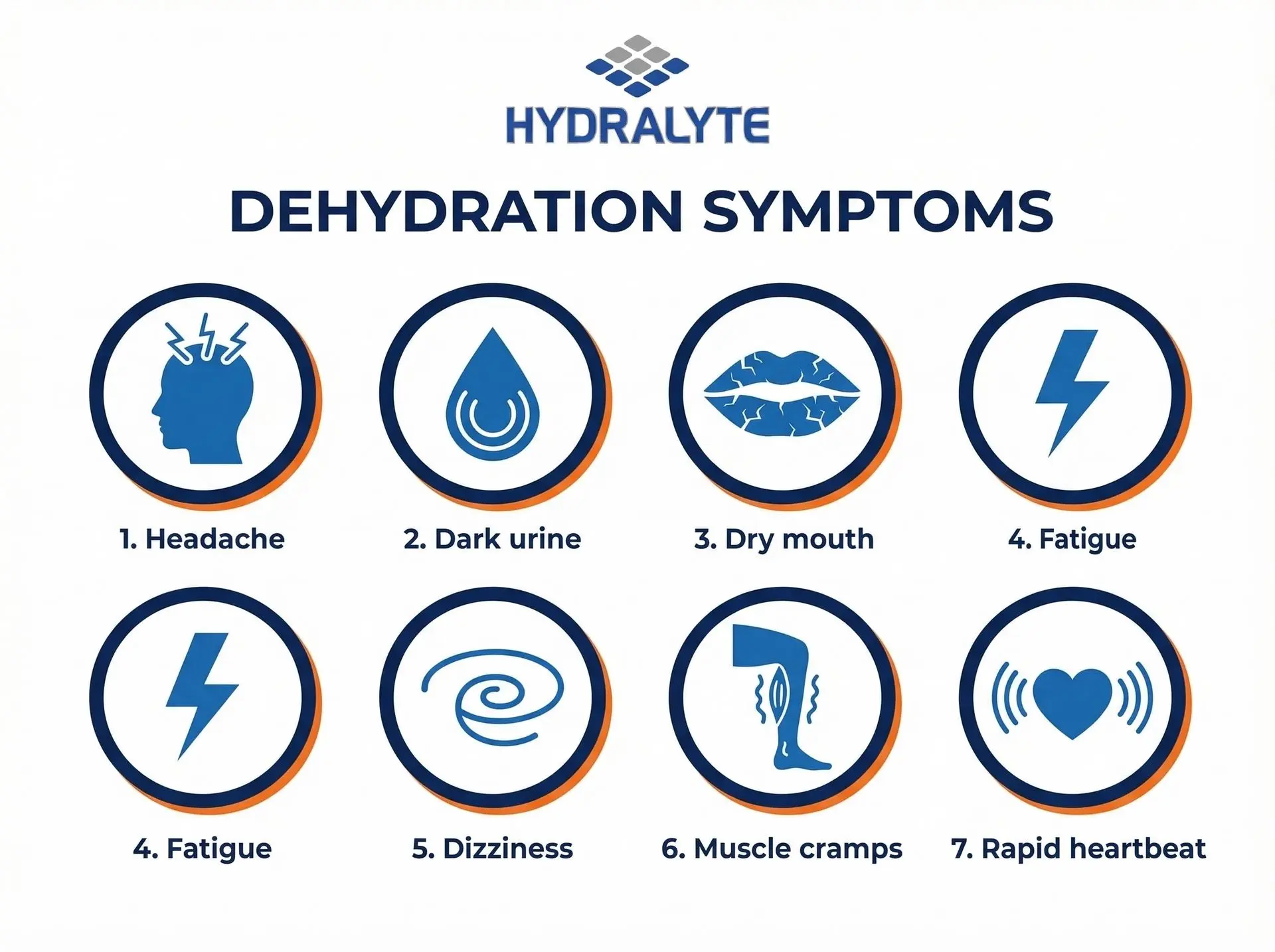
Thirst and dry mouth. The most obvious sign, but also one of the last to appear in the early stages. If you're thirsty, you're already behind on fluids.
Dark or reduced urine. Healthy hydration produces pale yellow urine. Dark yellow or amber urine indicates your kidneys are conserving water — a reliable early indicator. No urine for several hours is a more serious sign.
Headache. One of the most common and overlooked dehydration symptoms. When fluid levels drop, blood volume decreases, reducing oxygen and glucose delivery to the brain. Even mild dehydration can trigger tension-type headaches.
Fatigue and low energy. Dehydration reduces blood volume, making your heart work harder to circulate oxygen. The result is that heavy, sluggish feeling even after a full night's sleep.
Difficulty concentrating. Studies show that even 1–2% dehydration can impair cognitive performance, including memory, attention, and reaction time — a real concern for anyone working outdoors or in demanding roles in the UAE.
Moderate Dehydration: When It Gets Serious
As fluid loss increases to 3–5% of body weight, dehydration symptoms become harder to ignore:
Muscle cramps. Electrolyte imbalances — particularly low sodium and potassium — cause involuntary muscle contractions. This is common in endurance athletes and outdoor workers in the UAE summer.
Dizziness and lightheadedness. Reduced blood pressure from low fluid volume can cause dizziness, especially when standing up quickly (orthostatic hypotension).
Rapid heartbeat and breathing. Your heart compensates for reduced blood volume by beating faster. This increases your breathing rate as well.
Dry skin with reduced elasticity. Pinch the skin on the back of your hand — if it doesn't snap back quickly, dehydration may be a factor.
According to the international clinical, moderate dehydration in children can be identified by sunken eyes, reduced skin elasticity, and increased irritability. In adults, similar signs apply, though the threshold of severity differs.
Severe Dehydration: A Medical Emergency
Fluid loss exceeding 8–10% of body weight constitutes severe dehydration and requires immediate medical attention. Signs include extreme thirst, confusion or disorientation, no urine output, sunken eyes, rapid weak pulse, and cold or mottled skin. In the context of UAE's summer heat, severe dehydration can progress to heat stroke — a life-threatening condition.
Research published in PubMed confirms that heat stroke occurs when the body's temperature regulation fails, often as a direct consequence of severe dehydration. Core temperature rises above 40°C, causing damage to the brain and internal organs if not treated within minutes.
If you or someone around you shows signs of severe dehydration or heat stroke, call emergency services immediately and move to a cool, shaded area. Begin oral rehydration if the person is conscious and able to swallow.
How to Rehydrate Properly
For mild to moderate dehydration, the goal is to replace both fluids and electrolytes. Water alone can actually dilute the electrolytes remaining in your body if consumed rapidly in large quantities — a condition called hyponatremia.
Oral rehydration solutions (ORS) are formulated to replace fluids and electrolytes in the correct ratio. The clinical oral rehydration standard calls for a specific balance of sodium, glucose, and water that maximises absorption in the small intestine through a process called sodium-glucose cotransport. This is the science behind Hydralyte's formulation.
Practical rehydration steps for mild to moderate dehydration:
Sip fluids slowly rather than drinking large amounts quickly. Move to a cool, air-conditioned space if possible. Use an oral rehydration solution rather than plain water or sports drinks if you've been sweating heavily, vomiting, or have diarrhoea. Avoid caffeine and alcohol, which increase fluid loss. If symptoms persist or worsen, seek medical advice.
Preventing Dehydration in the UAE
Prevention is far easier than recovery. In the UAE climate, the general advice to drink "8 glasses a day" often isn't enough — especially in summer or during physical activity. Your individual fluid needs depend on body weight, activity level, heat exposure, and health status.
Practical habits that help: Carry water and electrolytes with you at all times. Start your morning with a glass of water before coffee. Monitor your urine colour throughout the day. If you're fasting during Ramadan, prioritise electrolyte replenishment at suhoor and iftar. For those working outdoors, take hydration breaks every 15–20 minutes — don't wait until you're thirsty.
Frequently Asked Questions
What are the first signs of dehydration to look out for?
The earliest dehydration symptoms include mild thirst, dry mouth, slightly reduced urine output, and the beginnings of a headache. Many people also notice a subtle drop in energy or concentration before they feel overtly thirsty. Checking your urine colour is one of the most reliable self-assessments — aim for pale yellow.
Can you be dehydrated even if you drink water regularly?
Yes. If you're sweating heavily, exercising, or experiencing illness (vomiting, diarrhoea), your body loses electrolytes alongside water. Replacing fluid without electrolytes can dilute sodium levels in your blood, potentially worsening symptoms. In these situations, an oral rehydration solution is more effective than plain water alone.
How long does it take to recover from dehydration?
Mild dehydration can be resolved within 30–60 minutes of adequate fluid and electrolyte intake. Moderate dehydration may take several hours. Severe dehydration typically requires medical intervention and intravenous fluids. Recovery time also depends on the underlying cause — heat, illness, or exercise.
Ready to Hydrate Smarter?
Understanding dehydration symptoms gives you the knowledge to act before minor fluid loss becomes a real problem — especially in the UAE's heat. Whether you're managing a long outdoor day, recovering from an intense workout, or simply making sure your family stays well, the right hydration approach makes a measurable difference.
Hydralyte is formulated as an isotonic oral rehydration drink, making it one of the most effective ways to replace both fluids and electrolytes quickly. Shop Hydralyte in the UAE → | For bulk orders and wholesale enquiries, contact our team →
This article is for informational purposes only and does not constitute medical advice. Consult a healthcare professional for personalised guidance.
The Hydralyte Advantage for UAE and GCC Conditions
Hydralyte is a potassium-rich, low-sodium isotonic electrolyte formula designed specifically for proactive daily hydration — not just reactive emergency recovery. With 500mg Vitamin C per serve and a low-sugar formula, it provides comprehensive hydration support for anyone living, working, or exercising in the extreme heat of the UAE and GCC.
Unlike traditional ORS sachets designed for acute illness, or high-sugar sports drinks designed for athletic performance, Hydralyte is formulated for safe, repeated daily consumption across the entire summer season. This makes it the preferred choice for workplace hydration programs, family use, and fitness enthusiasts across the region.
Available in three flavours (Orange Blast, Lemon Lime, Pineapple) and four pack sizes, Hydralyte is stocked online and across GCC retail, with bulk corporate supply available for businesses with 50+ workers.
🏗 Protecting Outdoor Workers? Hydralyte supplies bulk electrolyte programs for construction, oil & gas, logistics, and manufacturing companies across the GCC — with full MoHRE compliance documentation. See Industry Hydration Programs →