Electrolytes vs Water for <a href="/tools/heat-stress-assessment">Heat Stress</a> Prevention: The Science UAE Employers Need
The most common misunderstanding in UAE workplace heat safety is the assumption that providing water is sufficient to prevent heat illness. It is not. This is not a minor technical distinction — the difference between adequate water consumption and adequate electrolyte replenishment is, in extreme UAE conditions, the difference between a worker who remains functional and one who progresses into heat exhaustion despite drinking water throughout the shift. Understanding why requires a brief look at what sweat actually contains and what the body needs to recover from it.
What Sweat Actually Contains — and Why It Matters
Human sweat is not pure water. It is a complex fluid containing sodium, potassium, chloride, calcium, and magnesium — the electrolytes that govern fluid balance, muscle function, nerve transmission, and cardiac rhythm. A worker performing heavy outdoor labor in 45°C UAE conditions sweats at a rate of one to two liters per hour. Each liter of sweat carries approximately 1.5 to 2.5 grams of sodium and proportional quantities of other electrolytes. Over a four-hour morning shift before the midday ban, a worker can lose 10 grams of sodium and significant potassium — losses that directly impair the body's ability to maintain safe temperature regulation, muscle function, and cognitive performance.
Why Replacing Sweat with Water Makes Things Worse
When workers drink only water to replace sweat volume, they restore fluid levels but progressively dilute the remaining electrolyte concentrations in their blood — a condition called exercise-associated hyponatremia. The kidneys respond to excess water by excreting it, which means the worker urinates away the fluid that should be restoring hydration. Muscle cramps, weakness, nausea, and confusion — the hallmarks of heat exhaustion — are driven primarily by electrolyte depletion, not pure water deficit. Giving a worker with heat cramps a bottle of water may provide temporary comfort but will not address the electrolyte imbalance causing the symptoms. MOHRE's own technical guidelines explicitly distinguish between water and electrolyte supplement as distinct mandatory provisions for this reason.
The Mechanism That Makes Electrolyte Solutions Work
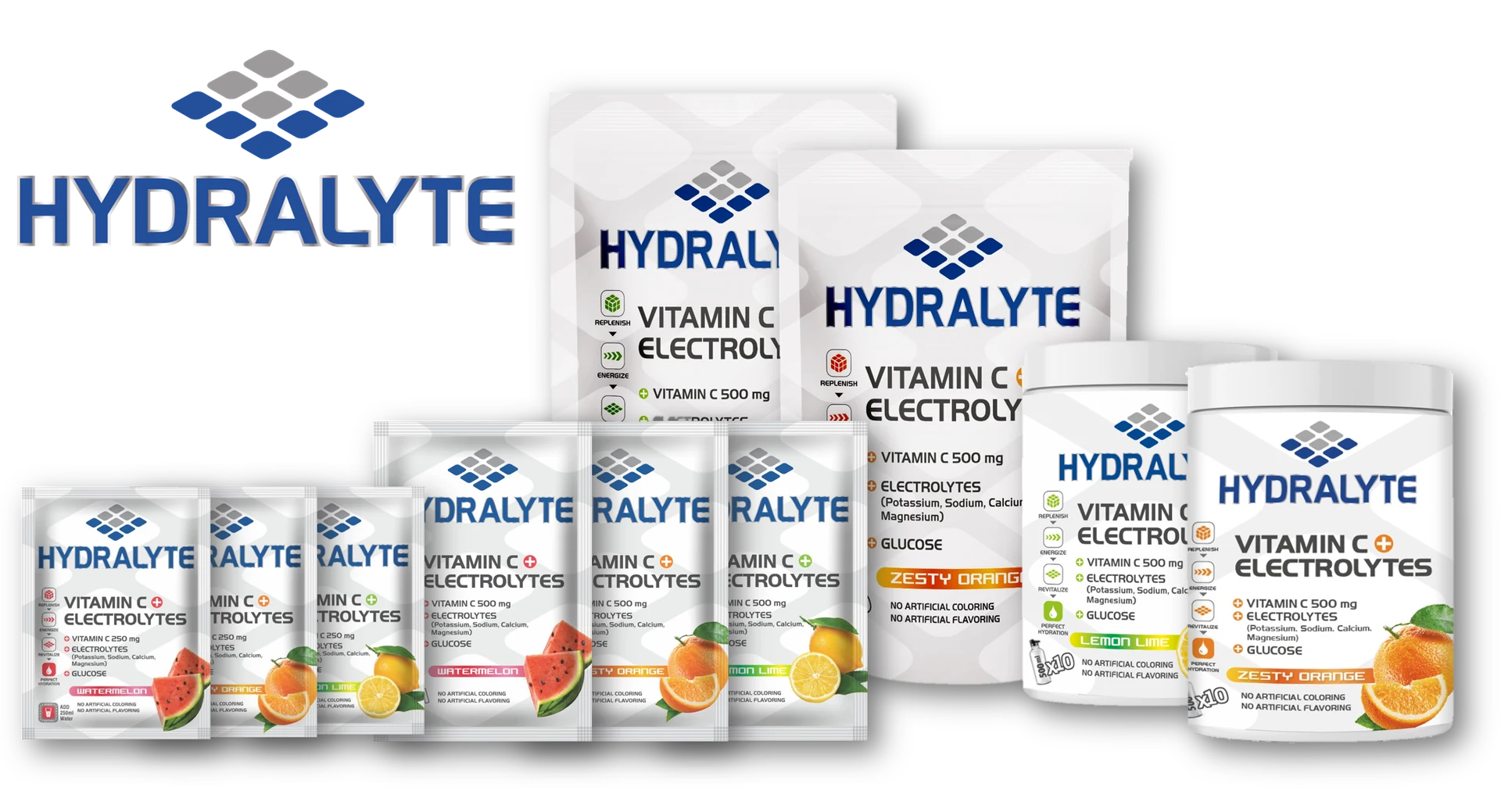
Oral rehydration solutions like Hydralyte work through a specific physiological mechanism: the sodium-glucose cotransport system in the intestinal wall. When sodium and glucose are present together at appropriate concentrations, the intestine actively pumps both into the bloodstream, dramatically accelerating fluid absorption compared to water alone. This is why Hydralyte absorbs at rates described as comparable to intravenous hydration. The isotonic formulation — matching the electrolyte concentration of blood — ensures absorbed fluid stays in circulation rather than being eliminated. Hydralyte's potassium-forward, low-sodium formula delivers 180mg Potassium and 105mg Sodium per serving in the new stick pack format, specifically calibrated for the sustained, repeated consumption pattern of workers in prolonged heat exposure.
What This Means for Your Site Hydration Program
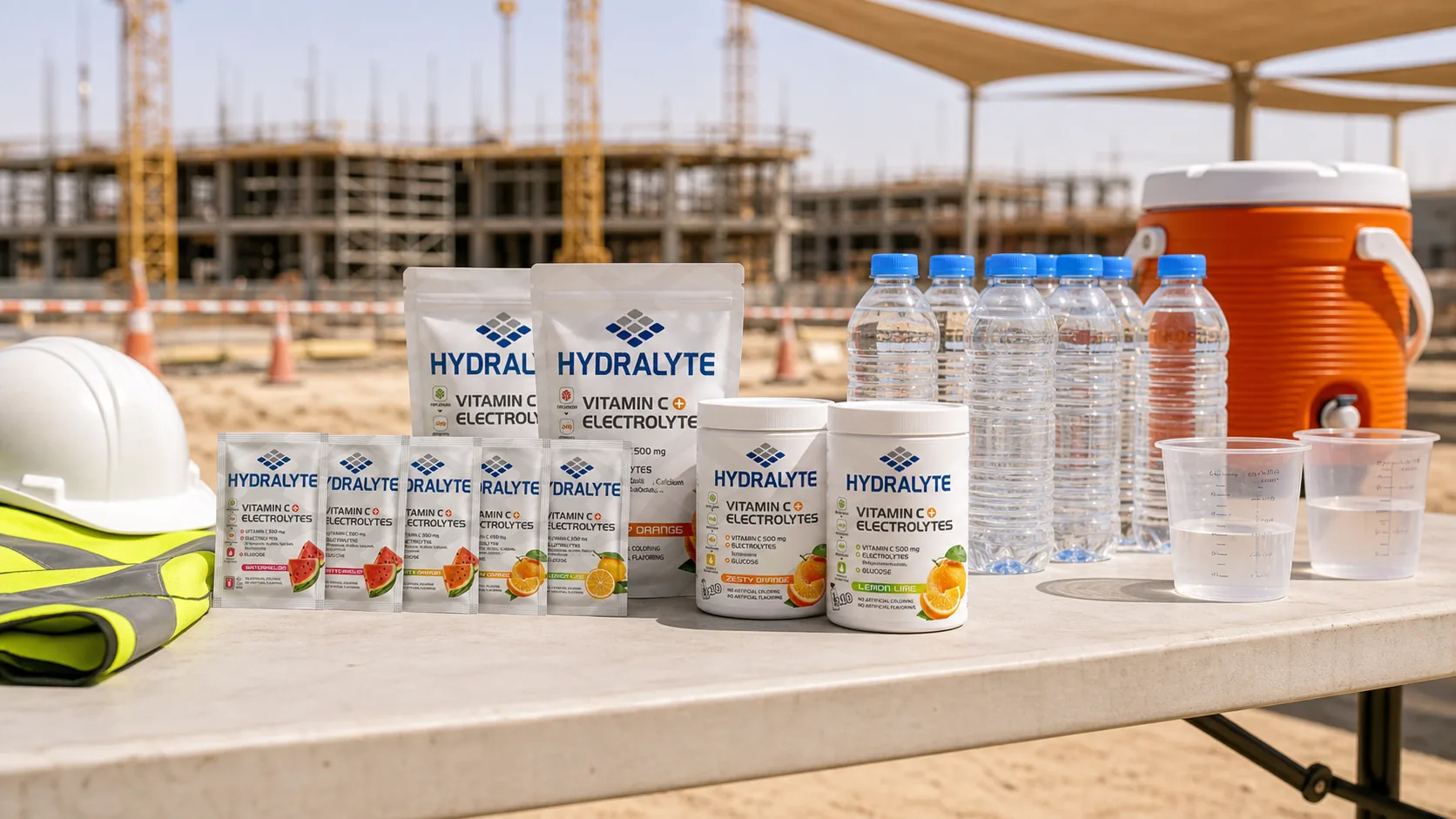
Water remains important and must always be freely available. But the electrolyte program is what provides protection under UAE heat stress conditions. The practical implementation: deploy Hydralyte sachets, stick packs, or jars at all outdoor work stations; establish a scheduled serving frequency enforced by supervisors; and document distribution at each interval. Sites that have both free water access and a structured electrolyte program meet MOHRE requirements and achieve meaningful heat illness prevention. Learn more about ORS and what makes an electrolyte solution effective.
Frequently Asked Questions
Is it dangerous for outdoor workers to drink only water in UAE summer heat?
Yes. Replacing sweat with only water without electrolyte replacement leads to hyponatremia — diluted blood sodium — that worsens heat illness symptoms even as the worker drinks more fluid. Electrolyte replenishment alongside water is essential, and MOHRE explicitly requires both as distinct provisions.
How much faster does Hydralyte absorb compared to plain water?
Hydralyte's sodium-glucose cotransport mechanism enables active intestinal absorption dramatically faster than water's passive osmotic absorption. The isotonic concentration ensures absorbed fluid stays in blood circulation rather than being eliminated by the kidneys.
Should workers stop drinking water when they use Hydralyte?
No. Water and Hydralyte work together. Hydralyte replaces electrolytes lost through sweating; water provides the fluid volume. Most compliant UAE programs supply Hydralyte on a scheduled basis plus free water access between intervals.
Recognising the Stages of Heat-Related Illness
Heat-related illness progresses through distinct stages, each requiring escalating intervention. Understanding these stages enables supervisors to intervene early — before a heat stress incident becomes a medical emergency.
- Stage 1 — Heat Cramps: Muscle spasms in legs, arms, or abdomen. Caused by electrolyte depletion. Intervention: Rest in shade, provide Hydralyte, stretch affected muscles.
- Stage 2 — Heat Exhaustion: Heavy sweating, weakness, cold/clammy skin, nausea, dizziness. Core temperature below 40°C. Intervention: Remove from heat immediately, cool actively, provide Hydralyte, monitor for 30 minutes.
- Stage 3 — Heat Stroke: Hot/dry skin, confusion, loss of consciousness, core temperature above 40°C. Medical emergency. Intervention: Call emergency services immediately, cool aggressively, do NOT give fluids if unconscious.
The critical window between heat exhaustion and heat stroke can be as short as 15–30 minutes. Proactive electrolyte hydration with Hydralyte throughout the workday prevents workers from ever reaching Stage 1.
Building a Site-Level Heat Stress Response Plan
Every outdoor work site in the UAE should have a documented heat stress response plan that includes: designated cool-down zones within 50m of work areas, trained first aiders on every shift, emergency cooling equipment (ice packs, misting fans), and pre-positioned Hydralyte electrolyte stocks at every welfare station and first aid point.
Train all workers — not just supervisors — to recognise heat stress symptoms in colleagues. Buddy-system monitoring is one of the most effective early warning mechanisms, especially during peak heat hours. Ensure your plan includes MoHRE compliance documentation requirements.
🏗 Protecting Outdoor Workers? Hydralyte supplies bulk electrolyte programs for construction, oil & gas, logistics, and manufacturing companies across the GCC — with full MoHRE compliance documentation. See Industry Hydration Programs →
🛒 Ready to try Hydralyte? Available in three refreshing flavours across multiple pack sizes — from individual sachets to 800g bulk pouches. Shop Hydralyte Online → or request a corporate quote.