Signs of Dehydration in GCC Outdoor Workers: A Supervisor's Field Guide
In GCC summer conditions, dehydration progresses faster than most supervisors expect. A worker who feels well at the start of a shift can reach moderate dehydration within 90 minutes without adequate electrolyte intake, and severe dehydration — with compromised cognitive function and physical capacity — within three hours. The challenge for site supervisors is that outdoor workers often fail to self-report dehydration symptoms: some do not recognize them, some are culturally reluctant to appear physically weak, and some have their judgment impaired by the very condition they are experiencing. Supervisors must know what to look for independently of worker self-reporting.
Stage 1: Mild Dehydration — 1 to 2 Percent Body Weight Loss
At this stage a worker has lost approximately one to 1.5 liters of fluid without replacement. Symptoms are subtle but identifiable: mild thirst, slightly darker yellow urine if the worker has used facilities recently, dry or slightly sticky mouth, minor fatigue that seems disproportionate to the workload, and marginally reduced work pace or attention. This is the ideal intervention stage — one Hydralyte serving administered here restores fluid and electrolyte balance before any physiological impairment takes hold. The critical point: thirst is a lagging indicator, not a leading one. A worker who feels thirsty has already reached mild dehydration. This is why scheduled hydration programs that do not wait for workers to request drinks are essential in GCC heat conditions.
Stage 2: Moderate Dehydration — 3 to 5 Percent Body Weight Loss
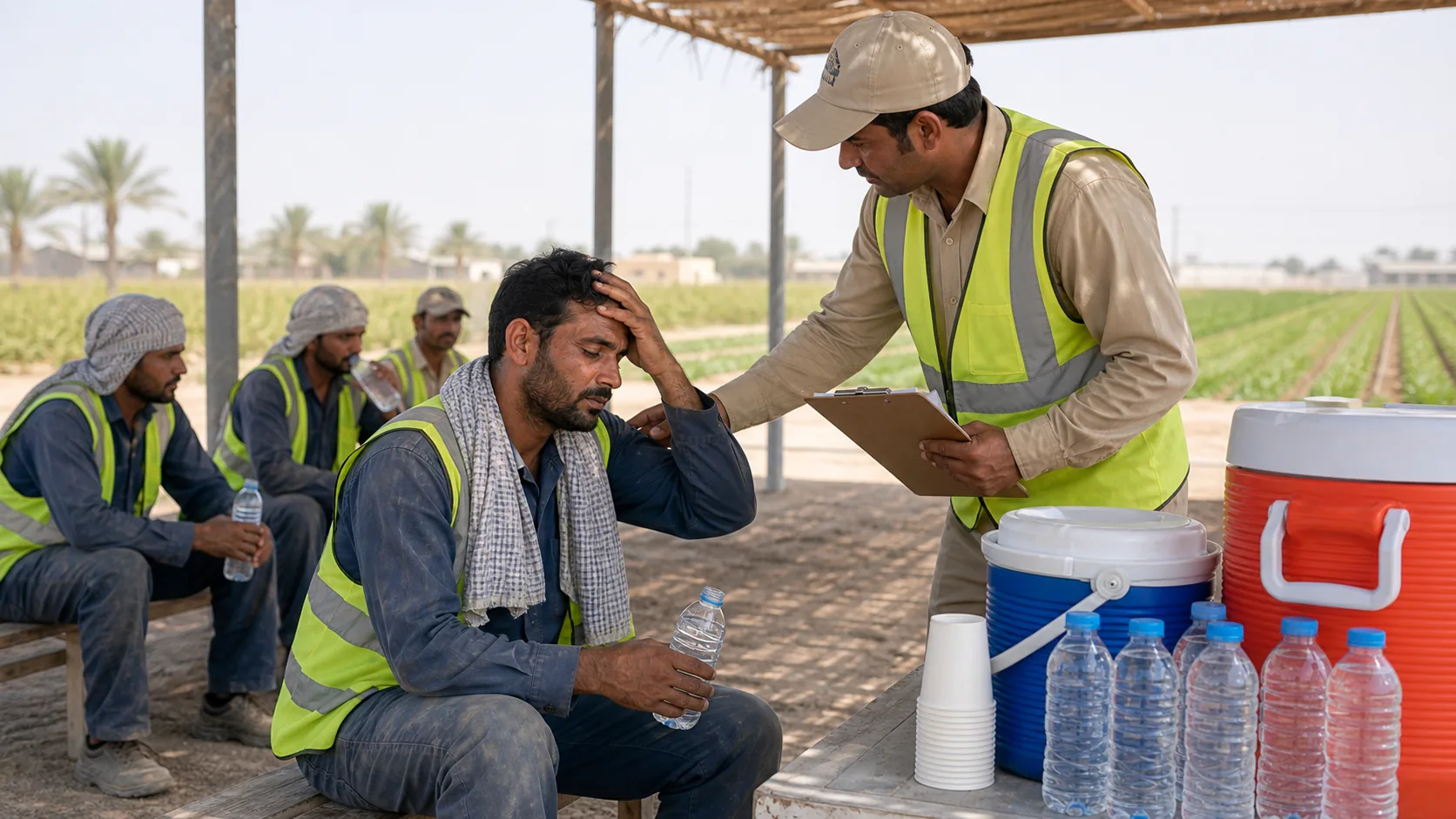
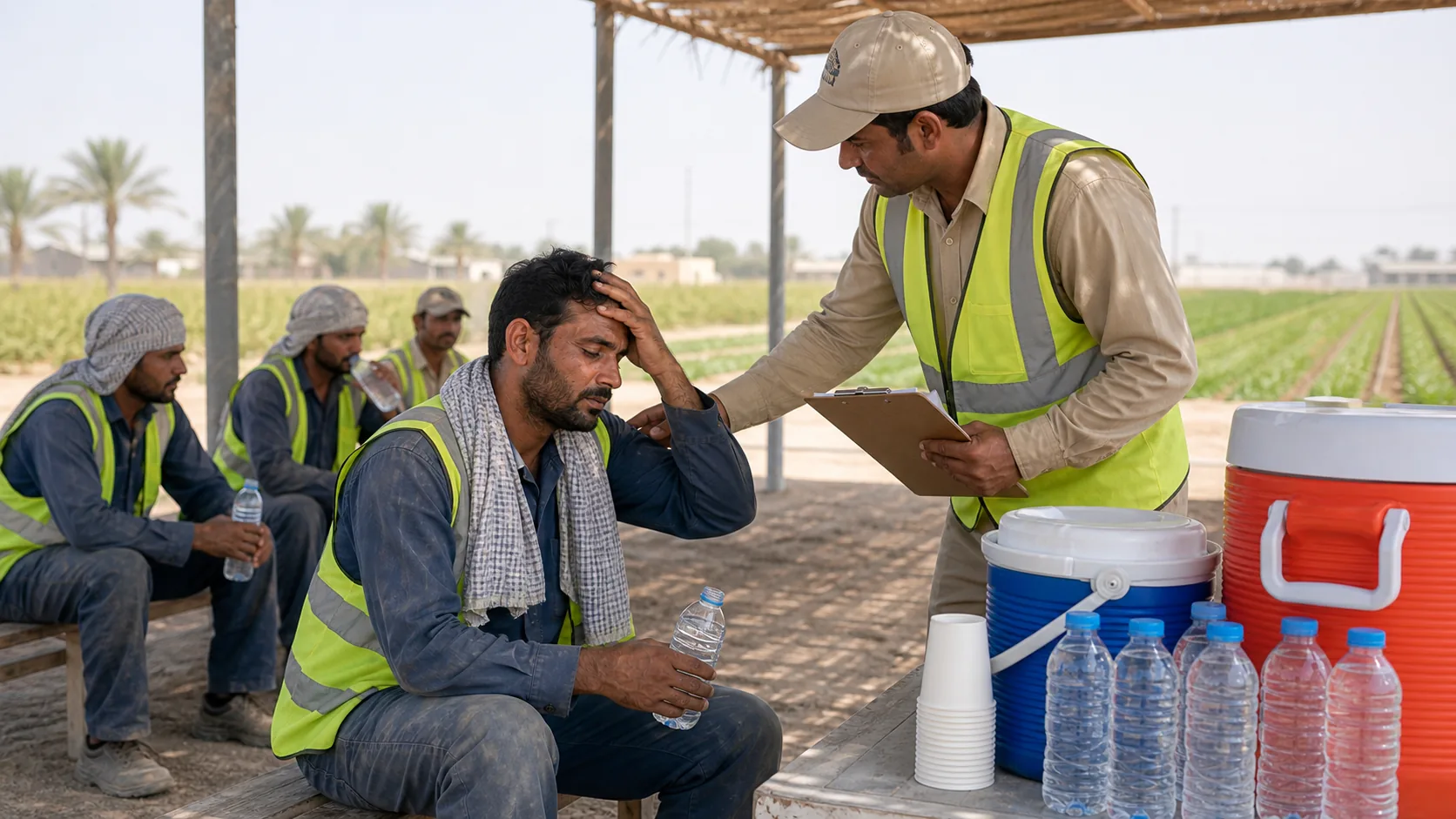
At 3% dehydration, measurable cognitive and physical impairment begins — reaction time slows, error rates increase, decision-making quality drops, and physical endurance decreases significantly. For workers on construction sites, oil and gas facilities, or road maintenance operations, these performance decrements create direct safety risk. Observable signs include: persistent headache not explained by other causes; fatigue noticeably greater than the work intensity would normally produce; dizziness or light-headedness when the worker stands up quickly; visible muscle cramping, particularly in the legs or abdomen; dark amber urine; and reduced work pace that stands out compared to the rest of the crew. Intervene immediately with electrolyte replacement and a rest period in shade or air conditioning.
Stage 3: Severe Dehydration — Above 5 Percent Body Weight Loss
Severe dehydration is a medical situation requiring emergency response. Signs include: confusion or incoherence — the worker cannot follow simple instructions clearly; inability to stand steadily or maintain balance; rapid and weak pulse; extreme weakness preventing normal work posture; and critically, cessation of sweating despite continued heat exposure. This last sign — dry skin in a hot environment — signals that the body's cooling mechanism is failing and heat stroke is imminent. Call emergency services immediately and begin passive cooling while waiting for the ambulance to arrive.
Practical Monitoring Routine for GCC Supervisors
Build a simple three-check monitoring routine into each work period. Visual check: scan your crew's alertness, skin appearance, and work pace every 30 minutes during the hottest hours of the day. Hydration check: at each scheduled Hydralyte interval, confirm workers are actually consuming their serving — not just accepting the product and setting it aside. Symptom check: brief verbal contact with each worker at the hydration interval allows you to gauge coherence and identify early confusion before it becomes dangerous. For crews where language barriers make verbal checks difficult, a simple laminated hydration color chart showing urine color from pale yellow to dark amber, posted in a central location in the worker's primary language, provides an accessible self-assessment tool. See our full heat exhaustion prevention guide for UAE employers.
Frequently Asked Questions
At what point is dehydration dangerous for outdoor workers in the UAE?
At 3% body weight loss from dehydration, measurable cognitive and physical impairment begins — a safety risk on construction and industrial sites. At 5% or above, severe heat illness is imminent and emergency medical attention is required immediately.
Can a GCC outdoor worker accurately self-assess whether they are dehydrated?
Often no. Moderate dehydration impairs the cognitive function needed for self-assessment. Many workers also underreport symptoms for cultural reasons. Scheduled hydration programs enforced by supervisors who actively monitor their crew are more reliable than relying on worker self-reporting.
What is the best first response when a supervisor notices Stage 2 dehydration signs in a worker?
Move the worker immediately to shade or air conditioning and administer one full Hydralyte serving. Monitor for improvement over 15–20 minutes. If moderate dehydration symptoms persist or progress — confusion, inability to stand, cessation of sweating — call emergency services immediately.
The Hydralyte Advantage for UAE and GCC Conditions
Hydralyte is a potassium-rich, low-sodium isotonic electrolyte formula designed specifically for proactive daily hydration — not just reactive emergency recovery. With 500mg Vitamin C per serve and a low-sugar formula, it provides comprehensive hydration support for anyone living, working, or exercising in the extreme heat of the UAE and GCC.
Unlike traditional ORS sachets designed for acute illness, or high-sugar sports drinks designed for athletic performance, Hydralyte is formulated for safe, repeated daily consumption across the entire summer season. This makes it the preferred choice for workplace hydration programs, family use, and fitness enthusiasts across the region.
Available in three flavours (Orange Blast, Lemon Lime, Pineapple) and four pack sizes, Hydralyte is stocked online and across GCC retail, with bulk corporate supply available for businesses with 50+ workers.
🏗 Protecting Outdoor Workers? Hydralyte supplies bulk electrolyte programs for construction, oil & gas, logistics, and manufacturing companies across the GCC — with full MoHRE compliance documentation. See Industry Hydration Programs →
🛒 Ready to try Hydralyte? Available in three refreshing flavours across multiple pack sizes — from individual sachets to 800g bulk pouches. Shop Hydralyte Online → or request a corporate quote.