Oil & Gas Worker <a href="/tools/heat-stress-assessment">Heat Stress</a> in the GCC: A Comprehensive Guide
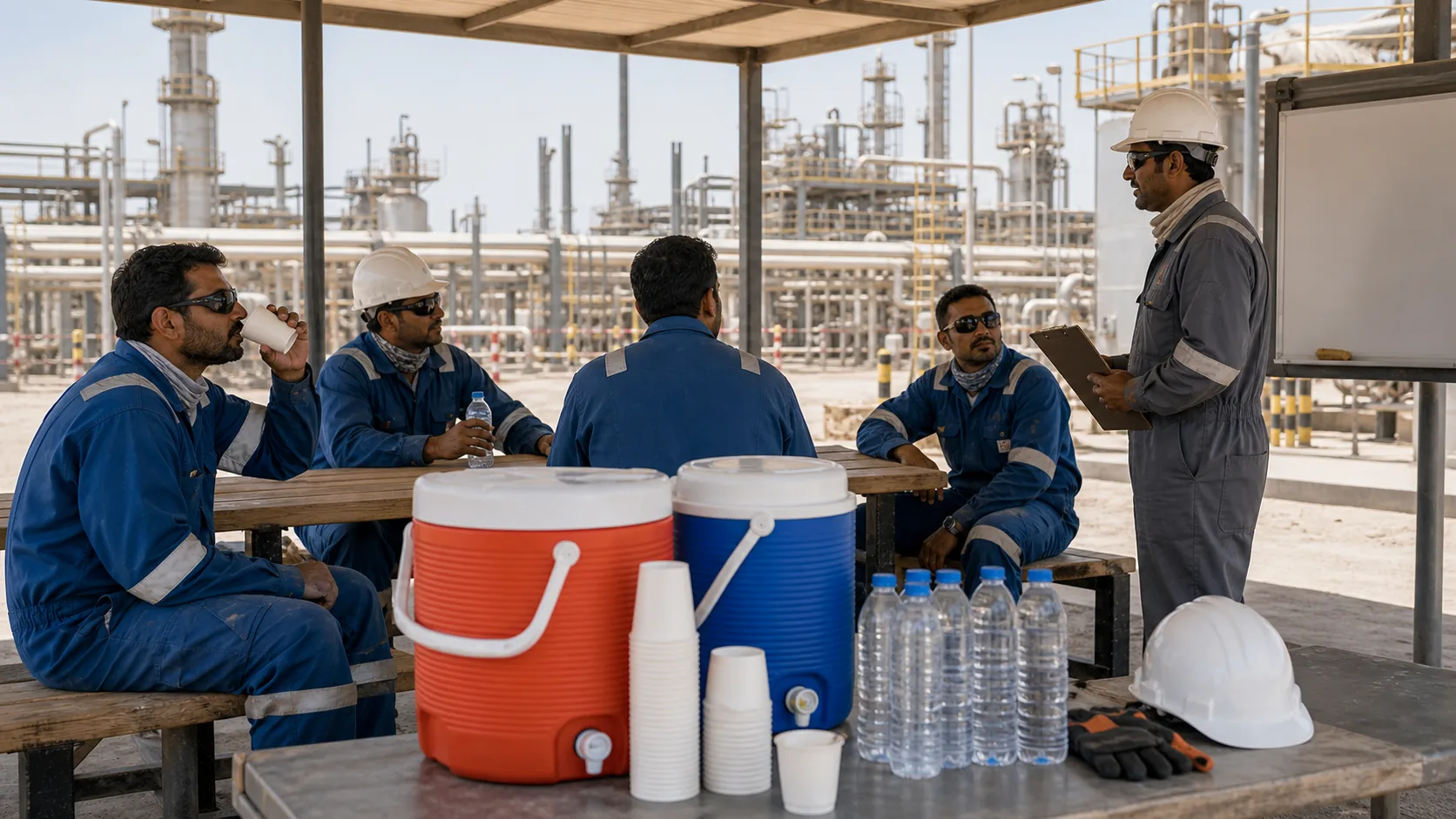
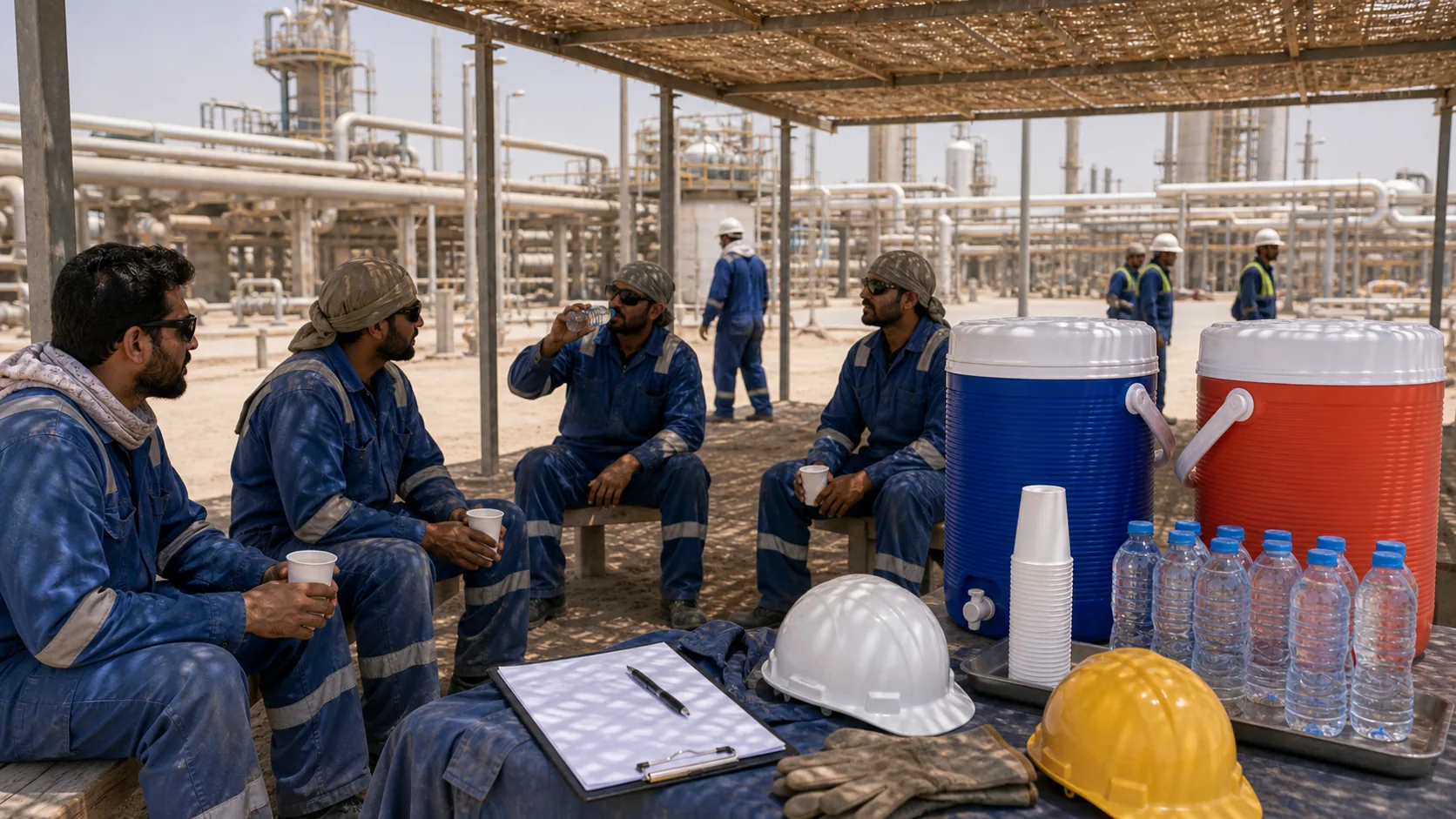
The GCC's oil and gas sector operates in environmental conditions that combine extreme heat with industrial hazards in ways that make heat stress management both critically important and operationally complex. Workers on onshore fields in Saudi Arabia, the UAE, and Qatar face ambient temperatures exceeding 50°C during summer months, compounded by the thermal output of industrial equipment, pipelines, and processing facilities operating continuously in the heat. Offshore workers on GCC platforms face the additional burden of high humidity that can push apparent temperatures well above the raw thermometer reading while simultaneously reducing the body's ability to cool itself through sweating. The result is one of the highest heat stress risk environments in any industry worldwide.
The Heat Factors Unique to Oil & Gas Sites
Several heat load sources are specific to the oil and gas environment. Flare heat from continuously burning operations adds significant radiant heat to workers within 50 to 100 meters of flare stacks on both onshore and offshore facilities. Process vessel and pipeline surfaces in direct sun can reach 80 to 90°C, creating radiant heat loads on maintenance workers in proximity that significantly exceed ambient temperature. Flame-resistant coveralls — mandatory in most oil and gas roles — prevent effective evaporative cooling and can add 8 to 12°C to effective body temperature. Emergency drill requirements in full PPE during summer create acute heat stress events that require dedicated post-drill electrolyte recovery protocols.
Hydration Protocol Design for Oil & Gas Role Categories
An effective oil and gas hydration protocol must address the diverse operational environments within a single facility. Control room operators in air-conditioned environments have low heat stress exposure and standard hydration needs. Outside operators conducting process rounds, inspection teams, and maintenance crews moving between process areas have moderate to high exposure depending on sun exposure time. Welding teams, scaffold crews, and heavy maintenance workers conducting prolonged outdoor tasks have very high exposure requiring the most intensive hydration schedule. The protocol must specify frequency schedules for each role category — not a single facility-wide schedule that underserves some workers and is unnecessary for others.
Hydralyte for Offshore Logistics: The Shelf-Stable Solution
Supply chain reliability is a critical constraint for offshore oil and gas operations. Helicopter delivery windows are limited, boat supply schedules are infrequent, and storage space on platforms is finite. Hydralyte's individually sealed sachets and new stick packs address all of these constraints: shelf-stable for two years without refrigeration, lightweight for payload-sensitive helicopter delivery, compact for storage in platform first aid lockers and personal PPE kits, and individually dosed to eliminate the wastage risk of bulk mixing products in a constrained supply environment. Platform safety officers can maintain a six-week supply buffer for the entire summer season in a single secure storage locker.
Permit to Work Integration for Summer Operations
GCC oil and gas operators routinely include heat stress controls in hot work permits, confined space entry permits, and SIMOPS procedures during summer. Specifying a Hydralyte sachet or stick pack as a mandatory provision in permit conditions integrates electrolyte protection into the existing operational safety framework without requiring additional supervisory overhead. The worker cannot commence the permitted task without their electrolyte provision — making the hydration program self-enforcing within the established permit culture. The labeled per-serving specification on the Hydralyte stick pack — 500mg Vitamin C, 105mg Sodium, 180mg Potassium per serving — simplifies compliance verification for permit review. See our oil and gas supply page for bulk ordering options and GCC distribution details.
Frequently Asked Questions
Why do oil and gas workers face greater heat stress than other outdoor workers in the GCC?
Oil and gas workers face combined heat loads from ambient temperature, process equipment radiant heat, flare heat, and the thermal burden of mandatory FR PPE. This combination can make effective body temperature 10–15°C above ambient, even in conditions that feel manageable in lighter environments.
Can Hydralyte sachets and stick packs be included in permit-to-work requirements for oil and gas operations?
Yes. Many GCC oil and gas operators specify electrolyte provision as a mandatory control in hot work and confined space permits during summer. Hydralyte's individually sealed sachets and labeled stick packs are ideal permit provisions — lightweight, individually dosed, and easily documented in the permit record.
What documentation does Hydralyte provide for ISO 45001 oil and gas HSE management systems?
Hydralyte provides product specification sheets, ingredient certifications, batch traceability records, and compliance declarations suitable for ISO 45001 and operator-specific oil and gas HSE management system documentation requirements.
PPE and Dehydration: The Compounding Effect in Oil & Gas
Oil and gas workers face a unique hydration challenge: the mandatory PPE that protects them from chemical and fire hazards simultaneously traps body heat. Fire-resistant coveralls, hard hats, safety goggles, and steel-toe boots create a microclimate that can elevate core body temperature by 2–3°C above ambient conditions.
This means that even when ambient temperatures are 38°C, workers inside full PPE may be experiencing effective temperatures of 40–41°C. Sweat rates under these conditions can reach 1.5–2 litres per hour, rapidly depleting not just water but critical electrolytes including potassium, sodium, chloride, and calcium.
Hydralyte's potassium-rich isotonic formula is specifically advantageous in these conditions. Unlike high-sodium reactive formulas, Hydralyte replaces all four key electrolytes in ratios appropriate for daily consumption throughout long shift rotations — typically 12-hour shifts on a 2-weeks-on, 2-weeks-off rotation in GCC oil fields.
Emergency Hydration Protocols for Rig Operations
Every rig and pipeline operation should have a heat stress emergency response protocol that includes electrolyte provision as a first-line intervention. When a worker shows signs of heat exhaustion — confusion, heavy sweating, rapid pulse — providing Hydralyte alongside cooling measures can prevent escalation to heat stroke.
Keep emergency hydration kits at every muster station containing Hydralyte sachets, cooled water, and a mixing vessel. Train all safety officers in the signs of electrolyte depletion versus simple overheating — the treatment protocols differ significantly.
🏗 Protecting Outdoor Workers? Hydralyte supplies bulk electrolyte programs for construction, oil & gas, logistics, and manufacturing companies across the GCC — with full MoHRE compliance documentation. See Industry Hydration Programs →
🛒 Ready to try Hydralyte? Available in three refreshing flavours across multiple pack sizes — from individual sachets to 800g bulk pouches. Shop Hydralyte Online → or request a corporate quote.