Understanding How Outdoor Workers Stay Hydrated During Ramadan for Peak Safety
Maintaining physiological health during the holy month is a primary concern for both HR managers and site personnel. When laboring in the heat of the UAE, understanding how outdoor workers stay hydrated Ramadan relies on maximizing the limited hours between sunset and sunrise. This guide provides an authoritative framework for managing hydration levels, ensuring that every individual can maintain their fast safely while remaining protected from the risks of heat-related illness and exhaustion. By implementing a structured approach to fluid and electrolyte intake, workers can sustain their energy levels and physical resilience throughout the day.
The Two Critical Windows for Managing How Outdoor Workers Stay Hydrated During Ramadan
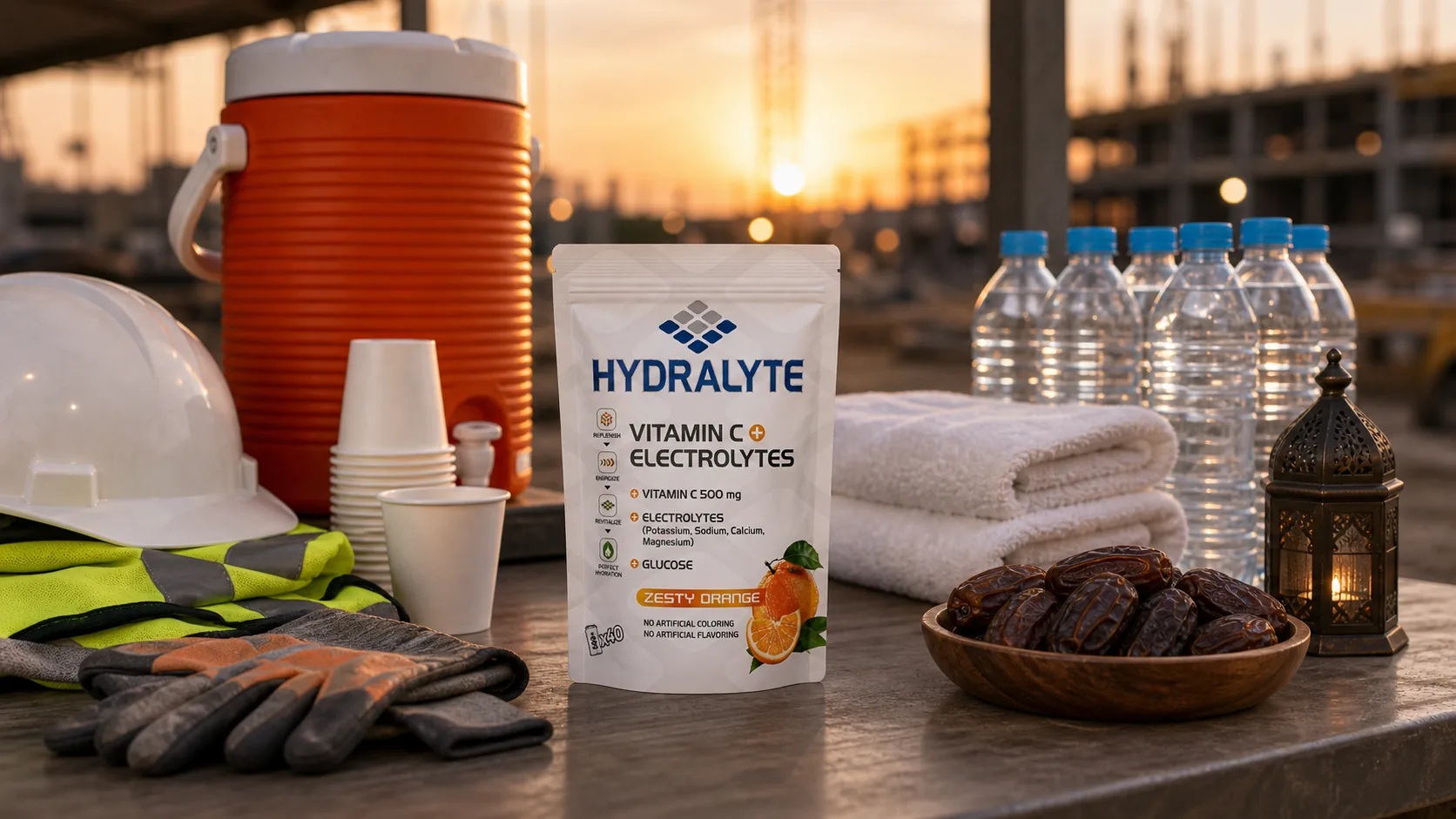
For those observing the fast, suhoor and iftar represent the only opportunities to replenish the body’s essential reserves. Effective management of how outdoor workers stay hydrated Ramadan depends on these two critical windows because the body must store enough water and electrolytes to last through a full shift of physical labor without further intake. Effective hydration is not just about the volume of water consumed but the quality of the fluid. During these periods, workers should focus on electrolyte-rich solutions to ensure proper cellular absorption. Utilizing Hydralyte stick packs or sachets during these times provides a precise balance of minerals that helps the body retain moisture more effectively than plain water alone.
The Suhoor Hydration Checklist for Long-Term Physical Resilience
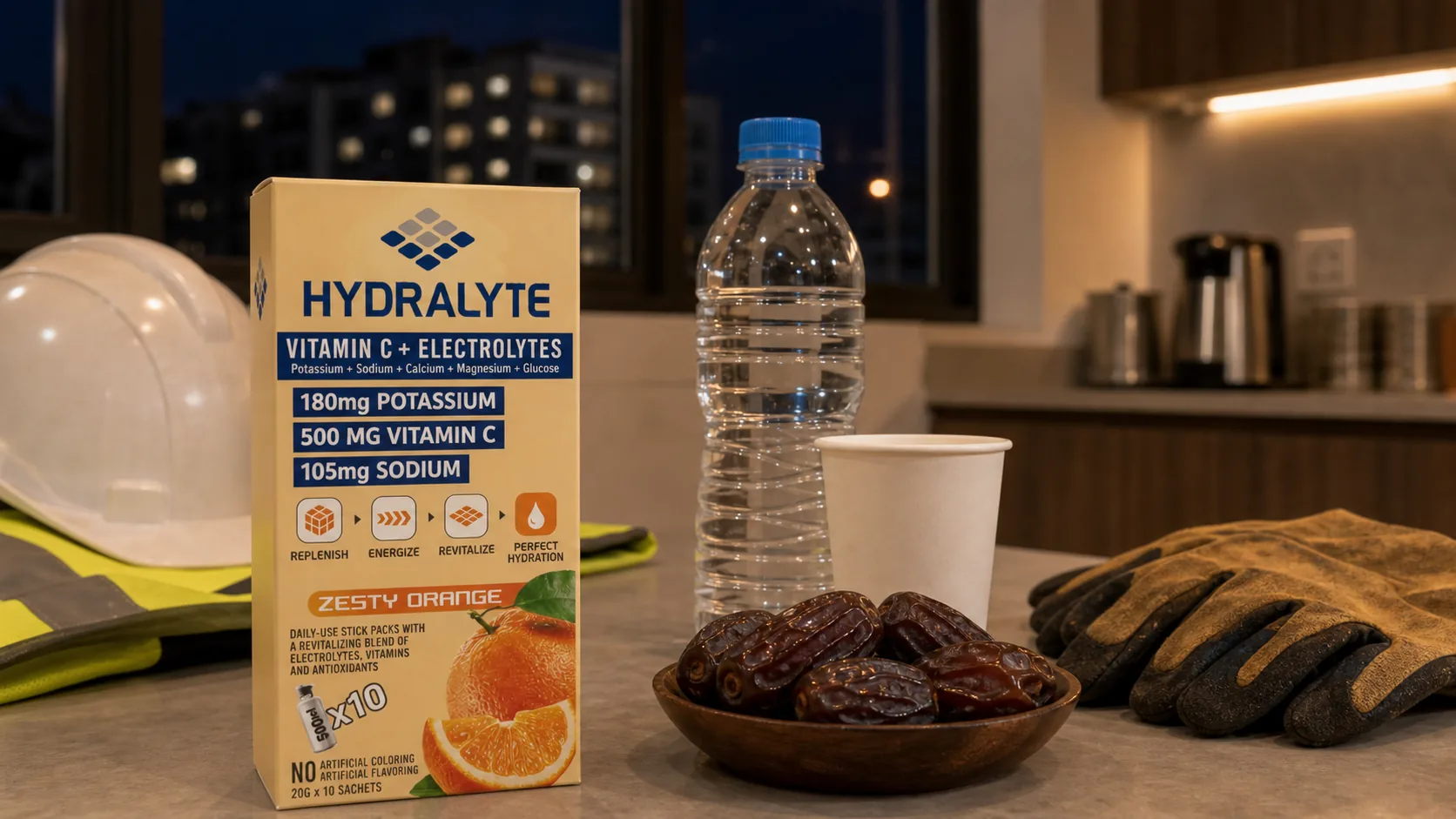
The pre-dawn meal is the most important preparatory phase for any outdoor laborer. To ensure the body is ready for the day ahead, workers should consume one full Hydralyte serving mixed with 500ml of water approximately 30 to 45 minutes before Fajr. This timing allows the electrolytes to begin circulating before the fast commences. This should be accompanied by slow-digesting foods such as oats, whole grains, or legumes which provide sustained energy. It is vital to avoid caffeine, as coffee and strong tea act as diuretics and will cause the body to lose fluids more quickly once work begins. Keeping stick packs readily available at home makes this morning routine simple and consistent.
The Iftar Rehydration Sequence for Rapid Recovery
Recovery must begin the moment the fast is broken at sunset. The ideal sequence for iftar rehydration involves consuming a serving of Hydralyte either immediately before or alongside the first small piece of food, such as a date. Electrolytes are absorbed most efficiently on a relatively empty stomach through the sodium-glucose cotransport mechanism. Once this initial recovery drink is finished, workers should continue to sip water steadily throughout the evening rather than drinking a large volume of water all at once. Drinking excessive water too quickly can lead to hyponatremia, a dangerous condition where sodium levels in the blood become too diluted. Using convenient sachets at the iftar table ensures that the necessary salts are replaced immediately after the shift ends.
Maintaining Safety and Reducing Dehydration Rates During the Working Day
While intake is restricted during daylight hours, physical habits on the job site can significantly slow the rate of fluid loss. Workers should be encouraged to maximize their use of shade during all scheduled breaks and reduce unnecessary movement to conserve energy. Proper ventilation and positioning in any available airflow can also help lower core body temperature. Most importantly, everyone on site must be empowered to communicate any symptoms of dizziness or fatigue to a supervisor early. Early intervention is the most effective way to prevent a minor issue from becoming a medical emergency. By combining smart site habits with the suhoor and iftar protocols, the collective health of the workforce is preserved.
To learn more about implementing these safety protocols or to secure a supply of hydration solutions for your team, visit our contact page at contact our team.
Frequently Asked Questions
What should an outdoor worker eat and drink at suhoor to maximize Ramadan hydration?
One Hydralyte serving for electrolyte pre-loading, 500ml water, and slow-digesting foods like oats, whole grain bread, or legumes. Avoid caffeine (diuretic effect) and very salty foods which increase thirst.
What is the ideal iftar rehydration sequence for a worker who labored outdoors all day?
Break fast with dates and water, then drink Hydralyte immediately before your main meal. Electrolytes absorb most effectively on a relatively empty stomach. Continue water intake through the evening to complete overnight rehydration.
What can workers do during the fasting day to reduce dehydration rate?
Maximize shade use, reduce unnecessary movement, position in any available airflow, wear loose light-colored clothing, and inform your supervisor early at the first sign of any symptom — early intervention is always more effective.
Understanding Fasting-Related Dehydration in UAE Summers
When Ramadan falls during the UAE summer months, outdoor workers face a compounded challenge: they cannot consume any liquids during daylight hours while still being exposed to extreme heat. This creates a dehydration deficit that accumulates daily and cannot be fully recovered during the shorter nighttime eating window.
Research indicates that fasting workers in GCC heat can experience fluid deficits of 3–5% of body weight by the end of a working day — well beyond the 1–2% threshold at which cognitive impairment begins. This makes pre-dawn hydration (Suhoor) and post-sunset recovery (Iftar) absolutely critical.
Hydralyte's potassium-rich isotonic formula is particularly valuable during Ramadan because it supports rapid and complete electrolyte replacement in a limited consumption window. Unlike high-sugar sports drinks that cause blood sugar spikes and subsequent crashes, Hydralyte provides sustained hydration support with low sugar.
Employer Obligations During Ramadan in the UAE
UAE labour law does not exempt employers from heat safety obligations during Ramadan. Employers must still provide shaded rest areas, approved rehydration materials, and adjusted work schedules. The MoHRE midday work ban (12:30–3:00 PM, June 15–September 15) applies regardless of Ramadan timing.
Practical steps include: offering Hydralyte sachets at Suhoor for pre-loading, providing Hydralyte at Iftar break stations for rapid recovery, and ensuring non-fasting workers still have access to electrolytes throughout the day. Document all Ramadan-specific hydration provisions as part of your MoHRE compliance records.
🏗 Protecting Outdoor Workers? Hydralyte supplies bulk electrolyte programs for construction, oil & gas, logistics, and manufacturing companies across the GCC — with full MoHRE compliance documentation. See Industry Hydration Programs →
🛒 Ready to try Hydralyte? Available in three refreshing flavours across multiple pack sizes — from individual sachets to 800g bulk pouches. Shop Hydralyte Online → or request a corporate quote.