Managing the Ramadan <a href="/tools/heat-stress-assessment">Heat Stress</a> Combined Risk UAE HSE Professionals Must Address
When the holy month of Ramadan intersects with the peak summer months in the Emirates, the physiological demands on outdoor labor are unprecedented. This Ramadan heat stress combined risk UAE workers face requires a proactive and highly specialized health and safety strategy. For HSE managers, understanding that the standard dehydration mitigation protocols are insufficient during this period is the first step in ensuring site-wide safety. The combination of mandatory fasting and extreme ambient temperatures creates a compound risk profile that demands authoritative oversight and precise intervention to prevent heat-related incidents.
The Cumulative Impact of the Ramadan Heat Stress Combined Risk UAE
The primary challenge during a summer Ramadan is the aggressive depletion of physiological reserves. In typical summer conditions, a worker begins their shift with full hydration and electrolyte levels. However, for fasting personnel, the dehydration clock effectively starts at sunrise. Because suhoor loading only provides a finite window for fluid intake, workers often start their workday with only a partial reserve. When this restricted intake meets the intense UAE summer heat, those reserves are depleted rapidly through perspiration. This leads to a deficit that accumulates more aggressively than either fasting or heat exposure would cause in isolation. To mitigate this, providing Hydralyte sachets for suhoor loading is a critical measure to ensure workers begin the fasting period with the highest possible electrolyte density.
Identifying High-Risk Groups in Combined Heat and Fasting Environments
Within the workforce, certain individuals are at a significantly higher Ramadan heat stress combined risk UAE than others. Newly arrived, unacclimatized workers are particularly vulnerable, as their bodies have not yet developed the thermoregulatory efficiency required for the local climate while fasting. Similarly, workers in high-intensity roles, such as scaffolding or heavy lifting, experience faster metabolic heat gain. Statistics show that the first week of Ramadan is a peak period for risk, as the body is still adjusting to the shift in metabolic patterns and hydration windows. HSE managers must prioritize these groups for enhanced observation and support during their shifts.
Leveraging the Midday Ban for Fasting Worker Recovery
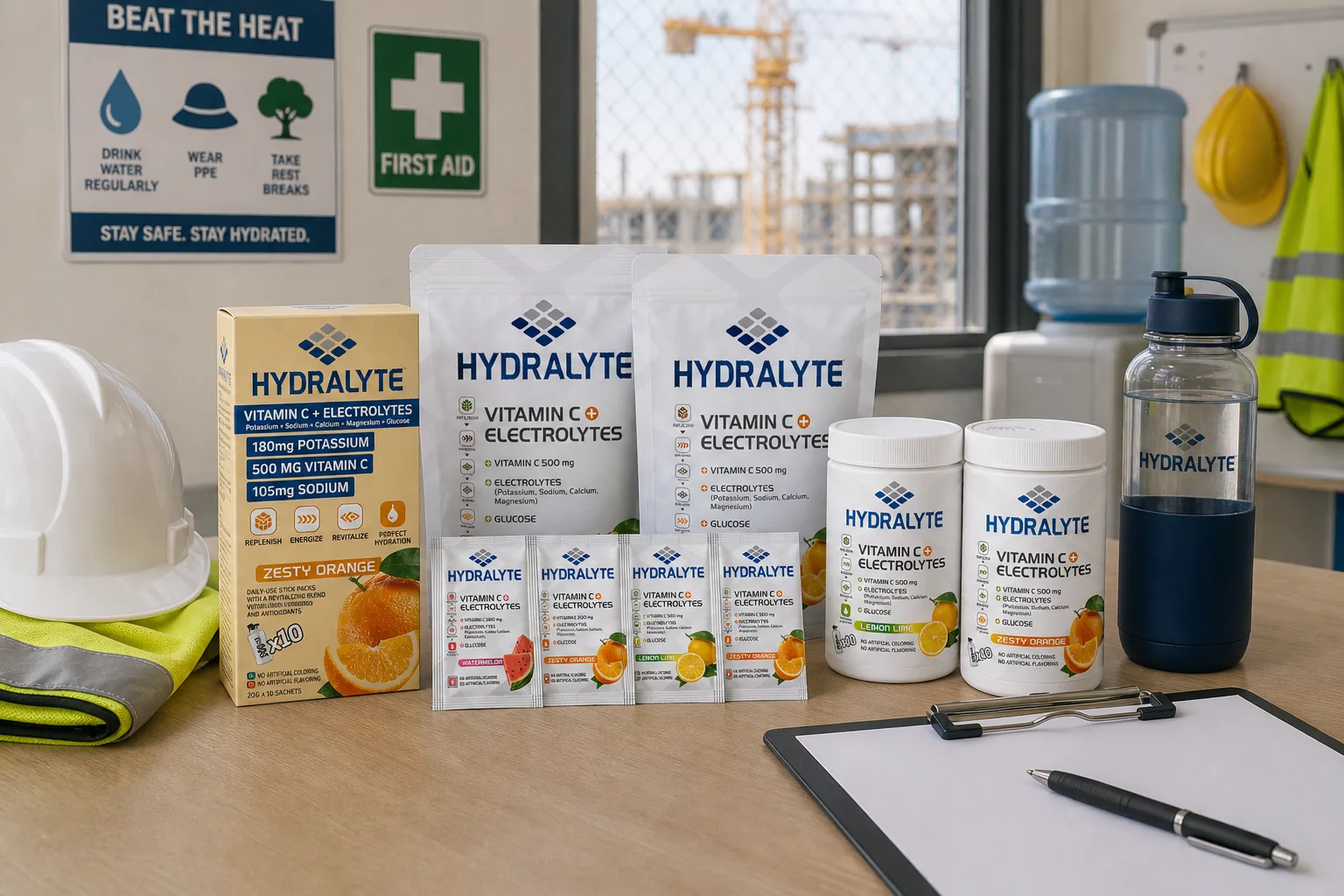
The UAE midday ban serves as a critical safety valve, providing a mandatory 2.5-hour rest window during the hottest part of the day. For fasting workers, this interval is even more vital than for their non-fasting counterparts. It offers a necessary pause in physical exertion, slowing the rate of fluid loss when solar radiation is at its peak. Site supervisors should ensure that cooling facilities are optimized and that workers are encouraged to remain immobile in shaded areas to preserve their remaining physiological reserves until iftar. Utilizing 800g pouches for iftar recovery at the worksite accommodation ensures that the rehydration process begins immediately and effectively as soon as the fast is broken.
Enhanced Monitoring and Emergency Intervention Protocols
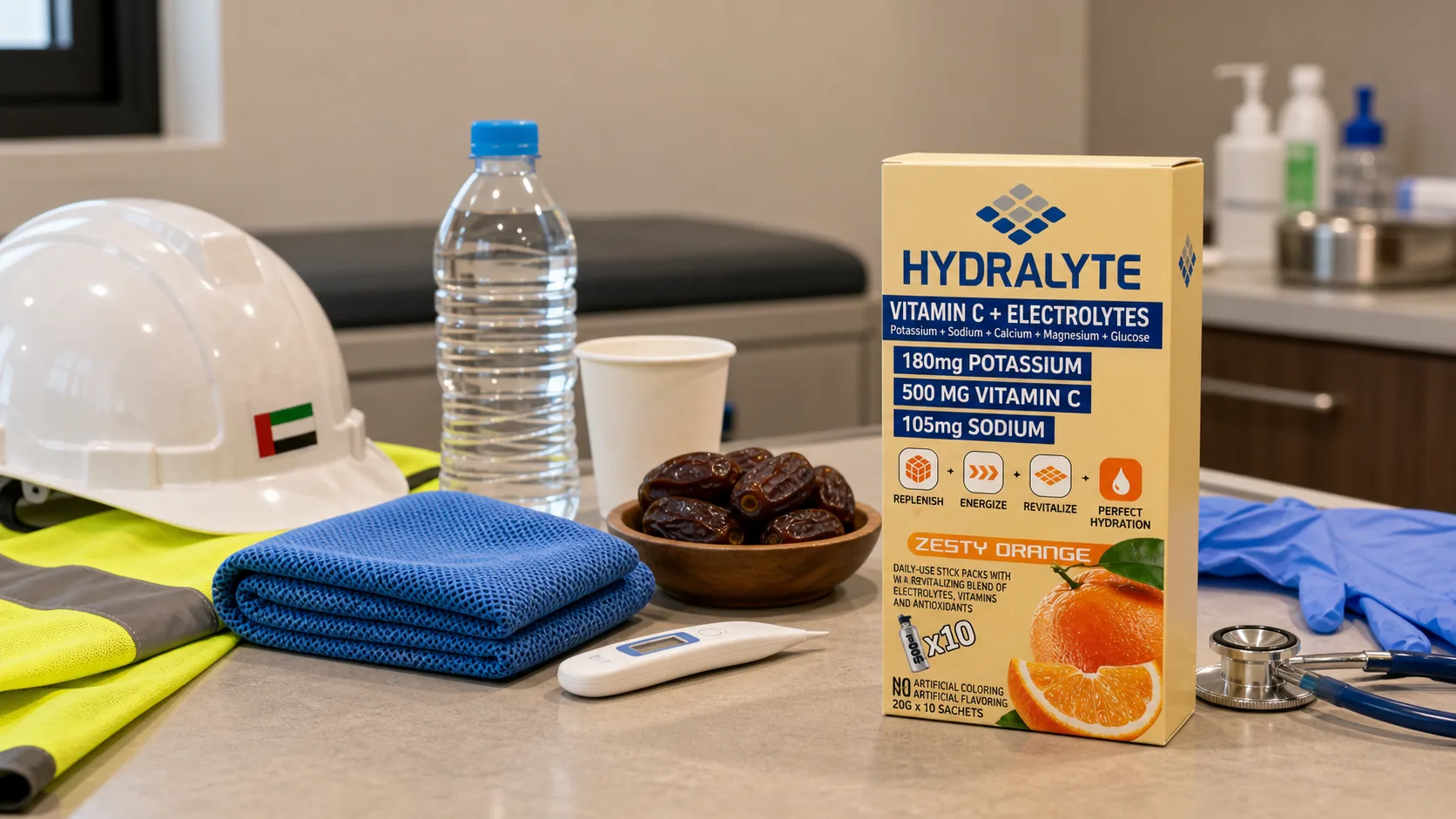
Standard observation intervals are insufficient when managing the Ramadan heat stress combined risk UAE. Supervisors must increase check-in frequencies for fasting personnel and adopt a lower threshold for medical intervention. It is essential to communicate that a worker showing signs of heat illness, such as confusion or extreme fatigue, must receive emergency electrolyte treatment. Under Islamic law, medical necessity overrides the fast; therefore, supervisors must have sachets immediately accessible in their emergency kits. Acting decisively in these moments is a life-saving duty of care. For expert assistance in designing an enhanced risk management program for your site, contact our specialists at contact our team.
Frequently Asked Questions
How does Ramadan fasting accelerate dehydration compared to normal summer conditions?
In normal conditions workers begin each shift with full electrolyte reserves. During Ramadan, even with suhoor loading, the worker starts with a partial reserve that was partially depleted from the previous day. This accumulating daily deficit means the effective dehydration clock starts faster and reaches dangerous thresholds sooner.
What additional monitoring should UAE employers implement during summer Ramadan?
Increase visual monitoring to every 20-30 minutes for fasting workers in high-exposure roles versus the standard 45-60 minute interval. Lower the symptom intervention threshold — act on early fatigue and headache rather than waiting for moderate symptoms.
How should HSE managers communicate enhanced monitoring to fasting workers without causing offence?
Frame it as supportive duty of care, not surveillance. Explain that Ramadan combined with UAE heat creates a documented physiological risk that the employer takes seriously. Workers who understand the employer acts out of genuine concern respond far better than those who feel watched because of their faith.
Understanding Fasting-Related Dehydration in UAE Summers
When Ramadan falls during the UAE summer months, outdoor workers face a compounded challenge: they cannot consume any liquids during daylight hours while still being exposed to extreme heat. This creates a dehydration deficit that accumulates daily and cannot be fully recovered during the shorter nighttime eating window.
Research indicates that fasting workers in GCC heat can experience fluid deficits of 3–5% of body weight by the end of a working day — well beyond the 1–2% threshold at which cognitive impairment begins. This makes pre-dawn hydration (Suhoor) and post-sunset recovery (Iftar) absolutely critical.
Hydralyte's potassium-rich isotonic formula is particularly valuable during Ramadan because it supports rapid and complete electrolyte replacement in a limited consumption window. Unlike high-sugar sports drinks that cause blood sugar spikes and subsequent crashes, Hydralyte provides sustained hydration support with low sugar.
Employer Obligations During Ramadan in the UAE
UAE labour law does not exempt employers from heat safety obligations during Ramadan. Employers must still provide shaded rest areas, approved rehydration materials, and adjusted work schedules. The MoHRE midday work ban (12:30–3:00 PM, June 15–September 15) applies regardless of Ramadan timing.
Practical steps include: offering Hydralyte sachets at Suhoor for pre-loading, providing Hydralyte at Iftar break stations for rapid recovery, and ensuring non-fasting workers still have access to electrolytes throughout the day. Document all Ramadan-specific hydration provisions as part of your MoHRE compliance records.
🏗 Protecting Outdoor Workers? Hydralyte supplies bulk electrolyte programs for construction, oil & gas, logistics, and manufacturing companies across the GCC — with full MoHRE compliance documentation. See Industry Hydration Programs →
🛒 Ready to try Hydralyte? Available in three refreshing flavours across multiple pack sizes — from individual sachets to 800g bulk pouches. Shop Hydralyte Online → or request a corporate quote.