Understanding the Role of Glucose Electrolyte Drinks Workers Need for Optimal Hydration and Absorption
For HSE managers and procurement officers overseeing industrial operations in the United Arab Emirates, selecting a hydration supplement is often viewed through the lens of nutritional minimalism. However, when evaluating the role of glucose electrolyte drinks workers utilize during extreme heat, it is vital to understand that glucose is not included for flavor or caloric energy. Instead, it serves a critical physiological function in the rapid delivery of electrolytes to the bloodstream. In the intense heat of the UAE summer, the speed of rehydration can be the difference between a productive shift and a medical emergency. Understanding the science behind glucose is essential for implementing an effective <a href="/tools/heat-stress-assessment">heat stress</a> prevention program.
The Common Misunderstanding Regarding the Role of Glucose Electrolyte Drinks Workers Require
A frequent misconception among procurement professionals is the belief that glucose in a rehydration solution is simply unnecessary added sugar. This often leads to the selection of zero-sugar or "healthier" alternatives that prioritize a low-calorie profile over rehydration effectiveness. While reducing dietary sugar is generally positive, removing glucose from an electrolyte drink designed for occupational safety actually compromises the product's primary purpose: rapid rehydration. Products that eliminate glucose rely solely on passive osmosis for fluid movement, which is a significantly slower process. By choosing a formula based on a misunderstanding of glucose's role, organizations may inadvertently provide their workforce with a supplement that fails to keep pace with the sweat rates experienced in desert environments.
The Science of the Sodium-Glucose Cotransport Mechanism
The true value of glucose in an oral rehydration solution (ORS) lies in its ability to activate the sodium-glucose cotransport mechanism. Located in the intestinal wall, a specific protein carrier known as SGLT1 facilitates the movement of sodium and glucose molecules into the body. To understand this process, one can use the door-and-key analogy: sodium is the guest that needs to enter the room (the bloodstream), but the door is locked. Glucose acts as the key that unlocks the SGLT1 protein "door," allowing both the glucose and the sodium to enter together. Crucially, as these molecules move through the intestinal wall, they pull a significant volume of water along with them. Without this "key," the door remains closed to active transport, and the body must wait for fluid to absorb slowly through passive osmosis. Hydralyte is formulated with the precise amount of glucose required to act as this key, ensuring that electrolytes are delivered to the workforce with maximum efficiency.
The Critical Difference Between ORS Glucose and Sports Drink Sugar
It is important to distinguish the role of glucose electrolyte drinks workers use for safety from the high sugar content found in typical sports drinks. A standard ORS, such as Hydralyte, maintains a glucose concentration of approximately 2% to 2.5%. This specific concentration is the minimum threshold required to activate the cotransport mechanism without making the solution hypertonic. In contrast, many sports drinks contain 5% to 8% sugar, designed primarily to provide caloric energy for high-intensity athletic performance. These high concentrations actually create a hypertonic environment in the gut, which can draw water out of the body and into the intestine to dilute the sugar before absorption can occur. For a worker in the UAE industrial sector, the goal is rapid absorption activation, not the provision of energy for a marathon. Hydralyte's calibrated formula ensures that glucose serves only as a functional activator.
Why Zero-Sugar Alternatives Fall Short of the Role of Glucose Electrolyte Drinks Workers Depend On
While zero-sugar electrolyte products are popular in consumer markets, they are often insufficient for the high-stakes requirements of industrial heat stress management. By removing glucose entirely, these products eliminate the body’s most efficient pathway for electrolyte and water uptake. Relying on passive osmosis means that the replacement of fluids is restricted by natural concentration gradients, which is a far slower and less reliable process than the active transport triggered by a glucose-sodium pairing. In a workplace where workers may be losing liters of sweat per hour, the delay caused by a zero-glucose formula can lead to cumulative dehydration. Hydralyte provides the scientific balance necessary to ensure that every sip taken by a worker is absorbed as quickly as possible, utilizing the cotransport pathway to maintain physiological stability throughout the day.
To ensure your workforce is protected by scientifically backed rehydration solutions that prioritize rapid absorption over simple energy, contact the Hydralyte team to discuss bulk procurement and account setup at contact our team.
Frequently Asked Questions
Why does an electrolyte drink need glucose if it is not a sports energy drink?
Glucose activates a specific protein transporter (SGLT1) in the intestinal wall that co-transports glucose and sodium — and the water attached to them — directly into the bloodstream through an active process. Without glucose, fluid absorption occurs only through slower passive osmosis driven by concentration gradients. The sodium-glucose cotransport mechanism is why standard ORS formulas absorb significantly faster than plain water or zero-sugar electrolyte solutions.
What is the difference between glucose in Hydralyte and sugar in a sports drink?
ORS glucose concentration in Hydralyte is approximately 2-2.5% — the minimum needed to activate the cotransport mechanism without creating a hypertonic solution that slows absorption. Sports drink sugar concentrations of 5-8% provide caloric energy for athletic performance and are three to four times the ORS concentration. The higher concentration makes sports drinks hypertonic, meaning the body must dilute them before absorption — the opposite of what an ORS achieves.
Do zero-sugar electrolyte drinks absorb as effectively as Hydralyte?
Not by the same mechanism. Zero-sugar electrolyte drinks cannot activate the sodium-glucose cotransport absorption pathway. They rely on passive osmotic absorption only, which is slower than active cotransport. For a worker needing rapid electrolyte replacement after significant sweating, the cotransport mechanism in a glucose-containing ORS formula like Hydralyte delivers electrolytes to the bloodstream faster than a zero-sugar alternative.
The SGLT1 Mechanism: How Electrolyte Drinks Actually Work
Understanding why electrolyte drinks work requires understanding the sodium-glucose co-transport mechanism (SGLT1) in the small intestine. This mechanism transports sodium and glucose molecules together across the intestinal wall, pulling water along by osmosis. This is why plain water alone — without electrolytes and glucose — is absorbed significantly slower.
Hydralyte's isotonic formula is specifically calibrated to optimise SGLT1 transport. The precise ratio of sodium, glucose, potassium, chloride, and calcium matches the body's natural fluid osmolality (280–295 mOsm/L), enabling absorption up to 3× faster than water alone.
This is fundamentally different from hypotonic solutions (which have lower osmolality than body fluids) and hypertonic solutions (which have higher osmolality). While hypotonic solutions may absorb slightly faster in the intestine, they provide less complete electrolyte replacement — meaning workers need to consume more volume to achieve the same rehydration effect.
Why Potassium-Rich Formulas Are Safer for Daily Use
Most traditional ORS formulas are high in sodium because they were originally designed for treating acute dehydration from diarrhoea and cholera. Consuming high-sodium formulas daily across a 3-month UAE summer season can contribute to elevated blood pressure, cardiovascular strain, and kidney stress.
Hydralyte reverses this ratio — high potassium, low sodium. Potassium supports muscle function, heart health, and cellular hydration. This makes Hydralyte safe for proactive daily use rather than just reactive emergency treatment. For workers consuming electrolyte drinks 6–8 times per day during summer, this distinction is significant.
🏗 Protecting Outdoor Workers? Hydralyte supplies bulk electrolyte programs for construction, oil & gas, logistics, and manufacturing companies across the GCC — with full MoHRE compliance documentation. See Industry Hydration Programs →
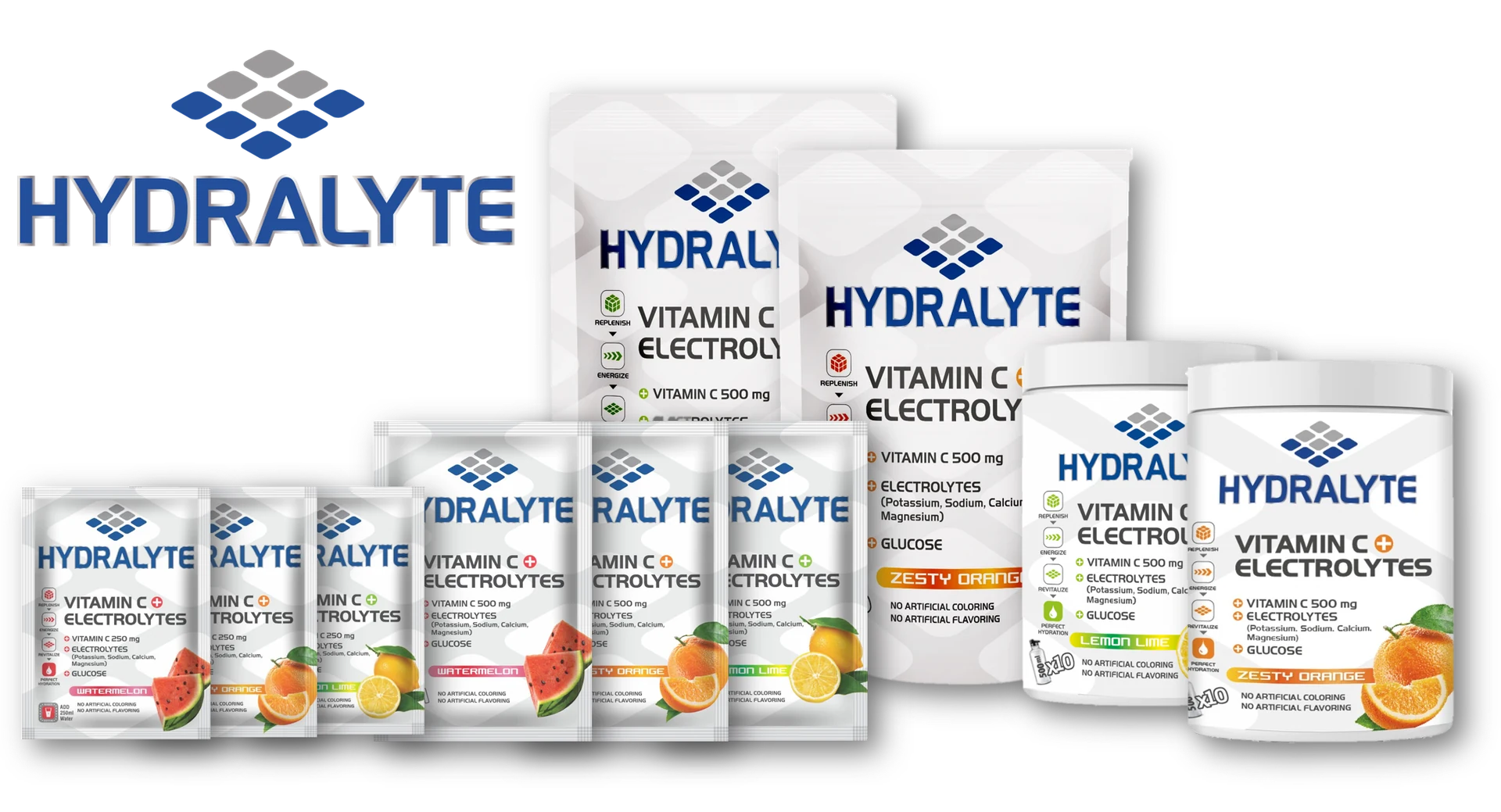
🛒 Ready to try Hydralyte? Available in three refreshing flavours across multiple pack sizes — from individual sachets to 800g bulk pouches. Shop Hydralyte Online → or request a corporate quote.