Implementing UAE Heat Safety Best Practices 2026 for Operational Excellence
As industrial and construction sectors in the Gulf prepare for rising temperatures, establishing robust UAE heat safety best practices 2026 is essential for protecting human capital and ensuring project continuity. Senior HSE managers and operations directors must look beyond basic regulatory adherence to implement a sophisticated, multi-layered defense against thermal stress. This 2026 guide provides the definitive framework for institutionalizing heat safety as a core operational competency, integrating scientific rehydration standards with advanced behavioral safety protocols to mitigate the unique risks of the UAE summer.
The Regulatory Baseline: Minimum MOHRE Compliance Requirements
The foundation of any professional program rests on the mandatory standards set by the Ministry of Human Resources and Emiratization (MOHRE). In 2026, the regulatory floor begins with a comprehensive site-specific heat risk assessment and strict adherence to the mandatory midday break ban. Employers must provide accessible shade, cooling facilities, and a constant supply of cool drinking water. However, water alone does not meet the technical requirements for high-intensity outdoor labor. Compliance documentation must verify the provision of rehydration supplements, such as electrolyte salts, that align with international clinical oral rehydration solution standards. These elements constitute the minimum legal requirements; failure to document the systematic distribution of these resources can lead to significant administrative penalties and project stoppages during official inspections.
Advanced UAE Heat Safety Best Practices 2026: Moving Beyond the Minimum
Top-performing organizations separate themselves from the baseline by implementing UAE heat safety best practices 2026 that address the physiological and logistical complexities of large-scale workforces. This includes formal acclimatization programs where new arrivals are gradually exposed to heat over a five-to-seven-day period rather than immediate full deployment. Leading sites also move toward supervised hydration monitoring, where supervisors sign off on hourly electrolyte consumption logs rather than simply making the product available. Furthermore, progressive employers utilize shift adjustment policies to remove the most physically demanding tasks from peak exposure windows and provide heat illness symptom training to the entire workforce in their native languages. These advanced measures transform heat safety from a passive provision into an active management system.
Regulatory Evolution and Verification Priorities for 2026
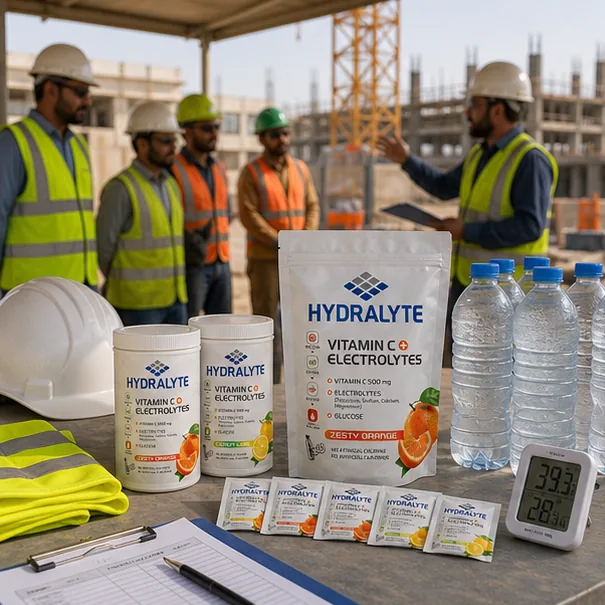
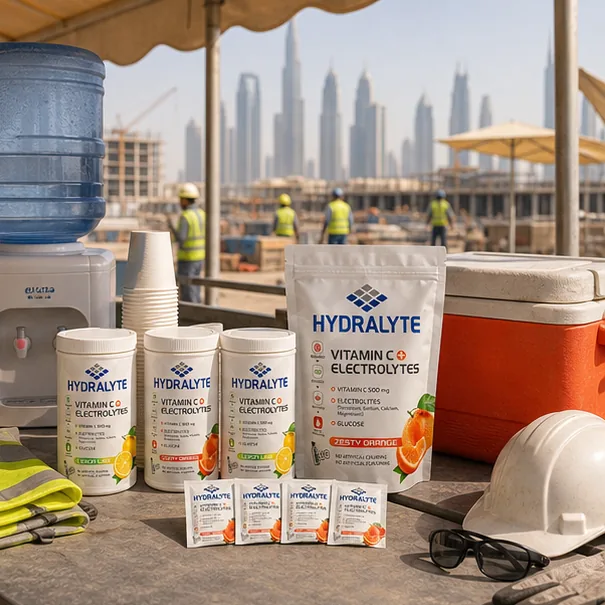
The 2026 summer season sees a continued shift in MOHRE enforcement priorities toward the verification of electrolyte quality and distribution evidence. Inspectors are increasingly focused on whether the electrolyte products provided are scientifically valid for occupational <a href="/tools/heat-stress-assessment">heat stress</a>. Providing generic, high-sugar sports drinks is no longer considered best practice. Instead, the 2026 regulatory context emphasizes the use of professional-grade solutions like the Hydralyte full range, which offers the correct potassium-to-sodium ratios for safe daily consumption. Verification now requires clear evidence that rehydration supplies are reaching every worker, especially those in remote or elevated positions, making the use of individually sealed sachets and stick packs a critical logistical component of a defensible safety program.
Institutionalizing a High-Performance Heat Safety Culture
Long-term safety performance is sustained through culture rather than just compliance. A mature heat safety culture is characterized by high management visibility on-site during the summer and the empowerment of workers to report early symptoms of heat exhaustion without fear of reprisal. Recognizing supervisors who achieve high hydration compliance and integrating heat safety data into weekly performance reviews are key leadership behaviors. By utilizing the Hydralyte full range of bulk pouches for welfare stations and portable formats for personal issue, management demonstrates a commitment to providing high-quality medical-grade resources. This investment in worker wellness fosters a environment where safety is a shared value, ensuring that your organization remains a leader in UAE heat safety best practices 2026.
To consult with our technical team on implementing a structured rehydration program for your 2026 operations, contact Hydralyte at contact our team.
Frequently Asked Questions
What are the five best practice elements that separate top-performing UAE heat safety programs from average ones?
(1) Acclimatization protocols for new arrivals rather than immediate full deployment. (2) Active supervisor enforcement of hydration schedules — not just provision availability. (3) Worker-level symptom recognition training in workers' home languages. (4) Weekly program review and consumption data analysis to catch compliance gaps early. (5) Named welfare monitors dedicated to hydration provision at each station, separate from production supervisors.
How should UAE employers approach heat safety in 2026 differently from previous years?
The primary 2026 change in enforcement emphasis is the verification of electrolyte provision quality — inspectors are increasingly checking not just that an electrolyte product is present, but that the product meets standard ORS compositional standards and that distribution is systematic and documented. Employers who have previously provided water plus an informal electrolyte supplement should upgrade to a documented, scheduled Hydralyte program with daily distribution logs.
What makes a UAE heat safety culture rather than just a heat safety program?
A culture exists when heat safety behaviors continue without constant management enforcement — when workers proactively report heat symptoms rather than hiding them, when supervisors enforce hydration schedules because they believe in them rather than because they are required to, and when management treats a heat near-miss as a learning opportunity rather than an inconvenience. Building this culture requires consistent leadership visibility on heat safety throughout the season.
The Hydralyte Advantage for UAE and GCC Conditions
Hydralyte is a potassium-rich, low-sodium isotonic electrolyte formula designed specifically for proactive daily hydration — not just reactive emergency recovery. With 500mg Vitamin C per serve and a low-sugar formula, it provides comprehensive hydration support for anyone living, working, or exercising in the extreme heat of the UAE and GCC.
Unlike traditional ORS sachets designed for acute illness, or high-sugar sports drinks designed for athletic performance, Hydralyte is formulated for safe, repeated daily consumption across the entire summer season. This makes it the preferred choice for workplace hydration programs, family use, and fitness enthusiasts across the region.
Available in three flavours (Orange Blast, Lemon Lime, Pineapple) and four pack sizes, Hydralyte is stocked online and across GCC retail, with bulk corporate supply available for businesses with 50+ workers.
🏗 Protecting Outdoor Workers? Hydralyte supplies bulk electrolyte programs for construction, oil & gas, logistics, and manufacturing companies across the GCC — with full MoHRE compliance documentation. See Industry Hydration Programs →
🛒 Ready to try Hydralyte? Available in three refreshing flavours across multiple pack sizes — from individual sachets to 800g bulk pouches. Shop Hydralyte Online → or request a corporate quote.