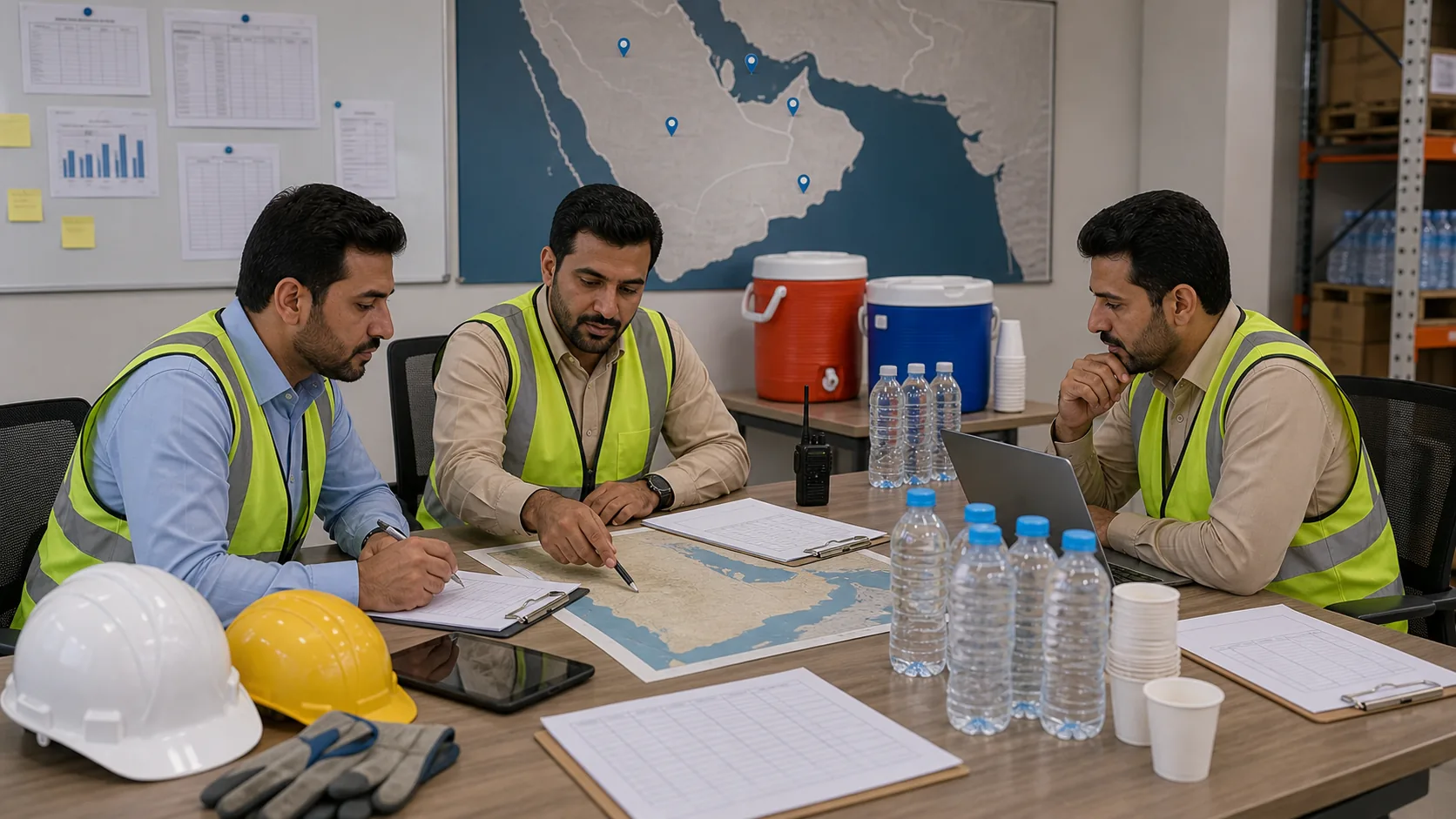
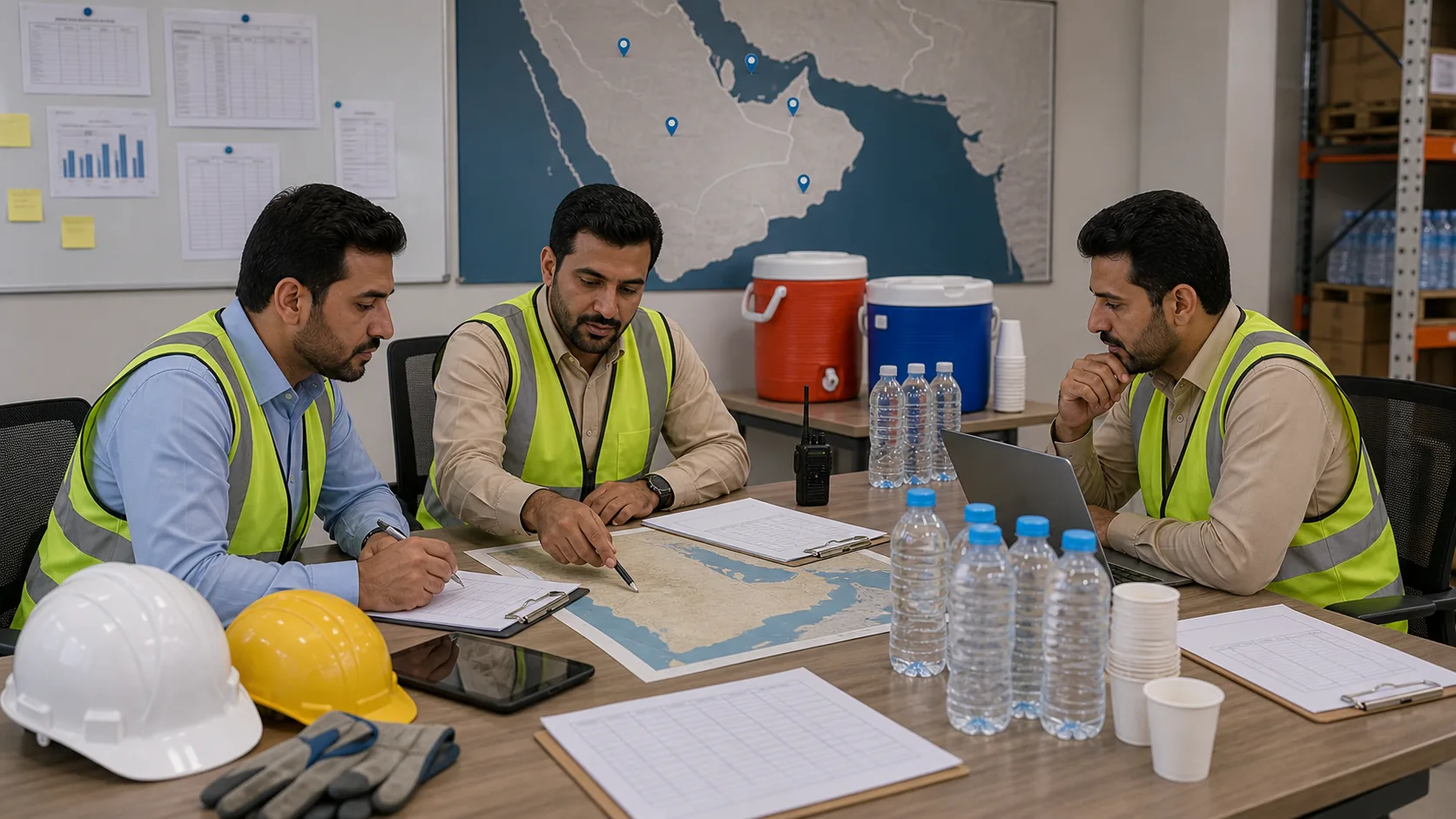
Achieving Operational Excellence with a GCC Regional Hydration Compliance Guide
For regional HSE managers and compliance directors, managing <a href="/tools/heat-stress-assessment">heat stress</a> across multiple borders requires a sophisticated understanding of varying legal landscapes. Establishing a unified GCC regional hydration compliance guide is the first step toward ensuring that multinational workforces remain protected while the organization remains audit-ready. By aligning procurement and safety protocols with the most stringent regional standards, companies can eliminate the risk of localized non-compliance and maintain a consistent standard of care from Abu Dhabi to Riyadh and beyond.
The Scientific Baseline for GCC Regional Hydration Compliance Guide Alignment
While the administrative requirements may vary, the physiological necessity of heat stress management is universal. All six GCC states have adopted heat safety mandates that include the provision of electrolytes for outdoor workers during the extreme summer months. This regional baseline is firmly rooted in the World Health Organization Oral Rehydration Salts (standard ORS) standards. Because the underlying formula requirements are consistent across the region, safety directors can implement a single, high-quality electrolyte solution that satisfies the scientific foundation of every GCC regulatory body. This allows for the use of Hydralyte 800g pouches, 20g sachets, and stick packs interchangeably across different sites without compromising the medical efficacy required by regional health authorities.
Navigating Country-By-Country Regulatory Frameworks in the Arabian Gulf
Despite the shared scientific baseline, the legal execution of heat safety differs by nation. In the United Arab Emirates, the Ministry of Human Resources and Emiratisation (MOHRE) enforces Federal Decree-Law No. 33 alongside the mandatory midday break. Saudi Arabia’s Ministry of Human Resources and Social Development maintains its own strict provisions for protecting workers during peak thermal hours. Qatar utilizes a highly detailed system involving the Qatar Integrated Aerodrome System (QIAS) and DBA regulations, which utilize wet-bulb globe temperature (WBGT) thresholds to trigger work modifications. Kuwait’s Public Authority for Manpower (PAM), Oman’s Ministry of Manpower, and Bahrain’s Labour Market Regulatory Authority (LMRA) each have specific ministerial orders governing outdoor work and hydration. Understanding these nuances is critical for maintaining an effective GCC regional hydration compliance guide that addresses specific local enforcement priorities.
Comparing Regional Documentation and Inspection Standards
Documentation is the primary differentiator in how GCC states manage heat stress compliance. The UAE and Qatar currently maintain the most rigorous requirements for record-keeping, often demanding proof of electrolyte procurement and daily distribution logs. In Saudi Arabia, the intensity of Ministry inspections is rapidly increasing as the Kingdom expands its industrial and construction sectors. While Bahrain’s LMRA provisions are more recent, they follow the regional trend toward stricter oversight. An effective compliance strategy must account for these variations by maintaining centralized records that prove the provision of standard ORS-aligned hydration across all jurisdictions, ensuring that a site manager in any of the six countries can immediately produce the necessary safety data sheets and batch certifications during a surprise audit.
Simplifying Regional Safety with a Unified Hydralyte Solution
Managing six different supply chains for six different regulatory environments is inefficient and increases the risk of error. A unified Hydralyte account provides a streamlined solution that satisfies the entire region. Because Hydralyte uses a consistent, standard ORS-aligned formula across its 800g pouches, 20g sachets, and stick pack formats, the same compliance documentation package serves every GCC country. This single-account approach allows regional directors to manage their entire GCC-wide electrolyte distribution through one point of contact, ensuring that every worker from Kuwait to Oman receives the same premium hydration support. This consistency not only simplifies logistics but also reinforces a corporate culture of safety that transcends national borders. To establish your unified regional safety program and secure your supply, visit our team at contact our team.
Frequently Asked Questions
Do all six GCC states require electrolyte provision for outdoor workers?
Yes. All six GCC states — UAE, Saudi Arabia, Qatar, Kuwait, Oman, and Bahrain — have adopted heat stress management requirements that include electrolyte provision for outdoor workers during summer months. The underlying standard ORS scientific standard is consistent across all six regulatory frameworks, though documentation requirements and enforcement intensity vary.
How does Qatar's heat stress framework compare to the UAE's?
Qatar introduced a comprehensive heat stress framework aligned with international wet-bulb globe temperature standards, particularly for the construction sector. Qatar's QIAS and DBA regulations include work stoppage thresholds based on WBGT readings. Both UAE and Qatar require standard ORS-aligned electrolyte provision, but Qatar's framework places greater emphasis on WBGT-triggered work modification.
Can one Hydralyte account and documentation package satisfy compliance in all six GCC countries?
Yes. Hydralyte's formula meets the standard ORS compositional standards referenced in all six GCC countries' electrolyte provision requirements. The compliance documentation package — ingredient certifications, batch traceability, nutritional declarations — satisfies the documentation requirements of each GCC country's regulatory framework under a single GCC account.
What MoHRE Inspectors Look For During Heat Stress Audits
MoHRE enforcement has intensified significantly since the introduction of Ministerial Resolution No. 44/2022. Inspectors now conduct both scheduled and surprise audits at outdoor work sites, with a specific focus on the availability of approved rehydration materials — not just water.
Key audit checkpoints include: presence of electrolyte rehydration products at welfare stations, documentation proving regular procurement and distribution, evidence of worker training on heat stress recognition, and compliance with the midday work ban (12:30–3:00 PM, June 15–September 15).
Having Hydralyte visibly stocked at welfare stations with dated distribution logs provides clear evidence of compliance. Request a corporate hydration plan that includes all MoHRE-ready documentation — product specifications, batch traceability, and distribution templates.
Calculating the True Cost of Non-Compliance
The direct penalty for failing a MoHRE heat stress audit is AED 5,000 per worker, with a maximum of AED 50,000 per violation. However, the indirect costs are far greater: project shutdowns during investigations, reputational damage affecting future tender bids, increased insurance premiums, and potential criminal liability if a worker suffers serious heat illness.
A comprehensive Hydralyte electrolyte program for 500 workers costs approximately AED 2–4 per worker per day — a fraction of a single non-compliance fine. Use the Hydralyte ROI Calculator to model the exact cost-benefit for your workforce size.
🏗 Protecting Outdoor Workers? Hydralyte supplies bulk electrolyte programs for construction, oil & gas, logistics, and manufacturing companies across the GCC — with full MoHRE compliance documentation. See Industry Hydration Programs →
🛒 Ready to try Hydralyte? Available in three refreshing flavours across multiple pack sizes — from individual sachets to 800g bulk pouches. Shop Hydralyte Online → or request a corporate quote.