Heat Stress and Mental Health in UAE Outdoor Workers
For UAE HSE managers and operations directors, the transition into the summer season is a high-stakes operational period defined by the June 15 enforcement of the midday work ban. Ensuring compliance and worker safety requires a structured, phased implementation of heat stress protocols.
Utilizing a pre-season checklist for Hydralyte UAE ensures your electrolyte provision program is fully operational before the peak thermal load arrives. By following a chronological sequence, you convert regulatory awareness into an audit-ready safety strategy:
- Procurement: Securing stock before seasonal demand spikes.
- Training: Preparing supervisors and the workforce.
- Station Setup: Physical installation of hydration points.
Phase 1: Risk Assessment and Procurement (January – March)
The foundation of a successful Hydralyte UAE strategy begins in the first quarter of the year. This phase focuses on:
- Updating and signing the heat stress risk assessment to reflect current site conditions.
- Initiating or renewing your Hydralyte B2B account to establish a standing order.
- Conducting a format selection review based on consumption data and workforce projections.
Determine the optimal mix of supplies:
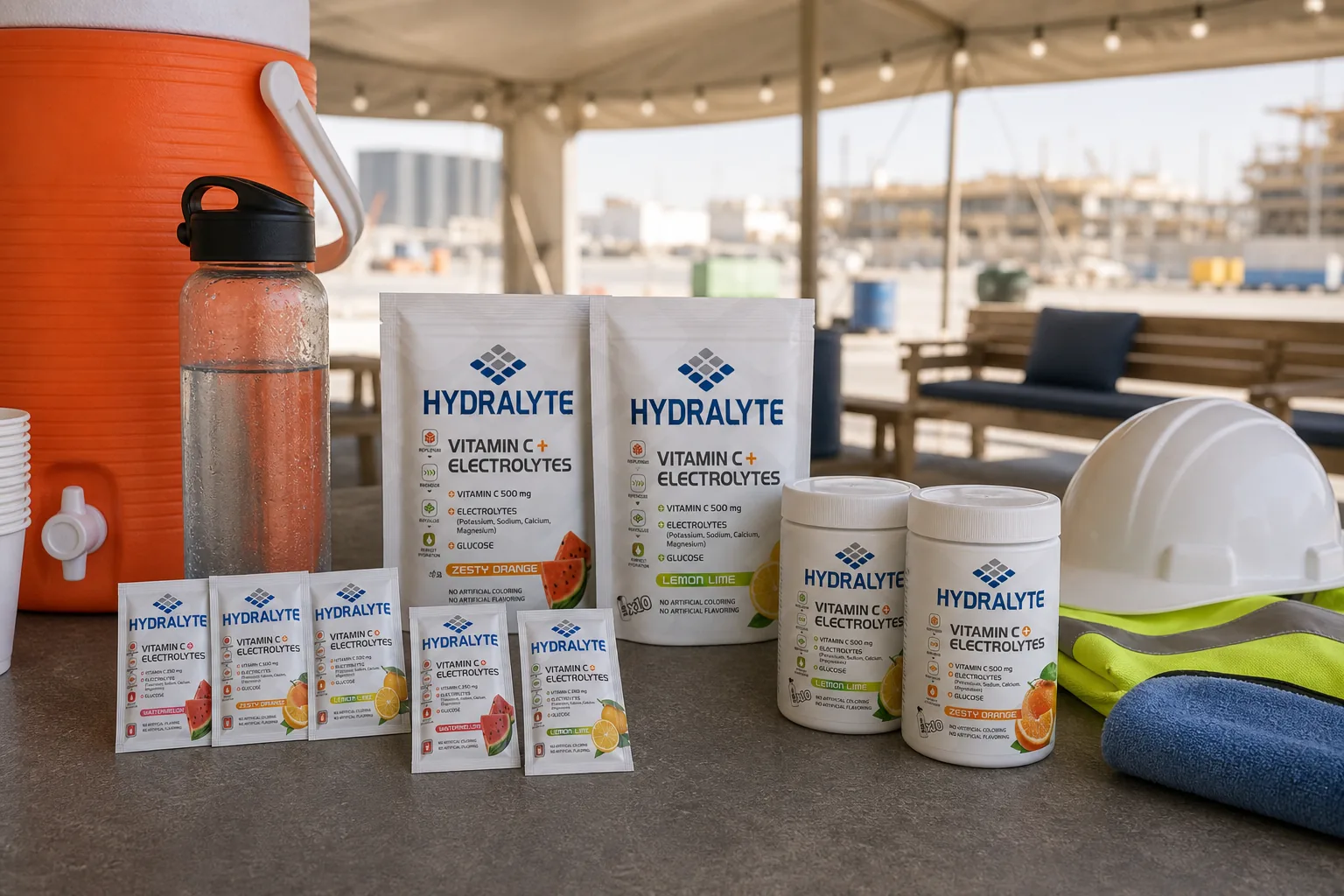
- 800g pouches: For permanent welfare stations.
- 200g jars: For specialized teams.
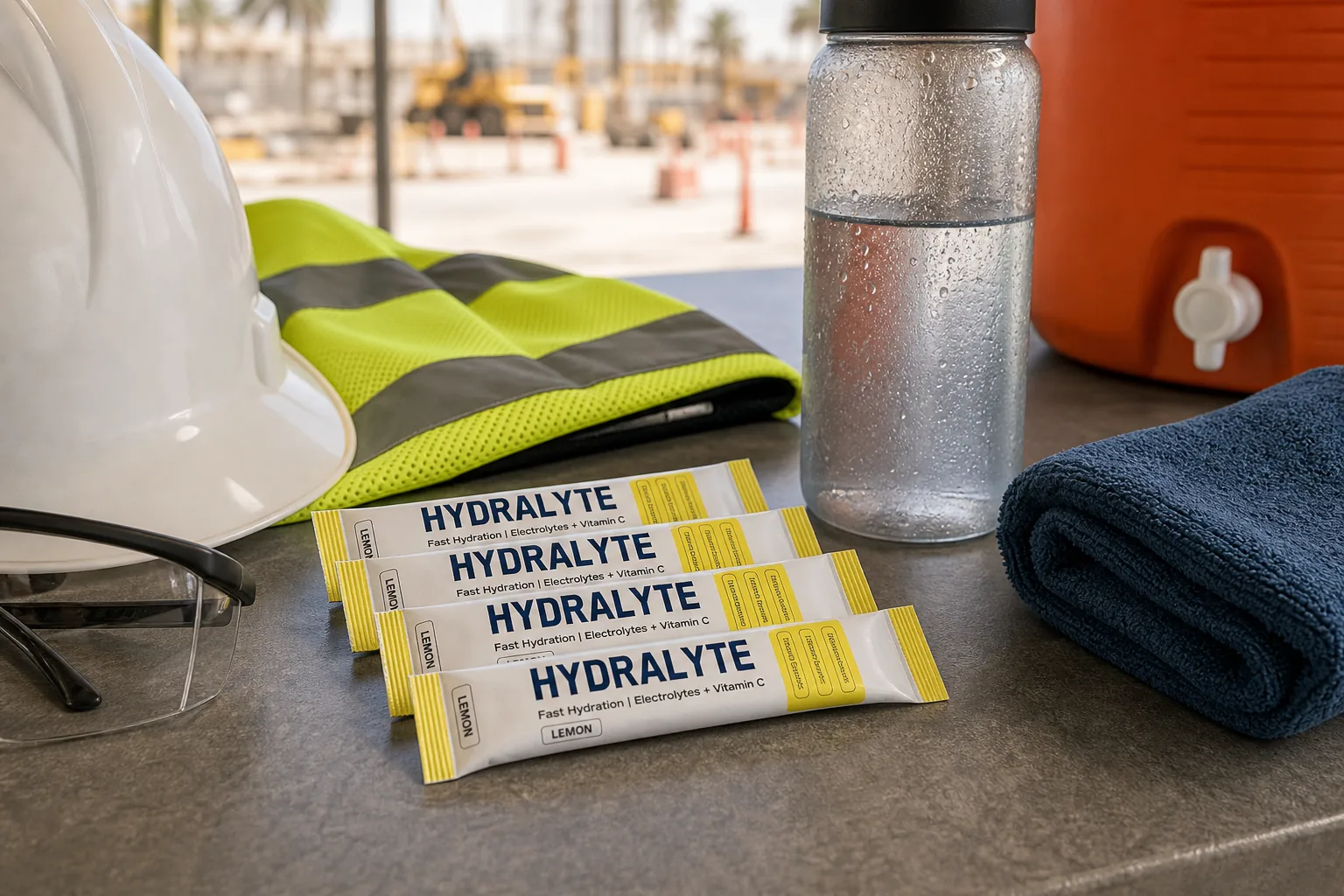
- 20g sachets or stick packs: For mobile workers or those at height.
Securing these commitments before March guarantees your supply chain remains robust during the height of the UAE summer.
Phase 2: Installation and Supervisor Training (April – May)
As ambient temperatures rise, the focus shifts toward physical readiness and human capital preparation:
- Confirm the first Hydralyte delivery for receipt in May to avoid logistics hurdles.
- Inspect, repair, and sanitize all physical welfare stations.
- Complete mandatory supervisor training before June 1.
- Prepare multilingual worker induction materials in Arabic, Hindi, Urdu, and Tagalog.
- Restock emergency response kits and position distribution log templates at every hydration point.
Phase 3: Final Readiness and Compliance Audit (June 1 – 15)
The final two weeks before the June 15 deadline represent the critical buffer period:
- Perform a final inventory check to confirm at least four weeks of stock is physically on site.
- Ensure the heat stress policy is signed and dated for the current year.
- Organize the compliance evidence binder, including procurement receipts and training logs, for immediate inspection.
- Brief senior management on the high probability of unannounced MOHRE inspections.
To secure your pre-season stock and set up your B2B account, contact our team today at /contactus.
Recognising the Stages of Heat-Related Illness
Heat-related illness progresses through distinct stages, each requiring escalating intervention. Understanding these stages enables supervisors to intervene early — before a heat stress incident becomes a medical emergency.
- Stage 1 — Heat Cramps: Muscle spasms in legs, arms, or abdomen. Caused by electrolyte depletion. Intervention: Rest in shade, provide Hydralyte, stretch affected muscles.
- Stage 2 — Heat Exhaustion: Heavy sweating, weakness, cold/clammy skin, nausea, dizziness. Core temperature below 40°C. Intervention: Remove from heat immediately, cool actively, provide Hydralyte, monitor for 30 minutes.
- Stage 3 — Heat Stroke: Hot/dry skin, confusion, loss of consciousness, core temperature above 40°C. Medical emergency. Intervention: Call emergency services immediately, cool aggressively, do NOT give fluids if unconscious.
The critical window between heat exhaustion and heat stroke can be as short as 15–30 minutes. Proactive electrolyte hydration with Hydralyte throughout the workday prevents workers from ever reaching Stage 1.
Building a Site-Level Heat Stress Response Plan
Every outdoor work site in the UAE should have a documented heat stress response plan that includes: designated cool-down zones within 50m of work areas, trained first aiders on every shift, emergency cooling equipment (ice packs, misting fans), and pre-positioned Hydralyte electrolyte stocks at every welfare station and first aid point.
Train all workers — not just supervisors — to recognise heat stress symptoms in colleagues. Buddy-system monitoring is one of the most effective early warning mechanisms, especially during peak heat hours. Ensure your plan includes MoHRE compliance documentation requirements.
Frequently Asked Questions
Q: What is the most important deadline in the pre-season Hydralyte program setup?
May 31 is the critical internal readiness deadline. By this date, you must have:
- All supervisor training completed and records filed.
- All welfare stations installed and stocked.
- The first Hydralyte delivery received on site.
- The heat stress risk assessment and policy signed.
- The distribution log system in place.
Q: What should UAE employers do if their Hydralyte order has not arrived by June 1?
- Contact your Hydralyte B2B account manager immediately for expedited delivery.
- Brief supervisors and document all interim provision steps.
- Ensure full operation by June 15 to meet the MOHRE inspection standard.
Q: How should UAE employers conduct the pre-season welfare station walkthrough?
Walk every station before June 15 and verify:
- The 800g pouch is in place and within its shelf life.
- The distribution log is ready with current date columns.
- The scoop is present and clean.
- Water connections are functional.
- The station is accessible without crossing vehicle routes.
- Photo evidence is taken of each station for readiness records.
🛒 Ready to try Hydralyte? Available in three refreshing flavours across multiple pack sizes — from individual sachets to 800g bulk pouches. Shop Hydralyte Online → or request a corporate quote.