How to Brief Workers on Heat Safety in Multiple Languages UAE
In the extreme thermal environments of UAE construction and industrial sectors, heat-related illness is a constant operational risk. While daily hydration programs focus on prevention through scheduled intake, a critical gap often exists in reactive capability. Establishing a dedicated Hydralyte emergency response kit in the UAE is a vital safety requirement for every site. This specialized resource ensures that when a worker exhibits signs of heat exhaustion, the speed of intervention is maximized, potentially preventing a medical emergency from escalating into a life-threatening heat stroke event.
Why a Dedicated Emergency Kit is Separate from Regular Welfare Supplies
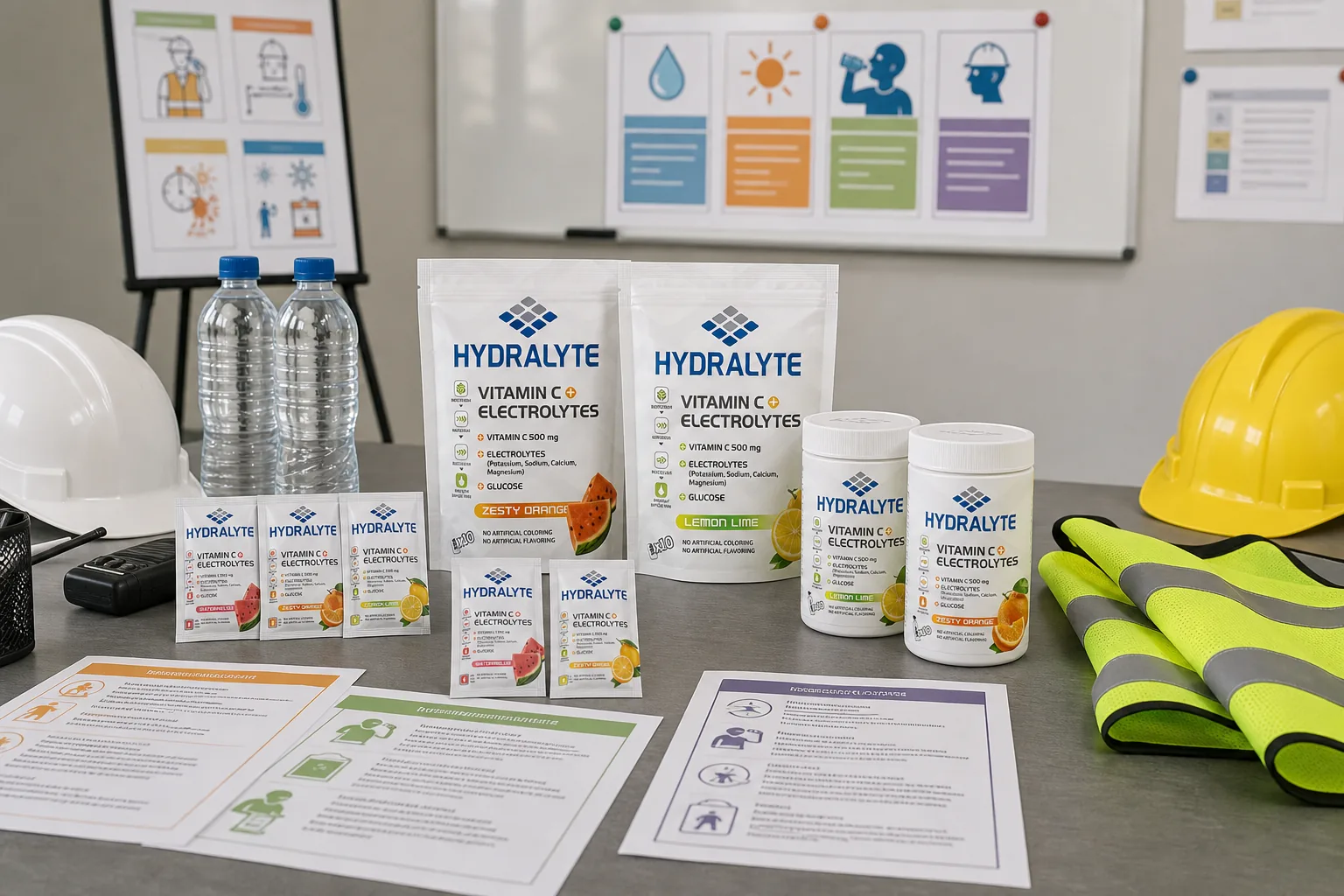
Standard <a href="/tools/heat-stress-assessment">heat stress</a> prevention programs in the UAE rely on bulk distribution through welfare stations using large-format 800g pouches or 200g jars. However, the Hydralyte emergency response kit for the UAE must remain a distinct, dedicated entity for the following reasons:
- Eliminates Resource Friction: First responders and safety officers should not be required to navigate high-traffic welfare stations or search through general stock during an active incident.
- Immediate Deployment: The kit is designed to contain everything needed for rapid rehydration in one clearly marked, accessible bag.
- Faster Response: Speed of response is the primary determinant in heat exhaustion cases; a dedicated kit ensures no time is lost during high-pressure safety events.
Essential Contents of a UAE Site Heat Illness Emergency Kit
A compliant Hydralyte emergency response kit in the UAE must be systematically stocked and maintained in a clearly marked bag. At a minimum, each kit should contain:
- 8-10 individually sealed Hydralyte sachets: Providing the precise Oral Rehydration Solution (ORS) formula required to reverse rapid electrolyte depletion.
- A clear mixing cup and a 500ml bottle of cool water.
- A basic thermometer for initial assessment.
- A cooling towel or space blanket.
- A laminated emergency response protocol card: This must clearly dictate when to administer Hydralyte and when to escalate to 999 emergency services.
Kits should be strategically positioned in the site first aid room, at primary outdoor welfare stations, and at hoist landings on high-rise projects to ensure vertical access.
Supervisor-Carried Sachets: The First-Response Layer
Beyond stationary kits, the most effective safety programs implement a mobile first-response layer:
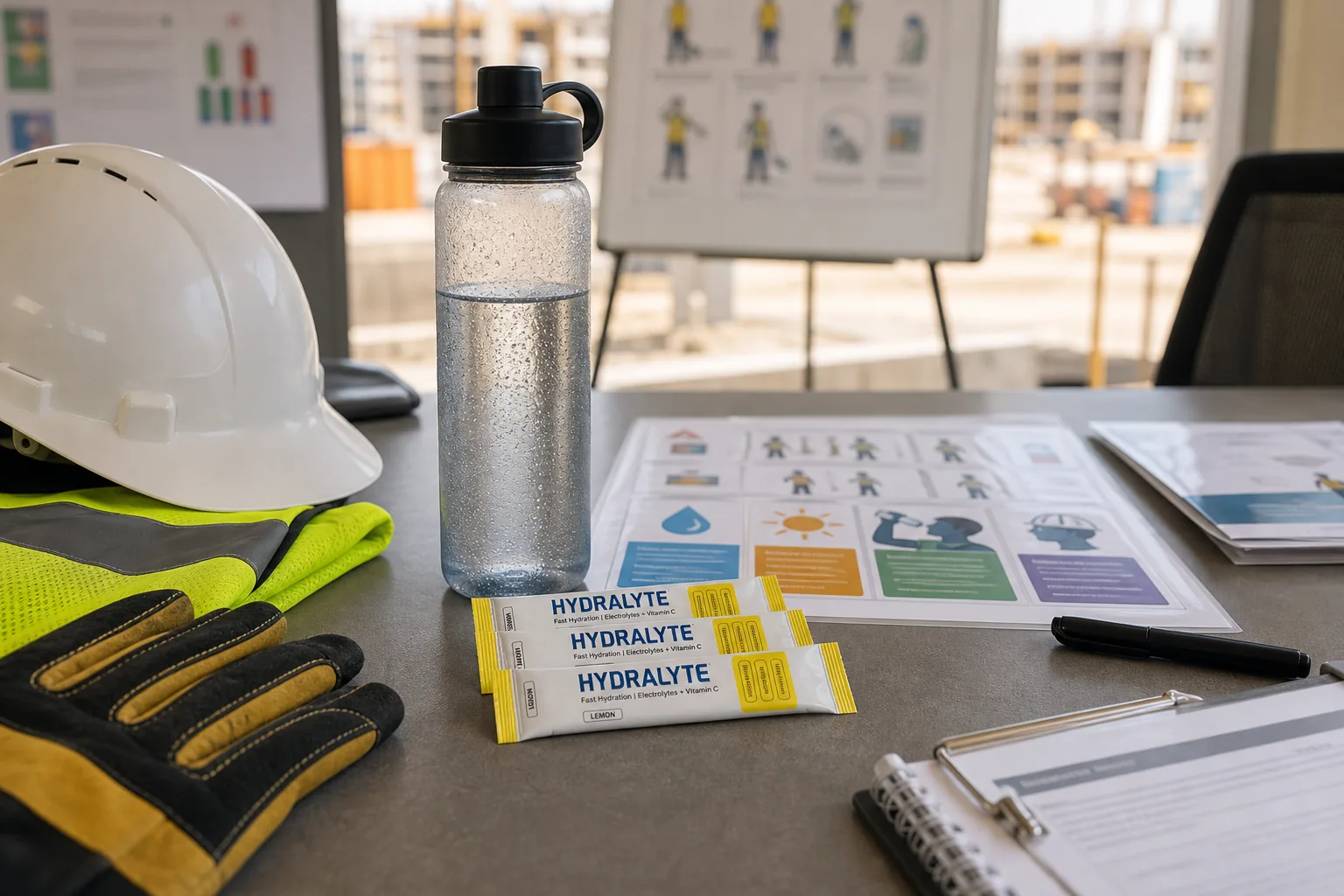
- On-Person Provision: Every site supervisor and welfare officer should carry 2-3 Hydralyte sachets in their safety vest at all times.
- Instant Intervention: Allows for the immediate administration of electrolytes the moment a worker shows early signs of fatigue or dizziness.
- Reduced Downtime: This immediate layer is often the difference between a minor incident and a significant medical evacuation, significantly reducing heat-related downtime.
To implement a comprehensive emergency response program for your site, contact our team.
The Hydralyte Advantage for UAE and GCC Conditions
Hydralyte is a potassium-rich, low-sodium isotonic electrolyte formula designed specifically for proactive daily hydration — not just reactive emergency recovery. With 500mg Vitamin C per serve and a low-sugar formula, it provides comprehensive hydration support for anyone living, working, or exercising in the extreme heat of the UAE and GCC.
Unlike traditional ORS sachets designed for acute illness, or high-sugar sports drinks designed for athletic performance, Hydralyte is formulated for safe, repeated daily consumption across the entire summer season. This makes it the preferred choice for workplace hydration programs, family use, and fitness enthusiasts across the region.
Available in three flavours (Orange Blast, Lemon Lime, Pineapple) and four pack sizes, Hydralyte is stocked online and across GCC retail, with bulk corporate supply available for businesses with 50+ workers.
Frequently Asked Questions
Q: What are the minimum contents of a UAE site heat illness emergency kit?
A: A minimum kit contains 8-10 individually sealed Hydralyte sachets, a mixing cup, a 500ml cool water bottle, a thermometer, a space blanket or cooling towel, and a laminated protocol card featuring the 999 emergency number.
Q: Where should a UAE construction site emergency heat kit be kept?
- Site Medical Center: One kit at the first aid room.
- Welfare Stations: A second at the primary outdoor station.
- High-Rise Access: Additional kits at each hoist landing.
- Note: All supervisors must be physically shown these locations during site induction.
Q: How often should UAE site emergency heat kits be inspected and restocked?
A: Inspect all kits monthly during the summer season. Check that all sachets are within their shelf life, mixing cups are present, and the 999 protocol card is legible. Restock any used items immediately to avoid inadequate coverage.
🛒 Ready to try Hydralyte? Available in three refreshing flavours across multiple pack sizes — from individual sachets to 800g bulk pouches. Shop Hydralyte Online → or request a corporate quote.
Creating Effective Multilingual Heat Safety Communications
UAE construction sites typically host workers from 10–15 nationalities speaking different languages. Effective heat safety communication must reach every worker regardless of language background. Key strategies include:
- Visual-first communication: Use pictograms and colour-coded severity levels (green/amber/red) that transcend language barriers. Hydralyte's distinctive orange packaging and clear mixing instructions work well as visual anchors.
- Translated toolbox talks: Prepare heat stress briefings in the top 5 languages on your site (typically English, Hindi, Urdu, Bengali, and Arabic). Focus on three key messages: drink electrolytes regularly, recognise heat stress symptoms in yourself and colleagues, and report to supervisors immediately if unwell.
- Buddy system: Pair workers who share a common language so they can monitor each other. Ensure every buddy pair knows the location of the nearest Hydralyte welfare station and the signs of heat exhaustion.
- Demonstrate, don't just instruct: Physical demonstrations of mixing Hydralyte and recognising dehydration symptoms are more effective than written instructions, regardless of language.
Document all multilingual training sessions with attendance records — this evidence is valuable during MoHRE compliance audits.