Heat Stress and Worker Turnover in the UAE: The Real Cost Employers Miss
In the competitive UAE landscape, HR and operations directors often view heat stress through the lens of medical compliance and immediate safety. However, a significant and often unquantified financial drain exists: the direct link between heat stress and worker turnover in the UAE and the long-term stability of the industrial workforce.
When summer temperatures soar, the quality of hydration and welfare provision becomes a decisive factor in whether an experienced operative remains with the company or exits the market entirely. Addressing this turnover is not just a health initiative; it is a critical strategy for protecting your bottom line from the high costs of recruitment and retraining.
The Seasonal Pattern of Heat Stress and Worker Turnover
UAE industrial and construction sectors face a predictable but damaging seasonal turnover pattern. Key factors include:
- Chronic Heat Fatigue: A notable proportion of outdoor workers who suffer from heat illness during their first summer do not return for a subsequent year.
- Negative Workplace Association: The physiological and psychological toll of inadequate hydration creates a lasting negative perception of the employer.
- High Replacement Costs: Replacing an experienced worker costs between AED 15,000 and AED 35,000 per individual.
Costs associated with these replacements include:
- Recruitment fees and agency charges
- Visa processing and work permits
- Onboarding and administrative overhead
- The skills ramp-up period and initial productivity loss
The "Employer of Choice" Effect in Worker Communities
The UAE workforce is highly connected, particularly within South Asian worker communities. Information regarding site conditions and welfare standards spreads rapidly. Benefits of a proactive program include:
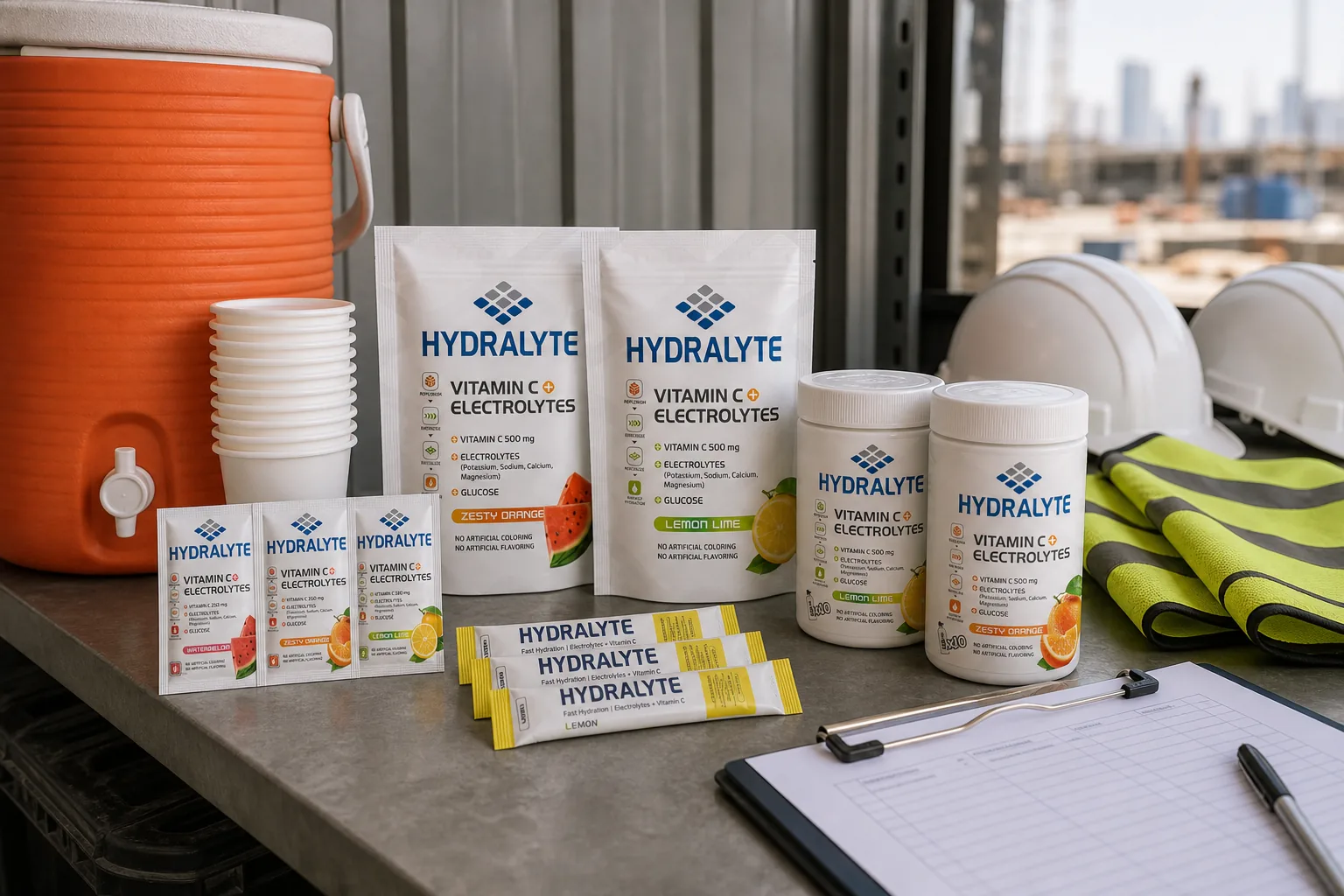
- Reputation Management: Companies providing the full Hydralyte range develop a reputation as an "employer of choice."
- Recruitment Quality: Positive standing directly supports the ability to attract experienced operatives.
- Risk Mitigation: Avoiding a reputation for poor welfare prevents reliance on less skilled labor, which increases the risk of site incidents and productivity declines.
Quantifying the Retention ROI of Proper Hydration
To understand the value of an electrolyte program, employers must calculate the "retention premium." For a typical 200-worker UAE site, reducing summer early departures by just five workers can save between AED 75,000 and AED 175,000 in avoided replacement costs.
Implementation for maximum loyalty includes:
- 800g pouches at permanent welfare stations
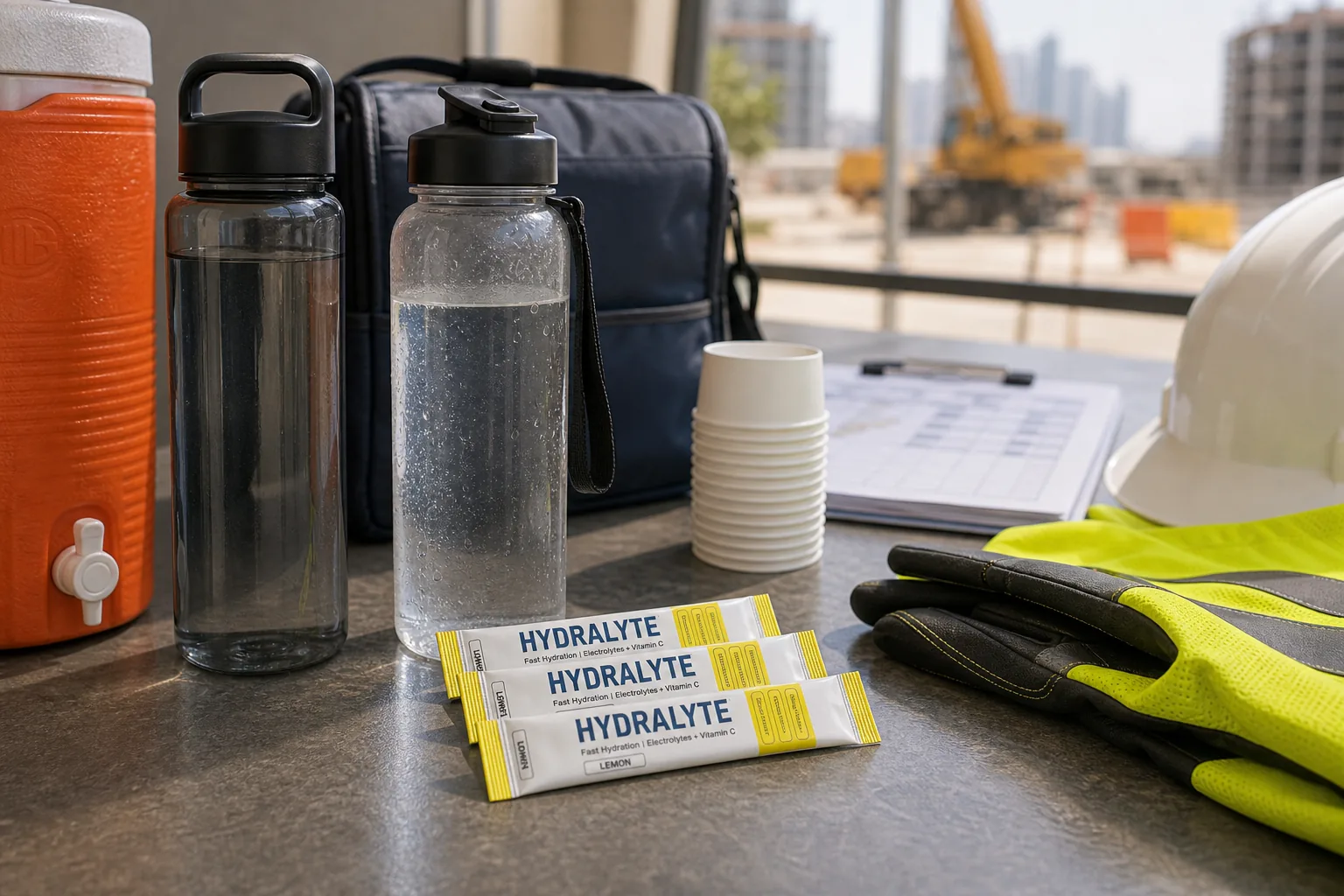
- Individual sachets for specialized or mobile tasks
- Tangible physical support during the most challenging months of the year
To stabilize your workforce and reduce the hidden costs of seasonal departures, contact us to implement a tailored hydration program at contact our team.
Recognising the Stages of Heat-Related Illness
Heat-related illness progresses through distinct stages, each requiring escalating intervention. Understanding these stages enables supervisors to intervene early — before a heat stress incident becomes a medical emergency.
- Stage 1 — Heat Cramps: Muscle spasms in legs, arms, or abdomen. Caused by electrolyte depletion. Intervention: Rest in shade, provide Hydralyte, stretch affected muscles.
- Stage 2 — Heat Exhaustion: Heavy sweating, weakness, cold/clammy skin, nausea, dizziness. Core temperature below 40°C. Intervention: Remove from heat immediately, cool actively, provide Hydralyte, monitor for 30 minutes.
- Stage 3 — Heat Stroke: Hot/dry skin, confusion, loss of consciousness, core temperature above 40°C. Medical emergency. Intervention: Call emergency services immediately, cool aggressively, do NOT give fluids if unconscious.
The critical window between heat exhaustion and heat stroke can be as short as 15–30 minutes. Proactive electrolyte hydration with Hydralyte throughout the workday prevents workers from ever reaching Stage 1.
Building a Site-Level Heat Stress Response Plan
Every outdoor work site in the UAE should have a documented heat stress response plan that includes: designated cool-down zones within 50m of work areas, trained first aiders on every shift, emergency cooling equipment (ice packs, misting fans), and pre-positioned Hydralyte electrolyte stocks at every welfare station and first aid point.
Train all workers — not just supervisors — to recognise heat stress symptoms in colleagues. Buddy-system monitoring is one of the most effective early warning mechanisms, especially during peak heat hours. Ensure your plan includes MoHRE compliance documentation requirements.
Frequently Asked Questions
Q: How much does it cost to replace a UAE outdoor construction worker who leaves mid-season?
A: Full replacement costs typically range from AED 15,000 to AED 35,000 per replacement, depending on the worker's skill level and recruitment source country.
Q: Does UAE worker turnover actually increase with inadequate heat stress provision?
A: Yes. Gulf construction workforce studies consistently show elevated voluntary departure rates among workers who experienced heat illness. Workers report a significantly higher intention to seek employment elsewhere if they feel their employer did not prioritize their safety.
Q: How should UAE employers present the retention benefit of the Hydralyte program to management?
A: Present a three-column ROI analysis:
- The annual Hydralyte program cost
- The estimated reduction in summer early departures
- The total replacement cost avoided per departure
🛒 Ready to try Hydralyte? Available in three refreshing flavours across multiple pack sizes — from individual sachets to 800g bulk pouches. Shop Hydralyte Online → or request a corporate quote.
Why Proactive Hydration Outperforms Reactive Treatment
The fundamental shift in modern occupational health is from reactive treatment to proactive prevention. Traditional approaches wait for dehydration symptoms to appear before intervening — by which point cognitive impairment, reduced coordination, and heat illness risk are already elevated.
Proactive hydration with Hydralyte maintains electrolyte balance throughout the workday, preventing the dehydration-impairment cascade from ever beginning. This is particularly critical in the UAE where ambient conditions can cause 1–2% body weight fluid loss within 60–90 minutes of outdoor work.
The economic case is equally compelling. Proactive electrolyte provision costs approximately AED 2–4 per worker per day. A single heat-related medical incident costs AED 20,000–50,000. A single MoHRE fine costs AED 5,000 per worker. The mathematics overwhelmingly favour prevention — and every employer who runs the numbers through the Hydralyte ROI Calculator reaches the same conclusion.