Water Dispensers Are Not Enough — Navigating Electrolyte Provision vs. Water Dispensers for UAE Compliance
For many UAE employers, installing high-capacity water dispensers across construction and industrial sites is seen as the final step in seasonal heat safety. However, a critical gap often remains in safety protocols. While cool, clean water is essential, relying solely on dispensers fails to meet the full technical guidelines set by the Ministry of Human Resources and Emiratisation (MOHRE). Understanding the regulatory and physiological necessity of electrolyte provision vs. water dispensers in the UAE is fundamental to maintaining worker safety and legal compliance during extreme summer months.
The Critical Regulatory Distinction in MOHRE Guidance
MOHRE’s technical guidelines regarding heat stress prevention are specific, mandating two separate, distinct obligations:
- Provision of adequate drinking water: Effectively satisfied by water dispensers.
- Supplementation of electrolytes: A separate requirement not addressed by plain water.
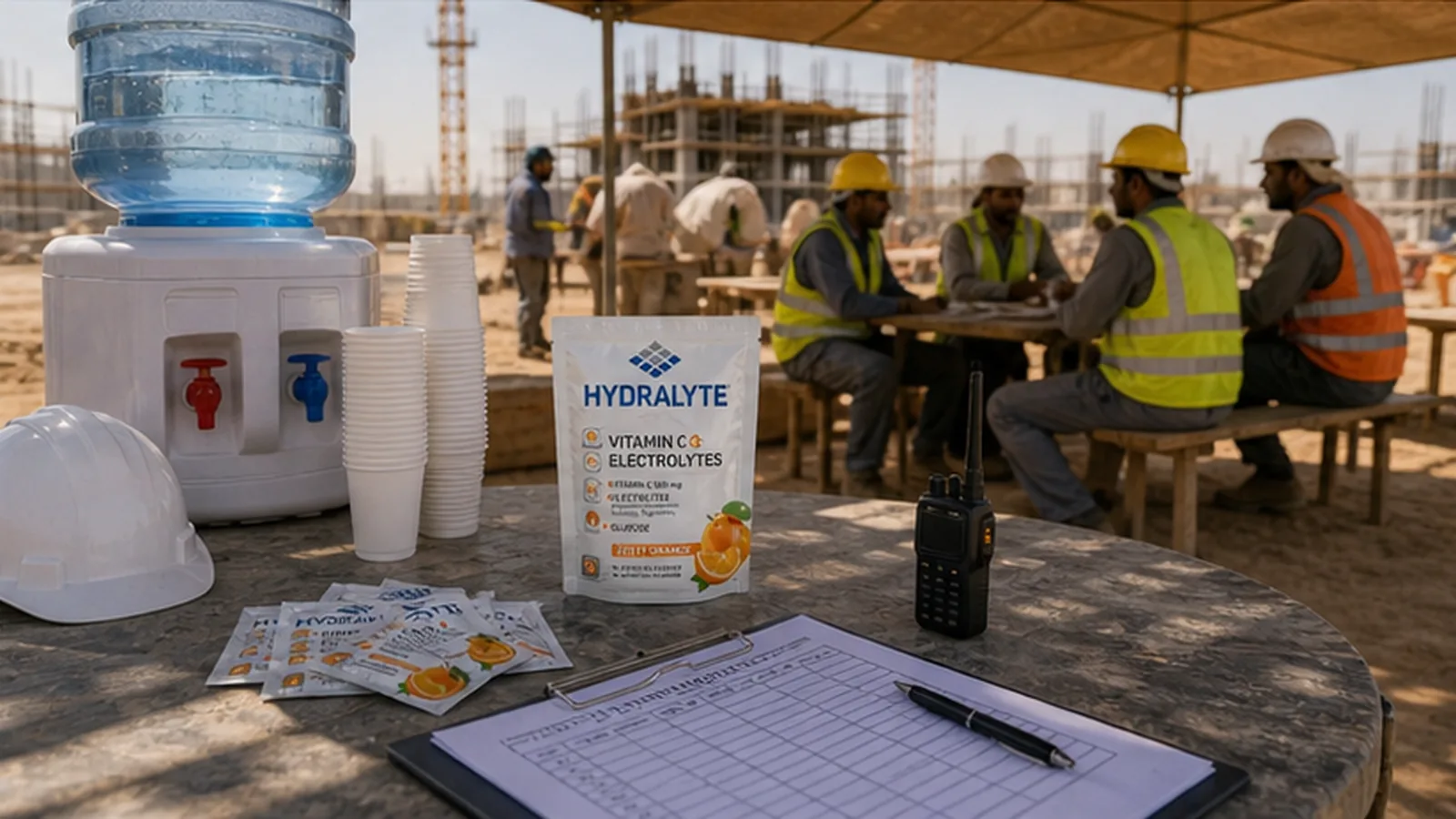
This distinction is one of the most common compliance gaps identified during summer site inspections. Employers are often surprised to receive an inspection finding for missing electrolytes despite heavy investment in water infrastructure. Under MOHRE standards, an employer must provide a dedicated electrolyte solution, such as Hydralyte 800g pouches or stick packs, as a separate component of welfare provision to be fully compliant.
Why Plain Water Alone Is Insufficient for UAE Summer Shifts
The physiological demands of the UAE summer mean that water alone, even in large volumes, is insufficient for heat stress prevention. Risks of water-only hydration include:
- Failure to replace critical salts: Sodium, potassium, magnesium, and calcium lost through heavy sweat.
- Hyponatremia: A dangerous condition where blood sodium levels become diluted by excessive plain water.
- Compounded symptoms: Hyponatremia mimics and worsens heat exhaustion, leading to fatigue and confusion that compromises site safety.
The Two-Component Compliance Solution
To achieve total compliance and maximum worker protection, employers must adopt a two-component hydration strategy:
- Component 1: Continuous supply of clean, cooled water via dispensers to address fluid volume.
- Component 2: A structured Hydralyte provision program to address electrolyte replacement.
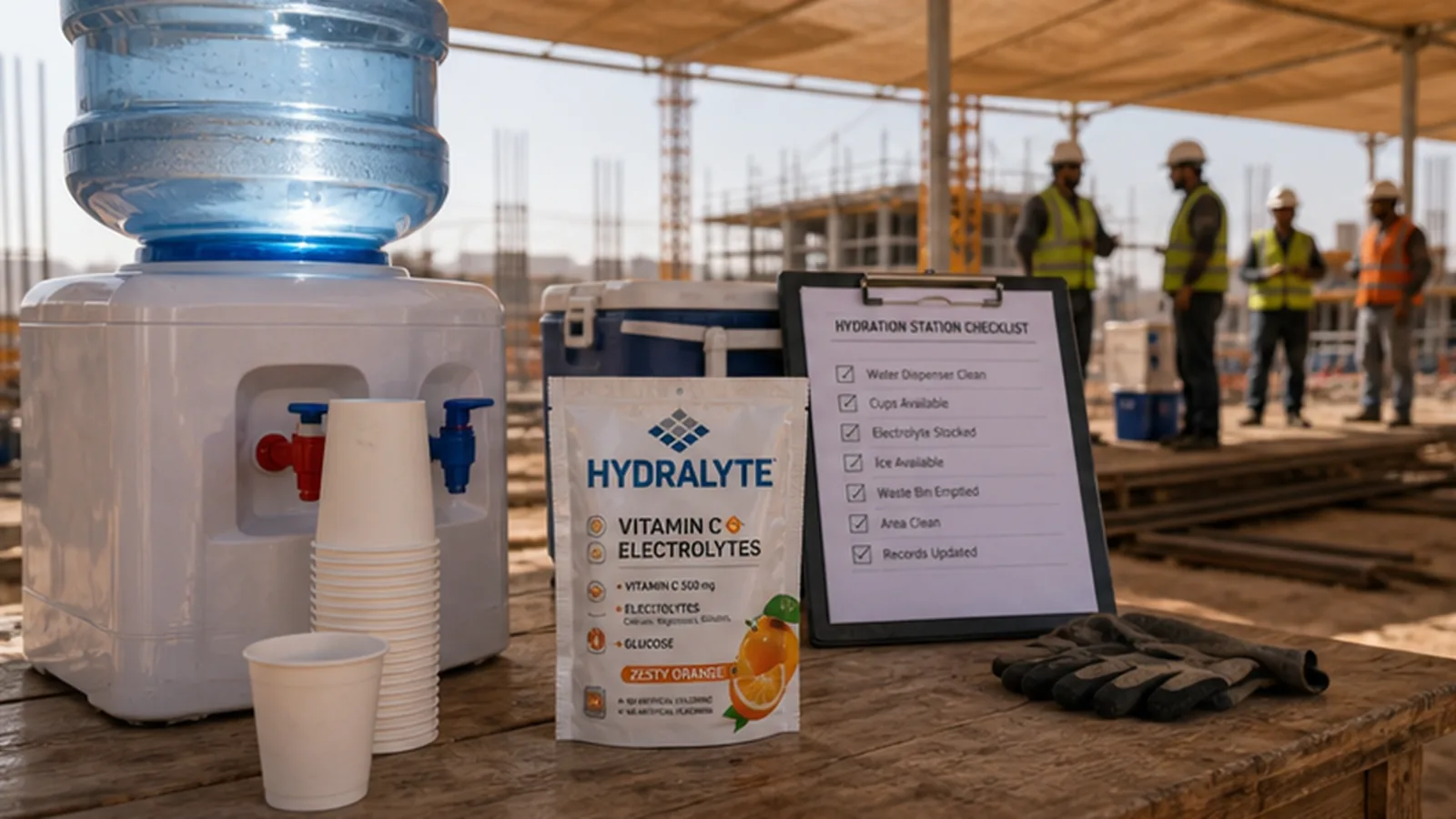
By integrating Hydralyte 800g pouches at <a href="/industries">welfare station</a>s or providing personal-issue stick packs for remote workers, companies ensure MOHRE’s requirements are met. This dual approach should be documented in the heat stress policy and reflected in daily distribution logs to ensure the electrolyte component of MOHRE compliance is never overlooked.
To implement a comprehensive two-component hydration program that meets all regulatory standards, contact our team.
What MoHRE Inspectors Look For During Heat Stress Audits
MoHRE enforcement has intensified significantly since the introduction of Ministerial Resolution No. 44/2022. Inspectors now conduct both scheduled and surprise audits at outdoor work sites, with a specific focus on the availability of approved rehydration materials — not just water.
Key audit checkpoints include: presence of electrolyte rehydration products at welfare stations, documentation proving regular procurement and distribution, evidence of worker training on heat stress recognition, and compliance with the midday work ban (12:30–3:00 PM, June 15–September 15).
Having Hydralyte visibly stocked at welfare stations with dated distribution logs provides clear evidence of compliance. Request a corporate hydration plan that includes all MoHRE-ready documentation — product specifications, batch traceability, and distribution templates.
Calculating the True Cost of Non-Compliance
The direct penalty for failing a MoHRE heat stress audit is AED 5,000 per worker, with a maximum of AED 50,000 per violation. However, the indirect costs are far greater: project shutdowns during investigations, reputational damage affecting future tender bids, increased insurance premiums, and potential criminal liability if a worker suffers serious heat illness.
A comprehensive Hydralyte electrolyte program for 500 workers costs approximately AED 2–4 per worker per day — a fraction of a single non-compliance fine. Use the Hydralyte ROI Calculator to model the exact cost-benefit for your <a href="/industries">workforce</a> size.
Frequently Asked Questions
Q: Does installing a water dispenser satisfy MOHRE's heat stress requirements for UAE outdoor workers?
A: No. MOHRE guidelines require both water provision and electrolyte supplementation as separate obligations. A water dispenser satisfies only the water requirement. standard ORS-aligned electrolyte supplementation must be provided separately to avoid inspection findings.
Q: Can a worker drink enough plain water to replace their electrolyte losses in the UAE summer?
A: No. Plain water contains no electrolytes. No volume of water replaces the sodium, potassium, magnesium, and calcium lost in sweat. Excessive water without electrolytes can create hyponatremia, which mimics heat exhaustion.
Q: What is the correct two-component compliance setup for UAE outdoor worker heat protection?
A: The setup requires two documented elements:
- Clean, cool water supply: Accessible to all workers to satisfy the water provision requirement.
- standard ORS-standard electrolyte supplement (Hydralyte): Distributed on a scheduled basis to satisfy the separate electrolyte supplementation requirement.
🛒 Ready to try Hydralyte? Available in three refreshing flavours across multiple pack sizes — from individual sachets to 800g bulk pouches. Shop Hydralyte Online → or request a corporate quote.
Why Proactive Hydration Outperforms Reactive Treatment
The fundamental shift in modern occupational health is from reactive treatment to proactive prevention. Traditional approaches wait for dehydration symptoms to appear before intervening — by which point cognitive impairment, reduced coordination, and heat illness risk are already elevated.
Proactive hydration with Hydralyte maintains electrolyte balance throughout the workday, preventing the dehydration-impairment cascade from ever beginning. This is particularly critical in the UAE where ambient conditions can cause 1–2% body weight fluid loss within 60–90 minutes of outdoor work.
The economic case is equally compelling. Proactive electrolyte provision costs approximately AED 2–4 per worker per day. A single heat-related medical incident costs AED 20,000–50,000. A single MoHRE fine costs AED 5,000 per worker. The mathematics overwhelmingly favour prevention — and every employer who runs the numbers through the Hydralyte ROI Calculator reaches the same conclusion.