Compliance Readiness for Heat Stress during UAE Public Holidays
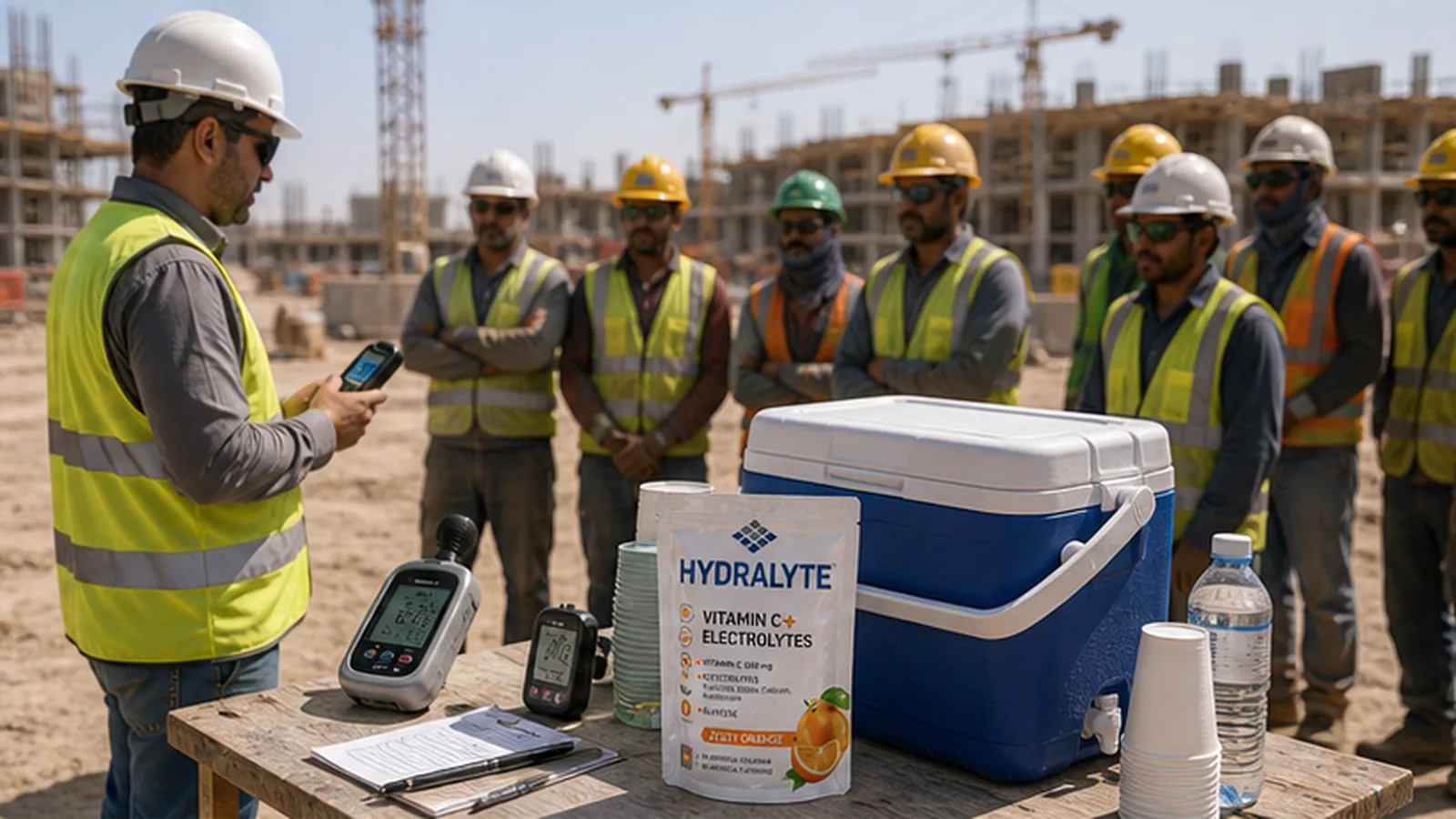
In the UAE, public holidays like National Day or Eid often involve shifting to skeleton crew operations for essential outdoor maintenance and construction tasks. For HR directors and operations managers, it is a common misconception that reduced staffing levels equate to relaxed safety standards. On the contrary, managing heat stress during UAE public holidays is a mandatory legal requirement that persists regardless of the calendar date or the size of the workforce on-site. Maintaining the same rigorous electrolyte provision and heat safety protocols during holidays is a critical component of regulatory compliance and worker protection.
The Legal Position on Heat Stress during UAE Public Holidays
The legal framework governing worker safety in the Emirates is unequivocal. UAE Federal Decree-Law No. 33 of 2021 mandates that heat stress obligations apply every calendar day on which outdoor workers are deployed, with no exceptions for public holidays. Key compliance points include:
- The mandatory midday work ban remains in full effect on Eid or National Day.
- Electrolyte provision requirements apply with the same intensity as on a standard working day.
- A single outdoor worker is entitled to the same level of protection and hydration support as a full crew.
- Failure to provide compliant welfare provisions can lead to significant legal and financial liability.
Specific Risks of Holiday Skeleton Crew Operations
Operating during public holidays introduces unique safety hazards that can exacerbate the risk of heat-related incidents:
- Reduced supervisor coverage, leading to a potential lapse in hydration monitoring.
- An "informal attitude" associated with holiday work that can reduce compliance discipline.
- The dangerous combination of reduced oversight and full UAE summer heat exposure.
- An increased risk of dehydration-induced accidents without dedicated management of 800g pouches at welfare stations.
Practical Compliance Planning for Public Holidays
To ensure total compliance during holiday deployments, proactive planning is essential. Before any skeleton crew is dispatched, management must follow these steps:
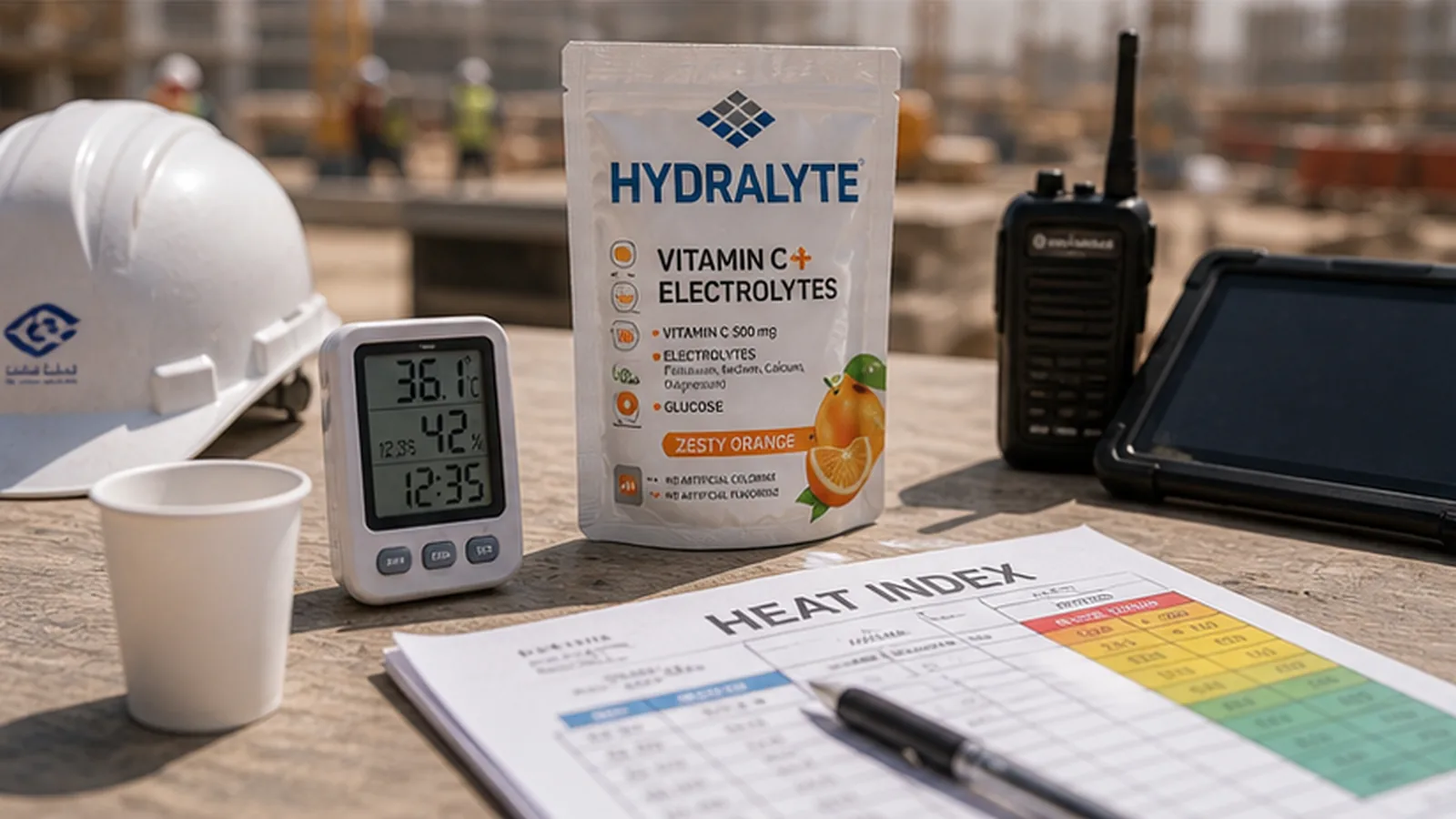
- Confirm welfare stations are fully stocked with Hydralyte 800g pouches and remain accessible.
- Pre-issue personal Hydralyte sachets for workers in remote site areas to ensure immediate rehydration.
- Identify a specific supervisor responsible for welfare monitoring and the mandatory distribution log.
- Stock first aid kits with emergency sachets to handle early signs of heat fatigue.
To secure your site’s holiday hydration supplies and ensure full compliance, contact our team.
🏗 Protecting Outdoor Workers? Hydralyte supplies bulk electrolyte programs for construction, oil & gas, logistics, and manufacturing companies across the GCC — with full MoHRE compliance documentation. See Industry Hydration Programs →
Implementing a Construction Site Hydration Protocol
A structured hydration protocol is the most effective way to reduce heat-related incidents on UAE construction sites. This requires more than simply placing water coolers — it demands a systematic approach to electrolyte provision timed around work-rest cycles.
Start by mapping your site's thermal exposure zones. Areas with direct solar radiation, reflective surfaces (steel decking, concrete pours), and enclosed spaces all create different dehydration risk profiles. Workers in these high-risk zones should receive Hydralyte at each mandatory rest break, not just water.
Hydration stations should be placed within 50 metres of every active work zone, stocked with Hydralyte 800g pouches for mixing at volume. For workers in mobile roles (crane operators, surveyors, scaffolders), provide individual 20g sachets that can be carried in PPE pockets and mixed with any available water source.
Document every aspect of your hydration program — from procurement receipts to distribution logs. This documentation becomes critical evidence during MoHRE inspections and any heat illness incident investigations. A well-documented program demonstrates duty of care and can significantly reduce employer liability.
Heat Acclimatisation and Hydration for New Workers
New workers arriving on UAE construction sites face the highest dehydration risk. Research shows that heat acclimatisation takes 7–14 days of gradual exposure. During this period, new workers lose significantly more electrolytes through sweat as their bodies haven't yet adapted to the thermal environment.
Implement a graduated work schedule: 50% workload in week one, 75% in week two, with increased electrolyte provision during the entire acclimatisation period. Providing Hydralyte during induction sends a clear signal that your site takes heat safety seriously — and reduces the risk of losing new workers to heat-related illness in their first fortnight.
Frequently Asked Questions
Q: Do MOHRE heat stress obligations apply on UAE public holidays?
A: Yes. Obligations under Federal Decree-Law No. 33 of 2021 apply on every calendar day on which outdoor workers are deployed. The midday work ban and electrolyte provision requirements remain mandatory regardless of crew size.
Q: What is the minimum heat stress provision for a skeleton crew on a UAE public holiday?
A: Employers must:
- Ensure functional, fully stocked welfare stations or issue personal sachets.
- Appoint a supervisor to manage distribution and logs.
- Ensure emergency sachets are available in first aid kits.
- Provide the same per-worker provision as a full crew.
Q: Are MOHRE inspectors active on UAE public holidays?
A: While MOHRE inspections typically follow the working calendar, any heat illness incident will trigger an investigation. Employers face the same liability if they cannot demonstrate compliant provision on a public holiday.
🛒 Ready to try Hydralyte? Available in three refreshing flavours across multiple pack sizes — from individual sachets to 800g bulk pouches. Shop Hydralyte Online → or request a corporate quote.