Welfare Station Distribution Log Templates UAE — MOHRE Guide
For HSE managers and occupational health professionals in the UAE, understanding heat stress requires looking beyond the standard shade thermometer. While ambient air temperature is a critical metric, it fails to account for the intense solar radiation characteristic of the Gulf summer. Addressing solar radiation dehydration in UAE workers is essential for maintaining site safety and operational continuity during peak thermal months.
The Hidden Burden of Radiant Heat in UAE Summer
Standard thermometers measure air temperature in the shade, but they do not reflect the reality for a worker on a roof, road, or scaffold. In the full intensity of the UAE summer sun, a worker's body absorbs solar radiation directly on skin and clothing surfaces. Key impacts include:
- Radiant heat can add a staggering 8–15°C to the effective thermal burden.
- A site measuring 44°C in the shade can be physiologically equivalent to 52–59°C in direct sun.
- The sun acts as a massive heater, significantly accelerating dehydration and heat-related illness regardless of air temperature.
Accelerated Electrolyte Depletion via Solar Radiation
The human body's primary defense against radiant heat is to increase the sweat rate far above what ambient temperature alone would demand. Because solar radiation provides a constant influx of energy, the body must work harder to stay cool. This results in:
- Rapid loss of fluids and essential salts.
- Faster electrolyte depletion per hour than shade-based data suggests.
- Underestimated replacement needs in traditional hydration schedules.
To maintain cognitive function and physical endurance, HSE protocols must increase the frequency of Hydralyte provision. Utilizing Hydralyte in all formats—from 800g pouches at welfare stations to portable sachets—ensures workers replace sodium, potassium, and chloride at a rate matching their physiological expenditure.
Shade and Scientific Rest Intervals
MOHRE's mandatory shade requirements serve as a critical clinical control. Moving to a shaded area during rest intervals provides vital benefits:
- Dramatically reduces radiant heat input.
- Allows core body temperature to stabilize.
- Causes the sweat rate to drop, preserving electrolytes.
Integrating effective shade with structured electrolyte replacement creates a combined defense. Providing workers with Hydralyte sachets for immediate access to oral rehydration therapy the moment they reach shade maximizes the recovery value of every break period.
To implement a data-driven heat stress program that accounts for solar radiation on your site, contact our team.
Why Proactive Hydration Outperforms Reactive Treatment
The fundamental shift in modern occupational health is from reactive treatment to proactive prevention. Traditional approaches wait for dehydration symptoms to appear before intervening — by which point cognitive impairment, reduced coordination, and heat illness risk are already elevated.
Proactive hydration with Hydralyte maintains electrolyte balance throughout the workday, preventing the dehydration-impairment cascade from ever beginning. This is particularly critical in the UAE where ambient conditions can cause 1–2% body weight fluid loss within 60–90 minutes of outdoor work.
The economic case is equally compelling. Proactive electrolyte provision costs approximately AED 2–4 per worker per day. A single heat-related medical incident costs AED 20,000–50,000. A single MoHRE fine costs AED 5,000 per worker. The mathematics overwhelmingly favour prevention — and every employer who runs the numbers through the Hydralyte ROI Calculator reaches the same conclusion.
🏗 Protecting Outdoor Workers? Hydralyte supplies bulk electrolyte programs for construction, oil & gas, logistics, and manufacturing companies across the GCC — with full MoHRE compliance documentation. See Industry Hydration Programs →
What MoHRE Inspectors Look For During Heat Stress Audits
MoHRE enforcement has intensified significantly since the introduction of Ministerial Resolution No. 44/2022. Inspectors now conduct both scheduled and surprise audits at outdoor work sites, with a specific focus on the availability of approved rehydration materials — not just water.
Key audit checkpoints include: presence of electrolyte rehydration products at welfare stations, documentation proving regular procurement and distribution, evidence of worker training on heat stress recognition, and compliance with the midday work ban (12:30–3:00 PM, June 15–September 15).
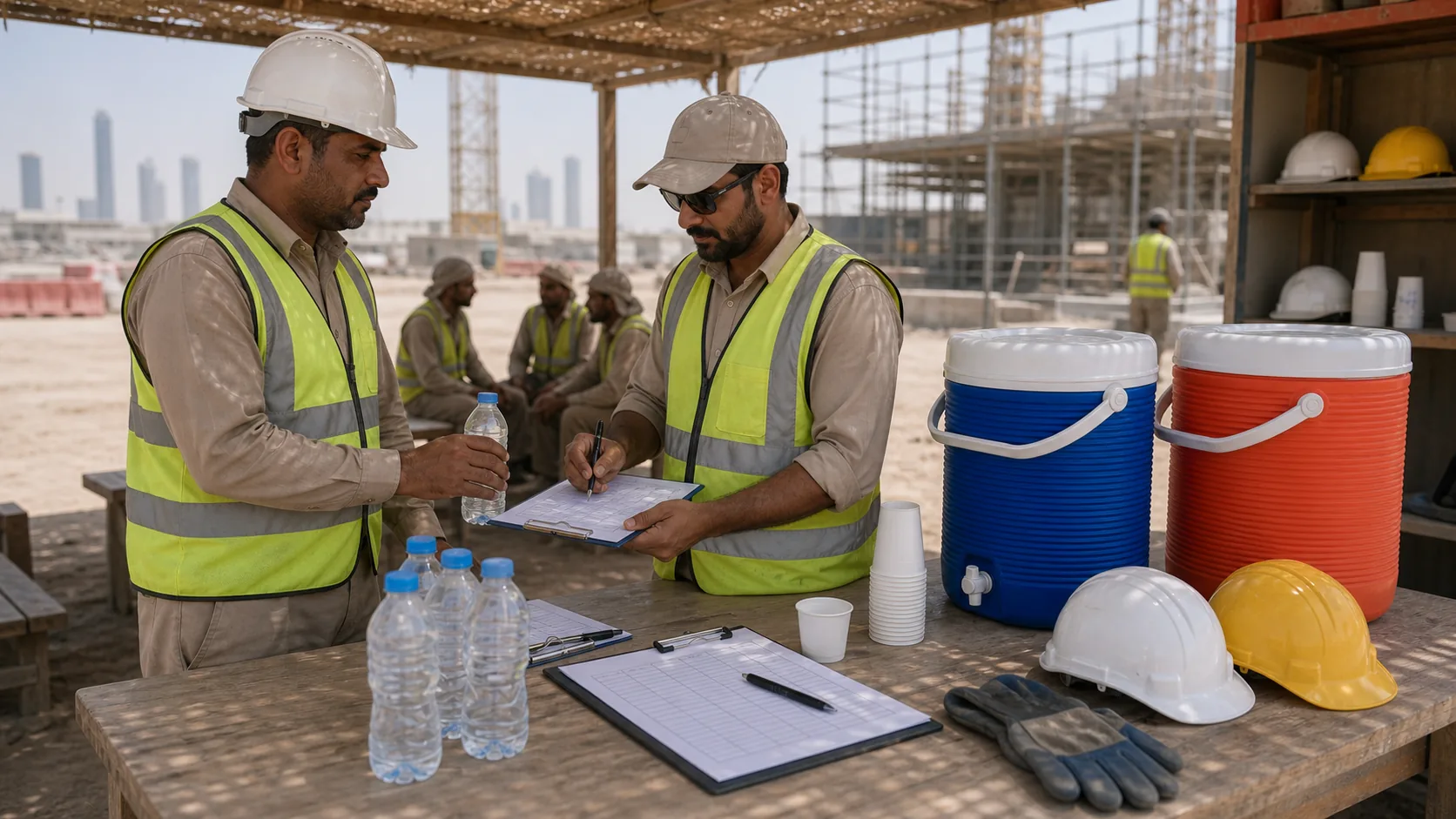
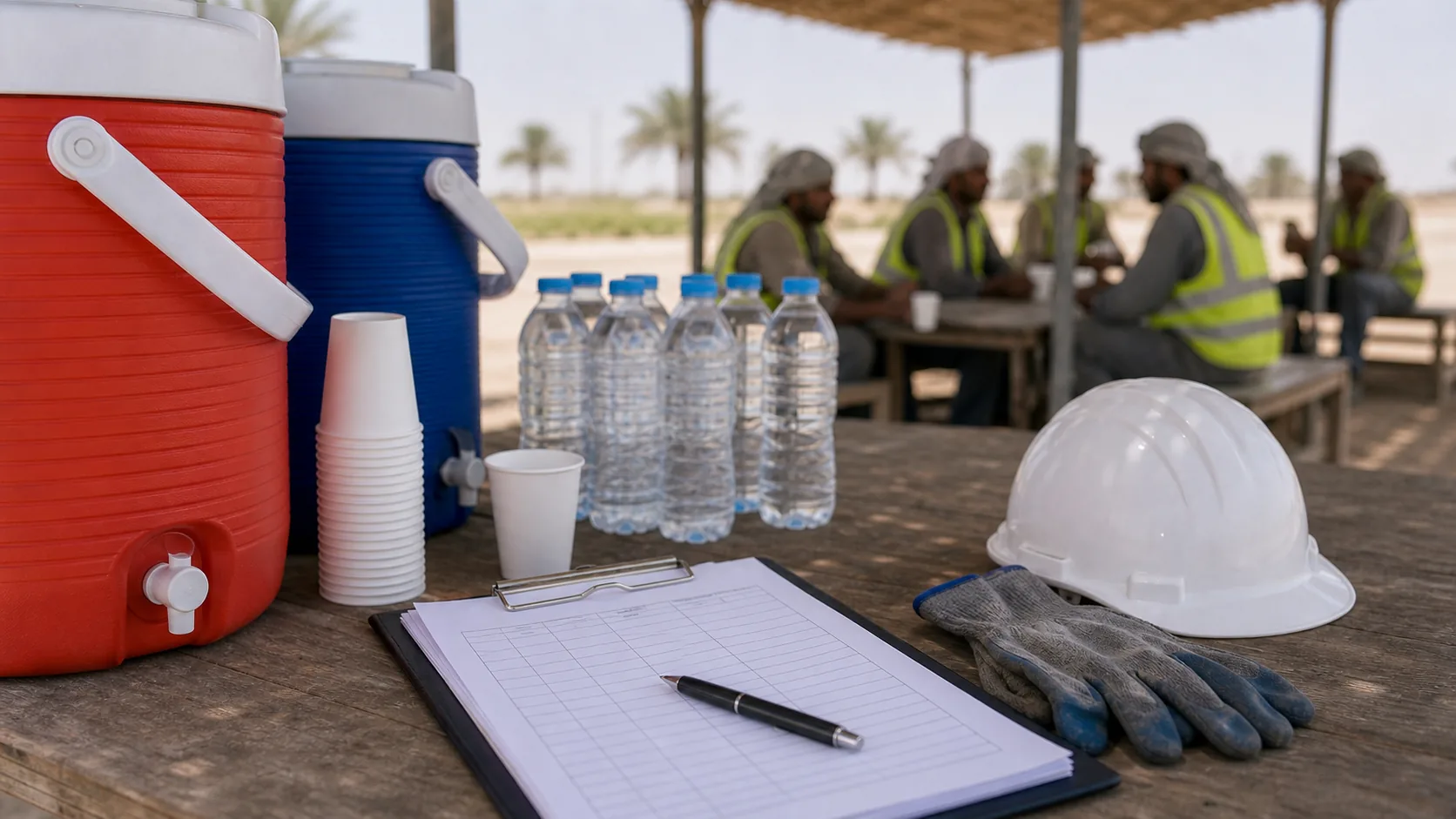
Having Hydralyte visibly stocked at welfare stations with dated distribution logs provides clear evidence of compliance. Request a corporate hydration plan that includes all MoHRE-ready documentation — product specifications, batch traceability, and distribution templates.
Calculating the True Cost of Non-Compliance
The direct penalty for failing a MoHRE heat stress audit is AED 5,000 per worker, with a maximum of AED 50,000 per violation. However, the indirect costs are far greater: project shutdowns during investigations, reputational damage affecting future tender bids, increased insurance premiums, and potential criminal liability if a worker suffers serious heat illness.
A comprehensive Hydralyte electrolyte program for 500 workers costs approximately AED 2–4 per worker per day — a fraction of a single non-compliance fine. Use the Hydralyte ROI Calculator to model the exact cost-benefit for your workforce size.
Frequently Asked Questions
Q: How much does direct solar radiation increase effective temperature for UAE outdoor workers?
Direct solar radiation in the UAE summer can add 8–15°C to the effective thermal burden. This is why WBGT (Wet Bulb Globe Temperature), which accounts for radiant heat, is a more accurate measure of actual heat stress risk.
Q: Should UAE employers adjust Hydralyte provision frequency based on direct sun exposure?
Yes. Workers in continuous direct sun—such as road workers, roofers, and tower riggers—deplete electrolytes faster. A practical adjustment for 2+ hours of direct sun is to reduce the provision interval to 30–40 minutes rather than the standard 45–60 minutes.
Q: Does UV-protective clothing reduce dehydration rates for UAE outdoor workers?
Yes. Lightweight clothing that covers the skin reduces the radiant heat load and sweat rate. Long-sleeved UV-protective shirts are counterintuitively cooler in direct sun than short-sleeved alternatives because they reduce solar radiation absorption while maintaining air circulation.
🛒 Ready to try Hydralyte? Available in three refreshing flavours across multiple pack sizes — from individual sachets to 800g bulk pouches. Shop Hydralyte Online → or request a corporate quote.