<a href="/tools/heat-stress-assessment">Heat Stress</a> During UAE Public Holidays — Employer Obligations
As the UAE construction sector continues to lead the world in large-scale infrastructure and high-rise development, the methods used to protect the workforce must evolve. Implementing heat stress monitoring technology on UAE sites is no longer just an optional upgrade for early adopters; it is a strategic necessity for data-driven HSE managers. By integrating advanced environmental and physiological sensors into a comprehensive heat safety program, employers can move from reactive first aid to a proactive model of prevention.
- Technology does not replace high-quality electrolyte solutions like Hydralyte.
- It provides precise data required to deploy electrolytes with maximum efficiency and safety impact.
WBGT Meters: The Foundation of Evidence-Based Heat Stress Monitoring Technology on UAE Sites
Wet-Bulb Globe Temperature (WBGT) meters represent the gold standard for environmental assessment on industrial sites. Unlike a standard thermometer, WBGT meters combine air temperature, humidity, radiant heat, and airflow into a single thermal stress index that accurately reflects the physiological burden on a worker.
- Utilizing heat stress monitoring technology on UAE sites allows HSE managers to make objective, real-time decisions regarding Hydralyte provision frequency.
- Site leaders can adjust distribution schedules based on actual environmental risk rather than static calendar dates.
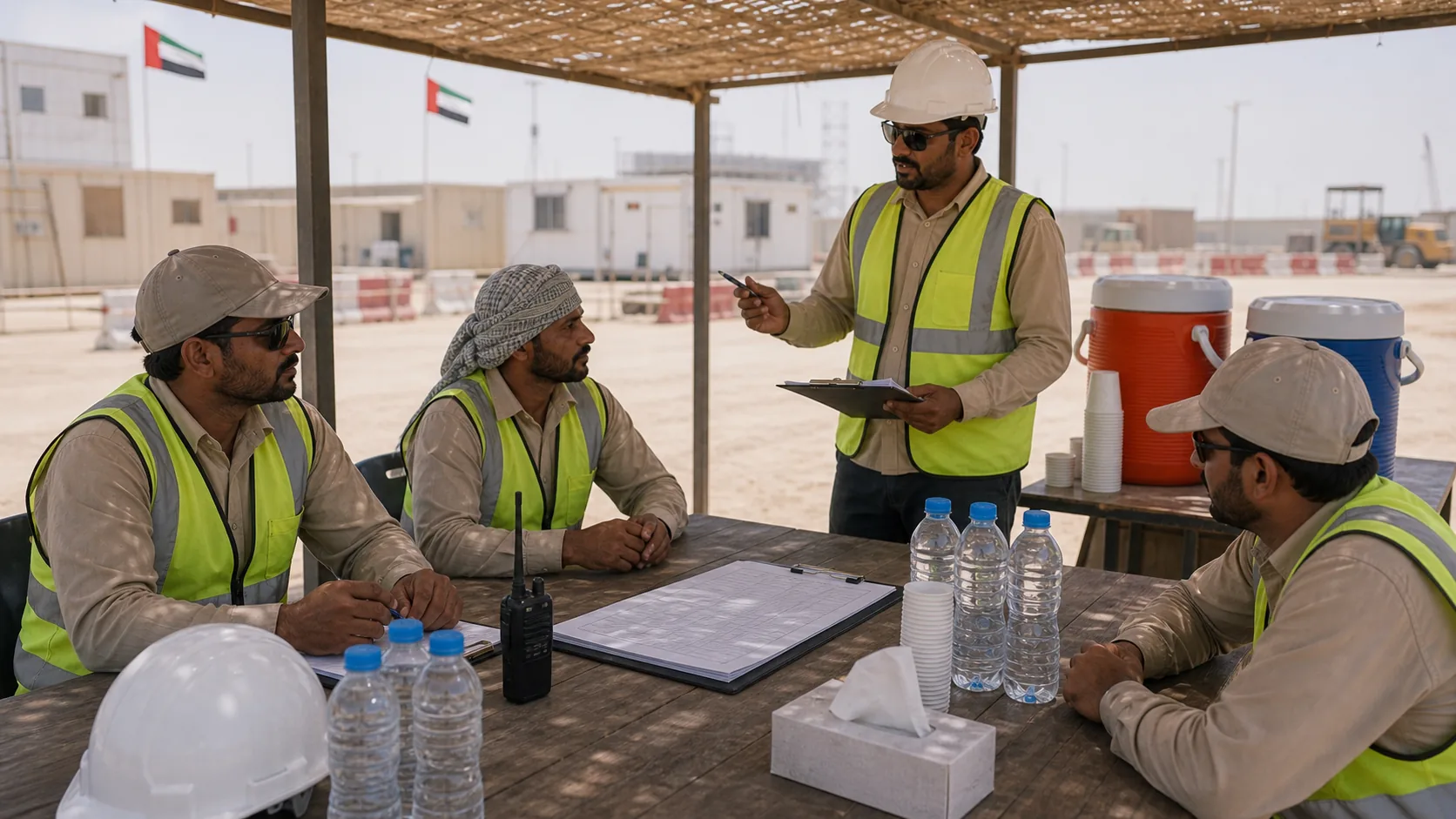
- Sites that automatically increase Hydralyte consumption—via 800g pouches at welfare stations or individual stick packs—when WBGT readings cross specific safety thresholds report measurably lower rates of heat-related incidents.
Wearable Technology for Individual Worker Physiological Monitoring
The next frontier in site safety is the transition from environmental monitoring to individual physiological tracking. Wearable sensors are currently being piloted on major UAE mega-projects to monitor:
- Core body temperature
- Heart rate variability
- Hydration indicators
This layer of heat stress monitoring technology on UAE sites provides a safety net for workers in high-risk roles or isolated areas. These devices alert supervisors before clinical symptoms appear, allowing for pre-emptive intervention such as directing a worker to a cooling zone and providing a Hydralyte sachet or effervescent tablet immediately.
Smart Welfare Station Tracking and Digital Compliance
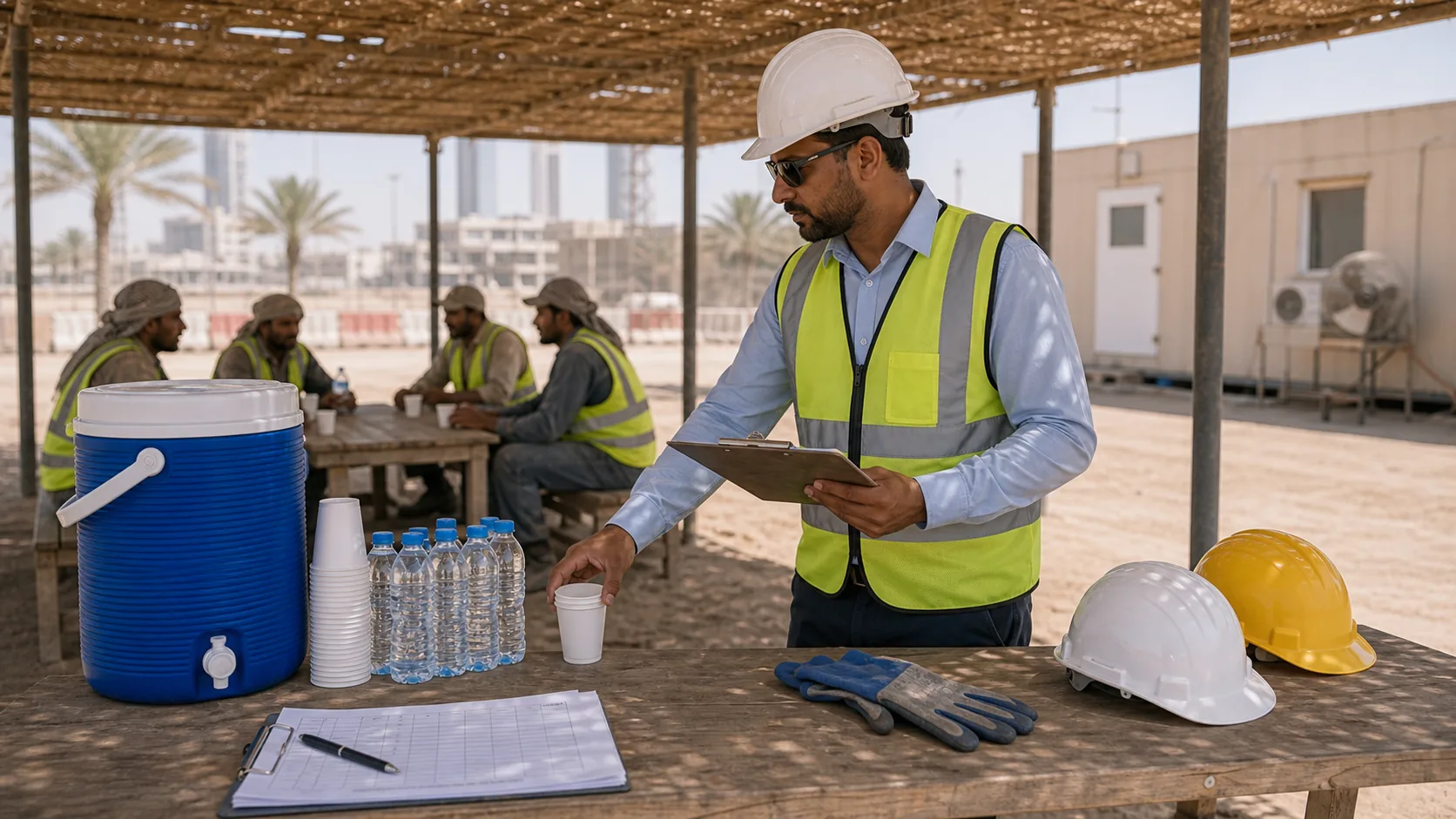
Ensuring every worker receives and consumes electrolytes is a major logistical challenge. Smart welfare station tracking, utilizing digital dispensers or QR-code-based distribution logging, solves this transparency gap.
- Monitor Hydralyte consumption across the site in real time.
- Track distribution of 20g sachets or stick packs at specific intervals.
- Generate automated compliance reports for internal audits and MOHRE documentation.
- Create a reliable and auditable digital trail that is superior to manual paper logs.
To learn more about integrating Hydralyte into your site’s technology-driven heat safety program, contact our team.
Recognising the Stages of Heat-Related Illness
Heat-related illness progresses through distinct stages, each requiring escalating intervention. Understanding these stages enables supervisors to intervene early — before a heat stress incident becomes a medical emergency.
- Stage 1 — Heat Cramps: Muscle spasms in legs, arms, or abdomen. Caused by electrolyte depletion. Intervention: Rest in shade, provide Hydralyte, stretch affected muscles.
- Stage 2 — Heat Exhaustion: Heavy sweating, weakness, cold/clammy skin, nausea, dizziness. Core temperature below 40°C. Intervention: Remove from heat immediately, cool actively, provide Hydralyte, monitor for 30 minutes.
- Stage 3 — Heat Stroke: Hot/dry skin, confusion, loss of consciousness, core temperature above 40°C. Medical emergency. Intervention: Call emergency services immediately, cool aggressively, do NOT give fluids if unconscious.
The critical window between heat exhaustion and heat stroke can be as short as 15–30 minutes. Proactive electrolyte hydration with Hydralyte throughout the workday prevents workers from ever reaching Stage 1.
Building a Site-Level Heat Stress Response Plan
Every outdoor work site in the UAE should have a documented heat stress response plan that includes: designated cool-down zones within 50m of work areas, trained first aiders on every shift, emergency cooling equipment (ice packs, misting fans), and pre-positioned Hydralyte electrolyte stocks at every welfare station and first aid point.
Train all workers — not just supervisors — to recognise heat stress symptoms in colleagues. Buddy-system monitoring is one of the most effective early warning mechanisms, especially during peak heat hours. Ensure your plan includes MoHRE compliance documentation requirements.
Frequently Asked Questions
Q: Is WBGT measurement required by MOHRE for UAE construction sites?
A: MOHRE does not currently mandate WBGT measurement. However, it is a leading practice that provides objective data and demonstrates a proactive employer commitment to evidence-based safety. Sites using WBGT are better positioned to defend provision decisions in heat illness investigations.
Q: What WBGT readings should trigger increased Hydralyte provision frequency on UAE sites?
Provisions should be adjusted based on the following WBGT thresholds for heavy outdoor work:
- WBGT 28-30°C: Maintain standard Hydralyte intervals of 45-60 minutes.
- WBGT Above 30°C: Shorten distribution intervals to every 30-45 minutes.
- WBGT Above 33°C: Consider intervals of 20-30 minutes for essential tasks.
- WBGT Above 35°C: Heavy outdoor work should generally cease.
Q: How do digital distribution logging systems improve Hydralyte program compliance?
- Removes friction: Eliminates paper log completion that supervisors may skip during busy shifts.
- Auditable trail: Automated timestamps create a more reliable record than manual entries.
- Remote monitoring: Allows HSE managers to monitor compliance across multiple sites simultaneously.
🛒 Ready to try Hydralyte? Available in three refreshing flavours across multiple pack sizes — from individual sachets to 800g bulk pouches. Shop Hydralyte Online → or request a corporate quote.