<a href="/tools/heat-stress-assessment">Heat Stress</a> and PPE — Choosing the Right Gear for UAE Summer
For HSE managers and procurement officers in the UAE, the summer season is a complex risk curve that peaks earlier than many anticipate. While ambient temperatures reach their zenith in August, the highest frequency of heat-related incidents historically occurs during the June and July UAE peak heat months. Effective heat stress management requires:
- Understanding the physiological and regulatory drivers behind the mid-summer spike
- Developing a procurement strategy that ensures organizational compliance
- Adopting a front-loaded approach to electrolyte provision
The Acclimatization Gap During June and July
The primary reason that June and July carry the highest incident risk is the acclimatization gap. Key risk factors during this window include:
- Physiological Transition: The human body moves from mild spring conditions to extreme heat.
- Post-Leave Vulnerability: Workers returning from seasonal leave start outdoor shifts without the necessary physiological adaptations.
- Overwhelmed Cooling Mechanisms: A sharp rise in humidity and heat creates a "risk spike" where environmental demand exceeds worker tolerance.
- Intensive Support Needs: This period necessitates the most intensive electrolyte support of the entire year.
The June 15 Midday Ban and Inspection Intensity
The regulatory landscape shifts significantly as the Ministry of Human Resources and Emiratisation (MOHRE) implements mandatory protections. Important compliance factors include:
- Mandatory Midday Ban: Prohibits outdoor work during peak sun hours starting June 15.
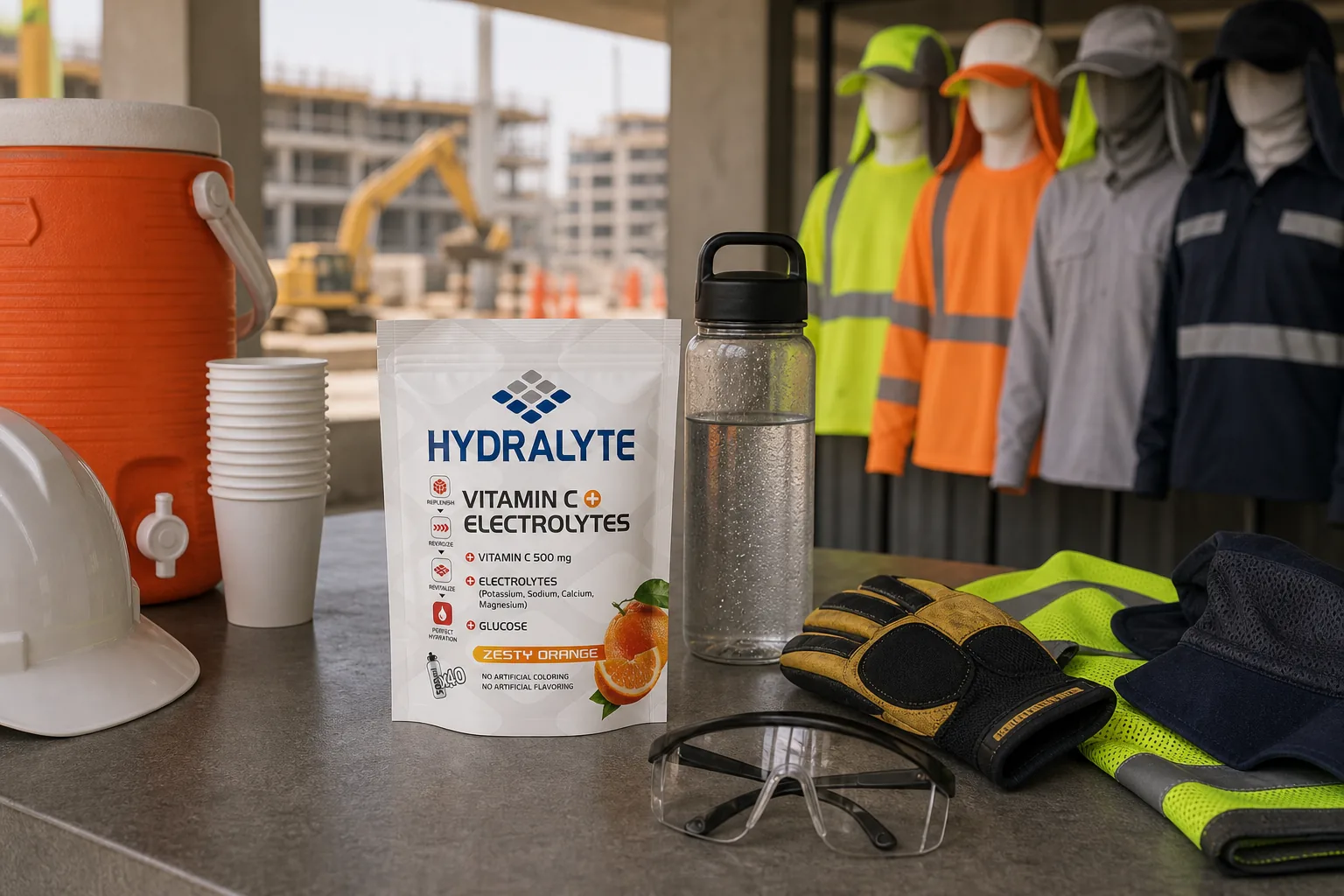
- Hydration Requirements: Employers must provide oral rehydration solutions for all outdoor working hours from 6:00 AM to 6:00 PM.
- Inspection Surge: The start of the ban marks the most intensive inspection period of the season.
- Welfare Station Audits: Authorities verify the presence of robust welfare stations stocked with essential electrolytes.
Front-Loading Procurement for Seasonal Success
To mitigate risks during the June and July UAE peak heat months, procurement officers should ensure that the largest stock levels are physically on-site by late May. Benefits of this strategy include:
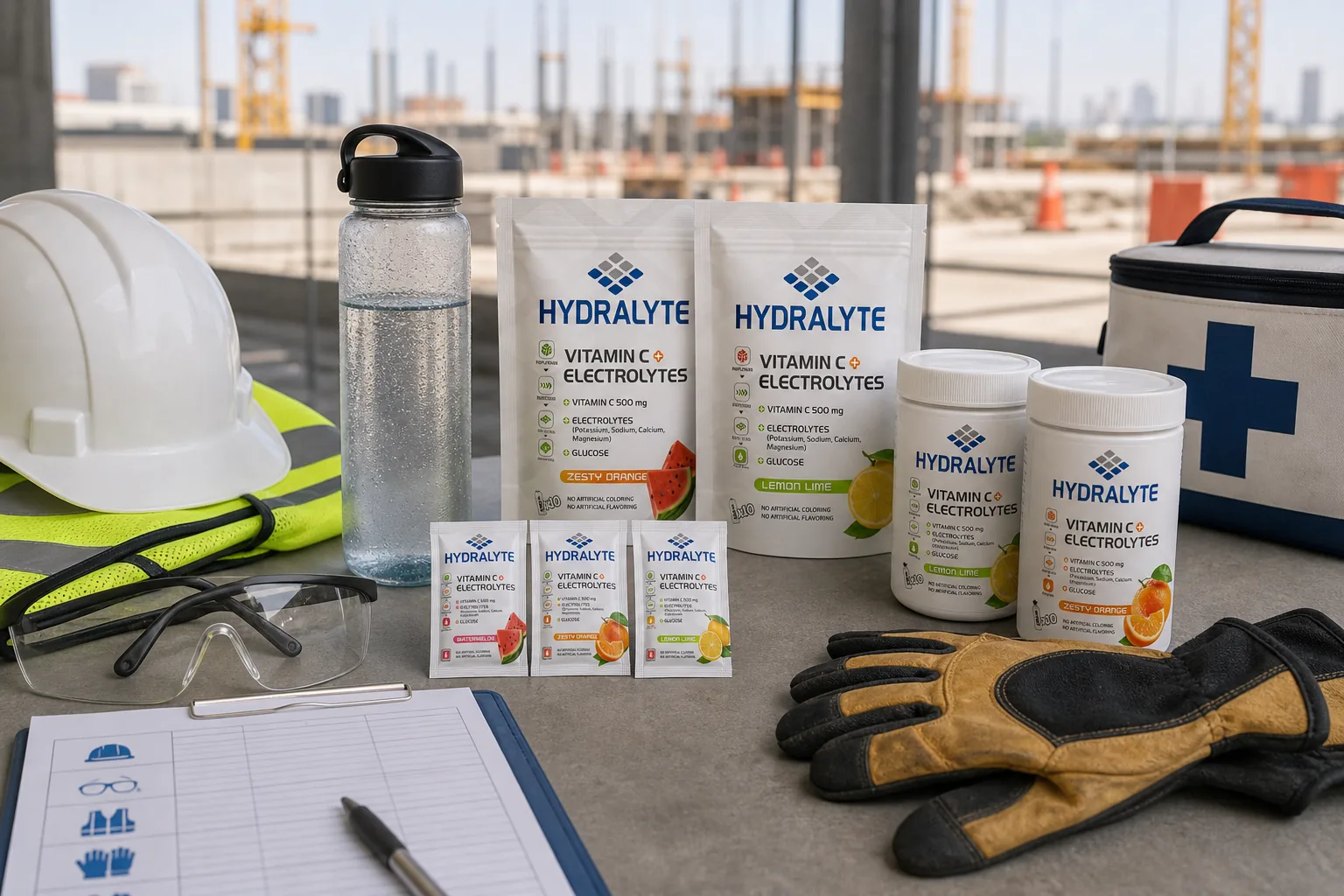
- Immediate Access: HSE managers can deploy 800g pouches for permanent stations and portable sachets for remote teams instantly.
- Eliminating Supply Chain Risk: Securing a full supply before the June peak prevents delivery delays or stock-outs.
- Strategic Inventory Management: Allows for a gradual drawdown of stock through August and September as the workforce fully acclimatizes.
To secure your seasonal stock and ensure HSE compliance for the upcoming peak months, contact our team.
🏗 Protecting Outdoor Workers? Hydralyte supplies bulk electrolyte programs for construction, oil & gas, logistics, and manufacturing companies across the GCC — with full MoHRE compliance documentation. See Industry Hydration Programs →
PPE and Dehydration: The Compounding Effect in Oil & Gas
Oil and gas workers face a unique hydration challenge: the mandatory PPE that protects them from chemical and fire hazards simultaneously traps body heat. Fire-resistant coveralls, hard hats, safety goggles, and steel-toe boots create a microclimate that can elevate core body temperature by 2–3°C above ambient conditions.
This means that even when ambient temperatures are 38°C, workers inside full PPE may be experiencing effective temperatures of 40–41°C. Sweat rates under these conditions can reach 1.5–2 litres per hour, rapidly depleting not just water but critical electrolytes including potassium, sodium, chloride, and calcium.
Hydralyte's potassium-rich isotonic formula is specifically advantageous in these conditions. Unlike high-sodium reactive formulas, Hydralyte replaces all four key electrolytes in ratios appropriate for daily consumption throughout long shift rotations — typically 12-hour shifts on a 2-weeks-on, 2-weeks-off rotation in GCC oil fields.
Emergency Hydration Protocols for Rig Operations
Every rig and pipeline operation should have a heat stress emergency response protocol that includes electrolyte provision as a first-line intervention. When a worker shows signs of heat exhaustion — confusion, heavy sweating, rapid pulse — providing Hydralyte alongside cooling measures can prevent escalation to heat stroke.
Keep emergency hydration kits at every muster station containing Hydralyte sachets, cooled water, and a mixing vessel. Train all safety officers in the signs of electrolyte depletion versus simple overheating — the treatment protocols differ significantly.
Frequently Asked Questions
Q: Why does June have the highest heat illness incident rate despite July being hotter?
A: June combines three critical factors:
- Temperatures rise sharply from May levels
- A workforce that has not yet fully acclimatized
- Sudden enforcement intensification following the June 15 midday ban
Q: Should UAE employers maintain higher Hydralyte stock levels in June than later in the season?
A: Yes. Front-loading stock in June is vital because it represents the highest incident risk and coincides with the peak of MOHRE inspections. Maintaining a four- to six-week buffer on-site eliminates the risk of running low during the most critical safety window.
Q: How does the June 15 midday ban interact with the electrolyte provision requirement?
A: The midday ban (12:30 PM to 3:00 PM) reduces exposure during peak heat, but it does not reduce the electrolyte obligation for the remaining outdoor working hours. Employers must provide hydration support for the entire shift duration.
🛒 Ready to try Hydralyte? Available in three refreshing flavours across multiple pack sizes — from individual sachets to 800g bulk pouches. Shop Hydralyte Online → or request a corporate quote.