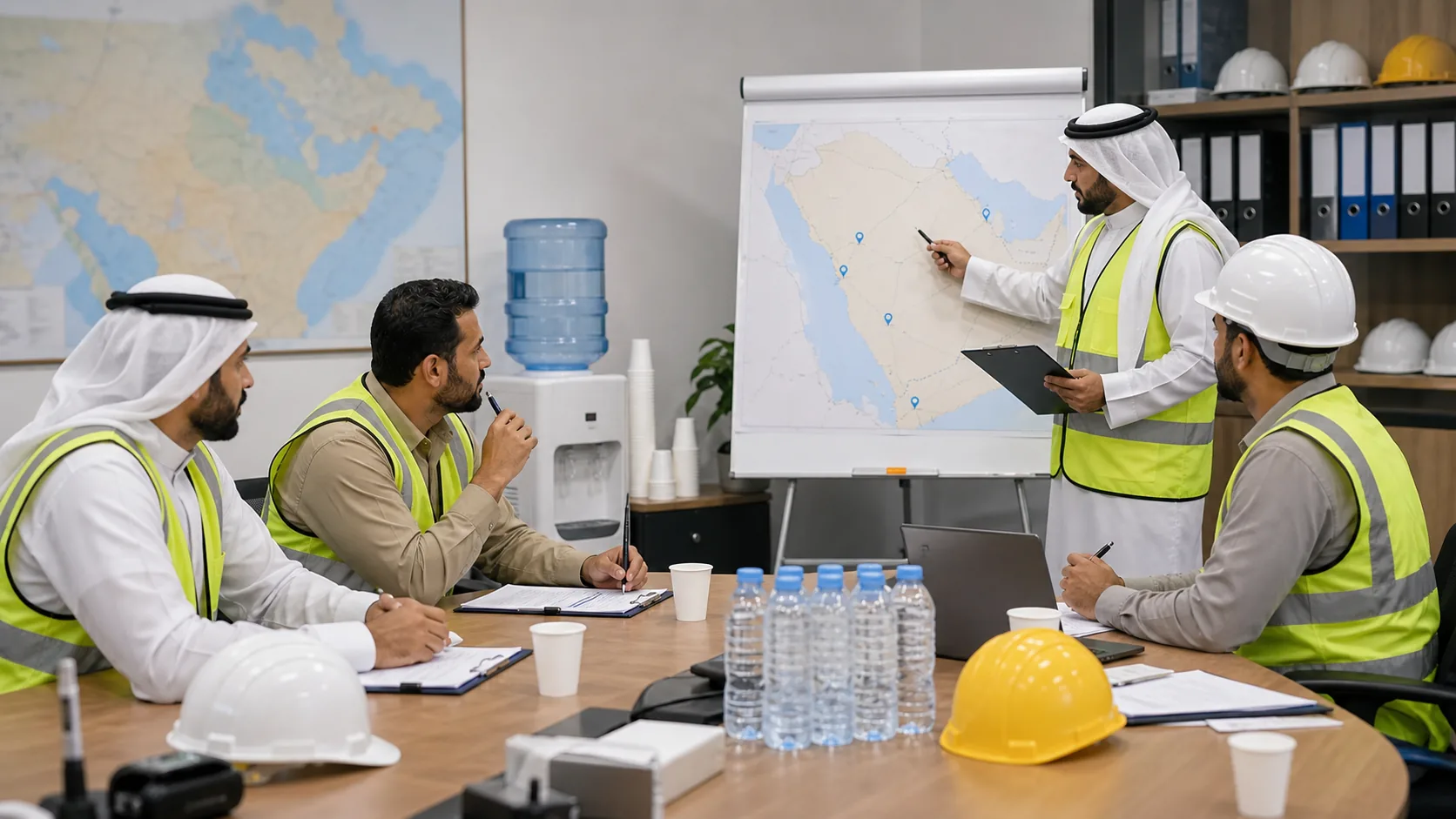
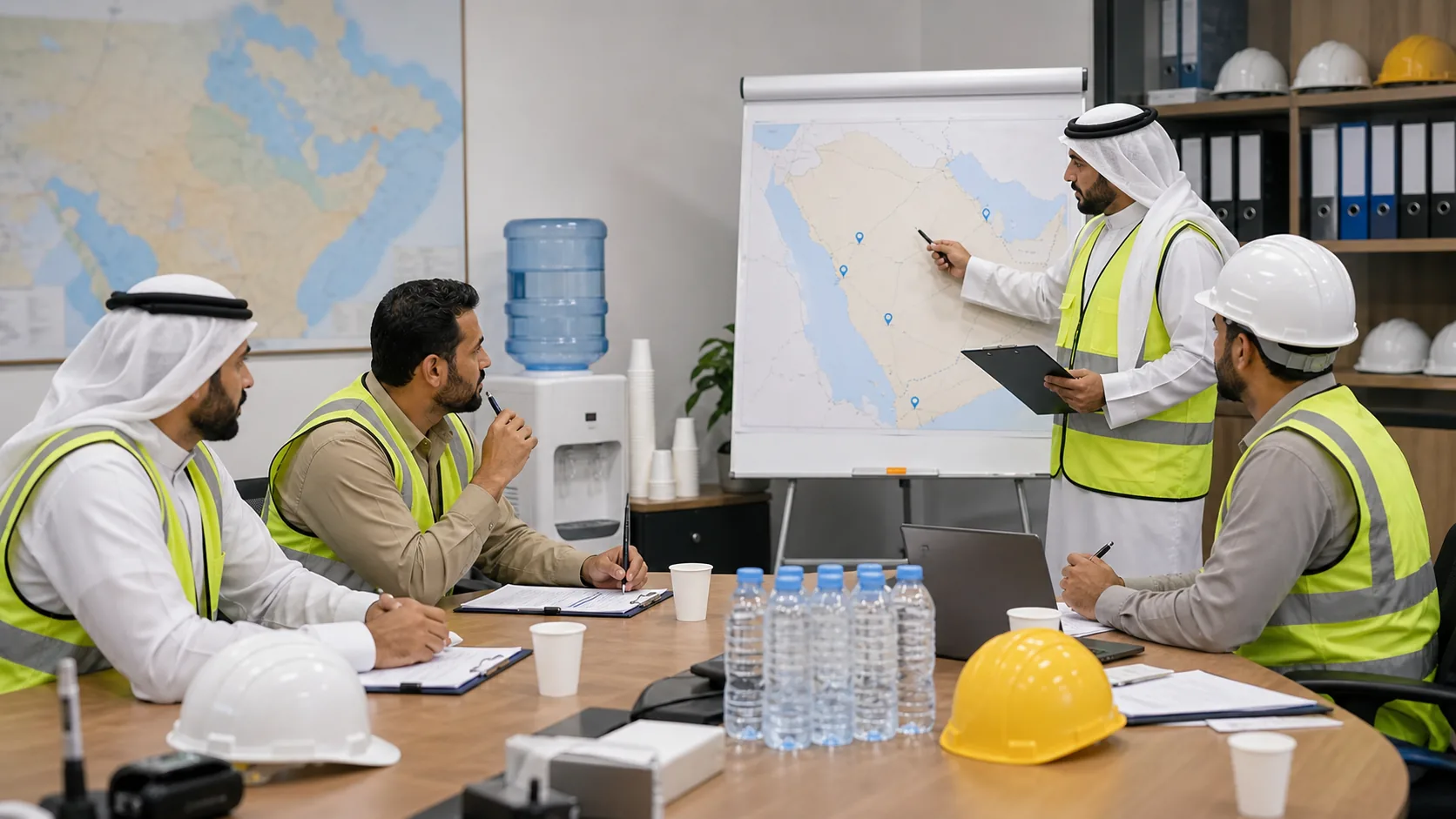
Establishing a Unified Strategy for GCC Regional Hydration Compliance
Maintaining high standards for GCC regional hydration compliance is essential for multinational organizations operating across the Arabian Peninsula, where extreme summer temperatures present significant occupational health risks. As regulatory bodies across the Gulf intensify their focus on worker welfare, HSE directors must implement robust hydration programs that satisfy the specific legal requirements of each member state. By adopting a standardized approach to electrolyte provision, companies can ensure the safety of their industrial, construction, and logistics <a href="/industries">workforce</a>s while maintaining full operational continuity during the most demanding months of the year.
The Harmonized Regulatory Framework for Electrolyte Provision
While each nation within the Gulf Cooperation Council maintains its own labor ministry and enforcement agencies, a de facto harmonized compliance baseline has emerged across the region. The labor ministries of all six GCC countries increasingly reference the World Health Organization standards for oral rehydration solution (ORS) as the benchmark for effective electrolyte supplementation. This alignment means that providing a scientifically formulated rehydration solution containing precise ratios of sodium, potassium, and glucose is recognized as a critical component of <a href="/tools/heat-stress-assessment">heat stress</a> prevention programs across all regional jurisdictions. Utilizing a isotonic formula ensures that your organization meets the medical and technical expectations of regional inspectors, regardless of the specific country of operation.
Country-Specific Compliance Summary for 2026
In the United Arab Emirates, the Ministry of Human Resources and Emiratization (MOHRE) enforces a strict midday work ban from June 15 to September 15, with fines reaching AED 5,000 per worker for violations including inadequate hydration provision. Saudi Arabia’s Ministry of Human Resources and Social Development oversees similar summer restrictions, where the massive scale of Vision 2030 projects necessitates rigorous adherence to workforce health standards. Qatar’s Ministry of Labour utilizes a humidity-compound heat index to trigger work stoppages, placing high importance on electrolyte availability for large-scale North Field and urban construction operations. In Kuwait, the Public Authority for Manpower monitors Kuwait City’s extreme heat index, requiring employers to provide sophisticated rehydration tools to combat the intense dry heat. Oman’s Ministry of Manpower mandates comprehensive heat stress management for both Muscat and the challenging interior desert conditions, focusing on rapid recovery solutions for outdoor laborers. Bahrain’s Labour Market Regulatory Authority (LMRA) emphasizes hydration in its industrial zones, where high island humidity complicates the body’s natural cooling mechanisms and increases the need for isotonic supplementation.
Strategic Advantages of standard ORS-Aligned GCC Regional Hydration Compliance
Achieving GCC regional hydration compliance is significantly simplified when utilizing a single, standard ORS-aligned product across all six markets. Deploying a consistent formulation ensures that a single set of compliance documentation satisfies the regulatory frameworks of the UAE, Saudi Arabia, Qatar, Kuwait, Oman, and Bahrain simultaneously. This eliminates the logistical complexity and cost of sourcing different rehydration products for different countries. Whether your teams are using large-format 800g pouches at central <a href="/industries">welfare station</a>s or personal-issue 20g sachets and stick packs in remote locations, a harmonized product selection guarantees that every worker receives the same high-quality, scientifically validated rehydration support regardless of their local jurisdiction.
Multi-Country Program Management with Hydralyte
Managing a multi-country hydration program requires a partner capable of providing harmonized documentation and GCC-wide distribution logistics. Hydralyte offers regional HSE directors a single-account solution that streamlines procurement and ensures that ingredient certifications, nutritional declarations, and batch traceability records are consistent across the entire GCC. Our versatile product range, including 200g jars and individual serving formats, allows for flexible deployment across diverse operational environments while maintaining a unified standard of care. By centralizing your hydration supply chain with Hydralyte, you secure a reliable partner dedicated to helping your organization exceed the requirements of GCC regional hydration compliance through every summer season.
To establish a compliant and effective regional hydration program or to request wholesale pricing for your GCC operations, contact the Hydralyte B2B team at contact our team.
Frequently Asked Questions
Do all six GCC countries have the same electrolyte requirements for outdoor workers?
The underlying standard is harmonized across all six GCC countries — all reference standard ORS composition guidelines for electrolyte provision, and all require electrolyte supplementation alongside water for outdoor workers in summer conditions. Specific ban periods, fines, and enforcement mechanisms vary by country, but an isotonic electrolyte product like Hydralyte is commonly used across all six markets.
Which GCC country has the strictest outdoor worker hydration enforcement?
The UAE has the most well-documented and actively enforced framework, with AED 5,000 per-worker fines and regular summer inspection campaigns. Qatar has seen increased enforcement attention following international labor scrutiny. All six GCC countries are strengthening enforcement, and the trend is toward greater scrutiny across the region.
Can one Hydralyte account cover compliance documentation for all six GCC countries?
Yes. Hydralyte's compliance documentation package — ingredient certifications, batch traceability, nutritional declarations — is formatted to satisfy all six GCC countries' regulatory documentation requirements from a single product datasheet set.
🛒 Ready to try Hydralyte? Available in three refreshing flavours across multiple pack sizes — from individual sachets to 800g bulk pouches. Shop Hydralyte Online → or request a corporate quote.
What MoHRE Inspectors Look For During Heat Stress Audits
MoHRE enforcement has intensified significantly since the introduction of Ministerial Resolution No. 44/2022. Inspectors now conduct both scheduled and surprise audits at outdoor work sites, with a specific focus on the availability of approved rehydration materials — not just water.
Key audit checkpoints include: presence of electrolyte rehydration products at welfare stations, documentation proving regular procurement and distribution, evidence of worker training on heat stress recognition, and compliance with the midday work ban (12:30–3:00 PM, June 15–September 15).
Having Hydralyte visibly stocked at welfare stations with dated distribution logs provides clear evidence of compliance. Request a corporate hydration plan that includes all MoHRE-ready documentation — product specifications, batch traceability, and distribution templates.
Calculating the True Cost of Non-Compliance
The direct penalty for failing a MoHRE heat stress audit is AED 5,000 per worker, with a maximum of AED 50,000 per violation. However, the indirect costs are far greater: project shutdowns during investigations, reputational damage affecting future tender bids, increased insurance premiums, and potential criminal liability if a worker suffers serious heat illness.
A comprehensive Hydralyte electrolyte program for 500 workers costs approximately AED 2–4 per worker per day — a fraction of a single non-compliance fine. Use the Hydralyte ROI Calculator to model the exact cost-benefit for your workforce size.