WBGT Monitoring for GCC Worksites: When the Midday Ban Is Not Enough
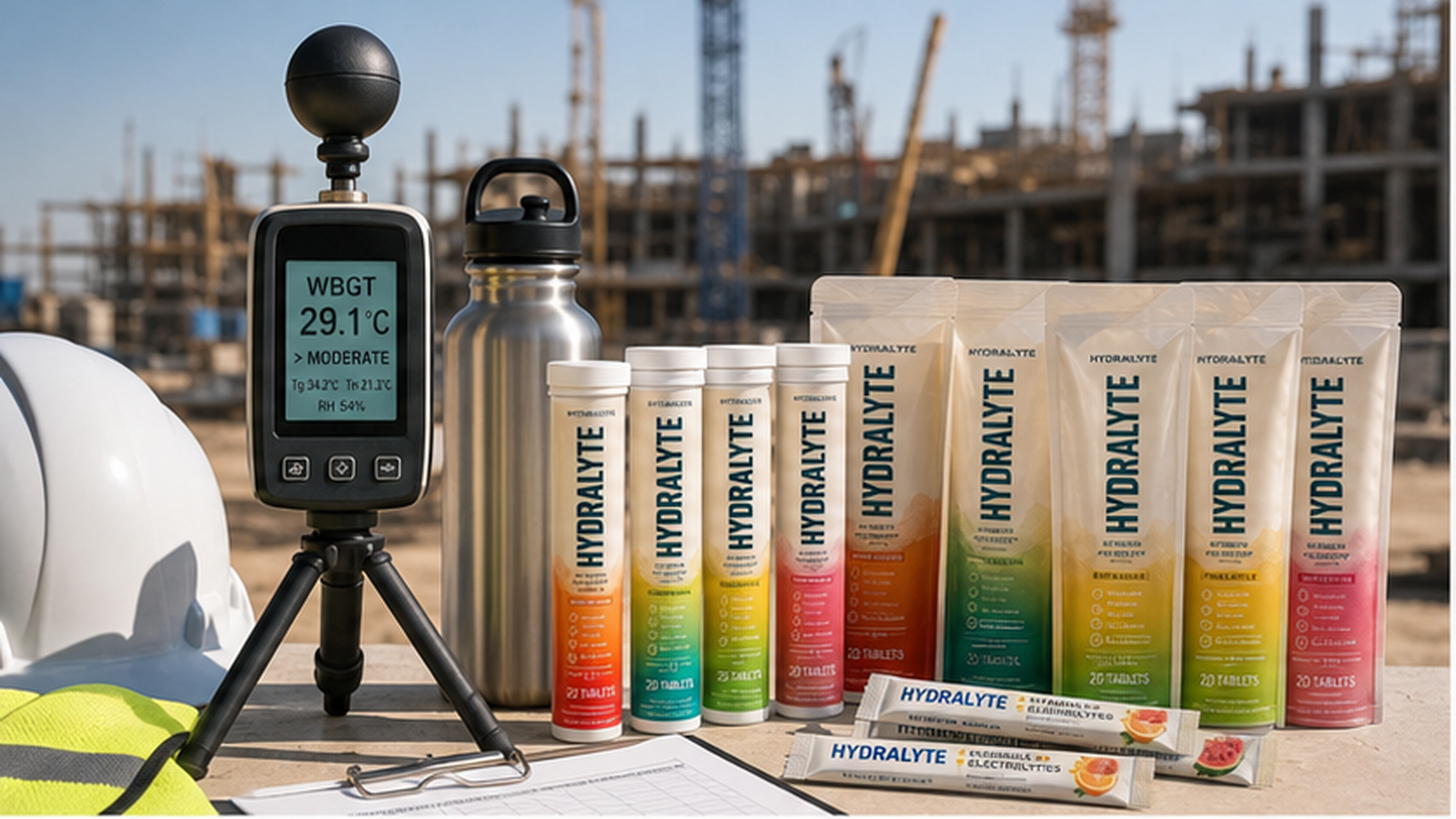
WBGT Monitoring for GCC Worksites: When the Midday Ban Is Not Enough is a practical guide for HSE managers, operations leaders and frontline supervisors across UAE and GCC worksites. The focus keyword is WBGT monitoring GCC worksites, but the operational goal is broader: make hydration decisions easier before heat, activity or travel turns a small fluid gap into a performance, comfort or safety problem.
GCC summer conditions combine high ambient temperature, radiant heat, protective clothing, long shifts, transport constraints and varied worker fitness. A good programme makes hydration visible, repeatable and easy to audit instead of leaving each person to guess when they need fluids. Because this is a consideration-stage topic, the guide compares practical options and shows when an electrolyte product can complement water, shade, rest and planning.
Hydralyte can sit inside that plan as an electrolyte option, alongside regular water access and sensible exposure management. This article uses current Hydralyte 2026 product imagery, led by Hydralyte 2026 standup pouches range four flavours and Hydralyte 2026 sticks range four flavours, so the page can be paired with current Hydralyte product imagery and descriptive alt text.
Quick checklist
- Name the owner for WBGT monitoring GCC worksites.
- Confirm water access before exposure, activity or travel starts.
- Place the Hydralyte 2026 product format where it will actually be used.
- Use reminders tied to natural breaks, not vague advice.
- Review what ran out, what was ignored and what needs changing next time.
Why WBGT monitoring GCC worksites deserves a written plan
The reason WBGT monitoring GCC worksites needs structure is that thirst is a late and inconsistent planning tool. People may delay drinking because work is busy, a match is underway, a child does not want to stop playing, or the next shop or welfare station feels close enough. A written routine removes that guesswork by defining what happens before exposure, where fluids are available, who checks supplies and what the team or family does when the day runs hotter than expected.
For HSE managers, operations leaders and frontline supervisors across UAE and GCC worksites, the real risk is usually a chain of small omissions rather than one dramatic mistake. A bottle is left in a vehicle, a break is skipped, a coach extends a drill, or a supervisor assumes everyone has already refilled. When heat stress monitoring Dubai is named in the plan, those small details become visible enough to correct before they create a bigger issue.
A strong plan should should not position electrolytes as a substitute for water, shade, rest, cooling or judgment. Instead, it should place an option such as Hydralyte 2026 standup pouches range four flavours and Hydralyte 2026 sticks range four flavours inside a broader routine. That keeps the page useful and responsible: Hydralyte is presented as a practical hydration support, not as medical treatment, diagnosis or replacement for medical advice.
What makes this situation different in UAE and GCC conditions
UAE and GCC conditions add complexity because people often move between intense outdoor heat and very cold air conditioning. Sweat loss can continue after a person steps inside, while the cooler indoor environment can make them feel less thirsty. That pattern matters for WBGT monitoring GCC worksites because the plan has to cover transitions, transport, waiting periods and recovery, not only the obvious peak-heat moment.
Humidity, radiant heat from concrete or asphalt, clothing choices and the duration of exposure all change how the body responds. A short outdoor errand can feel manageable, while repeated short exposures over a full day can create a larger cumulative fluid deficit. The same logic applies to WBGT heat index workers: the environment should determine the routine, not the other way around.
The best content for this topic should therefore sound practical and local. It should mention UAE summer realities without pretending that every person, worksite, sport or family schedule is identical. That is why this guide uses checklists, role ownership and review points rather than a single universal drinking volume.
Who should own the hydration routine
Hydration plans fail when ownership is vague. For HSE managers, operations leaders and frontline supervisors across UAE and GCC worksites, one person should own supply checks, one person should own communication and one person should know when to escalate concerns. In a workplace that may be an HSE officer, supervisor and storekeeper. In sport or family settings it may be a coach, parent or trip organiser.
The owner does not need to make the routine complicated. Their job is to ensure that water is available, electrolyte options are accessible when appropriate, and the plan is repeated often enough that nobody has to ask what to do next. For WBGT monitoring GCC worksites, the owner should also understand the situations that change the plan, such as longer exposure, extra clothing, travel delays, illness or unusual fatigue.
This is also where product placement should be disciplined. Hydralyte product imagery can support visual recognition, but the owner should still talk in terms of timing, access, serving instructions and common-sense monitoring. That makes the recommendation easier to trust and easier to execute.
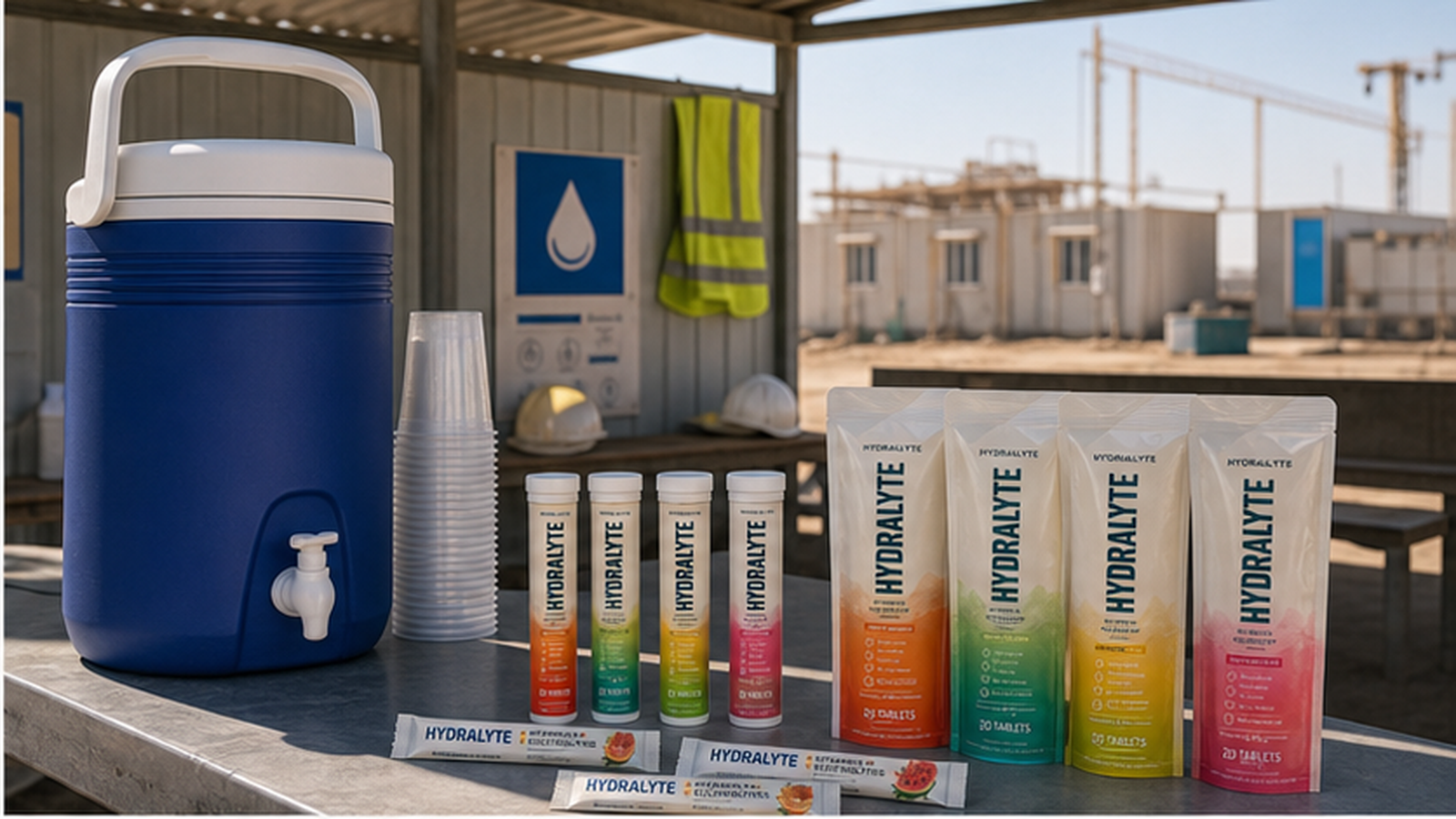
Before exposure: preparation that reduces last-minute catch-up drinking
Preparation starts before heat or activity begins. The first step is to check the schedule, likely exposure time and access points for water. The second step is to confirm whether the person or group has eaten normally, slept reasonably and packed what they need. Those simple checks change how WBGT monitoring GCC worksites is handled because they identify people who may need closer attention from the start.
A practical pre-exposure routine can include a refill point, a visible bottle, a reminder before leaving AC and a small stock of electrolyte products in a known location. For wet bulb globe temperature UAE, that location matters: it may be a welfare station, sports bag, family travel pouch, school kit, site vehicle or hotel room. The routine should be easy to repeat even when the day is busy.
Hydralyte should be introduced as one part of the setup. If the selected format is a stick, pouch, tablet tube or tub, the page should remind the reader to follow label directions and prepare it with clean water. That keeps the advice practical, compliant and suitable for review before publication.
Heat controls that must sit beside hydration
Hydration is only one heat control. Worksites also need shade, rest, ventilation, scheduling, acclimatisation, supervision, communication and escalation steps. For WBGT monitoring GCC worksites, the article should show how hydration fits with those controls rather than suggesting a drink can carry the whole heat-safety programme.
Controls should be visible before work starts. If a crew is exposed to radiant heat, heavy PPE or repeated outdoor tasks, the supervisor should know where breaks happen and how to modify the plan. Electrolytes can support hydration, but they do not remove the need to reduce heat load where possible.
This matters for HSE credibility. A buyer or safety manager will trust the Hydralyte recommendation more when the content respects the full control hierarchy and the realities of GCC worksites.
During the day: prompts, access points and sensible pacing
During exposure, the most useful plan is one people can actually follow. A reminder every so often, a visible refill point and permission to pause are more reliable than a vague instruction to drink more. For WBGT monitoring GCC worksites, the routine should be linked to natural moments: start of shift, toolbox talk, change of task, half-time, school pick-up, rest stop, scheduled rest stops, boarding gate or return to the car.
The page should also acknowledge that people respond differently. Body size, fitness, acclimatisation, clothing, medication, health status and intensity all influence fluid needs. That is why the guide should encourage readers to watch for signs that the plan is not keeping up, without turning the article into a medical diagnostic checklist.
An electrolyte option can be useful when sweating is sustained, activity is prolonged, or plain water alone is not enough for the routine. The copy should stay balanced: keep water central, keep shade and cooling visible, and show Hydralyte as a convenient way to add electrolytes when the situation calls for it.
After activity or shift: recovery and review
After the shift, match, travel leg or outdoor session, the plan should not end immediately. People often under-drink once they return to AC because the urgent heat sensation fades. A recovery step for WBGT monitoring GCC worksites should include fluids, a normal meal or snack where appropriate, and a short review of what ran out, what was ignored and what should be packed differently next time.
This review does not need to be formal for every audience. A supervisor can check stock and incident notes. A coach can ask whether players refilled between sets or drills. A parent can notice whether the beach bag came home with full bottles. These small observations make the next plan better.
If someone feels unwell, has symptoms that concern them, or is a child, older adult, pregnant person or medically vulnerable person, the page should direct them to appropriate healthcare advice. That statement protects the content from sounding like a diagnosis and makes the Hydralyte recommendation more responsible.
When water is enough and when electrolytes may help
Water remains the foundation. Electrolytes become relevant when sweat losses are meaningful, exposure is repeated, activity is prolonged, or the person needs a more structured rehydration option. For WBGT monitoring GCC worksites, that means the decision should be tied to conditions and behaviour, not to a generic belief that every outing requires a sports drink.
The distinction is especially important for wet bulb globe temperature UAE. Some days call for a simple water bottle and sensible timing. Other days call for a planned electrolyte serving prepared according to the product label. This balanced framing helps readers decide when Hydralyte belongs in the kit without pushing it into every scenario.
The article should avoid medical claims and avoid overstating performance outcomes. A compliant phrase is that Hydralyte can help support hydration by providing electrolytes when used as directed. The rest of the page should carry the value through planning, reminders, storage, access and repeatability.
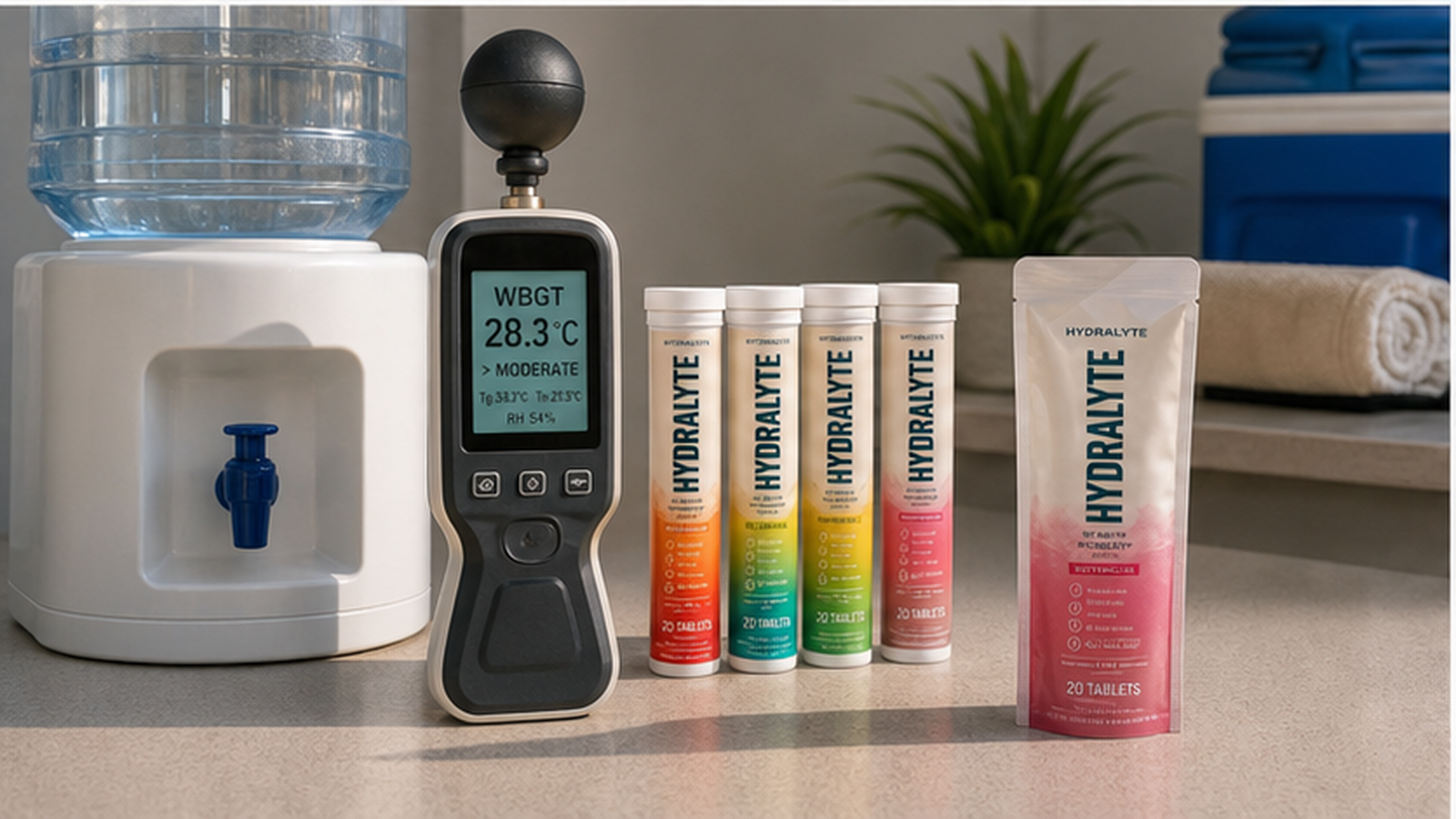
How to position Hydralyte without overpromising
The product role for this post should be concrete. If the focus asset shows sticks, the copy can talk about portability, work bags, gym bags or travel kits. If it shows pouches or tubs, the copy can talk about team distribution, welfare stations or family storage. If it shows tablet tubes, the copy can talk about compact storage and planned serving moments.
For WBGT monitoring GCC worksites, the strongest Hydralyte mention is not a hard sell. It is a sentence that connects the format to the reader's situation: Hydralyte 2026 standup pouches range four flavours and Hydralyte 2026 sticks range four flavours can be placed where the hydration decision happens, then prepared with clean water according to directions. That makes the product easy to picture and easy to operationalise.
Storage, serving and visibility details
Storage and serving details determine whether the routine survives real life. Products should be kept where they are protected from unnecessary heat, moisture and damage, and where the right person can access them without hunting. For WBGT monitoring GCC worksites, that could mean a labelled bin, a locker shelf, a sports bag pocket, a travel pouch or a dedicated family drawer.
The serving point should be matched to behaviour. Workers may need access before deployment and at welfare stations. Athletes may need a planned bottle before training and another after a long session. Families may need small, visible packs that do not disappear under towels, snacks and spare clothes.
The article should also make waste and replenishment visible. Empty sachet boxes, low stock, missing cups, warm water and unclear ownership are operational signals. Calling them out gives the reader more value than a simple product description.
Procurement notes for multi-shift teams
Procurement teams need quantities, storage logic and replenishment triggers. For WBGT monitoring GCC worksites, the article should encourage teams to estimate headcount, shift pattern, likely exposure and serving moments before ordering. That reduces the risk of both under-supply and boxes sitting unused in the wrong location.
Multi-shift teams should also think about handover. If the morning crew empties stock and the afternoon crew starts with nothing, the programme fails even though the purchase was made. A simple stock sheet or supervisor sign-off can reduce that gap.
The Hydralyte format should match the site. Portable sticks may suit distributed crews. Pouches or tubs may suit central welfare points. Tablet tubes may suit compact kits. The page should let that operational logic guide the product mention.
Common mistakes to remove from the routine
The first mistake is waiting until someone feels very thirsty. The second is assuming that AC breaks erase previous sweat loss. The third is buying hydration products but keeping them in a place nobody uses. For WBGT monitoring GCC worksites, these mistakes are common because the day feels familiar until heat, activity or travel delay changes the load.
Another mistake is writing a plan that depends on perfect behaviour. People forget bottles, children resist pauses, crews rush tasks, and athletes follow the session instead of their own signals. A good routine adds prompts, backup stock and simple roles so the plan still works when people are distracted.
The final mistake is overstating what electrolytes can do. Hydralyte should not be framed as a replacement for rest, shade, medical care or proper heat controls. Keeping that boundary clear helps the page read like expert guidance rather than generic promotional copy.
Simple measurement signals to track
Measurement can stay simple. Track whether supplies were available, whether reminders happened, whether people used refill points and whether any heat-related concerns were reported. For WBGT monitoring GCC worksites, those signals are often more useful than a complex spreadsheet that nobody maintains.
In workplaces, logs can show stock issued, station checks, supervisor notes and escalation events. In sport, a coach can record training conditions, session length and whether extra breaks were needed. For families, the record may simply be a packing list that gets adjusted after each outing.
The important point is review. If bottles come back full, stock runs out early, or people avoid the serving area, the routine needs redesign. That is a better conclusion than blaming individuals for not following a plan that was hard to follow.
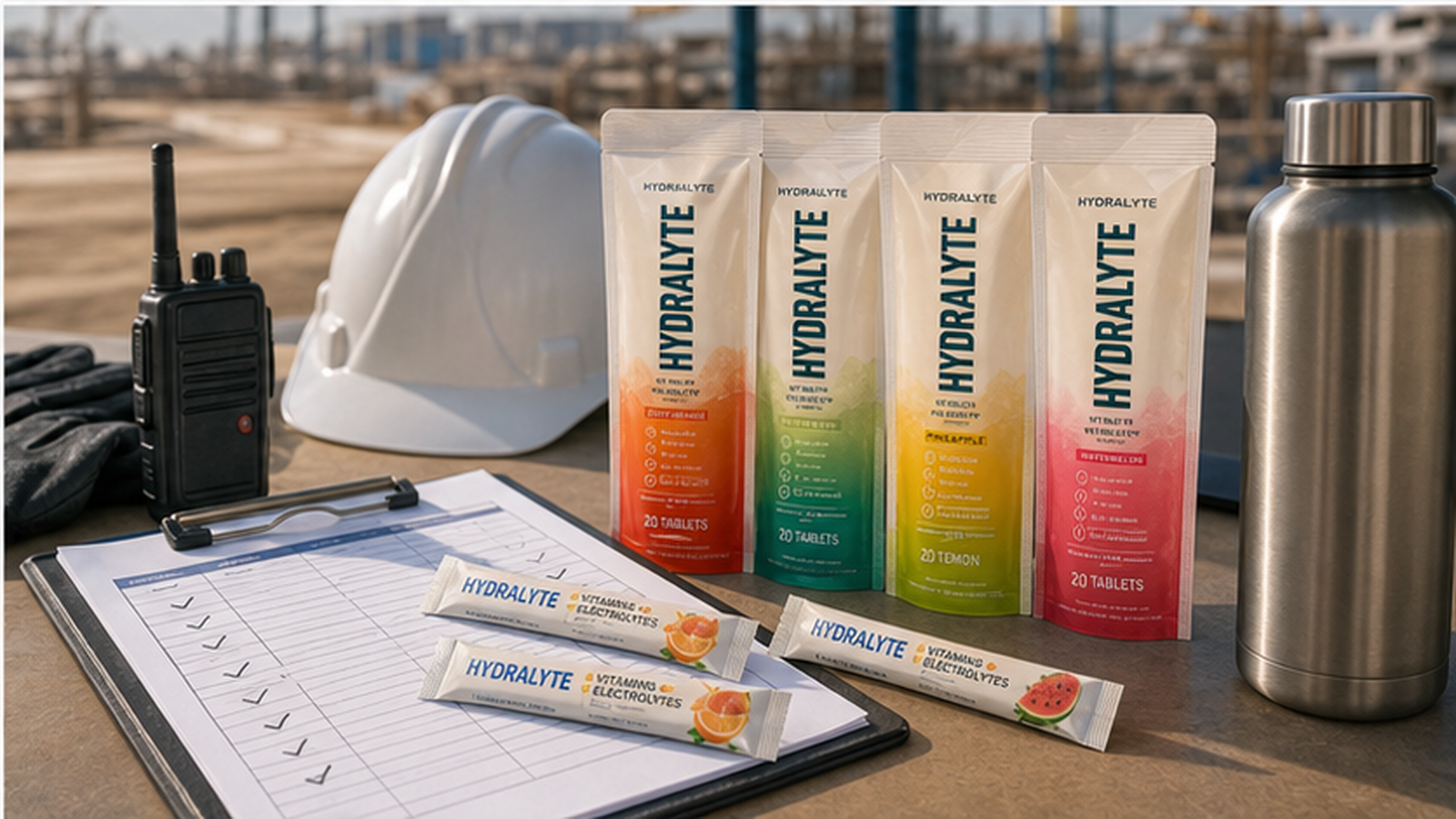
Checklist for WBGT Monitoring for GCC Worksites: When the Midday Ban Is Not Enough
Use this checklist before the next relevant day: confirm the schedule, identify heat or activity exposure, assign ownership, pack water, place Hydralyte where it will be used, check clean water access, explain the timing prompts and decide when the plan should be adjusted.
For WBGT heat index workers, add context-specific checks. A workplace may need shift handover notes, welfare station stock and supervisor escalation routes. A sports setting may need pre-training reminders, break timing and recovery bottles. A family setting may need child-friendly access, travel delays and a backup option if the outing runs long.
The checklist should appear in the HTML because it gives the page utility beyond search traffic. It also makes the content easier for sales, customer service or operations teams to reuse when answering practical hydration questions.
How to brief the plan in one minute
A one-minute briefing should avoid technical clutter. Say what the day looks like, where water is, when reminders happen, where the Hydralyte option is stored and who to speak to if someone feels unwell or the plan is not working. That is enough to make WBGT monitoring GCC worksites actionable.
The briefing should be repeated at the moment of decision, not hidden in a policy document. In a worksite it belongs in the toolbox talk. In sport it belongs before warm-up. In family travel it belongs while packing, before leaving the hotel or before children run toward the beach or park.
The best briefing language is calm and specific. It should not scare people, but it should make the next step obvious. That tone fits Hydralyte content because the brand can be useful, practical and safety-aware without becoming alarmist.
Next actions for the next hot day
The next action is to turn the guide into a small operating routine. Choose the serving format, choose the storage point, assign the owner and decide when reminders will happen. For WBGT monitoring GCC worksites, these four decisions create more behaviour change than a long list of abstract hydration facts.
Then review after one hot day, one training session, one trip or one week of use. Ask what was easy, what was ignored and what ran out. That review is where the content becomes useful for real people rather than only search engines.
Finally, keep the product choice tied to the situation. Hydralyte can support electrolyte hydration when used as directed, and the 2026 current Hydralyte visuals can support the page. The article keeps that practical balance from headline to FAQ.
Useful Hydralyte links
Sources and further reading
Selected external sources are included for readers who want to review the broader guidance behind this article.
Frequently asked questions
What is the simplest way to start with WBGT monitoring GCC worksites?
Start with a visible routine: water access, planned reminders, a known owner and a review after the hot day, session or trip. Add an electrolyte option only where the conditions make it useful.
Can Hydralyte replace water, shade or rest?
No. Hydralyte should be used as directed as part of a wider hydration plan. Water access, shade, rest, cooling, sensible scheduling and medical advice where needed remain important.
Which Hydralyte 2026 assets are referenced for this gcc workplace hydration article?
This article features Hydralyte 2026 standup pouches range four flavours and Hydralyte 2026 sticks range four flavours and uses current Hydralyte 2026 product formats.
When should someone seek medical advice?
If symptoms are severe, unusual, persistent or involve a child, older adult, pregnant person or someone with a medical condition, seek qualified healthcare advice promptly.