Optimizing Agricultural Worker Hydration UAE for Enhanced Summer Safety
In the demanding landscape of the Middle East, agricultural worker hydration UAE represents a critical operational priority for farm managers and HSE professionals. As summer temperatures soar, protecting the health of outdoor personnel is not only a regulatory requirement but a fundamental necessity for maintaining productivity and operational continuity. Implementing a robust hydration strategy that addresses the unique environmental stressors of the UAE agricultural sector is essential for preventing heat-related illnesses and ensuring the long-term well-being of the <a href="/industries">workforce</a>.
Understanding the UAE Agricultural <a href="/tools/heat-stress-assessment">Heat Stress</a> Profile
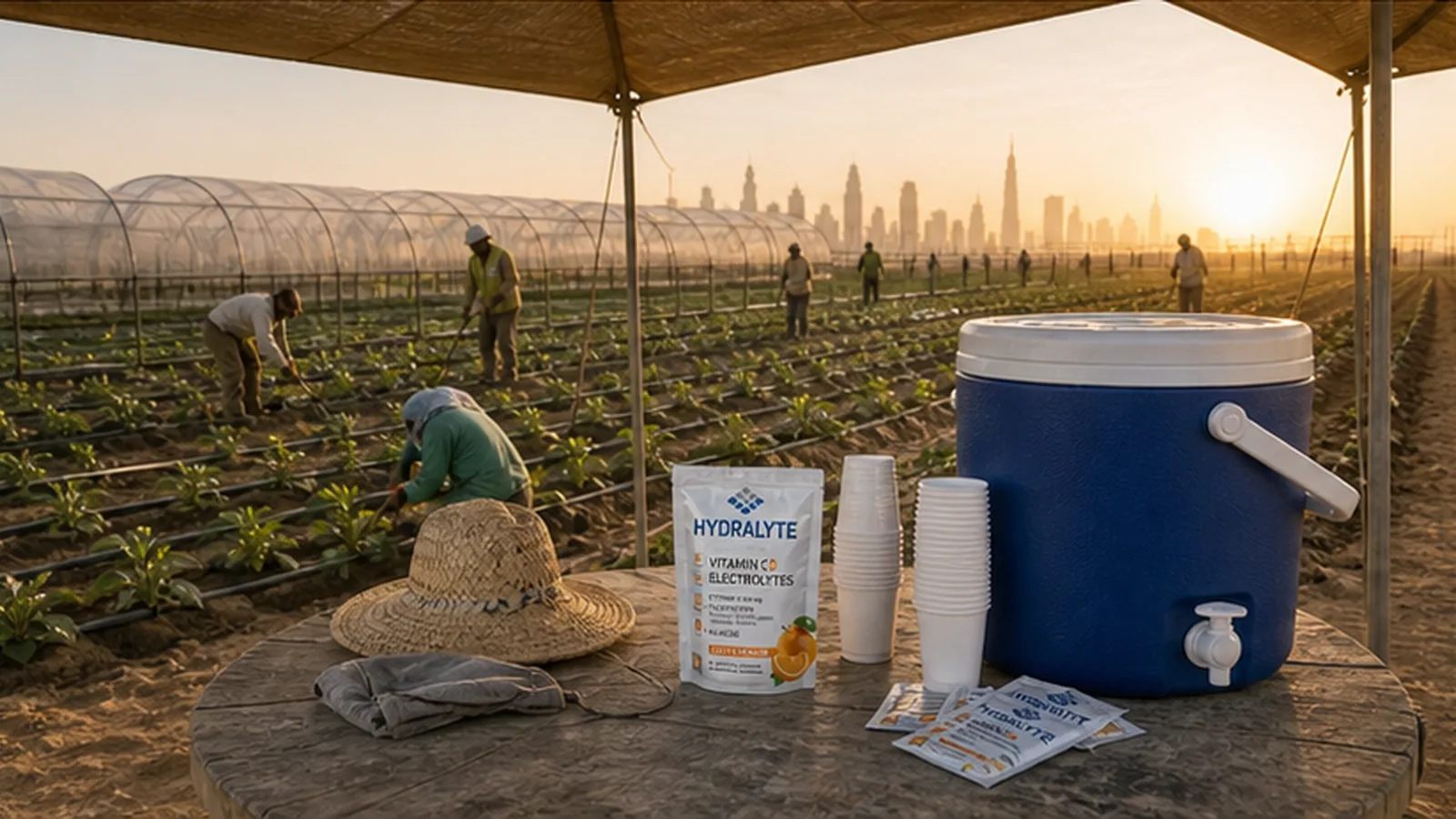
Agricultural workers in the UAE face some of the most sustained outdoor exposure in the region. Date palm workers, greenhouse laborers, and livestock handlers perform high-intensity physical labor in intense heat with frequently limited access to cooling infrastructure. While industrial sectors often have localized <a href="/industries">welfare station</a>s, the agricultural regions of Ras Al Khaimah and the Al Ain oasis present a more dispersed risk profile. In these areas, the combination of high ambient temperatures and solar radiation creates a continuous physiological demand on the body, making consistent electrolyte replacement a non-negotiable safety standard.
Addressing the Logistics of Remote Agricultural Settings
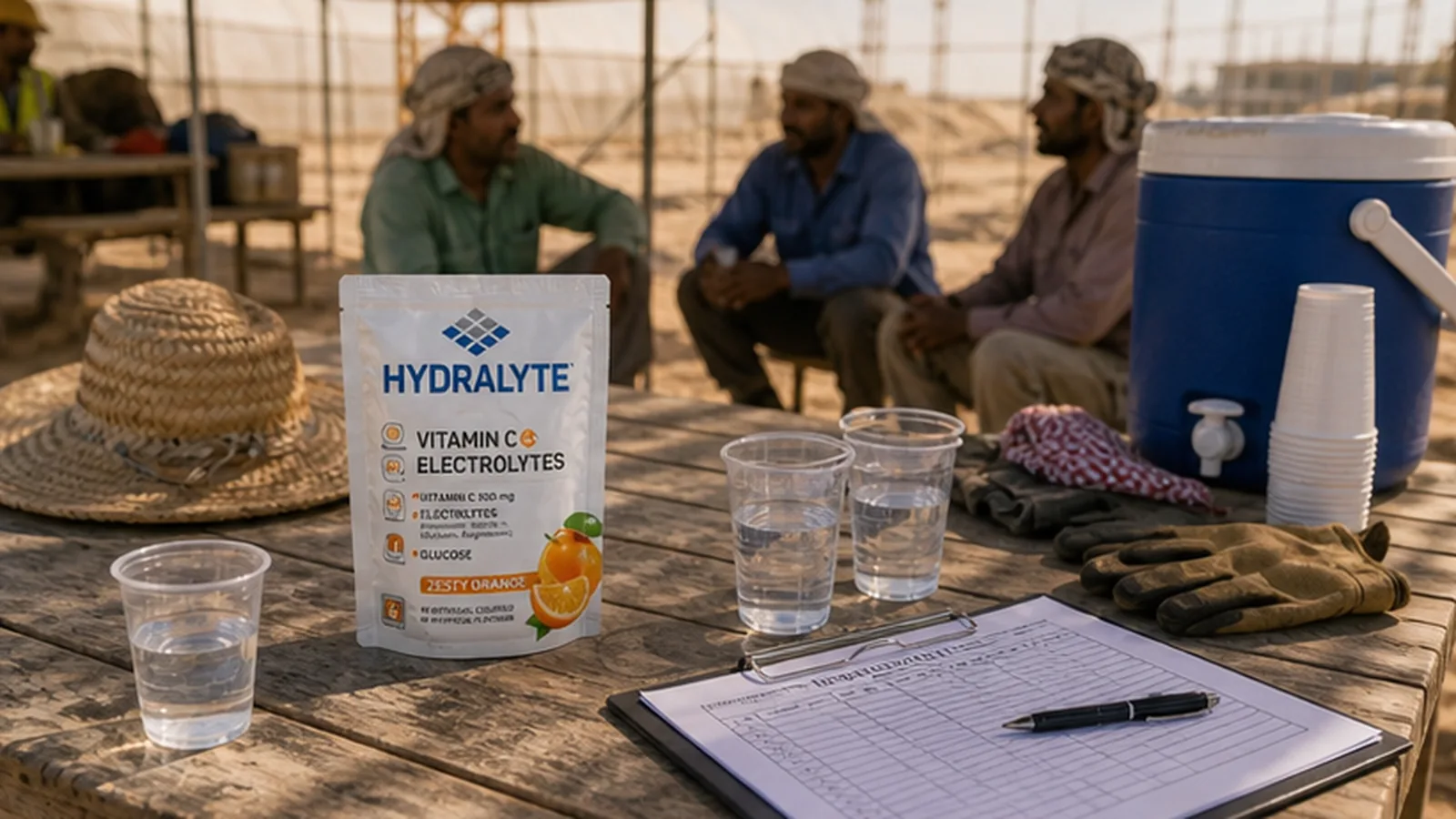
One of the primary challenges in the agricultural sector is the remote nature of farm locations. Unlike centralized construction sites, workers are often dispersed across large farm areas where they may not have direct supervisor access for several hours at a time. This makes the personal carry sachet format essential for effective safety management. By providing individual sachets that workers can carry in their pockets or gear, managers ensure that professional-grade hydration is available at the point of need. Supplementing this with 800g pouches at central farm facility welfare points creates a multi-layered defense against dehydration.
The Extreme Context of Al Ain Agricultural Operations
The Al Ain oasis region presents a particularly extreme environment for agricultural worker hydration UAE. Inland temperatures regularly reach 48-50°C, and when combined with the physical labor required for oasis farming, it creates some of the most extreme heat exposures in the country. In these conditions, water alone is often insufficient to replace the rapid loss of sodium and other essential minerals. Utilizing scientific hydration protocols at these remote sites ensures that workers maintain the electrolyte balance necessary for cognitive function and physical endurance under the harsh desert sun.
Mitigating Risks in the Greenhouse Heat Environment
Greenhouse operations introduce a different but equally dangerous heat profile. Closed greenhouse structures in the UAE can reach internal temperatures of 50-55°C during the summer months. Workers inside these facilities face extreme combined ambient and enclosed heat, often without the benefit of natural airflow. Because the environment is so taxing, increased provision frequency is essential. Greenhouse laborers require more frequent breaks and proactive electrolyte loading to combat the accelerated dehydration rates caused by the stagnant, high-temperature air inside these structures.
To establish a comprehensive heat stress management program for your agricultural operations, contact our specialist team at contact our team.
Frequently Asked Questions
Are UAE farm and agricultural workers covered by MOHRE heat stress obligations?
Yes. UAE Federal Decree-Law No. 33 of 2021 covers all workers in heat-exposed environments regardless of sector. Agricultural employers in the UAE have the same duty of care to protect farm workers from heat illness as construction or industrial employers.
Why is the personal carry sachet format essential for agricultural workers?
Agricultural workers in UAE farms and oasis areas work across dispersed locations without access to central welfare stations. Each worker must carry their own daily supply of individually sealed sachets to ensure access wherever they are working. The sealed format also tolerates the heat and humidity of agricultural environments without moisture damage.
What makes greenhouse work in UAE particularly dangerous for heat stress?
UAE greenhouse structures reach 50-55°C internally in summer. Workers inside greenhouses cannot benefit from any natural airflow cooling and face extreme enclosed ambient heat on top of the physical demands of horticultural work. Greenhouse workers should receive electrolyte provision every 30 minutes during summer hours.
🛒 Ready to try Hydralyte? Available in three refreshing flavours across multiple pack sizes — from individual sachets to 800g bulk pouches. Shop Hydralyte Online → or request a corporate quote.
The Hydralyte Advantage for UAE and GCC Conditions
Hydralyte is a potassium-rich, low-sodium isotonic electrolyte formula designed specifically for proactive daily hydration — not just reactive emergency recovery. With 500mg Vitamin C per serve and a low-sugar formula, it provides comprehensive hydration support for anyone living, working, or exercising in the extreme heat of the UAE and GCC.
Unlike traditional ORS sachets designed for acute illness, or high-sugar sports drinks designed for athletic performance, Hydralyte is formulated for safe, repeated daily consumption across the entire summer season. This makes it the preferred choice for workplace hydration programs, family use, and fitness enthusiasts across the region.
Available in three flavours (Orange Blast, Lemon Lime, Pineapple) and four pack sizes, Hydralyte is stocked online and across GCC retail, with bulk corporate supply available for businesses with 50+ workers.
Why Proactive Hydration Outperforms Reactive Treatment
The fundamental shift in modern occupational health is from reactive treatment to proactive prevention. Traditional approaches wait for dehydration symptoms to appear before intervening — by which point cognitive impairment, reduced coordination, and heat illness risk are already elevated.
Proactive hydration with Hydralyte maintains electrolyte balance throughout the workday, preventing the dehydration-impairment cascade from ever beginning. This is particularly critical in the UAE where ambient conditions can cause 1–2% body weight fluid loss within 60–90 minutes of outdoor work.
The economic case is equally compelling. Proactive electrolyte provision costs approximately AED 2–4 per worker per day. A single heat-related medical incident costs AED 20,000–50,000. A single MoHRE fine costs AED 5,000 per worker. The mathematics overwhelmingly favour prevention — and every employer who runs the numbers through the Hydralyte ROI Calculator reaches the same conclusion.