Optimizing Industrial Hydration: Isotonic vs Hypotonic Electrolyte Drinks UAE Workers Need
For HSE managers and occupational health professionals operating in the extreme thermal environments of the UAE, selecting the correct rehydration protocol is a matter of physiological necessity and safety compliance. Understanding the scientific distinction between isotonic vs hypotonic electrolyte drinks UAE workforce requirements demand is essential for maintaining productivity and preventing heat-related illnesses. The efficacy of an electrolyte solution is largely determined by its osmolarity, which dictates how quickly fluids and essential minerals are absorbed into the bloodstream to counteract the effects of heavy perspiration and <a href="/tools/heat-stress-assessment">heat stress</a>.
Defining Isotonic, Hypotonic, and Hypertonic Terminology
To evaluate hydration products accurately, one must first master the terminology of solution concentration. An isotonic solution possesses the same salt and sugar concentration as human body fluids, typically measured between 285 and 310 mOsm/kg. This balance allows for steady fluid replacement. In contrast, a hypotonic solution has a lower concentration of particles than body fluids, creating a dilute environment. Conversely, hypertonic solutions, which include the majority of commercial sports drinks, have a much higher concentration of sugars and salts than the blood. Understanding these levels of tonicity is the first step in determining which isotonic vs hypotonic electrolyte drinks UAE safety programs should prioritize for outdoor laborers.
Absorption Speed and the Osmotic Gradient
The speed at which a worker recovers from dehydration is directly linked to the osmotic gradient. Hypotonic solutions are generally absorbed at the fastest rate because the lower particle concentration allows water to move rapidly into the cells via osmosis. Isotonic solutions are absorbed at a rate similar to the body's natural fluid movement, providing a reliable and consistent intake of both water and electrolytes. However, hypertonic solutions actually slow down the rehydration process. Because they are so concentrated, the body must first draw water from the bloodstream into the gut to dilute the solution before it can be absorbed. For a UAE worker already suffering from heat exhaustion, this delay is counterproductive and potentially dangerous.
Why Isotonic is the Global Standard for Oral Rehydration
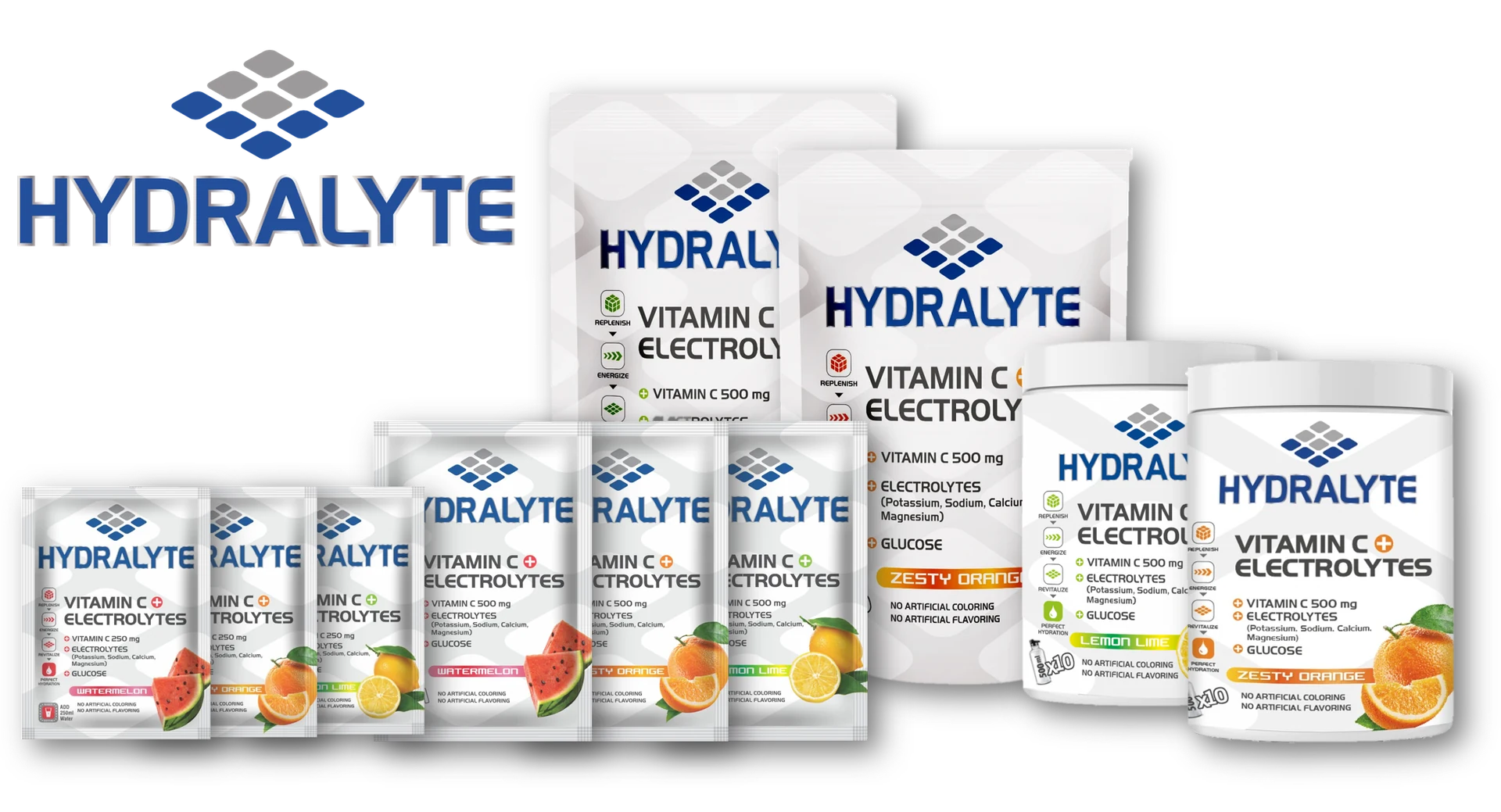
The World Health Organization has established the isotonic standard for Oral Rehydration Solutions (ORS) because it represents the optimal balance between absorption speed and electrolyte density. While a purely hypotonic drink might enter the bloodstream quickly, it often lacks the necessary concentration of sodium and potassium required to replace what is lost through heavy sweating in the UAE heat. Isotonic formulas like Hydralyte ensure that every milliliter of fluid absorbed carries a meaningful payload of electrolytes, facilitating genuine rehydration rather than simple fluid volume replacement. This scientific balance is why the isotonic vs hypotonic electrolyte drinks UAE debate consistently favors ORS-aligned formulas for industrial use.
Practical Implications for UAE HSE Management
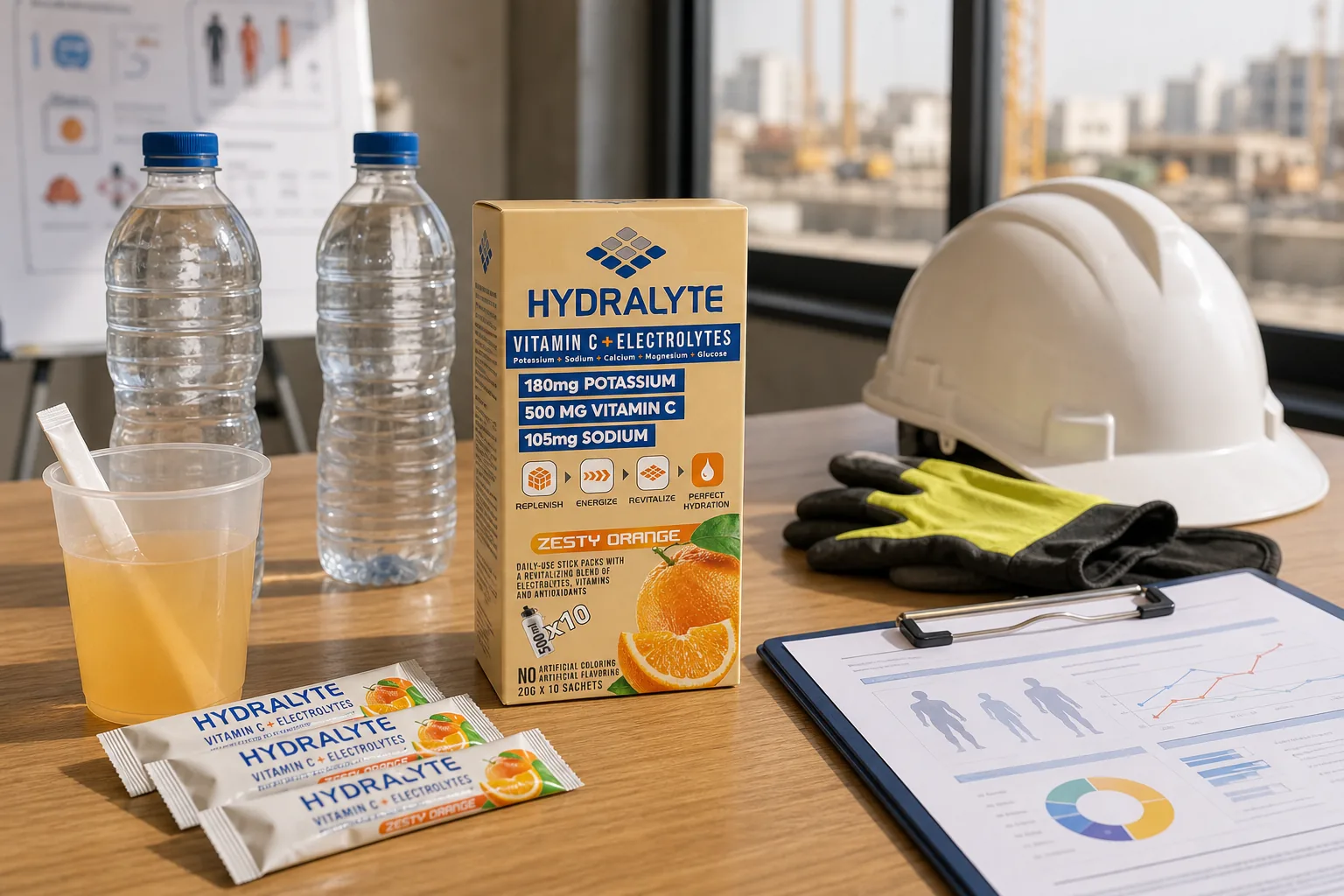
In the practical context of a UAE construction site or industrial facility, providing an isotonic formula like Hydralyte is the most effective way to manage heat stress. These formulas provide the rapid fluid replacement characteristic of high-performance hydration while ensuring the body receives the specific mineral ratios required for sustained physical labor. By choosing an isotonic standard over high-sugar hypertonic alternatives, HSE managers can ensure their teams recover faster and maintain better physiological resilience throughout their shifts. To implement a scientifically backed hydration program for your site, contact our specialists at contact our team.
Frequently Asked Questions
What is the difference between isotonic and hypotonic electrolyte solutions?
Isotonic solutions have the same concentration as body fluids (285-310 mOsm/kg) — they absorb at a rate similar to body fluid movement. Hypotonic solutions are more dilute than body fluids and absorb slightly faster due to the osmotic gradient. Hypertonic solutions are more concentrated than body fluids and absorb more slowly as the body must dilute them before uptake.
Why is isotonic the ORS standard rather than hypotonic?
standard ORS is technically slightly hypotonic in its most recent formulation (approximately 245 mOsm/kg), balancing fast absorption with meaningful electrolyte delivery per unit absorbed. The key is that the formula combines absorption speed with sufficient electrolyte concentration to achieve genuine rehydration — not just fluid replacement without adequate electrolytes.
What concentration category are most sports drinks and why does it matter?
Most sports drinks are hypertonic (6-8% sugar content creates 400-500 mOsm/kg). Hypertonic solutions draw fluid into the gut from the bloodstream before absorption — temporarily worsening dehydration before the body can dilute and absorb them. For a worker who is already significantly depleted, a hypertonic drink slows the rehydration process compared to an isotonic ORS.
The SGLT1 Mechanism: How Electrolyte Drinks Actually Work
Understanding why electrolyte drinks work requires understanding the sodium-glucose co-transport mechanism (SGLT1) in the small intestine. This mechanism transports sodium and glucose molecules together across the intestinal wall, pulling water along by osmosis. This is why plain water alone — without electrolytes and glucose — is absorbed significantly slower.
Hydralyte's isotonic formula is specifically calibrated to optimise SGLT1 transport. The precise ratio of sodium, glucose, potassium, chloride, and calcium matches the body's natural fluid osmolality (280–295 mOsm/L), enabling absorption up to 3× faster than water alone.
This is fundamentally different from hypotonic solutions (which have lower osmolality than body fluids) and hypertonic solutions (which have higher osmolality). While hypotonic solutions may absorb slightly faster in the intestine, they provide less complete electrolyte replacement — meaning workers need to consume more volume to achieve the same rehydration effect.
Why Potassium-Rich Formulas Are Safer for Daily Use
Most traditional ORS formulas are high in sodium because they were originally designed for treating acute dehydration from diarrhoea and cholera. Consuming high-sodium formulas daily across a 3-month UAE summer season can contribute to elevated blood pressure, cardiovascular strain, and kidney stress.
Hydralyte reverses this ratio — high potassium, low sodium. Potassium supports muscle function, heart health, and cellular hydration. This makes Hydralyte safe for proactive daily use rather than just reactive emergency treatment. For workers consuming electrolyte drinks 6–8 times per day during summer, this distinction is significant.
🏗 Protecting Outdoor Workers? Hydralyte supplies bulk electrolyte programs for construction, oil & gas, logistics, and manufacturing companies across the GCC — with full MoHRE compliance documentation. See Industry Hydration Programs →
🛒 Ready to try Hydralyte? Available in three refreshing flavours across multiple pack sizes — from individual sachets to 800g bulk pouches. Shop Hydralyte Online → or request a corporate quote.