Construction site hydration is one of the defining safety challenges of working in the UAE. Few jobs combine the risk factors as completely as construction does: heavy physical exertion, long hours in direct sun, exposure to heat radiating from concrete, steel and machinery, and protective equipment that traps body heat. Add the region's intense summer temperatures, which routinely climb above 45 degrees Celsius, along with the punishing coastal humidity, and the result is an environment where dehydration and heat illness are constant threats unless they are actively managed.
Getting hydration right on a building site is therefore not a comfort measure but a core part of keeping workers safe and projects on schedule. A dehydrated worker is slower, less coordinated and far more likely to make the kind of mistake that causes an accident on a site full of hazards. The financial and human cost of a single serious heat incident dwarfs the modest expense of provisioning water, electrolytes and proper rest areas. Prevention is not only the right thing to do; it is the economical thing to do.
This guide sets out practical, site-ready measures for keeping construction crews hydrated through the worst of the UAE summer. It complements the wider %heat-safety challenges of the construction sector% that every site manager in the Emirates must plan around, and it is written to be used rather than filed away. Whether you run a single villa build or a multi-tower development with thousands of operatives, the same principles apply: make hydration easy, make it constant, and make it everyone's responsibility.
Understanding the science of heat and the working body
To manage hydration well, it helps to understand what is actually happening inside a worker's body on a hot site. The human body works hard to keep its core temperature within a narrow band around thirty-seven degrees Celsius. When muscles work, they generate heat as a by-product, and when the surrounding air is hot, the body also absorbs heat from the environment. To stay within its safe range, the body must continuously shed this combined heat load, and its primary tool for doing so is sweat.
Sweating cools the body only when the sweat evaporates from the skin, drawing heat away as it turns from liquid to vapour. Herein lies the particular cruelty of the UAE coastal climate: when humidity is very high, sweat cannot evaporate efficiently, so the worker keeps sweating but gains little cooling benefit. The result is a body that loses fluid and salt rapidly while its core temperature continues to climb. This is why a humid day at forty degrees can be more dangerous than a dry day at forty-five, and why managers should never judge risk on temperature alone.
As fluid is lost, blood volume falls, the blood thickens slightly, and the heart must beat faster to deliver oxygen to working muscles and to carry heat to the skin for cooling. A worker whose cardiovascular system is already strained by dehydration has less reserve to cope with the heat, and the margin for safety narrows with every litre of unreplaced sweat. Understanding this chain of events makes clear why hydration is not a side issue but the very mechanism that keeps a worker safe.
Why construction sites are especially demanding
Construction work pushes the body's cooling system to its limits in several ways at once. The work itself is physically intense, generating large amounts of internal metabolic heat that must be shed on top of the heat absorbed from the surrounding environment. Sites are often open and exposed, with little natural shade, and surfaces such as concrete slabs and steel reinforcement radiate stored heat back at workers throughout the day and well into the evening.
Personal protective equipment adds another layer of strain. Hard hats, high-visibility clothing, steel-toe boots and gloves are all essential for safety, but they reduce the body's ability to cool itself by trapping heat and limiting the evaporation of sweat. The net effect is that construction workers sweat heavily and continuously, losing both fluid and electrolytes at a rate that occasional water breaks simply cannot keep pace with. A worker can lose well over a litre of sweat per hour during heavy work in the Gulf summer, and that fluid has to be replaced if the body is to keep functioning safely.
The hidden cost of dehydration on output
It is easy to think of hydration purely as a health and safety matter, but it has a direct effect on the bottom line too. A mildly dehydrated worker is not just at greater risk of illness; they are measurably less effective. Concentration slips, reaction times slow, and fine motor control declines, all of which matter enormously on a site full of moving plant, heavy loads and sharp edges. Mistakes become more likely, and on a construction site a mistake can mean a damaged structure, a costly rework or a serious injury.
Fatigue also accumulates faster in a dehydrated body, so the afternoon's productivity falls away even before the heat forces a stop. Consider a typical scenario: a crew of twenty operatives pouring concrete on an exposed deck in August. If half of them are running a fluid deficit by mid-morning, the whole pour slows, quality suffers, and the supervisor spends the afternoon managing fatigue rather than progress. Seen this way, investing in proper hydration is not a cost centre but a way of protecting the pace and quality of the entire project.
Acclimatisation and the high-risk first weeks
One factor that contractors frequently overlook is acclimatisation. A worker who has just arrived in the country, or who is returning from leave in a cooler climate, is not yet adapted to the Gulf heat. The body needs roughly one to two weeks of gradual exposure to learn to sweat earlier, sweat more efficiently and conserve salt. During this adjustment period a new worker is markedly more vulnerable to heat illness than an acclimatised colleague performing the same task beside them.
Good sites manage this deliberately. New arrivals are eased into full exertion over their first week or two, given lighter duties or shorter spells in direct sun, and watched more closely for early symptoms. This phased approach is not coddling; it reflects the physiological reality that an unacclimatised body simply cannot cope with the same heat load as a seasoned one. Ignoring acclimatisation is one of the most common and avoidable causes of serious incidents early in a deployment.
Make water genuinely accessible
The single most common failure in site hydration is distance. If the nearest water is a long walk across a busy and constantly changing site, workers will drink less simply because stopping is inconvenient and time-consuming. The goal should be to bring water to the work, with cool drinking stations distributed close to where crews are actually operating, and replenished reliably so they never run dry during a shift.
Water should be kept genuinely cool, because cool water is more palatable and people drink more of it. Stations should be clean, shaded wherever possible, and clearly signposted so that new workers and visitors can find them without asking. On large or fast-changing sites, the position of water points needs to move with the work, which calls for a little planning each day rather than a fixed setup that quickly becomes irrelevant as the build progresses floor by floor.
Practical rules for water points
- Keep the walk to water under a minute or two from any active work face.
- Insulate or chill containers so water stays cool through the hottest hours.
- Assign a named person each shift to check and refill stations.
- Provide disposable or individually marked cups to maintain hygiene.
- Relocate stations as the work front moves rather than leaving them stranded.
Do not rely on water alone
Because construction workers sweat so heavily for so long, replacing water without replacing salts can leave them dehydrated in a different and dangerous way. When a person drinks large volumes of plain water after losing litres of salty sweat, the sodium concentration in their blood can fall, which in extreme cases leads to a condition called hyponatraemia. Far more commonly, it simply means the body cannot hold on to the fluid being consumed, and the worker urinates it away without ever rehydrating properly.
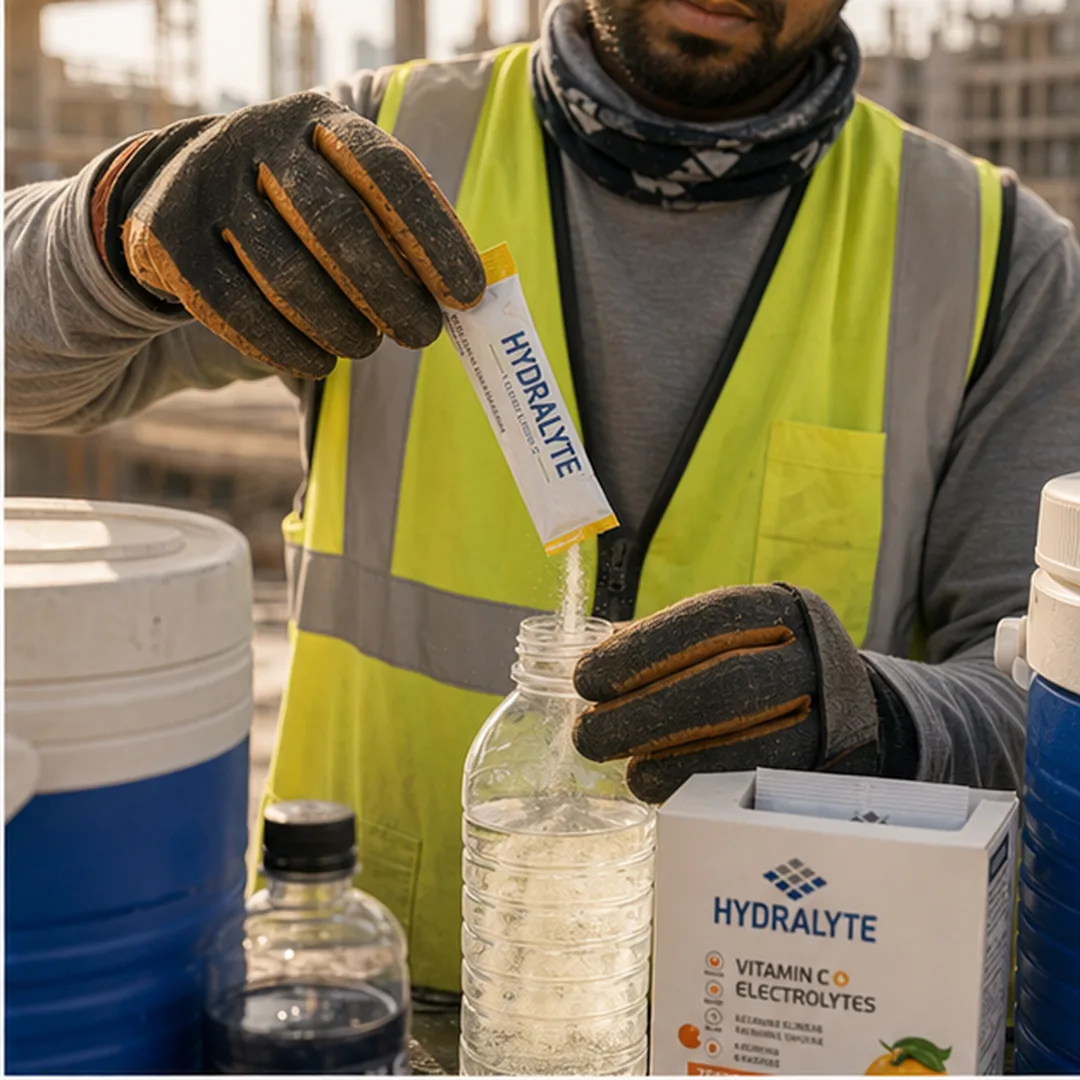
Electrolyte replacement is therefore especially important on site during and after sustained heavy work. Replacing the sodium, potassium and other minerals lost in sweat helps the body retain the fluid it takes in and reduces the muscle cramps that plague workers in hot conditions. A sensible approach combines plenty of cool water for general drinking with electrolyte replacement timed around the most demanding stretches of work. Different sites and tasks need different levels of provision, so it pays to %assess the heat risk on each of your sites% and match the hydration response to the actual conditions your crews face rather than applying a single blanket rule across every trade and location.
Choosing the right electrolyte provision
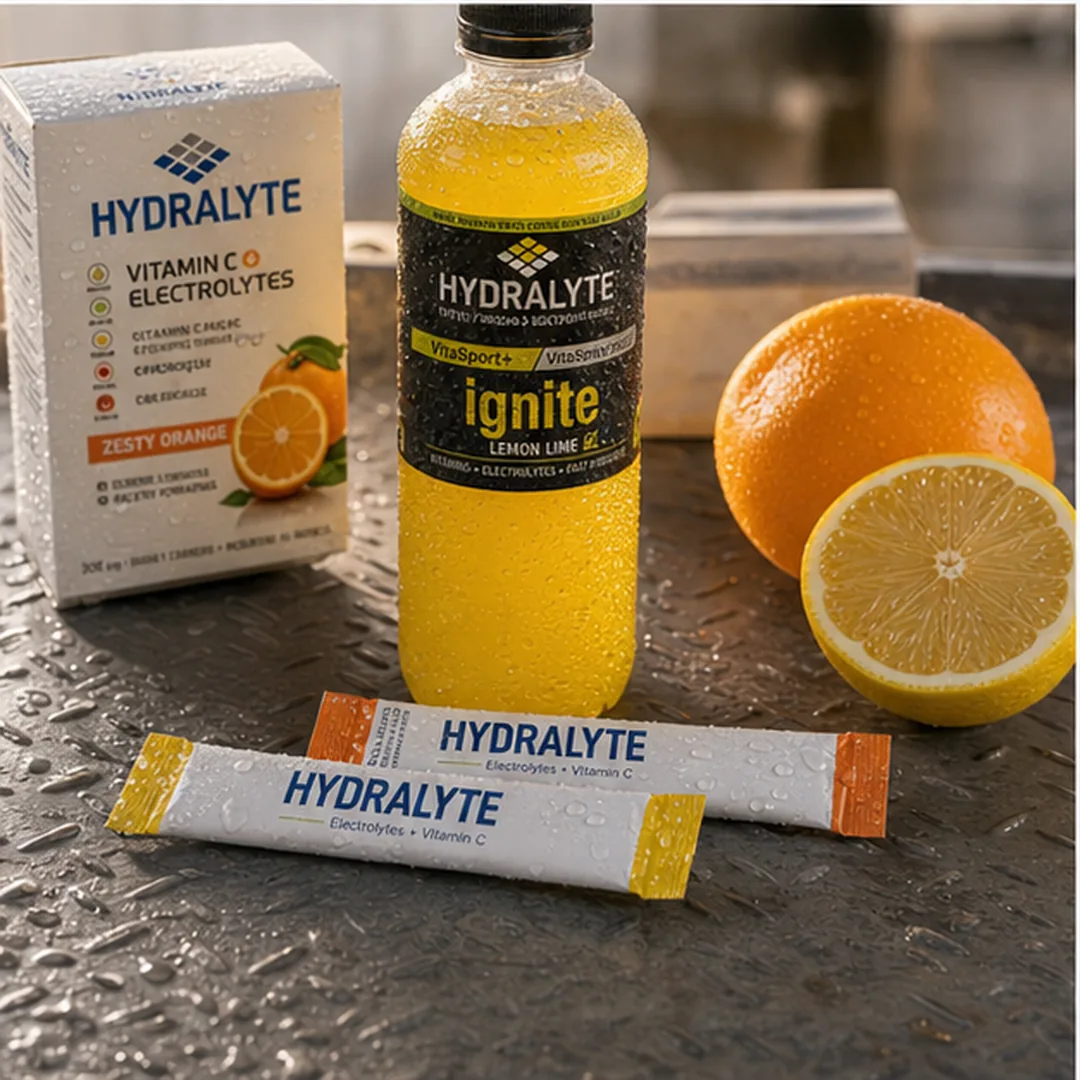
Not all electrolyte products are equal, and the needs of a steel fixer working in full sun differ from those of an electrician in a shaded plant room. It is worth taking time to %compare electrolyte options for heavy sweaters% so that the formulation you provide actually matches the sweat losses your workers experience. The aim is a balanced solution that replaces sodium effectively without being so sugary that it sits heavily in the stomach. Provision should be simple to prepare on site, palatable enough that workers actually drink it, and consistent across crews so that nobody is left short during the hardest part of the day.
Timing matters as much as quantity
How fluid and electrolytes are spread through the day matters as much as the total amount consumed. A worker who arrives already hydrated, drinks little and often through the shift, and tops up with electrolytes around the heaviest tasks will fare far better than one who drinks nothing for hours and then floods their system at lunch. The body can only absorb fluid at a limited rate, so large infrequent volumes are partly wasted, passing straight through, while a steady trickle keeps the worker topped up.
Pre-hydration the evening before and the morning of a hard day pays dividends, as does proper rehydration after the shift ends. Some sites build short, structured drink breaks into the rhythm of the day, so that drinking becomes a habit rather than an afterthought. The simple discipline of a scheduled sip every twenty minutes or so, rather than waiting for thirst, keeps workers in a far safer place across a long, hot shift.
Schedule work and breaks around the heat
How the working day is structured has an enormous effect on hydration and heat risk. Wherever possible, the heaviest and most exposed tasks should be scheduled for the cooler parts of the day, with lighter or sheltered work reserved for the hottest hours. Early starts, before the sun has had time to bake the site, let crews complete demanding work while temperatures are still manageable.
The mandated summer <a href="/industries">midday break</a> is the cornerstone of UAE heat safety. Each year from the middle of June to the middle of September, work in the sun and in open areas is prohibited during the hottest part of the afternoon, broadly from around half past twelve until three o'clock, and this is enforced by the Ministry of Human Resources and Emiratisation. The break must be respected fully, with workers moved into proper shaded rest areas rather than simply pausing in place. Beyond the legal minimum, regular shorter breaks throughout the day also help, giving workers the chance to rest, cool down and drink before strain accumulates.
Designing effective rest areas
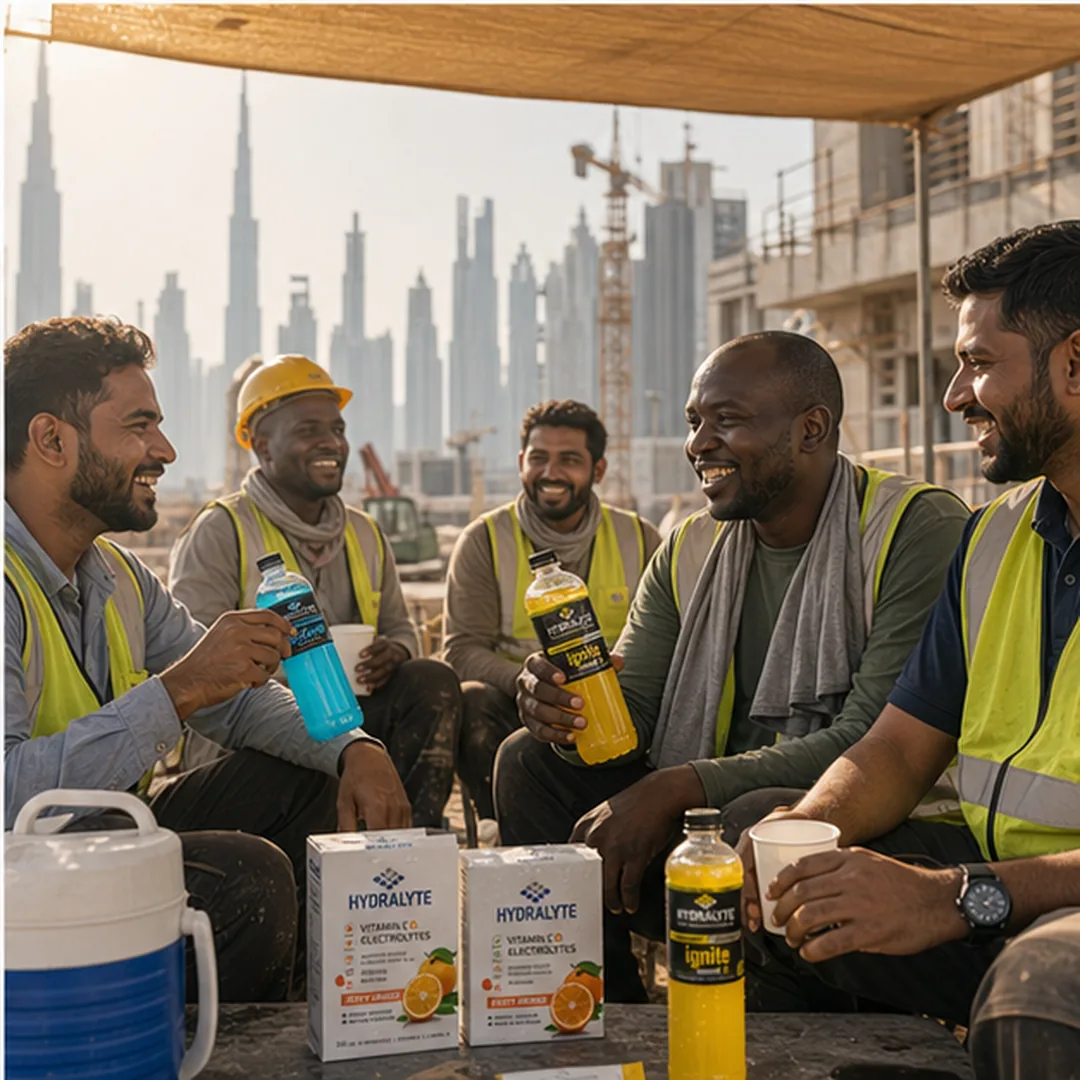
A rest area is only useful if workers actually get relief from it. Simply parking a tent in the sun achieves little. The best rest areas are properly shaded and ventilated, positioned so that workers do not have to walk a long way to reach them, and equipped with seating, cool water and electrolyte replacement close at hand. Many sites use cooled or air-conditioned cabins, which make a dramatic difference during the worst of the summer.
The aim is for workers to leave the rest area meaningfully cooler and rehydrated than when they arrived, ready to work safely again, rather than having merely paused without recovering. Well-designed rest areas also send a clear signal that the site takes worker welfare seriously, which strengthens morale and trust across the whole crew. On a long programme, that goodwill translates into lower turnover and a <a href="/industries">workforce</a> that looks out for itself.
Stay on the right side of the regulations
UAE heat-safety law is not optional, and inspectors are active during the summer months. Beyond the midday break, employers have broader duties to provide shade, cool drinking water, rest facilities and appropriate scheduling, and to keep records demonstrating that they have done so. Falling short risks fines, stop-work orders and reputational damage, quite apart from the danger to workers.
Because the rules carry specific timings and obligations, it is worth taking the time to %check your obligations under the Midday Break Rule% before each summer season begins, so that your site setup, scheduling and documentation are aligned with current requirements. Treating compliance as a baseline rather than a ceiling is the wisest approach: the law sets the minimum, but the conditions on a UAE site in August often justify going further. A contractor who plans for genuine worker comfort will comfortably clear the legal bar as a by-product.
The wider duty of care
Compliance is the floor, not the ceiling. Beyond the specific letter of heat-safety regulation sits a broader duty of care that every responsible employer owes its workforce. Workers in the UAE construction sector are often far from home, supporting families abroad, and dependent on their employer for accommodation, transport and welfare as well as wages. The conditions they work in, and the care taken to protect them from the heat, reflect directly on the contractor's reputation among clients, regulators and the labour market itself.
There is a practical dimension too. Clients and main contractors increasingly scrutinise the welfare records of those they engage, and a strong heat-safety culture has become a competitive advantage when bidding for work. Treating worker welfare as a genuine priority rather than a box to be ticked tends to pay back many times over in retention, reputation and the simple fact of fewer disruptive incidents during the season.
Equip and empower site supervisors
On a construction site, supervisors and foremen are the front line of heat safety. They are best placed to notice when a worker is flagging, to enforce drinking and breaks, and to step in before a problem becomes an emergency. Training them to recognise the early signs of heat illness, and giving them the authority to stop work when necessary, is one of the highest-value steps any contractor can take. A supervisor who hesitates to halt a task for fear of upsetting the programme is a liability; one who is empowered and expected to act is an asset.
Practical habits make a difference here. A buddy system, where workers keep an eye on one another, catches symptoms that an individual may not notice in themselves, since dehydration impairs the very judgement needed to recognise it. Short daily briefings that remind crews to drink, explain why electrolytes matter and recap the warning signs keep hydration front of mind even when the pressure is on to hit a deadline.
What supervisors should watch for
Early signs of trouble include unusual quietness or irritability, stumbling or clumsiness, a worker who has stopped sweating despite the heat, complaints of headache or dizziness, and confusion or slurred speech. Any of these warrants an immediate stop, a move to shade and rehydration, and escalation to medical help if the worker does not recover quickly. Supervisors should know that hot, dry skin and confusion are red-flag emergencies, not signs of someone who simply needs to toughen up.
Responding to a heat emergency on site
Every site should have a clear, rehearsed plan for what happens when a worker shows signs of serious heat illness, because in those moments confusion and delay cost lives. The basic sequence is to stop the affected worker immediately, move them to the coolest available place, begin active cooling with water and airflow, and summon medical help without delay. If the worker is fully conscious and able to swallow, fluids may be offered in sips, but they must never be forced on someone who is confused or drowsy.
Knowing in advance who calls for help, where the nearest medical facility is, how an ambulance will reach the work face on a large site, and who is trained in first aid removes precious seconds of hesitation. A short drill at the start of the season ensures that supervisors and first aiders are not improvising during a genuine emergency. The goal is for the response to be automatic, calm and fast, because severe heat illness can deteriorate within minutes.
Hydration beyond the work face
A worker's hydration status when they arrive on site each morning is shaped by what happens away from the work face, and a thorough programme takes this into account. Long commutes in hot, poorly cooled buses can leave operatives already warm and dehydrated before the shift even begins. Accommodation that is uncomfortably hot at night disrupts sleep and recovery, so workers start the day fatigued and behind on fluids. Meals that are heavily salted without adequate water, or shifts where workers fast or skip drinking, all erode the baseline from which they begin.
Forward-thinking contractors recognise that the twelve hours between shifts matter almost as much as the shift itself. Providing cool water on transport, ensuring accommodation allows proper rest and rehydration, and encouraging workers to drink in the evening and morning all raise the level at which crews begin each day. A worker who arrives well rested and well hydrated has a far larger safety margin than one who is already depleted at the gate, and the cost of supporting that is modest compared with the value it protects.
Tailoring provision to different trades and tasks
A construction site is not a single uniform environment but a patchwork of very different working conditions, and hydration provision works best when it reflects that. A steel fixer tying rebar on an exposed deck in full sun faces a far heavier heat load than an electrician working in a shaded plant room or a carpenter inside a partly enclosed structure. Treating every trade identically either over-provisions for the sheltered and under-provisions for the exposed, or, more dangerously, leaves the hardest-hit workers without enough support.
The practical answer is to map the site by exposure and exertion, then concentrate provision where the risk is greatest. Crews working in direct sun on heavy physical tasks should have the closest water points, the readiest electrolyte supply and the most attentive supervision. This is also where a structured assessment of conditions earns its keep, because matching the response to the real workload, rather than a blanket rule, makes the most of finite resources while keeping the most vulnerable workers safe.
Planning supply so stations never run dry
One overlooked failure mode is the water point that simply runs out during the busiest part of the day. A station that is empty at two o'clock in the afternoon is worse than useless, because workers learn not to rely on it and stop checking. Reliable provision means calculating expected consumption generously, assigning clear responsibility for refilling, and building in a buffer for the hottest days when demand spikes. Cool storage, enough containers, and a logistics routine that keeps them topped up are unglamorous but essential parts of a site hydration plan.
Pull it together into a site-wide plan
Individual measures are useful, but they work best as part of a coordinated approach. The strongest results come from treating hydration as a managed system across the whole project, with clear responsibilities, reliable supplies, sensible scheduling and proper records. Many contractors find it helpful to %plan hydration across your whole workforce% so that every site, crew and shift is covered consistently rather than left to improvisation. A written plan turns good intentions into routine practice that survives staff changes and the relentless pressure of a live programme.
Record-keeping rounds out a good site approach. Logging water provision, break times, toolbox talks and any heat-related incidents takes only minutes a day but provides genuine value. It demonstrates diligence if inspectors visit, it helps identify patterns such as a particular task or time of day causing repeated problems, and it gives the management team the evidence to refine the approach as the season wears on. What gets measured tends to get managed, and hydration is no exception.
Reviewing and improving through the season
A site hydration plan should not be a static document. As the summer intensifies and the build progresses, conditions change, and the plan should change with them. A short weekly review of incident logs, water consumption and worker feedback will reveal where the plan is working and where it is not. Perhaps one trade is consistently struggling, or a particular elevation gets too little shade in the afternoon. Catching these patterns early lets you adjust before they cause an incident. Every contractor's situation is different, so if you want help shaping a programme around your specific sites and crews, you can %talk to our team about a tailored site programme% who can advise on provision, scheduling and documentation.
Common mistakes to avoid
Even well-meaning sites repeat the same avoidable errors year after year. The most common is treating water as the whole answer and neglecting electrolyte replacement, which leaves heavy sweaters chronically under-recovered no matter how much plain water they drink. A close second is placing water too far from the work, so that drinking becomes a chore that busy workers skip under deadline pressure.
Other frequent failings include rest areas that offer no real relief because they sit in the sun or lack ventilation, supervisors who feel unable to stop work for fear of upsetting the programme, and a complete absence of records that would otherwise reveal patterns and demonstrate diligence. Some sites also forget about acclimatisation entirely, throwing brand-new arrivals straight into the hardest tasks in peak heat. Each of these mistakes is simple to fix once recognised, yet collectively they account for the majority of preventable heat incidents on UAE sites.
A simple checklist for the season
- Cool water within a minute or two of every active work face, refilled reliably.
- Electrolyte provision matched to the heaviest tasks and crews.
- Heavy work scheduled away from peak heat, with the midday break fully observed.
- Properly shaded, ventilated rest areas that workers leave genuinely cooler.
- Supervisors trained, empowered and expected to stop work when needed.
- New arrivals acclimatised gradually over their first week or two.
- Daily records of water, breaks, briefings and any incidents.
Bringing it all together
Construction will always be hard, hot work in the UAE summer, but heat illness on site is not inevitable. The contractors who get this right are not necessarily those who spend the most; they are those who plan deliberately and execute consistently. Accessible cool water at every work front, proper electrolyte replacement for heavy sweaters, heat-aware scheduling built around the midday break, well-designed rest areas and supervisors empowered to act together form a system that protects people.
The payoff is real and measurable in fewer incidents, steadier productivity, lower turnover and a cleaner compliance record. With these measures in place, contractors can protect their crews, meet their legal obligations and keep their projects moving safely through even the most punishing months of the year. Hydration, properly managed, is one of the quiet foundations of a successful UAE construction programme.
Perhaps the most important shift is to stop thinking of hydration as something that competes with the schedule and to see it instead as something that protects the schedule. A crew that is well hydrated works faster, more accurately and for longer than one that is fighting the heat with an empty tank. The hour notionally lost to breaks and drinking is repaid many times over in sustained afternoon output, avoided rework and incidents that never happen. Build hydration into the rhythm of the site from the first day of the season, hold to it through the worst of the heat, and the benefits compound across the whole programme. In the unforgiving conditions of a UAE summer, that discipline is not a luxury but a defining mark of a site that is run well.
Frequently Asked Questions
How much should construction workers drink in the UAE summer?
There is no single figure, because needs depend on the heat, humidity, workload and the individual. During heavy work in the Gulf summer a worker can lose well over a litre of sweat per hour, so intake must be substantial. The key principle is regular, frequent drinking throughout the shift rather than waiting for thirst, combined with electrolyte replacement during and after heavy sweating.
Why do construction workers need electrolytes, not just water?
Construction involves prolonged heavy sweating, which strips the body of sodium, potassium and other minerals as well as fluid. Replacing only water can dilute the body's salts and, in extreme cases, cause hyponatraemia, while more commonly it simply prevents the body from holding on to the fluid. Electrolyte replacement helps restore balance, reduces cramps and allows the body to retain what it takes in.
Where should water be placed on a construction site?
Water should be brought close to where crews are working, kept cool and replenished reliably. Long distances discourage drinking, so distributed, well-signposted and shaded water points that move with the work as it progresses are far more effective than a single distant station. A good rule of thumb is to keep the walk to water under a minute or two from any active work face.
What is the UAE Midday Break Rule for construction?
Each year from the middle of June to the middle of September, the UAE prohibits work in the sun and in open areas during the hottest part of the afternoon, broadly from around half past twelve until three o'clock. The rule is enforced by the Ministry of Human Resources and Emiratisation, and workers must be moved to proper shaded rest areas during the break. It is a legal minimum, and many sites sensibly go further.
What role do supervisors play in site hydration?
Supervisors are the front line of heat safety. They ensure water is available, enforce drinking and breaks, recognise early signs of heat illness and have the authority to stop work when needed. Training and empowering them, and backing their decisions to halt work, is one of the most effective hydration measures a contractor can take.
What are the warning signs of heat illness on site?
Early signs include thirst, headache, dizziness, irritability, fatigue and reduced concentration. More serious signs include muscle cramps, a rapid pulse, confusion, slurred speech, and the red-flag combination of hot, dry skin where sweating has stopped. The last group indicates a medical emergency requiring immediate cooling and medical help, and the worker should never be left alone or told to continue.
How can a contractor prove compliance with heat-safety rules?
Good record-keeping is the answer. Logging water provision, break times, toolbox talks and any heat-related incidents takes only minutes a day and demonstrates diligence if inspectors visit. These records also reveal patterns, such as a particular task or time of day causing repeated problems, allowing the plan to be refined through the season.
Do shaded rest areas really make a difference?
Yes, a great deal. A properly shaded, ventilated rest area, ideally cooled or air-conditioned during the worst of the summer, allows workers to recover their core temperature and rehydrate before returning to work. The aim is for them to leave meaningfully cooler than when they arrived. Simply pausing in the sun provides little genuine recovery and leaves workers closer to the danger zone.
Should hydration provision change as the work progresses?
Yes. On a multi-storey or fast-moving site, the work front shifts, shade patterns change and the season intensifies. Water points should move with the work rather than being left stranded, and the overall plan should be reviewed regularly. A short weekly review of incident logs, water use and worker feedback helps you adjust provision before problems arise.