A <a href="/industries">workforce</a> hydration plan is one of the most practical and high-impact investments an employer can make ahead of the UAE summer. Heat-related illness is preventable, but prevention does not happen by accident. It requires a deliberate plan that sets out who is responsible for what, how much workers should drink and when, where water and electrolytes will come from, and how the whole system will be monitored. Without that structure, good intentions tend to dissolve in the heat of a busy operational day.
The UAE summer is not an ordinary working environment. Temperatures regularly exceed 45 degrees, humidity on the coast can be punishing, and outdoor workers face these conditions for hours at a time. In response, the country enforces the summer <a href="/industries">midday break</a>, which bans work in the sun and open areas during the hottest part of the afternoon from mid-June to mid-September. A hydration plan sits within this regulatory framework and complements it, turning legal minimums into a genuine culture of protection.
The aim of a hydration plan is to make the right behaviour the easy behaviour. When cool water and electrolyte replacement are always within reach, when drinking is scheduled rather than left to chance, and when supervisors actively encourage it, hydration stops being something workers have to remember and becomes part of how the day runs. A good starting point is to %build a structured hydration plan for your teams% so that the plan reflects the real demands of your sites rather than generic advice.
Why a structured plan matters
It is tempting to assume that providing a water cooler and reminding people to drink is enough. In practice, that informal approach fails precisely when it matters most: during the busiest, hottest stretches of the day, when supervisors are stretched and workers are focused on getting the job done. Dehydration creeps in quietly, eroding concentration and reaction times before anyone notices, and by the time a worker shows obvious signs of heat strain, the situation is already serious.
A structured plan removes reliance on memory and goodwill. It bakes hydration into the timetable, the supply chain and the chain of command, so that protection happens automatically rather than depending on individuals remembering to act. It also protects the employer, demonstrating diligence and care in a regulatory environment that takes worker welfare seriously. The investment is modest; the return, in safety, productivity and reputation, is substantial.
Start by understanding your workforce and conditions
Every hydration plan should begin with an honest assessment of the specific risks your people face. A worker pouring concrete in direct sun has very different needs from a driver moving between air-conditioned cabs, and a plan that treats them identically will either under-protect the first or waste effort on the second. The first job, then, is to understand who does what, where and for how long.
Map out the roles in your organisation by their heat exposure and physical intensity. Consider the environment, the duration of exposure, the protective clothing involved and the presence of higher-risk individuals such as those new to the climate or managing chronic conditions. This assessment shapes everything that follows, from how much water you need to stock to how often breaks should occur. A structured way to %assess the heat stress risk across your roles% makes this process far more reliable than relying on a manager's general impression of which jobs are hardest.
Group roles by risk tier
A useful technique is to sort roles into broad risk tiers rather than treating everyone identically. The highest tier covers heavy physical work in direct sun for extended periods, such as concrete pouring, scaffolding or field maintenance, where the plan must be most intensive. A middle tier covers moderate outdoor activity or work that moves in and out of shade, where regular hydration is still essential but the load is lower. The lowest tier covers largely indoor or air-conditioned roles, where standard drinking-water provision is generally enough. Tiering in this way lets you concentrate resources, supervision and electrolyte provision where the danger is greatest, rather than spreading effort thinly and evenly across roles with very different needs.
Identify higher-risk individuals
Within any tier, some individuals carry extra risk and deserve particular attention. Workers newly arrived in the UAE have not yet acclimatised and tend to lose more salt in their sweat, making them more vulnerable in their first couple of weeks. Older workers, those managing chronic health conditions, and anyone recovering from a recent illness also need closer monitoring. A good plan does not single people out in a way that embarrasses them, but it does ensure supervisors are aware of who might need extra support and a watchful eye during the most demanding parts of the day.
Set clear, practical hydration targets
Vague encouragement to drink more is not a plan. Effective programmes translate hydration into concrete, achievable targets that fit the rhythm of the working day. The goal is to give workers and supervisors something specific to aim for, rather than leaving hydration to individual judgement under pressure.
Scheduled drinking
Because thirst lags behind actual need, the plan should encourage drinking at regular intervals throughout the shift rather than waiting until workers feel thirsty. Small, frequent amounts are absorbed better than large volumes consumed all at once, and they avoid the dilution problems that come with gulping plain water during heavy sweating. Tying drinking to natural pauses in the work, or to a simple timed prompt, helps make it routine rather than something workers have to consciously remember.
Electrolyte replacement
For roles involving sustained heavy sweating, the plan should specify when electrolyte replacement is provided, not just water. This is particularly important during and after long stretches of demanding outdoor work, when sweat has stripped away significant amounts of sodium and other minerals. Setting this out clearly removes ambiguity and ensures workers actually receive what their bodies need. The plan should make plain which roles and conditions trigger electrolyte provision, so that it is delivered consistently rather than left to chance.
Before and after the shift
Hydration targets should not begin only when work starts. Encouraging workers to arrive already well hydrated, and to continue replenishing after the shift ends, gives the body a buffer against the day's losses and supports overnight recovery. A worker who starts each day in deficit will struggle no matter how good the on-site provision is. Building pre-shift and post-shift hydration into the plan, even as simple guidance, closes a gap that on-site water alone cannot fill.
Provide the right infrastructure
A plan only works if the practicalities are in place. That means cool drinking water available at the point of work, not a long walk away, because distance is one of the most common reasons workers under-drink. It means shaded, ventilated rest areas where breaks can genuinely refresh, and a reliable supply chain so that water and electrolyte products never run out mid-shift. Infrastructure is where many well-intentioned plans quietly fail, undone by a cooler that is too far away or a supply that runs dry on the hottest afternoon.
In dispersed operations such as %logistics and yard operations%, infrastructure planning takes extra thought, because workers may be spread across sites or constantly on the move. The plan should account for how supplies travel with the work, whether through stocked vehicles, distributed cooling points or pre-prepared rehydration packs. The principle is the same everywhere: the easier it is to get a cool drink, the more workers will drink, and the more effective the whole plan becomes.
Keep it cool and keep it close
Two practical details deserve special emphasis. First, water that is warm and unappealing will be left undrunk, so cooling and shade for supplies matter as much as the supplies themselves. Second, proximity is everything: a cooler placed where the work is happening will be used many times more often than one stationed at a site office hundreds of metres away. When you plan infrastructure, picture the worker's journey to a drink and remove every barrier you can, because each obstacle, however small, reduces how often people hydrate.
Train people and assign responsibility
Even the best-resourced plan fails if nobody owns it. Assign clear responsibility for hydration at supervisor level, so that someone on every shift is accountable for making sure water is available, breaks are taken and workers are drinking. Supervisors should be trained to recognise the early signs of heat illness and empowered to act immediately, including stopping work if needed. That authority is crucial: a supervisor who can see a worker struggling but feels unable to halt the task is of little use.
Workers themselves need training too. They should understand why hydration matters, why plain water alone may not be enough during heavy sweating, how to pace their drinking, and what symptoms to watch for in themselves and their colleagues. A short, well-delivered briefing at the start of the season, reinforced by daily reminders, pays for itself many times over. The realities of demanding environments such as %the demands of construction sites% make this education especially valuable, because workers who understand the risks are far better at protecting themselves and each other.
Recognising heat illness early
A core part of training is teaching everyone to spot trouble before it becomes an emergency. Early signs of heat strain include unusual fatigue, headache, dizziness, nausea and muscle cramps. Heat exhaustion adds heavy sweating, weakness and clammy skin, and demands that the worker stop, move to shade and rehydrate at once. Heat stroke, in which the body's cooling system fails and core temperature climbs dangerously, is a medical emergency requiring immediate help. When every worker and supervisor can recognise this progression, the workforce becomes its own early-warning system.
Account for diet, rest and life outside work
Hydration does not begin and end at the site gate. A genuinely effective plan recognises that the state a worker arrives in each morning shapes how well they cope through the day. Someone who is already dehydrated, who slept badly in hot accommodation, or who skipped breakfast starts at a disadvantage that no amount of on-site water can fully undo. While employers cannot control everything about their workers' lives, they can raise awareness and make supportive choices.
Encouraging workers to hydrate before and after shifts, providing access to balanced food, and being mindful of accommodation and transport conditions all contribute to the overall picture. Drinks heavy in caffeine or sugar can work against hydration, and this is worth communicating gently as part of training. A plan that treats hydration as a twenty-four-hour matter, rather than something that switches on only during working hours, protects workers far more reliably and shows them that their wellbeing is genuinely valued.
Choose products workers will actually use
The most carefully designed plan still depends on workers reaching for the drink in front of them, and that comes down to acceptability. A product that workers find unpleasant, or that is awkward to prepare on a busy site, will simply be left unopened, however good it looks on paper. Taste, convenience and the practicality of the format matter enormously, and they are easy to underestimate when decisions are made in an office rather than on site.
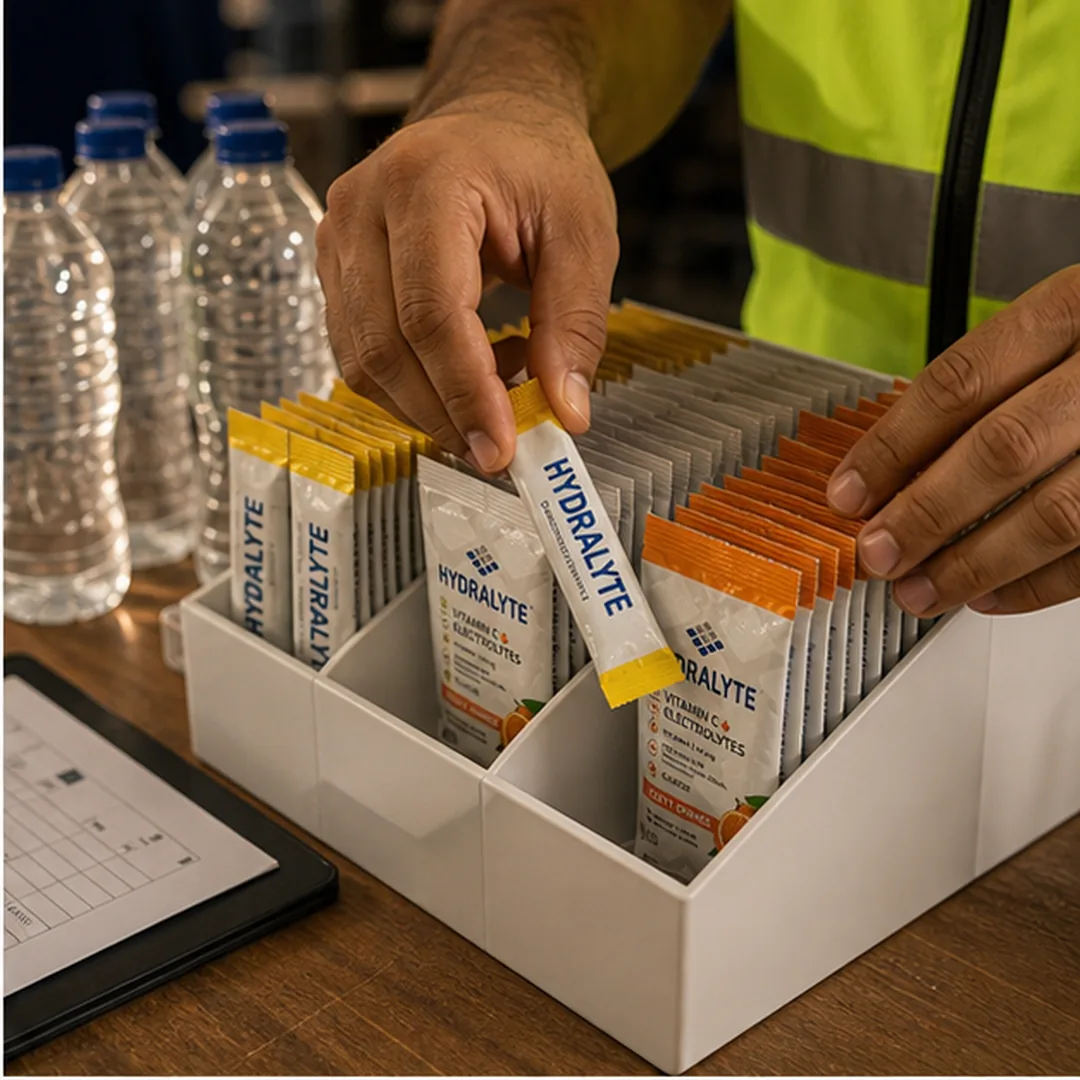
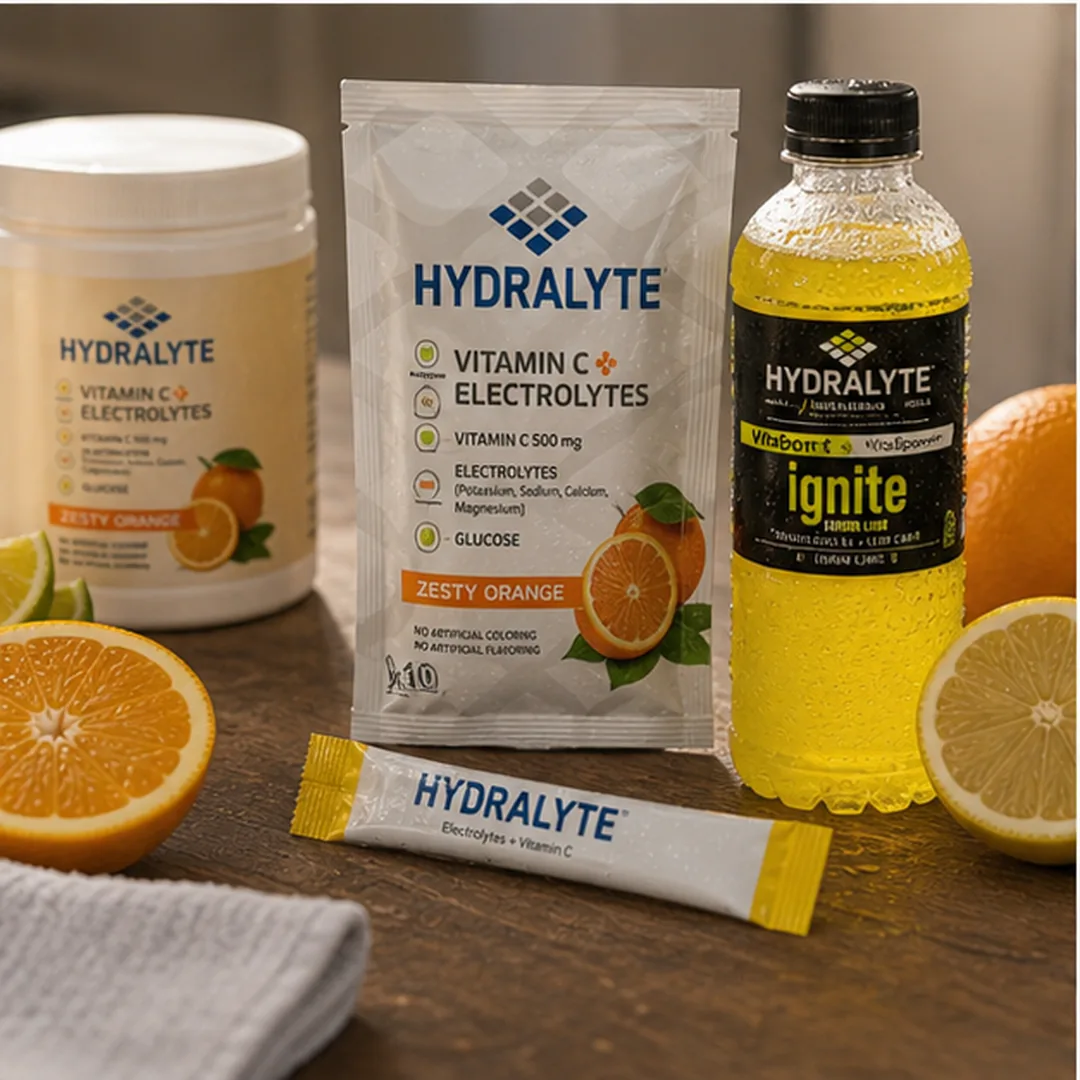
Ready-to-use formats that workers can prepare quickly are far more likely to be used than anything fussy or time-consuming, and building electrolyte replacement into existing break routines helps it become a habit rather than a chore. It is worth taking time to %find a product format that suits your workers% so that the hydration solution fits both the conditions and the preferences of the people who will rely on it. The right product, chosen with the workforce in mind, is the one that gets used consistently across an entire summer.
Align with legal requirements
A workforce hydration plan does not stand alone; it sits within the broader framework of UAE heat-safety regulation, including the summer midday break enforced by MoHRE. The plan should be designed so that compliance is built in rather than bolted on, with break schedules, rest provision and water supply all aligned to legal obligations. It is worth taking time to %check your obligations under UAE heat rules% so that the plan satisfies both the letter and the spirit of the rules.
Compliance and good practice are not in tension; they reinforce each other. The midday break exists precisely because the afternoon sun is most dangerous, so honouring it fully, and using that rest period to ensure workers cool down and rehydrate properly, turns a legal requirement into a genuine safety benefit. A plan that treats the rules as a floor to build on, rather than a ceiling to scrape past, protects workers more effectively and stands up far better to scrutiny during inspections.
Monitor, record and improve
Finally, treat the plan as a living document. Keep simple records of water provision, breaks taken, training delivered and any heat-related incidents. These records demonstrate diligence during inspections and, just as importantly, reveal where the plan is working and where it needs adjustment. Conditions vary across the summer, and a plan that is reviewed and refined will outperform one that is written once and forgotten.
It also helps to communicate the plan clearly to everyone it affects, not just to file it away with the safety paperwork. Workers should know what the plan promises them, supervisors should know what it requires of them, and senior management should understand both the obligations and the benefits. A plan that lives only in a document achieves nothing; a plan that is understood, owned and visibly backed by leadership becomes part of how the organisation operates. Reviewing it together at the start of each season keeps it relevant and signals that hydration is taken seriously from the top down.
Learn from near misses
Records are most valuable when they are actually used to improve the plan. A worker who felt faint, a cooler that ran empty, a shift where drinking targets slipped: each of these is a small lesson that, taken seriously, prevents a bigger problem later. Treating near misses as feedback rather than failures encourages honest reporting and steady improvement. Over a few seasons, this habit of learning turns a decent plan into an excellent one, finely tuned to the real conditions of your sites.
Communicating the plan across language barriers
The UAE workforce is highly international, and a hydration plan that exists only in one language will fail to reach many of the people it is meant to protect. Workers come from a wide range of countries and speak many different first languages, so the way the plan is communicated is as important as its content. A brilliantly designed policy that workers cannot understand offers little real protection on the ground.
Practical communication means using clear, simple language, supported by visual aids wherever possible. Pictures showing the signs of heat illness, simple diagrams of when and how much to drink, and colour-coded reminders can cross language barriers far more effectively than dense text. Briefings delivered in the languages workers actually speak, or through bilingual supervisors and peer leaders, ensure the message genuinely lands. Taking the trouble to communicate inclusively signals respect, improves uptake, and makes the plan work for the whole workforce rather than just those who happen to read the dominant language fluently.
Use visual cues on site
Beyond formal briefings, the everyday environment can quietly reinforce the plan. Simple posters near water points, pictorial reminders in rest areas, and visible markers showing where supplies and shade can be found all keep hydration front of mind without requiring anyone to read a policy document. These low-cost visual cues are especially valuable in a multilingual workforce, because a well-designed image speaks to everyone. Refreshing them periodically keeps them noticeable rather than fading into the background.
Coordinating hydration with the midday break
The summer midday break is a cornerstone of UAE heat safety, and a well-built hydration plan uses it deliberately rather than treating it as merely a pause in work. The break removes workers from the most dangerous afternoon heat, and that protected window is an ideal opportunity to ensure they cool down properly and rehydrate before returning to the day's tasks. Planning around the break, rather than simply observing it, multiplies its benefit.
During the break, workers should have ready access to shade, cool water and electrolyte replacement, so that the rest period actively restores them rather than passing as idle time. Supervisors can use the break to check on anyone who showed signs of strain in the morning, and to remind teams to top up before the next stretch of work. Coordinating provision, supervision and rest around this legally mandated pause turns a compliance requirement into one of the most valuable hydration moments of the day. It is a clear example of how aligning with the rules and protecting workers point in exactly the same direction.
A week-by-week timeline for the season
One of the most common reasons hydration plans underperform is timing. A plan assembled in a rush as the first heatwave arrives will inevitably miss details, and supplies ordered late may not arrive in time. Treating the summer as a season to prepare for, with a clear timeline, transforms the plan from a reactive scramble into a calm, well-rehearsed routine.
In the weeks before the heat peaks, the priorities are assessment and procurement: review the previous year's experience, update your risk tiers, secure water and electrolyte supplies, and check that cooling and shade infrastructure is ready. As the season opens, the focus shifts to training and briefing, making sure every supervisor and worker understands the plan before conditions become dangerous. Through the height of summer, the emphasis is on consistent delivery and monitoring, with regular checks that supplies are stocked, breaks are honoured and workers are drinking. As the season winds down, a short review captures what worked and what did not, feeding directly into next year's plan.
Don't let the plan lapse mid-season
Plans are often strong in June and weaker by August, as initial enthusiasm fades and routines slip under operational pressure. Guarding against this drift is a deliberate act: scheduled supply checks, periodic refresher reminders for supervisors, and a quick mid-season review all help keep standards high when fatigue and complacency are most likely to set in. The hottest, most dangerous part of the summer is precisely when the plan must be at its sharpest, so building in these mid-season touchpoints is well worth the modest effort they require.
Handling a heat emergency when it happens
Even the best hydration plan cannot guarantee that no one will ever fall ill, which is why a plan must also prepare for the moment when prevention is not enough. Knowing exactly what to do when a worker shows signs of heat exhaustion or heat stroke can be the difference between a quick recovery and a tragedy, and that knowledge needs to be in place before it is needed, not improvised in a crisis.
The response to heat exhaustion is to act immediately: move the worker to shade or a cooler area, help them rest, loosen heavy clothing, and provide cool water and electrolyte replacement while monitoring them closely. If symptoms do not improve quickly, or if there are signs of heat stroke, such as confusion, collapse, or hot skin with a very high temperature, this is a medical emergency requiring urgent professional help while the worker is cooled as rapidly as possible. The plan should set out clearly who calls for help, how, and where the nearest assistance is, so that no time is lost. Rehearsing this response, even briefly, ensures that supervisors and workers react calmly and correctly under pressure.
Make the emergency response known to everyone
An emergency procedure that lives only in the safety manager's head is of little use when seconds count. Every supervisor, and ideally every worker, should know the basic steps: recognise the signs, move the person to a cool place, begin cooling and rehydration, and summon help without delay. Posting a simple, clear procedure where workers gather, and covering it briefly in seasonal training, keeps it accessible to all. When everyone knows the plan, the response is faster and more confident, and a frightening situation is handled with far less chaos.
Budgeting and the business case
Some employers hesitate over the cost of a comprehensive hydration plan, but the economics strongly favour prevention. The direct costs, water, electrolyte products, cooling, shade and a little supervisory time, are modest and predictable. Against them sit the very real costs of getting it wrong: lost productivity from a dehydrated workforce, the disruption of a serious heat incident, potential regulatory consequences, and the human cost of a worker falling ill or worse.
Framing hydration as an investment rather than an expense makes the decision straightforward. A workforce that stays alert and capable through the summer simply gets more done, with fewer errors and fewer accidents, and that improved performance easily offsets the cost of provision. There is also a reputational dimension: organisations that visibly look after their people are more attractive to workers and clients alike. When the full picture is considered, a well-run hydration plan is one of the clearest examples of safety spending that pays for itself.
Building a culture, not just a policy
The most resilient hydration plans are those that have grown into a genuine workplace culture rather than remaining a document on a shelf. A policy tells people what to do; a culture makes them want to do it, and reminds them even when no supervisor is watching. The difference shows up on the hardest days, when a strong culture keeps workers looking out for one another and topping up steadily, while a mere policy is quietly ignored under pressure.
Culture is built through consistent example and visible commitment from the top. When managers drink water openly, take the midday break seriously, and treat a worker stopping to rehydrate as responsible rather than idle, the message spreads. When workers are encouraged to watch for signs of strain in their colleagues and to speak up without fear, hydration becomes a shared responsibility. Over time, these habits become simply how the organisation works, and that cultural foundation is far more durable than any single season's plan.
Encourage peer support
Workers are often the first to notice when a colleague is flagging, sometimes before the person themselves realises. Encouraging a culture where teammates check on one another, prompt each other to drink and raise concerns without hesitation adds a valuable human layer of protection on top of the formal plan. This kind of peer support costs nothing and can be remarkably effective, turning every worker into a quiet guardian of the group's wellbeing. Building it into briefings and reinforcing it through example helps it take root.
Tailoring the plan to your industry
While the principles of a hydration plan are universal, the practical details should reflect the specific demands of your industry. A construction site, a logistics yard and an oil and gas facility each present different patterns of heat exposure, movement and supervision, and a thoughtful plan adapts to these rather than applying a single template everywhere. The closer the plan fits the reality of the work, the more naturally it slots into the working day.
For fixed sites with concentrated, heavy labour, the focus falls on point-of-work water, ample shade and intensive supervision during the hardest tasks. For mobile or dispersed operations, the challenge is keeping supplies travelling with the work and ensuring lone or roaming workers are not overlooked. For facilities with specialised hazards and protective equipment, the plan must account for how that equipment traps heat and limits the body's ability to cool. Taking the time to understand these industry-specific patterns, and to match infrastructure, scheduling and product choice to them, is what turns a generic policy into a plan that genuinely protects your particular workforce.
Bringing the plan to life
Building a workforce hydration plan takes effort up front, but it transforms hydration from a daily worry into a dependable system. The pieces fit together: understand your people and conditions, set clear targets, provide the right infrastructure, train and assign responsibility, look beyond the work day, choose products people will use, align with the law, and keep refining the whole thing as the season unfolds.
The result is a safer, sharper and more productive workforce that can withstand even the harshest UAE summer, and an organisation that can demonstrate it takes the wellbeing of its people seriously. Heat-related illness is preventable, and a well-built hydration plan is the surest way to prevent it. Start early, keep it practical, and make the right behaviour the easy behaviour, and your teams will be ready to work safely through whatever the summer brings.
Frequently Asked Questions
What should a workforce hydration plan include?
A solid plan includes a risk assessment of roles and conditions, clear drinking schedules and electrolyte targets, reliable water and shade infrastructure, assigned supervisor responsibility, worker training, alignment with UAE heat rules, and ongoing monitoring and record-keeping. It should also look beyond the work day to encourage hydration before and after shifts. The best plans make the healthy choice the easy choice. Each element supports the others, so missing one weakens the whole.
How often should workers drink during the summer?
Rather than waiting for thirst, workers should drink small amounts at regular intervals throughout the shift. The exact frequency depends on the heat, humidity and intensity of the work, which is why tailoring the plan to your specific conditions is important. Small, frequent top-ups are absorbed better than large volumes gulped at once. Tying drinking to natural pauses in the work helps make it a reliable habit.
Who is responsible for a hydration plan on site?
Overall responsibility sits with the employer, but day-to-day ownership should be assigned to supervisors on each shift. They ensure water is available, breaks are taken, workers are drinking, and any signs of heat illness are acted on immediately. Supervisors must also be empowered to stop work when a worker is at risk. Clear ownership is what keeps a plan alive rather than gathering dust.
Does a hydration plan help with regulatory compliance?
Yes. A well-designed plan aligns water provision, rest areas and break schedules with UAE heat-safety requirements such as the summer midday break enforced by MoHRE, and the records it generates help demonstrate compliance during inspections. Treating the rules as a foundation to build on, rather than a minimum to scrape past, protects workers better and stands up to scrutiny. Compliance and good practice reinforce each other.
When should employers start preparing their hydration plan?
Well before the peak of summer. The midday break period runs from mid-June to mid-September, but conditions become demanding earlier, so the plan, supplies and training should be ready in advance. Starting early allows time to assess risks, secure supplies, brief supervisors and train workers without rushing. A plan put together at the last minute rarely covers all the practical details that matter on site.
How do I provide hydration to a mobile or dispersed workforce?
For teams spread across sites or constantly on the move, supplies need to travel with the work. Options include stocked vehicles, distributed cooling points and pre-prepared rehydration packs that workers carry with them. The guiding principle is the same as on a fixed site: keep drinks cool and close to the point of work. Planning the logistics of supply is just as important as choosing the product itself.
What are the early warning signs of heat illness to train workers on?
Early signs include unusual fatigue, headache, dizziness, nausea and muscle cramps. Heat exhaustion adds heavy sweating, weakness and clammy skin and requires the worker to stop, rest in shade and rehydrate at once. Heat stroke, where the body's cooling fails and core temperature rises dangerously, is a medical emergency needing immediate help. Training everyone to recognise this progression turns the workforce into its own early-warning system.
How can I make sure workers actually use the electrolyte products provided?
Acceptability is key. Choose formats that are quick to prepare and have a taste workers find pleasant, because a disliked product will simply be left unopened. Build electrolyte replacement into existing break routines so it becomes a habit rather than an extra task. Involving workers in product choice, and matching the format to your site conditions, dramatically improves uptake.
Should the hydration plan cover what workers do outside working hours?
It should at least raise awareness of it. A worker who arrives dehydrated, slept poorly in hot accommodation or skipped breakfast starts at a disadvantage that on-site water cannot fully fix. While employers cannot control workers' lives, encouraging pre-shift and post-shift hydration, balanced food and sensible choices about caffeine and sugary drinks all help. Treating hydration as a twenty-four-hour matter protects workers far more reliably.
How do I know whether my hydration plan is working?
Keep simple records of water provision, breaks taken, training delivered and any heat-related incidents or near misses. Reviewing these reveals where the plan succeeds and where it falls short, allowing steady improvement across the season. Honest reporting of near misses, treated as lessons rather than failures, is especially valuable. Over time this habit of monitoring and refining turns a decent plan into an excellent one.