Heat stress in the UAE workplace is not an abstract hazard reserved for the very worst days of summer. For anyone working outdoors or in hot, poorly ventilated indoor environments, it is a daily occupational risk that builds quietly through the morning and can escalate quickly into a medical emergency. The UAE's combination of extreme air temperatures, intense solar radiation and high coastal humidity makes it one of the most demanding climates in the world for physical labour.
Understanding heat stress means understanding how the body responds to that environment. When the body absorbs and generates more heat than it can shed, its core temperature rises, and the consequences range from reduced concentration and fatigue to organ damage and death. Occupational heat stress is responsible for lost productivity, errors, accidents and serious illness across the region's busiest sectors, yet it remains widely underestimated precisely because its early stages look so ordinary.
The good news is that heat stress is almost entirely preventable. With the right awareness, scheduling, rest and hydration, employers can keep their teams safe and productive through even the harshest months. The first step for any responsible employer is to %measure heat stress risk across your sites% before deciding what controls to put in place, because you cannot manage a risk you have not measured.
What heat stress is and why it happens
The human body works hard to keep its core temperature within a narrow safe range, close to 37°C. In hot conditions it does this mainly by sweating; as sweat evaporates from the skin, it carries heat away. But this cooling system has limits. When humidity is high, sweat evaporates poorly, so the body loses its main defence even though it is losing large volumes of fluid and salts. When physical work adds internal heat on top of the environmental load, the system can be overwhelmed.
Heat stress is the cumulative strain that results. It is influenced by air temperature, humidity, radiant heat from the sun and nearby surfaces, air movement, the intensity of the work, clothing and personal protective equipment, and the individual worker's fitness, hydration and health. Two people doing the same job in the same place can experience very different levels of strain, which is why blanket assumptions about who is safe are dangerous.
Workplace heat stress is best thought of as a balance sheet. On one side is the heat coming in, from the environment and from the worker's own exertion; on the other is the heat the body manages to shed. As long as the body sheds at least as much as it gains, core temperature stays safe. When the incoming heat outpaces what can be removed, even by a small margin, the surplus accumulates hour after hour until the body's tolerance is exceeded.
The role of humidity
Humidity deserves special mention because it is so often underestimated. People tend to judge heat danger by temperature alone, but a moderately hot day with very high humidity can be more dangerous than a hotter, drier one. The reason is simple: when the air is already saturated with moisture, sweat cannot evaporate efficiently, and evaporation is what actually cools the body. The sweat still pours off the worker, draining fluid and salts, but it delivers little of the cooling benefit it should.
Coastal areas of the UAE experience exactly this combination, which is why heat stress can strike even when the thermometer reading seems manageable. A worker in humid coastal conditions may feel that the day is bearable while their body is quietly losing the battle to stay cool. This is why measures such as the heat index, which combines temperature and humidity, give a far truer picture of risk than air temperature on its own.
Why the UAE climate is so demanding
To manage heat stress well, it helps to appreciate just how extreme the UAE summer is by global standards. For several months of the year, daytime temperatures regularly exceed 45°C, and in the deep summer they can climb higher still. The sun is intense and high in the sky, delivering powerful radiant heat that beats down on workers and on every surface around them, so that concrete, steel and machinery all become secondary sources of heat radiating back at the body.
Along the coast, where much of the population and a great deal of industrial activity is concentrated, this fierce heat combines with very high humidity rolling in off the Gulf. That humidity is the silent multiplier of danger, because it cripples the body's ability to cool itself through sweating just when the cooling is needed most. Inland, the heat is drier but often even hotter, presenting a different but equally serious challenge. Either way, for the worker doing physical labour in the open, the environment for much of the year is genuinely at the edge of what the human body can safely tolerate.
This is the backdrop against which every heat-safety decision is made. It is not a question of unusually bad days to be weathered occasionally; it is a sustained, predictable seasonal hazard that demands a planned, systematic response. Employers who treat the UAE summer with the seriousness it deserves protect their people; those who treat it as a normal working environment with a bit of extra heat are courting disaster.
The stages of heat illness
Heat illness is not a single event but a progression, and recognising where a worker sits on that progression is the key to responding correctly. At the mild end are heat rash and heat cramps, the painful muscle spasms caused by salt loss in heavy sweating. Next comes heat exhaustion, a more serious condition in which the body is struggling but still coping, marked by heavy sweating, weakness, dizziness, headache and nausea.
The most dangerous stage is heat stroke, which occurs when the body's temperature regulation fails entirely and core temperature climbs to a level that damages the brain and other organs. Heat stroke is a true medical emergency and can be fatal within a very short time. Understanding this progression matters because intervention at the cramp or exhaustion stage almost always prevents the slide into heat stroke, whereas a missed early warning can cost a life.
How the body tries to cope, and where it fails
It is worth pausing on the remarkable but limited ways the body defends itself against heat, because understanding them shows exactly where prevention needs to step in. When core temperature begins to rise, the body responds first by widening the blood vessels near the skin, sending more warm blood to the surface so that heat can radiate away. At the same time it ramps up sweating, betting on evaporation to carry heat off the skin.
Both responses come at a price. Diverting blood to the skin means less is available for the muscles and the brain, which is why heat makes work feel harder and thinking feel slower. Sweating heavily drains the body of fluid and salts, and if those are not replaced, blood volume falls, the heart has to work harder, and the cooling system itself begins to falter. In humid conditions, the sweat cannot even evaporate properly, so the body pays the full cost of sweating while reaping little of the cooling reward.
This is the crucial insight: the body's defences are powerful but finite, and they depend entirely on being supported. Replace the lost fluid and salts, give the body shade and rest so it is not constantly fighting incoming heat, and the defences hold. Fail to support them, and they collapse, sometimes suddenly. Every prevention measure discussed in this article is, at root, a way of helping the body's own cooling system keep working.
Recognising the signs of heat illness
Heat illness exists on a spectrum, and learning to read the early signals is the single most valuable skill a supervisor can have. Catching the problem early almost always prevents it from becoming serious.
Early and moderate signs
The first indicators are often behavioural and easy to miss: irritability, loss of concentration, slower work, and mistakes that are out of character. Physical symptoms include heavy sweating, intense thirst, headache, dizziness, muscle cramps, nausea and clammy skin. At this stage, moving the worker to shade, providing rest and offering rehydration with fluids and electrolytes usually allows a full recovery within a reasonable period of observation.
Severe warning signs
Heat stroke is a life-threatening emergency. The warning signs include confusion, slurred speech or altered behaviour, fainting or collapse, very hot skin that may be either dry or sweaty, a rapid pulse and, sometimes, a sudden absence of sweating despite the heat. A worker showing these signs needs immediate cooling and urgent medical help at the same time. Never assume someone will simply walk it off; heat stroke can cause permanent harm within minutes, and the affected worker is often the last to realise how serious their condition has become.
Common myths about heat and the body
A surprising amount of heat illness stems not from a lack of effort but from genuine misunderstandings about how the body copes with heat. Clearing up these myths is one of the cheapest and most effective forms of prevention, because once workers and supervisors understand the truth, better habits follow naturally.
The most damaging myth is that thirst is a reliable guide to hydration. It is not; by the time a worker feels thirsty, they are already meaningfully dehydrated, which is why drinking to a schedule beats drinking to thirst. A second myth is that plain water is always enough. During heavy sweating, large volumes of water without electrolytes can actually dilute the body's salts and cause problems of their own, so replacing electrolytes matters as much as replacing fluid. A third is that tough, experienced workers are somehow immune; experience helps with judgement but does nothing to change the physiology, and overconfidence can be deadly if it leads someone to ignore early symptoms.
Other persistent myths include the belief that you only need to worry on the very hottest days, when in fact humid, moderately hot days can be more dangerous, and the idea that a quick rest fully resets the body, when in reality heat load accumulates across the day and recovery takes genuine time, shade and fluid. Replacing these myths with accurate understanding turns every worker into a more reliable guardian of their own safety and their colleagues'.
Who is most at risk
Some workers carry a higher baseline risk and deserve closer attention. People who are new to the climate or returning from leave have not yet acclimatised and are particularly vulnerable in their first days back. Older workers, those with chronic conditions such as heart disease, kidney disease or diabetes, and anyone taking certain medications that affect fluid balance or temperature regulation may struggle to cope. Workers who arrive dehydrated, who skipped meals, who drank little overnight, or who slept poorly start the day already disadvantaged.
Job factors matter too. Heavy manual roles in %the construction sector%, road works, logistics yards and field operations combine high exertion with high exposure, which is the most dangerous mix. Workers in %our range of free workforce hydration tools% face the added challenge of remote sites where help may be further away and where protective clothing can trap heat. Supervisors should know which of their team members fall into higher-risk groups and check on them more often.
The danger of pushing through
A particular cultural risk on busy sites is the pressure, real or perceived, to push through discomfort. Workers may fear that asking for a break, a drink or shade will be seen as weakness or will cost them work. This is one of the most lethal dynamics in heat safety, because it suppresses exactly the early signals that prevent tragedy. Employers must actively dismantle that pressure, making it clear at every level that stopping when unwell is expected, respected and protected, never penalised.
The hidden costs of heat stress to a business
Beyond the immediate human harm, heat stress imposes a string of costs on a business that are easy to overlook because they rarely appear on a single invoice. The most visible is the dramatic incident, the worker hospitalised or worse, which can halt operations, trigger investigations and inflict lasting reputational damage. But the steady, low-level drain of unmanaged heat is often larger in total even though it never makes the news.
Heat-strained workers are slower, less accurate and more prone to mistakes and accidents, so productivity falls and rework rises across the hottest hours. Fatigue accumulates over the season, pushing up absenteeism and turnover as workers tire of conditions that feel unsafe or uncared-for. Each departure carries the cost of recruitment, induction and the lost experience of someone who knew the site. Minor heat illnesses that never become emergencies still cost hours of lost work and supervisor time. Taken together, these quiet losses make a compelling financial case for prevention quite apart from the moral and legal one.
The reassuring flip side is that the investment required to prevent these costs is modest. Shade, reliable cool water, electrolyte provision, sensible scheduling and a few hours of training cost little compared with the cumulative drag of heat on an unmanaged operation, let alone the price of a serious incident. Prevention is not just the right thing to do; it is the economical thing to do.
Practical prevention that works
Effective heat-stress prevention layers several controls together rather than relying on any single measure. The most reliable programmes share a few common features.
- Schedule the most demanding tasks for the cooler parts of the day and respect mandated rest periods during peak heat.
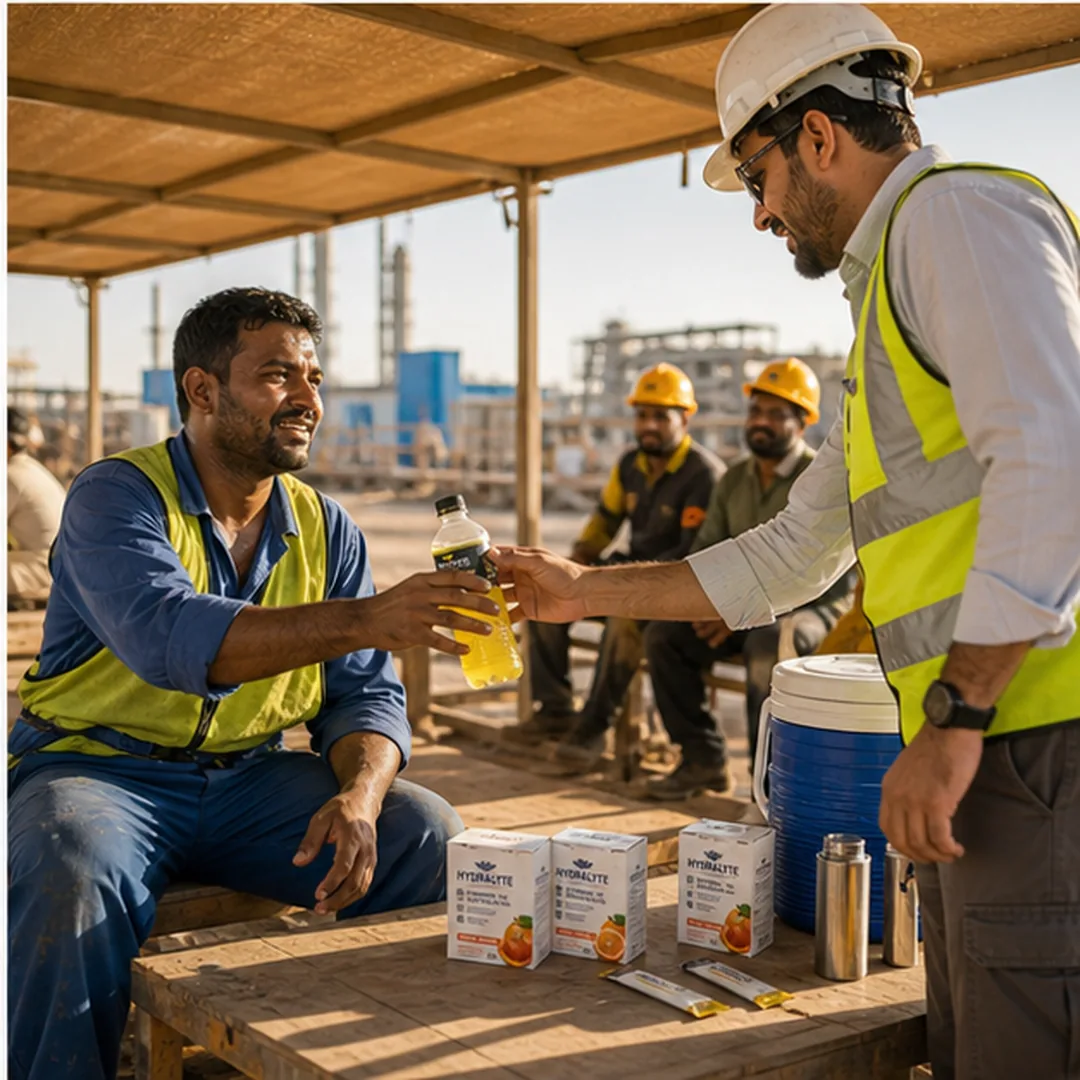
- Provide shaded, ventilated rest areas and a constant supply of cool drinking water alongside proper electrolyte rehydration.
- Build in acclimatisation, gradually increasing workload over the first week for new or returning workers.
- Train workers and supervisors to recognise symptoms early and to act without hesitation.
- Use a buddy system so colleagues watch one another for warning signs that an individual may not notice in themselves.
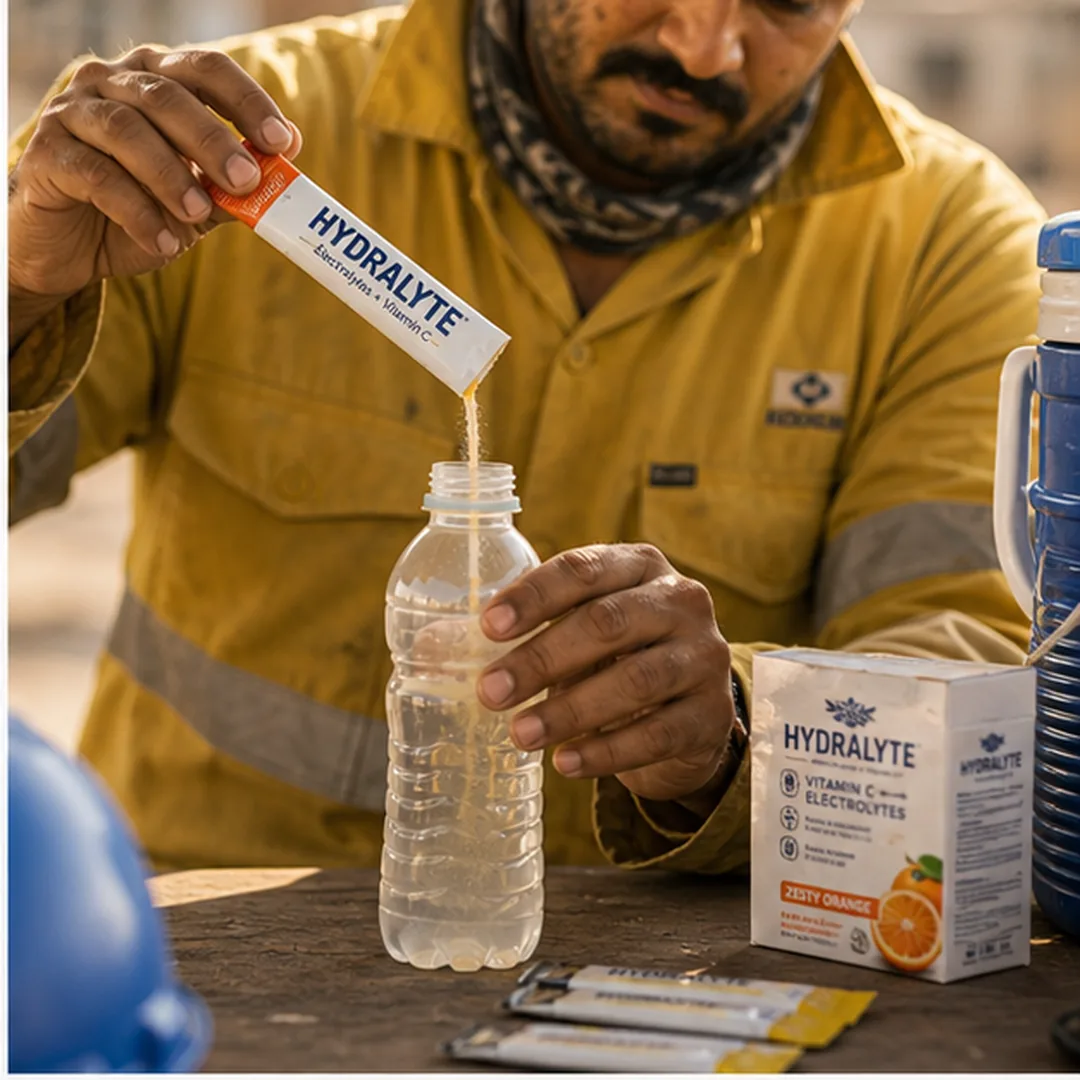
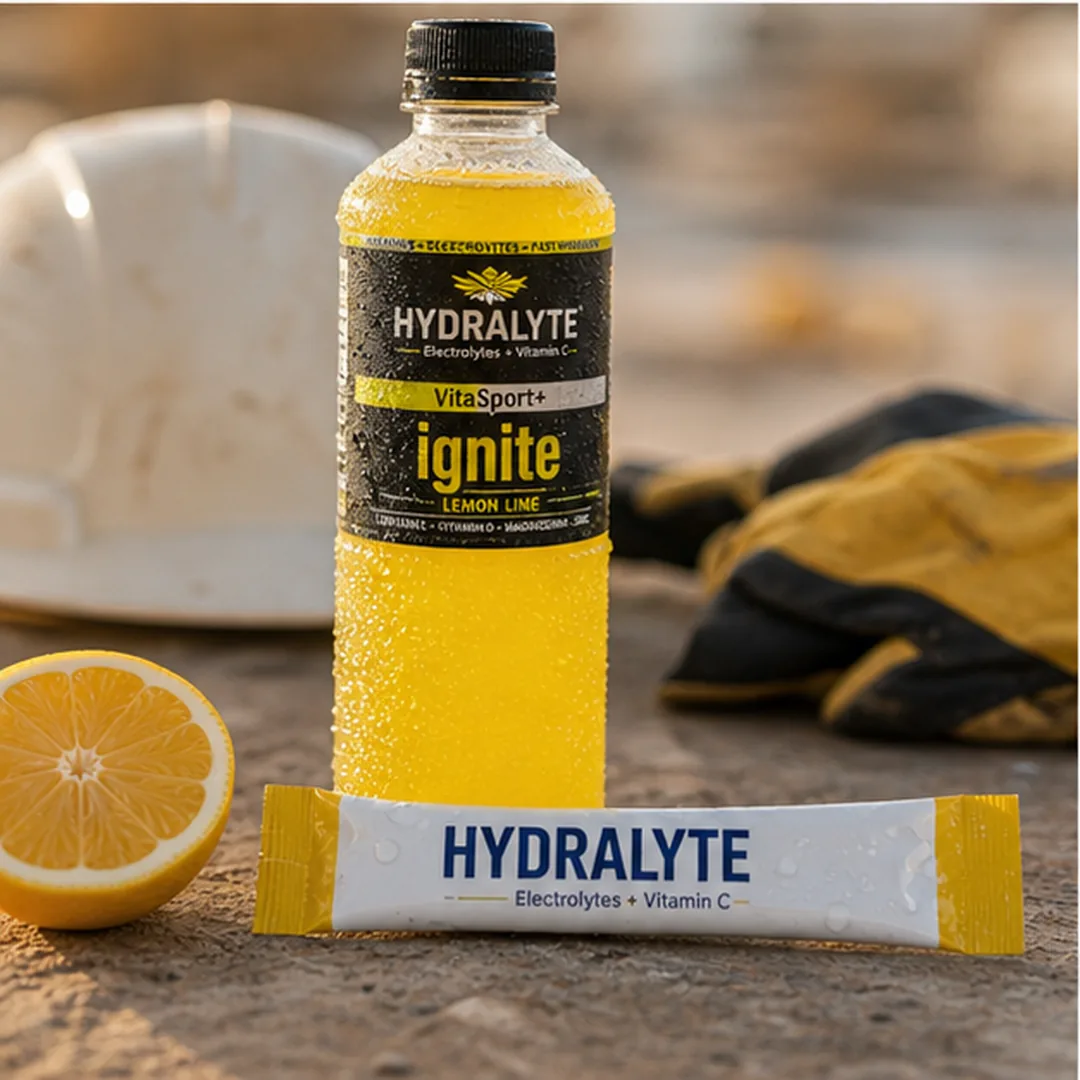
Hydration deserves particular emphasis. By the time a worker feels thirsty, they are already behind, and plain water alone does not replace the salts lost in heavy sweat. Encouraging regular, scheduled drinking with electrolyte support keeps workers functioning safely for longer. Employers who are unsure what to provide can %oil and gas field operations% so that the choice is matched to the intensity of the work and the conditions on site rather than left to guesswork.
Engineering and administrative controls
Beyond hydration and rest, there are practical engineering and administrative steps that reduce the heat load itself. Providing shade structures and canopies over fixed work areas, using reflective surfaces, positioning fans or misting systems where appropriate, and rotating workers between hotter and cooler tasks all chip away at the cumulative strain. Light, breathable clothing that still meets safety requirements helps the body shed heat, while scheduling site deliveries and meetings to minimise time spent waiting in the sun removes avoidable exposure. None of these on their own is a complete answer, but together they meaningfully lower risk.
The central role of hydration
Hydration is so important to heat-stress prevention that it deserves to be understood properly rather than treated as simply having water on site. During heavy work in UAE summer conditions, a worker can lose several litres of sweat in a shift, and that sweat carries away sodium and other electrolytes that the muscles and nervous system depend on. Replacing the water but not the salts leaves the worker vulnerable to cramps, weakness and, in extreme cases, dangerous electrolyte imbalances.
This is why proper electrolyte rehydration matters. Drinking to a schedule rather than to thirst, in modest amounts at regular intervals, keeps fluid levels topped up without overwhelming the stomach. Pairing that water with electrolytes ensures the body actually retains the fluid and maintains the balance it needs to keep cooling itself effectively. For employers managing large or dispersed teams, it is worth taking the time to %plan hydration for your whole workforce% so that provision is matched to headcount, work intensity and site conditions rather than being left to chance.
It is also worth noting that hydration is a 24-hour matter, not just a working-hours one. A worker who arrives in the morning already dehydrated from the previous day, from a salty diet, or from insufficient overnight intake begins the shift at a disadvantage that no amount of mid-shift water can fully correct. Encouraging good hydration habits around the clock is part of a genuinely protective programme.
Measuring and monitoring heat risk
Good prevention begins with measurement, because heat risk changes hour by hour and site by site. Relying on a glance at a weather app or a general sense that it feels hot is not enough on a site where conditions vary between an exposed yard, a shaded bay and an enclosed plant room. The more precisely an employer can gauge the actual strain on workers, the better the decisions about when to push, when to rest and when to stop.
The most useful metric for occupational heat is one that combines temperature, humidity, radiant heat and air movement rather than air temperature alone, because as we have seen, humidity and direct sun can make a moderate temperature genuinely dangerous. Many employers set internal trigger levels: as conditions cross defined thresholds, additional controls switch on automatically, such as more frequent rest breaks, mandatory hourly hydration, increased supervision of high-risk workers, and ultimately the suspension of the most strenuous tasks.
Monitoring should also include the workers themselves. Encouraging people to report how they feel, watching for the early behavioural signs of strain, and paying attention to who is struggling all turn the <a href="/industries">workforce</a> into a living sensor network. A site that monitors both the environment and its people, and acts on what it learns, is far safer than one that simply hopes the day will pass without incident.
How to respond when heat illness strikes
Even with strong prevention, employers must be ready to respond quickly, because the speed of the response often determines the outcome. Every site should have a simple, well-rehearsed plan that everyone understands. For early symptoms such as dizziness, headache or cramps, the response is to stop work immediately, move the worker into shade or a cool area, loosen heavy clothing or equipment, and provide cool fluids with electrolytes while they rest and recover under observation.
For the severe warning signs of heat stroke, the priority is rapid cooling and urgent medical help at the same time. Move the person to the coolest available place, remove excess clothing, and cool them aggressively with water, wet cloths, ice packs to the neck, armpits and groin, or fanning while emergency assistance is summoned. Do not wait to see whether they improve. Because confusion is one of the hallmark signs, an affected worker may insist they are fine even as their condition deteriorates, so colleagues and supervisors must be willing to act on their behalf.
Knowing in advance where the nearest help is, who to call and how to direct them to the exact location on a large or remote site can save crucial minutes. A response plan that exists only on paper is not enough; it should be rehearsed so that when a real emergency comes, everyone acts quickly and calmly rather than losing precious time working out who does what.
The long-term health effects of repeated heat exposure
Most discussion of heat stress focuses on the acute emergency, the worker who collapses on a hot afternoon, and rightly so, because that is where lives are most immediately at stake. But there is a quieter, longer-term dimension that deserves attention. Repeated episodes of significant heat strain, year after year, can take a cumulative toll on the body, particularly on the kidneys, which bear much of the burden of managing fluid and salt balance during heavy sweating.
Workers who are chronically under-hydrated and repeatedly pushed into heat strain over many summers may face elevated risks to their long-term health that no single day's data would reveal. This is one more reason why proper, consistent hydration and disciplined heat management are not just about surviving the worst afternoons but about protecting the people who do this work over the span of their careers. An employer who keeps workers well-hydrated and well-rested through every summer is investing in their durable health, not merely avoiding an immediate incident.
It also reframes hydration as a daily, year-round habit rather than an emergency response. The body that starts each day properly hydrated and finishes it replenished copes far better with cumulative strain than one that lurches from dehydration to crisis and back. Building that steady rhythm into the working culture pays off over months and years, not just hours.
Heat stress across different UAE sectors
While the underlying physiology of heat stress is the same everywhere, the way it shows up varies by sector, and tailoring controls to the specific work makes prevention far more effective. On construction sites, the combination of heavy exertion, full sun, reflective surfaces and protective equipment creates intense strain, and the constantly changing layout of a live site means shade and water points must be moved and maintained as the work progresses.
In logistics and yard operations, the danger often hides in plain sight. Drivers and loaders move between cool cabs or shaded bays and blazing open yards, and the intermittent nature of the exposure can mask how much heat load is accumulating. Vehicle cabs left in the sun can become ovens, and time spent waiting for loading or paperwork in the open adds avoidable strain. In oil and gas and other field operations, remoteness compounds every risk: help is further away, protective clothing can trap heat, and lone or small-team working means early warning signs may go unnoticed.
Understanding these differences allows an employer to put the right controls in the right places rather than applying a generic checklist. The principles of measure, schedule, shade, rest, hydrate and respond remain constant, but their application should reflect the real conditions of each kind of work.
Designing a practical heat-stress management plan
All the individual measures discussed here work best when they are pulled together into a single, written heat-stress management plan that everyone on site understands. A plan turns good intentions into a repeatable system that does not depend on any one person remembering to do the right thing on a busy day. It need not be long or bureaucratic; what matters is that it is clear, practical and actually used.
A sound plan defines the trigger conditions at which extra controls switch on, sets out the scheduling rules for demanding work, specifies the shade, water and electrolyte provision required, and assigns clear responsibilities so that everyone knows who does what. It includes the acclimatisation approach for new and returning workers, the recognition and first-response procedures for heat illness, and the emergency escalation steps with the relevant contacts and directions. Finally, it sets out what gets recorded, so that the organisation can learn from each season and demonstrate its diligence.
- Defined heat trigger levels and the controls that activate at each.
- Scheduling rules that move strenuous work to cooler hours.
- Shade, cool water and electrolyte provision matched to headcount and conditions.
- An acclimatisation programme for new and returning workers.
- Recognition, first response and emergency escalation procedures.
- Record-keeping so the plan improves year on year.
Crucially, the plan must be communicated in the languages the workforce speaks and reinforced through briefings, signage and the daily example set by supervisors. A plan that lives in a folder protects no one; a plan that lives in the daily habits of the site protects everyone. Reviewing it at the end of each summer, with input from the supervisors and workers who lived it, keeps it sharp and grounded in reality.
Building heat awareness into everyday work
The strongest defence against heat stress is a culture in which everyone takes it seriously, every day, not just during a heatwave. Short daily briefings, visible reminders to drink, and supervisors who lead by example all reinforce the message. Many employers find it helpful to draw on %compare electrolyte options for your teams% to structure their planning, set hydration targets and keep the topic front of mind throughout the season.
It is worth remembering that a strong heat-safety culture pays dividends beyond the obvious. Workers who feel genuinely looked after are more engaged, more loyal and more willing to flag problems early rather than push through and hope for the best. Lower rates of illness and incident mean fewer disruptions to schedules and a steadier, more predictable operation through the hottest months. The investment in awareness, training and proper provision is modest set against these returns.
Heat stress is a serious occupational risk in the UAE, but it responds remarkably well to preparation. With early recognition, sensible scheduling, proper rest and disciplined hydration, employers can keep their workforce safe and productive even through the most extreme summer conditions. The climate cannot be changed, but the way an organisation prepares for it can make all the difference between a hazardous summer and a safe one.
Frequently Asked Questions
What is the difference between heat exhaustion and heat stroke?
Heat exhaustion is a serious but recoverable condition marked by heavy sweating, dizziness, headache, weakness and nausea, and it usually responds to rest, shade and rehydration. Heat stroke is a medical emergency involving confusion, very high body temperature and potential loss of consciousness, and it requires immediate aggressive cooling and urgent medical care. The difference can be a matter of minutes, which is why early recognition is vital.
How quickly can heat stress become dangerous?
It varies with conditions and the individual, but symptoms can escalate within minutes once the body can no longer cool itself. This is why early recognition and quick action are so important, and why supervisors should never wait to see whether a worker improves on their own. The cumulative heat load built up over a morning means the afternoon can become critical very fast.
Can fit, experienced workers still suffer heat stress?
Yes. Fitness helps, but even experienced workers are at risk if they are dehydrated, returning from leave without re-acclimatising, working through the hottest hours, or pushing too hard. Everyone working in extreme heat needs the same protective measures, and overconfidence can itself be a hazard if it leads someone to ignore early symptoms.
Why isn't drinking water enough to prevent heat stress?
Water replaces fluid but not the electrolytes lost in heavy sweat, and drinking large amounts of plain water during heavy sweating can dilute the body's remaining salts and create its own problems. Combining cool water with proper electrolyte rehydration, alongside rest and shade, gives far better protection during prolonged work in the heat. Drinking to a schedule rather than waiting for thirst is also more effective.
What are the very first signs of heat stress to watch for?
The earliest signs are often subtle and behavioural: irritability, poor concentration, slower work and uncharacteristic mistakes, alongside heavy sweating, thirst, headache, dizziness and muscle cramps. Spotting these early markers and acting on them promptly is the most reliable way to stop a minor problem from becoming a medical emergency.
How does humidity make heat stress worse?
High humidity prevents sweat from evaporating efficiently, and evaporation is the body's main cooling mechanism. In humid coastal conditions the worker still loses fluid and salts through sweating but gains little of the cooling benefit, so the body overheats even when the air temperature seems only moderately high. This is why a humid day can be more dangerous than a hotter, drier one.
What should I do immediately if a worker shows signs of heat stroke?
Treat it as a life-threatening emergency. Move the person to the coolest place available, remove excess clothing, and cool them aggressively with water, wet cloths, ice packs to the neck, armpits and groin, or fanning, while calling for urgent medical help at the same time. Do not wait to see if they recover, and do not be reassured if they insist they are fine, as confusion is itself a symptom.
How long does it take a worker to acclimatise to UAE heat?
Acclimatisation typically develops over a period of one to two weeks of gradual, repeated exposure, during which the body becomes more efficient at sweating and at conserving salts. Workers new to the climate or returning from leave should have their workload increased gradually over their first week, and they remain at elevated risk until they have fully adapted.
What role do supervisors play in preventing heat stress?
Supervisors are the front line of prevention. They schedule demanding work for cooler hours, enforce rest and hydration breaks, watch for early warning signs, pay extra attention to higher-risk and un-acclimatised workers, and create a culture where stopping when unwell is expected rather than penalised. A well-trained, attentive supervisor prevents the majority of incidents before they ever become serious.
Is heat stress only a risk for outdoor workers?
No. While outdoor workers face the greatest exposure, anyone working in a hot, poorly ventilated indoor environment, such as a warehouse, plant room or vehicle cab, can also develop heat stress. The same principles of ventilation, rest, hydration and awareness apply, and mixed roles that move between indoor and outdoor work need particular attention to cumulative heat load.