For anyone managing a <a href="/industries">workforce</a> under the UAE summer sun, understanding the stages of dehydration is not a clinical nicety, it is a frontline safety skill. Dehydration rarely announces itself with a single dramatic symptom. Instead, it creeps in gradually, eroding concentration, coordination and judgement long before a worker collapses. By the time obvious signs of dehydration appear, the body has already lost a meaningful share of the fluid it needs to regulate temperature and keep the cardiovascular system stable.
Outdoor workers in the Emirates face a particularly demanding combination of high ambient temperatures, intense solar radiation and physically taxing tasks. Recognising dehydration as a progression, rather than an on-off event, allows supervisors and colleagues to intervene at the right moment, when a short rest and rehydration can prevent a far more serious incident. The difference between a minor pause and a hospital visit often comes down to whether someone noticed the early signs and acted.
This guide walks through the stages of dehydration as they actually appear in the field, from the first easily-missed warnings to a full heat emergency. It explains what to watch for, how to respond at each stage, and why the tidy textbook progression often blurs in real working conditions. Most importantly, it is written so that supervisors, safety officers and workers themselves can use it to keep people safe through the hottest months of the year.
What dehydration actually is
Dehydration occurs when the body loses more fluid than it takes in, leaving it without enough water to carry out its normal functions. It sounds simple, but the consequences ripple through almost every system in the body. Water makes up a large share of our body weight and is essential for regulating temperature, transporting nutrients, cushioning joints and maintaining the volume and pressure of the blood. When fluid runs short, all of these processes begin to falter.
Importantly, dehydration is not only about water. Sweat carries away dissolved minerals known as electrolytes, chiefly sodium but also potassium, chloride and others. These electrolytes govern how fluid is distributed between the inside and outside of cells, how nerves fire and how muscles contract. When a worker loses litres of sweat over a long shift, they are losing both water and salt, and replacing only one of the two leaves the body out of balance. This is why understanding dehydration means thinking about fluid and electrolytes together, not water in isolation.
The body has some ability to defend itself, concentrating urine to conserve fluid and triggering thirst to prompt drinking. But these defences are limited and slow, and in the face of the heavy, sustained sweat losses typical of UAE outdoor work they are quickly overwhelmed. Once losses outpace intake, the stages of dehydration begin to unfold.
Why dehydration matters more in the UAE
The human body cools itself primarily through sweating, and in the Gulf summer sweat rates can be extraordinarily high. As fluid leaves the body, blood volume drops, the heart works harder to circulate what remains, and the body's ability to shed heat declines. This is why dehydration and heat illness are so tightly linked: a dehydrated worker overheats faster, and an overheating worker dehydrates faster. The two reinforce each other in a dangerous loop that can spiral quickly in the right conditions.
The UAE climate makes this loop especially perilous. Summer temperatures regularly exceed 45 degrees Celsius, and on the coast the humidity is so high that sweat struggles to evaporate, robbing the body of its main cooling mechanism just when it is needed most. The largely expatriate workforce, much of it engaged in outdoor manual labour, is frequently exposed to these conditions for long shifts.
Crucially, thirst is a lagging indicator. Most people only feel genuinely thirsty once they are already mildly dehydrated. For physically active outdoor work, waiting for thirst is waiting too long. Employers can get ahead of this by assessing site conditions and individual risk using a %free heat stress assessment tool%, which helps translate weather and workload into a practical sense of how aggressively hydration breaks need to be scheduled across the day.
The dehydration and heat illness loop
It is worth dwelling on the vicious circle that links dehydration and heat illness, because it explains why outdoor workers can deteriorate so suddenly. A worker who falls behind on fluids has less blood volume available to carry heat to the skin, so their core temperature rises faster. A rising core temperature drives heavier sweating, which accelerates fluid loss, which further reduces the body's cooling capacity. Each turn of the loop tightens the next.
Left unchecked, this spiral can carry a worker from feeling slightly tired to a genuine medical emergency in a surprisingly short time, particularly on a humid coastal day when sweat barely evaporates. Breaking the loop early, while it is still gentle, is far easier than arresting it once it has gathered momentum. This is the single most important reason to act on the earliest, mildest signs rather than waiting for something dramatic to force a response.
The early stage: mild dehydration
In the earliest stage, the warning signs are easy to dismiss. A worker may feel thirsty, notice a dry mouth, or pass darker, more concentrated urine. Energy dips slightly and there may be a mild headache. None of these feel alarming, which is precisely the problem, because productivity and mood drop before anyone recognises a safety issue. A worker at this stage will usually carry on, unaware that their performance and their margin of safety are already shrinking.
At this point the remedy is simple and effective: a shaded break, steady fluid intake and, where sweating has been heavy, replacement of the electrolytes lost in sweat rather than plain water alone. Catching dehydration here is the single most cost-effective intervention an employer can make, because it requires only minutes and prevents hours of lost output or a clinic visit later. It also helps to know roughly how much an individual needs, and you can %estimate an individual worker's fluid needs% so that fluid targets are realistic rather than guesswork.
What to watch for in yourself and colleagues
- Persistent thirst and a dry or sticky mouth
- Dark yellow urine or noticeably reduced trips to the toilet
- Mild headache, fatigue or irritability
- Slightly reduced concentration on routine tasks
- A faint feeling of being "off" without an obvious cause
The middle stage: moderate dehydration
If fluid losses continue, the symptoms become harder to ignore. A worker may feel dizzy or light-headed, develop a stronger headache, experience muscle cramps, and notice their heart beating faster. Sweating may continue heavily, or in some cases begin to taper as the body runs short of fluid to spare. Coordination and decision-making suffer, which is especially hazardous around moving vehicles, scaffolding or heavy plant.
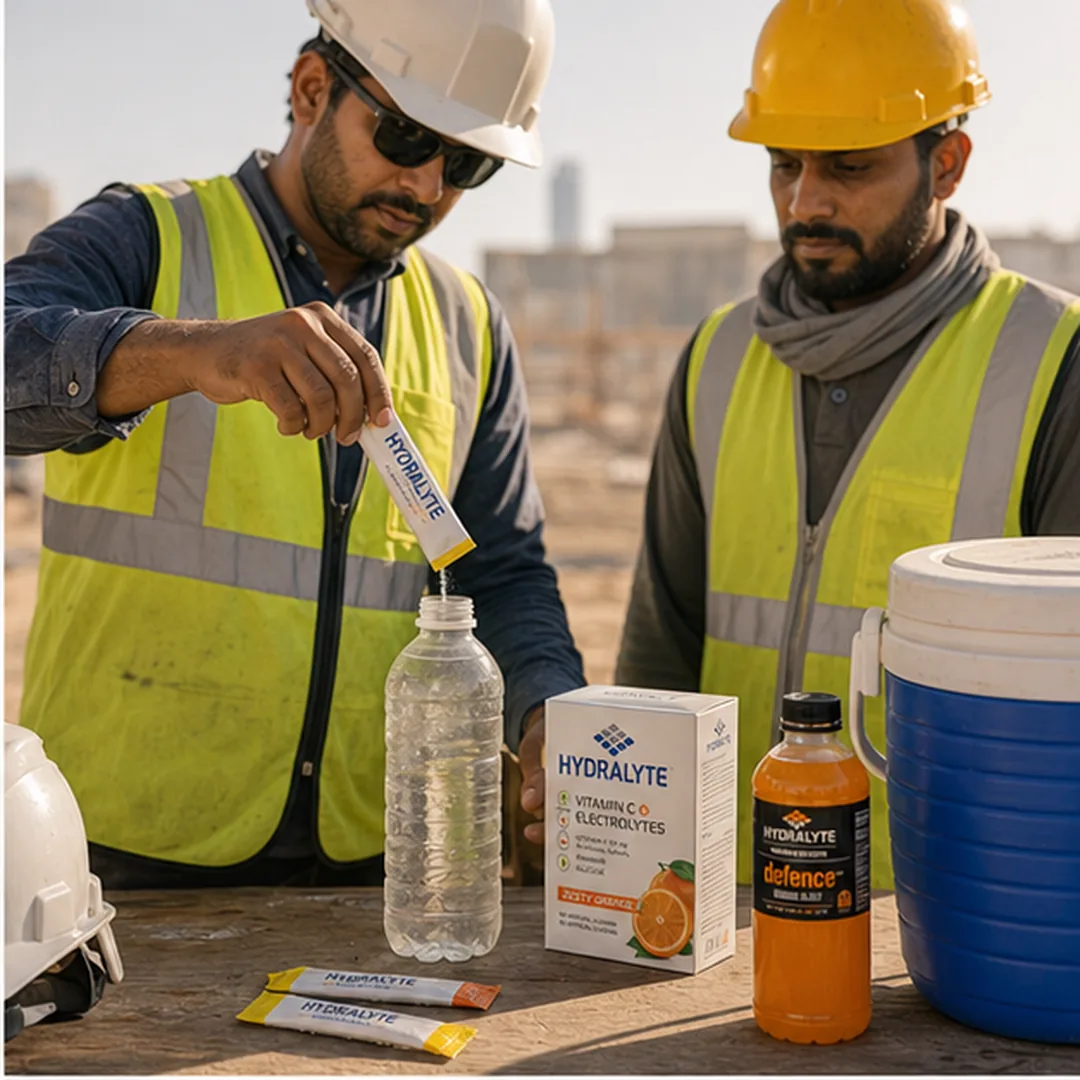
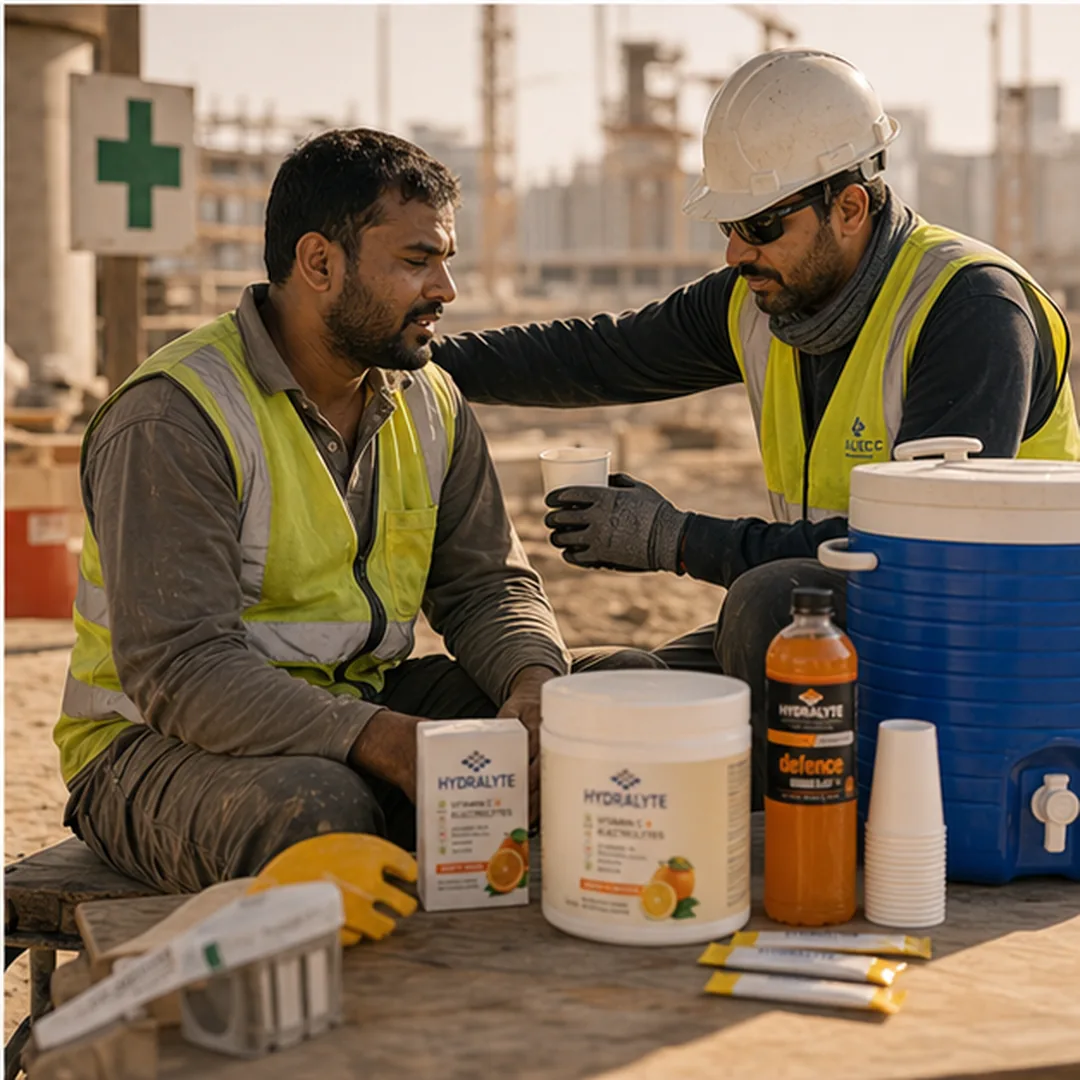
Moderate dehydration demands prompt, deliberate action: move the person into shade or air conditioning, have them stop work, loosen heavy clothing and provide an electrolyte drink in measured sips. Drinking too fast can cause nausea, so steady, repeated sips work better than gulping. This stage is common among %workers on construction sites%, where physical exertion, protective gear and direct sun combine to push fluid losses well beyond what casual drinking can replace.
It is important to recognise that a worker at the moderate stage should not simply be sent back to work after a quick drink. The body needs time to absorb fluid and to bring its core temperature back down, and rushing the recovery often means the worker slides straight back into trouble within the hour. A proper rest in a cool place, with steady rehydration over fifteen to thirty minutes and a check that symptoms have genuinely eased, is far safer than a token pause. If the worker does not improve, or worsens, the situation should be treated as heading towards the severe stage.
Choosing what to drink at this stage
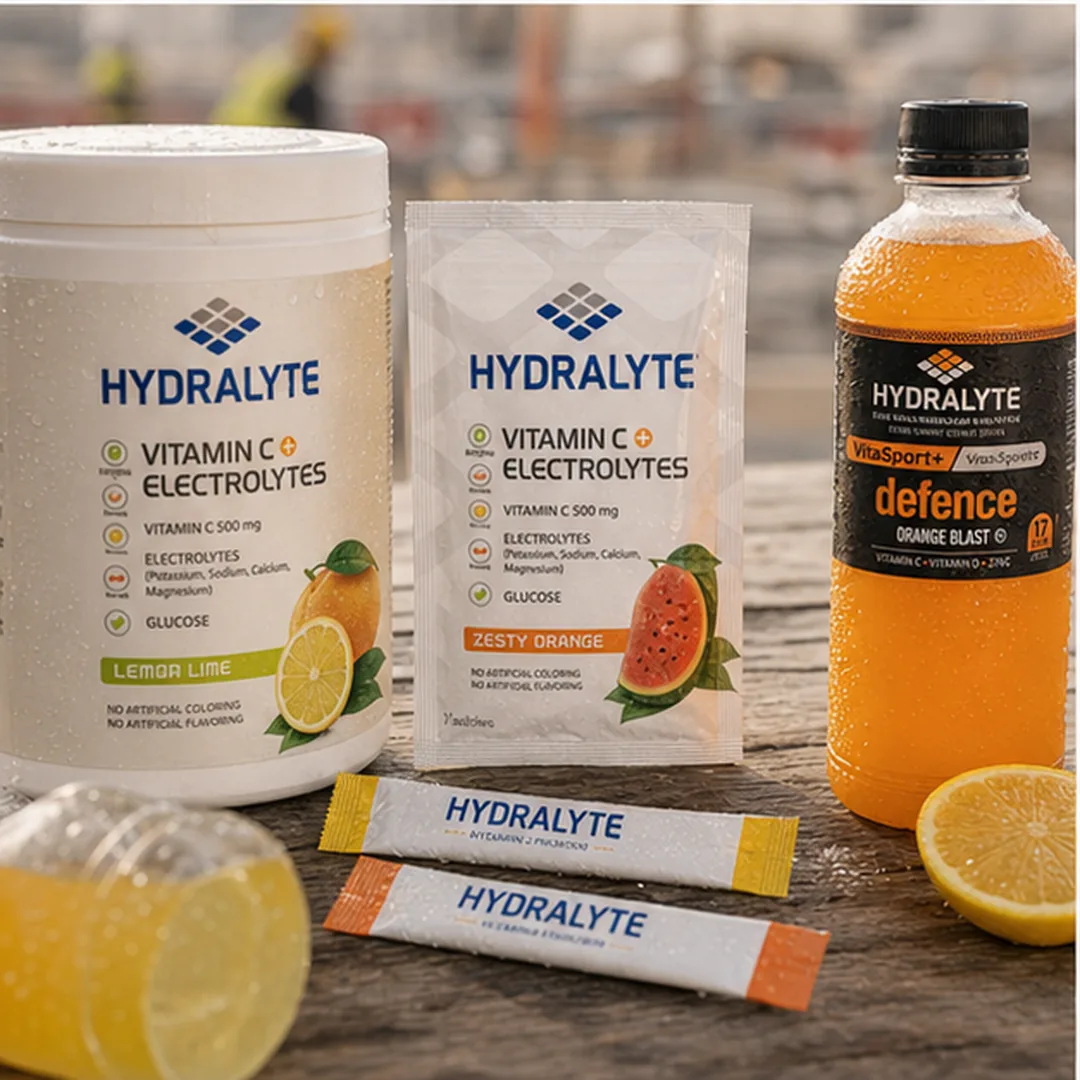
By the moderate stage, plain water alone is rarely the best choice. The body has lost significant sodium and other minerals, and replacing only water can leave the worker unable to retain the fluid. An appropriately balanced electrolyte solution restores both fluid and salts, helping recovery happen faster. Because products vary widely in their formulation, it is worth taking time to %compare electrolyte solutions side by side% so that the option you keep on site genuinely matches the heavy sweat losses your workers experience rather than being chosen on taste or price alone.
The danger stage: severe dehydration and heat illness
Severe dehydration is a medical emergency and frequently overlaps with heat exhaustion or heat stroke. Signs include confusion, slurred speech, rapid breathing, a weak but fast pulse, very little or no urine, and in the most serious cases, fainting or the alarming sign of hot, dry skin where sweating has stopped altogether. A worker at this stage may not be able to recognise their own condition, so colleagues and supervisors must act on their behalf without waiting for the person to ask for help.
The response should be immediate: call for medical help, move the person to the coolest available place, cool them actively with water and airflow, and, only if they are fully conscious and able to swallow safely, offer fluids. Never give fluids to someone who is confused or semi-conscious, as they may choke. Severe heat illness can escalate within minutes, so no one should ever be left alone or told to walk it off. Heat stroke in particular can be fatal or cause lasting organ damage, and every minute of delay matters.
Distinguishing heat exhaustion from heat stroke
Two conditions often overlap with severe dehydration, and knowing the difference shapes the response. Heat exhaustion is the body's warning that it is struggling to cope: the worker is typically pale, sweating heavily, weak, dizzy and nauseous, but still mentally aware. It is serious and demands immediate cooling and rest, but with prompt action most people recover well.
Heat stroke is a different order of emergency. It occurs when the body's temperature control fails altogether, and the defining feature is a change in mental state, including confusion, disorientation, agitation, slurred speech or loss of consciousness. The skin may be hot and, in classic cases, dry, because sweating has stopped, though in exertional heat stroke the worker may still be sweating. Heat stroke is life-threatening and requires emergency medical care alongside aggressive cooling without a moment's delay. When in doubt, treat any worker with confusion or collapse as a heat-stroke emergency and call for help.
Why the stages blur together in real conditions
On paper the stages of dehydration look tidy and sequential. In the field they rarely behave so neatly. A worker who started the day already slightly behind on fluids, perhaps from a poor night's sleep, a skipped breakfast or a previous hot shift they never fully recovered from, can move through the early stage and into moderate dehydration far more quickly than a colleague who began the day well hydrated. Caffeine, certain medications, age, fitness and a heavy workload all shift the timeline, so two people doing identical tasks side by side may present at quite different stages within the same hour.
This is why supervisors should treat the stages as a guide to severity rather than a strict timetable. The practical question is never simply which stage a person is at but whether they are getting better or worse, and how fast. A worker who looks merely tired but is deteriorating quickly warrants more concern than one who is uncomfortable but stable. Watching the direction of travel, not just the snapshot, is what separates a near miss from a serious incident.
The role of recovery between shifts
Dehydration is also cumulative across days. A worker who never quite replaces their losses at the end of one shift carries a deficit into the next, starting each morning a little further behind. Over a hot week this rolling shortfall can build into chronic mild dehydration that leaves a person permanently closer to the moderate stage and quicker to tip into trouble. Encouraging proper rehydration after work, not just during it, and respecting rest days as genuine recovery time helps reset that balance and keeps the whole crew further from the danger zone.
Simple self-checks workers can use
Because dehydration impairs the very judgement needed to recognise it, workers benefit from simple, objective checks they can apply to themselves without relying on how they feel. The most useful is urine colour: pale straw indicates good hydration, while dark yellow or amber signals that the body is conserving fluid and needs more. A quick glance after each break gives every worker a private, reliable gauge of their own status.
Two other rough checks help. Noticing how often you are passing urine matters, since infrequent visits suggest the body is short of fluid. And paying attention to early symptoms honestly, rather than dismissing a headache or a dip in energy as just tiredness, lets a worker act while the remedy is still a simple drink and a few minutes in the shade. Teaching these checks turns every worker into their own first line of defence.
Who is most at risk
While anyone working outdoors in the UAE summer is exposed, some workers face higher risk than others. New arrivals who have not yet acclimatised to the heat are particularly vulnerable in their first week or two, before their bodies adapt to sweating more efficiently. Older workers, those carrying extra weight, anyone recovering from illness, and people taking certain medications such as some blood pressure drugs are all more prone to dehydration. Workers who have had a heat-related episode before are also at greater risk of another.
Different industries carry different risk profiles too. The relentless sun and heavy lifting of building work is one obvious example, but the same pressures apply elsewhere, including %the demands faced by logistics crews% who load and unload vehicles, drive without proper cooling, or work on hot tarmac yards. Recognising which of your workers and which tasks carry the highest risk lets you target your attention and provision where it will do the most good, rather than spreading effort evenly across a workforce with very uneven exposure.
How to rehydrate properly once symptoms appear
Spotting dehydration early is only half the battle; responding well is the other half. The instinct to hand a struggling worker a large bottle of cold water and send them on their way is understandable but often counterproductive. Drinking a big volume quickly can cause bloating and nausea, and if the worker has lost a great deal of salt, flooding their system with plain water may actually worsen the imbalance. The body absorbs fluid best when it arrives steadily and carries the right amount of sodium to help it cross from the gut into the bloodstream.
The practical method is to move the worker into shade, have them rest, and give measured sips of an appropriately balanced electrolyte solution over fifteen to thirty minutes rather than a single large drink. For the milder stages this, combined with a proper cool-down, is usually enough to restore the worker. For moderate cases the same approach applies but with closer monitoring and a longer rest. For severe cases, as covered above, fluids take second place to active cooling and emergency medical care, and nothing should be given by mouth to a worker who is confused or drowsy.
Why electrolyte balance matters in recovery
The reason electrolytes feature so prominently is that they govern how the body holds on to fluid. Sodium in particular drives the absorption of water from the gut and helps the body retain it rather than passing it straight out as urine. A worker who has sweated heavily for hours and then drinks only water can find their blood sodium diluted, which not only fails to rehydrate them properly but can, in extreme cases, become dangerous in its own right. A balanced solution closes this gap, which is why comparing the formulation of the products kept on site is a worthwhile exercise for any safety team rather than a detail to be left to chance.
Common myths that put workers at risk
Several persistent misconceptions undermine good hydration practice, and dispelling them is part of keeping a workforce safe. The first is the belief that a tough, experienced worker does not need to fuss about water and can simply push through the heat. Experience helps with acclimatisation, but no amount of toughness changes the physiology: an experienced worker who is dehydrated is just as vulnerable to heat stroke as a novice, and sometimes more so because they are inclined to ignore the warning signs.
A second myth is that drinking more water is always better. Beyond a certain point, drinking large volumes of plain water without replacing salt can actually be harmful, diluting the body's sodium and, in rare cases, causing serious illness. The aim is balance, not sheer volume. A third misconception is that feeling fine means being hydrated. Because thirst lags behind actual fluid loss and dehydration dulls self-awareness, a worker can feel reasonably well while already running a significant deficit. Relying on feel alone is unreliable; objective checks such as urine colour are far better guides.
The myth of toughing it out
The most dangerous cultural belief on any hot site is that asking for a break or admitting to feeling unwell is a sign of weakness. This attitude kills. It pressures workers to hide symptoms until they collapse, by which point a problem that a five-minute rest would have solved has become an emergency. Leadership has to actively dismantle this myth by normalising breaks, praising those who speak up early, and making clear that the strongest thing a worker can do is look after themselves and their colleagues. A crew that feels safe to say I need a moment is a crew that rarely loses someone to the heat.
The long-term picture: repeated dehydration and health
Most discussion of dehydration focuses on the acute danger of a single hot shift, but there is a longer-term dimension that matters for any workforce employed season after season. Repeated episodes of dehydration, and the chronic mild dehydration that builds when losses are never fully replaced, place ongoing strain on the body. The kidneys in particular bear the burden, working hard to conserve fluid and concentrate urine, and there is growing concern in occupational health about the cumulative toll of years of heat exposure and inadequate rehydration on workers in hot climates.
For employers, this reframes hydration as an investment in the long-term health and productivity of the workforce, not merely a daily safety task. A worker whose hydration is well managed across seasons stays healthier, takes fewer sick days, and remains productive for longer. Conversely, a workforce that is allowed to run a chronic deficit will see more illness, more turnover and more lost time. Protecting people from dehydration is therefore not only about preventing the dramatic emergency; it is about safeguarding the steady, dependable health of the crew over the years they give to the work.
Building dehydration awareness into daily routines
The best defence is a culture where hydration is planned, not improvised. That means scheduled water breaks rather than ad-hoc ones, accessible cool drinking water and electrolyte solutions at the work front, and supervisors who treat early symptoms as a signal to act. Encouraging workers to check their own urine colour as a simple daily gauge gives every person a quick, private way to monitor their status, while regular toolbox talks keep the warning signs fresh in everyone's mind.
It also helps to remove the stigma around speaking up. Workers who fear looking weak, slow or unreliable will hide early symptoms until they can no longer be ignored, by which point the situation is more dangerous and more disruptive. When taking a hydration break is treated as normal and expected, something the most experienced workers do without a second thought, people intervene earlier, both for themselves and for their colleagues. Leadership sets this tone: when supervisors visibly drink, take breaks and ask after their crews, the message lands.
What employers can put in place
A handful of practical measures, applied consistently, transform a workforce's resilience to dehydration. Scheduled drink breaks built into the rhythm of the shift remove the reliance on individual willpower. Cool water and electrolyte solutions positioned at the work front, rather than across the site, make the right choice the easy choice. Shaded, ventilated rest areas give workers somewhere to recover properly rather than merely pausing in the heat.
Beyond the physical provision, training is what makes the system work. A short toolbox talk at the start of a hot week, refreshers on the warning signs, and a buddy system in which workers watch one another all raise the chance that a problem is caught early. A written plan that assigns clear responsibilities, names who responds in an emergency, and is reviewed as the season intensifies turns these good intentions into dependable routine. None of this is expensive or complicated; what it requires is intention and consistency.
Turning awareness into action
Education ties the whole approach together. When a crew can name the stages of dehydration and knows the correct response to each, intervention happens earlier and more confidently. A worker who understands that a dry mouth and dark urine are the body's early alarm will reach for fluids before the headache and dizziness arrive. A supervisor who knows that hot, dry skin is a red flag will call for help rather than hesitating.
Prevention should also be woven into how the working day is structured. Wherever the law and the task allow, the hottest hours should be reserved for lighter or sheltered work, with demanding jobs scheduled for the cooler early morning. In the UAE the summer <a href="/industries">midday break</a>, which prohibits work in the sun during the hottest part of the afternoon from mid-June to mid-September, is a legal cornerstone of this approach, but the principle of working with the heat rather than against it applies all year. A workforce that is never pushed into sustained heavy exertion at the peak of the day rarely reaches the severe stage of dehydration in the first place.
To support that understanding, you can %explore our range of hydration tools% that help teams plan fluid intake, compare electrolyte options and assess site-specific risk before the hottest part of the day arrives. Recognising dehydration early is not just about comfort, it keeps people safe, productive and able to go home well at the end of every shift. In the UAE summer, that knowledge is one of the most valuable things a workforce can carry.
A shared responsibility
Ultimately, recognising the stages of dehydration is a shared responsibility that runs from the most senior manager to the newest recruit. Employers provide the water, the electrolytes, the shaded rest areas, the schedules and the training. Supervisors enforce the breaks, watch their crews and act decisively when someone is in trouble. Workers look out for themselves and for each other, learn the warning signs, and feel safe to speak up before a small problem becomes a large one. No single link in that chain is sufficient on its own; it is the combination that keeps people safe.
The encouraging truth is that almost every serious dehydration incident is preventable. The knowledge required is not complicated, the measures are not expensive, and the warning signs, once learned, are not hard to spot. What is needed is the will to take the threat seriously, to plan for it before the season arrives, and to maintain the discipline through the long, punishing months when complacency is most tempting and most dangerous. A workforce that understands dehydration as a progression to be caught early, rather than a sudden disaster to be feared, is a workforce that stays healthy, productive and whole.
If there is a single message to carry away, it is this: do not wait for the dramatic symptom. The body gives quiet warnings long before it gives loud ones, and the whole art of protecting outdoor workers in the UAE heat lies in listening to those quiet warnings and acting while the remedy is still simple. Treat every dry mouth, every dark patch of urine and every dip in energy as the body asking for help, respond promptly and properly, and the stages of dehydration that follow need never arrive.
Frequently Asked Questions
What is usually the first sign of dehydration in outdoor workers?
The earliest signs are typically thirst, a dry mouth and darker than usual urine, often accompanied by a mild headache or dip in energy. These appear before any dramatic symptoms, which is why they are so easy to overlook. Treating them promptly with shade and fluids prevents progression to more serious stages and is the most cost-effective intervention an employer can make.
Is thirst a reliable way to know when to drink?
No. Thirst is a lagging signal that usually arrives only once mild dehydration has already begun. For physically demanding outdoor work in the UAE heat, workers should drink to a schedule rather than waiting until they feel thirsty. Drinking little and often through the shift keeps the body ahead of its losses.
What are the three main stages of dehydration?
Dehydration is commonly described in three broad stages: mild, with thirst, dry mouth and dark urine; moderate, with dizziness, cramps, a faster heartbeat and reduced coordination; and severe, which is a medical emergency marked by confusion, fainting, a weak rapid pulse and sometimes hot, dry skin. In practice the stages blur together, so it is best to watch whether a worker is improving or deteriorating rather than fixating on a label.
When does dehydration become a medical emergency?
Dehydration becomes an emergency when severe symptoms appear, such as confusion, fainting, a rapid weak pulse, very little or no urine, or skin that is hot and dry because sweating has stopped. These overlap with heat exhaustion and heat stroke. Call for medical help immediately and begin active cooling while you wait, and never give fluids to someone who is confused or unable to swallow safely.
Should workers drink water or an electrolyte solution?
For short, light tasks water is usually sufficient, but when sweating is heavy over a long shift the body loses electrolytes that plain water cannot replace. In those conditions an electrolyte solution helps maintain fluid balance and reduces the risk of cramps and dizziness. Matching the drink to the workload is the practical approach, and comparing formulations helps you choose one suited to heavy sweaters.
Why do dehydration symptoms vary so much between workers?
Many factors shift the timeline, including how hydrated someone was at the start of the day, their age, fitness, body weight, medications, caffeine intake and how well they have acclimatised to the heat. Two people doing identical tasks side by side can therefore present at quite different stages within the same hour. This is why personal monitoring and a buddy system are so valuable.
Can dehydration build up over several days?
Yes. Dehydration is cumulative. A worker who does not fully replace their losses at the end of a shift starts the next day with a deficit, and over a hot week this rolling shortfall can become chronic mild dehydration. Encouraging rehydration after work as well as during it, and treating rest days as real recovery, helps reset the balance.
Who is most at risk of dehydration on outdoor sites?
Newly arrived workers who have not yet acclimatised, older workers, those carrying extra weight, anyone recovering from illness, people on certain medications, and workers who have had a previous heat episode all face higher risk. Tasks involving heavy exertion in direct sun, such as construction and logistics work, also raise exposure. Targeting attention at these higher-risk workers and tasks makes prevention more effective.
How can employers build a strong anti-dehydration culture?
The most effective approach combines scheduled water breaks, accessible cool water and electrolyte solutions at the work front, regular toolbox talks, and supervisors empowered to act on early symptoms. Removing the stigma around speaking up is essential, since workers who fear looking weak will hide symptoms until they become dangerous. When breaks and hydration are treated as normal and expected, people intervene earlier and everyone is safer.