Preventing Warehouse Worker Dehydration in Dubai Through Targeted Electrolyte Programs
Operations managers and HSE officers across Dubai Industrial City, JAFZA, and DIP face a silent productivity killer during the summer months. While outdoor construction safety often takes the spotlight, warehouse worker dehydration Dubai remains a critical operational risk. Large-scale logistics facilities frequently reach internal temperatures of 38-48°C, creating a high-stakes environment where standard water provision is insufficient to maintain worker safety and cognitive performance. Implementing a professional electrolyte program is the only way to safeguard your workforce against the compounding effects of industrial heat and physical exertion.
Understanding the Warehouse <a href="/tools/heat-stress-assessment">Heat Stress</a> Profile and Environmental Risks
A common misconception in the Dubai logistics sector is that indoor workers are shielded from extreme heat. In reality, warehouse worker dehydration Dubai is often driven by trapped ambient heat within large steel structures. Even with industrial ventilation, internal temperatures soar. Workers stationed at loading dock edges face the most acute exposure, frequently transitioning between the conditioned or shaded warehouse interior and the intense outdoor sun. Furthermore, forklift operators in poorly ventilated units experience sustained heat stress due to restricted airflow within equipment cabs. These micro-climates within the facility require specific hydration interventions to prevent heat-related incidents.
Metabolic Heat and the Physical Intensity Factor in Logistics
Environmental temperature is only one half of the dehydration equation. The physical intensity of picking, packing, and heavy unloading generates significant metabolic heat. When workers engage in high-frequency manual handling, their bodies must dissipate heat through sweat at an accelerated rate. In the humid climate of Ras Al Khor and other industrial hubs, this fluid loss includes essential salts and minerals. Without replenishing these electrolytes, workers suffer from reduced coordination and increased fatigue. Integrating Hydralyte 800g pouches into your welfare strategy ensures that your pickers and loaders have the medical-grade rehydration necessary to match their physical output.
Managing Multi-Shift Hydration Challenges in Dubai Warehouses
Logistics operations in Dubai typically utilize 24-hour shift patterns, each presenting a unique dehydration risk profile. While the night shift may feel cooler, humidity remains high, and the day shift face the peak thermal load. The afternoon handover period is often the most dangerous as cumulative fatigue meets the highest ambient temperatures. An effective hydration program must be consistent across all shifts. To manage this, operations managers should utilize 800g pouches for centralized welfare stations located at rack aisle access points and dispatch areas. This allows for rapid, high-volume preparation that serves the entire workforce regardless of their clock-in time.
Strategic Placement and Product Selection for Maximum Compliance
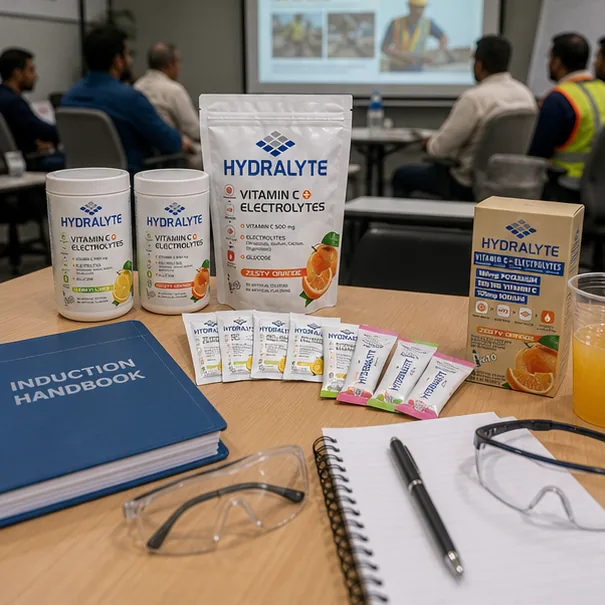
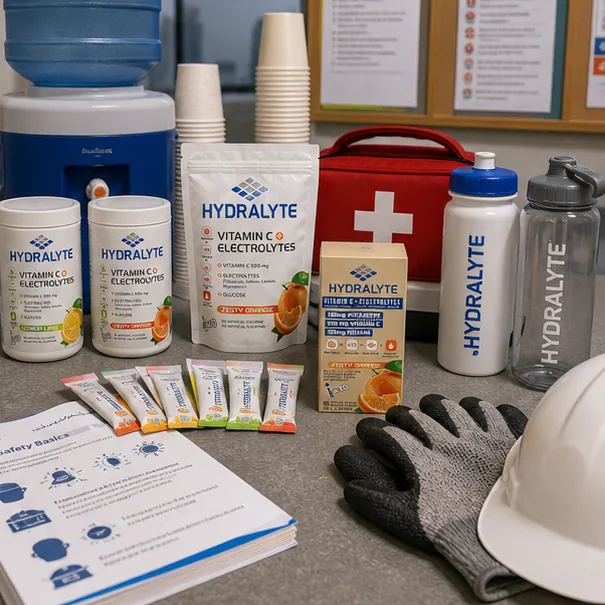
The success of a heat stress program depends on the accessibility of the solution. Centralized welfare stations should be established at loading dock edges and high-traffic rack aisles to encourage frequent consumption. For mobile staff, such as forklift and pallet jack operators, personal carry options are more effective. Providing individual Hydralyte sachets for these workers allows them to rehydrate at their station without leaving their equipment. By combining bulk 800g pouches at fixed points with portable sachets for mobile operators, HSE officers can ensure comprehensive coverage across the entire facility footprint. Protect your logistics team and maintain peak operational efficiency by establishing a robust hydration protocol today. For assistance in designing your site-specific program, visit our team at contact our team.
Frequently Asked Questions
Are warehouse workers at risk from heat stress in UAE even without outdoor exposure?
Yes. Large UAE warehouses in summer reach 38-48°C internally, and loading dock workers moving between the outdoor environment and warehouse interior face the most acute temperature transitions. The combination of warm ambient temperatures and physical work intensity creates meaningful electrolyte depletion even in workers who do not go outdoors.
Which areas of a Dubai warehouse have the highest heat stress exposure?
Loading docks and bay doors where workers are exposed to direct outdoor air are the highest risk areas. Workers in poorly ventilated high-rack areas also accumulate heat from the enclosed environment. Forklift operators confined to equipment cabs without adequate air conditioning face sustained exposure.
Does MOHRE's heat stress obligation apply to warehouse workers who do not work outdoors?
MOHRE heat stress obligations apply broadly to workers in hot environments regardless of whether they are technically outdoors. UAE warehouses that regularly reach temperatures above the MOHRE heat stress threshold require electrolyte provision programs. Employers should assess internal temperatures and apply appropriate provisions.
The Hidden Heat Risk in Logistics Operations
Logistics and warehousing operations in the UAE face a dehydration risk that is often underestimated because much of the work happens inside structures. However, non-air-conditioned warehouses in the GCC routinely reach internal temperatures of 50°C or higher during summer months. Delivery vehicles parked in direct sun can exceed 60°C internally.
Forklift operators, pickers, packers, and delivery drivers all face sustained heat exposure without the cooling effects of wind movement. The physical demands of lifting, carrying, and loading compound the dehydration risk — these workers can lose 1–1.5 litres of sweat per hour during peak operations.
Positioning Hydralyte 200g jars at loading docks, break rooms, and vehicle staging areas ensures workers have access to proper electrolyte replacement throughout their shifts. For delivery drivers who spend extended periods away from base, individual Hydralyte sachets provide a portable solution that fits in a vehicle door pocket.
Shift-Based Hydration Planning for Warehouse Teams
Design your hydration program around shift patterns rather than fixed schedules. Night shift workers in non-AC facilities face cumulative heat that builds throughout the evening as warehouse structures radiate absorbed daytime heat. These workers often receive less hydration attention than day shift crews, despite facing comparable dehydration risks.
Provide Hydralyte at shift handovers and at each scheduled break. Track consumption — if a team consistently uses less than the recommended volume, it indicates either inadequate access or insufficient awareness training, both of which need addressing.
🏗 Protecting Outdoor Workers? Hydralyte supplies bulk electrolyte programs for construction, oil & gas, logistics, and manufacturing companies across the GCC — with full MoHRE compliance documentation. See Industry Hydration Programs →
🛒 Ready to try Hydralyte? Available in three refreshing flavours across multiple pack sizes — from individual sachets to 800g bulk pouches. Shop Hydralyte Online → or request a corporate quote.